


May Lifestyle Trends: Where Innovation Meets Nostalgia

What’s next for how we live, sip, and spend time in 2025. May 2025 has revealed a fascinating lifestyle shift — one where innovation and nostalgia are not clashing, but merging. From wellness habits to home design and social rituals, this month’s top trends suggest that people aren’t just chasing what’s new — they’re choosing what feels good. 1. “Skinimalism” Makes a Comeback — But SmarterAfter a brief flirtation with hyper-glam routines, many are returning to minimalist skincare — with a twist. Today’s pared-down regimens focus on multitasking products powered by science, sustainability, and AI skin diagnostics. 2. Low-ABV (low alcohol by volume) Beverages Are the New Brunch EssentialConsumers are sipping smarter. Sparkling botanical spritzers, mood-enhancing mocktails, and low-alcohol aperitifs are surging in popularity, especially among Gen Z and wellness-conscious millennials. The vibe? “Let’s toast — and still make that 7 a.m. workout.” 3. Comfort-First Design Is In — AgainDesigners are seeing a renewed love for ‘90s comfort mixed with clean, modern aesthetics. Think: rounded furniture, cozy lighting, and nostalgic color palettes with updated materials. The trend is equal parts retro and forward-looking. 4. Intentional Living Is the New LuxuryPerhaps the biggest trend of all is the mindset shift. Whether it’s analog hobbies, screen-free Sundays, or rethinking how we use space, people are prioritizing simplicity, presence, and values-driven choices. Many trace this lifestyle transformation back to the global reset brought on by COVID-19. The pandemic disrupted routines, reshaped homes, and forced a collective reevaluation of what truly matters. Now, several years later, that reevaluation is taking hold as lifestyle practice. The result? A slower, more considered approach to everyday life — and a redefinition of luxury as peace, purpose, and time well spent. The Author
Philadelphia Mass Shooting on Memorial Day Leaves 2 Dead, 9 Injured

What was meant to be a day of remembrance ended in tragedy. A Memorial Day gathering in Philadelphia turned deadly when gunfire erupted in Fairmount Park, leaving two people dead and at least nine others injured — including three teenagers. Authorities say the attack happened just after 11 p.m., shaking a peaceful community event and reigniting national conversations around gun violence in America. No arrests have been made as of Tuesday morning. Police are still searching for the suspect and reviewing surveillance footage. The motive remains unclear. Among the victims were a 14-year-old and two 16-year-olds, according to local officials. One man died at the scene, while another succumbed to injuries at a nearby hospital. “This was supposed to be a family-friendly holiday,” said one witness, “and now it’s a crime scene.” City leaders and advocacy groups have already begun calling for stricter firearm regulations and more visible public safety measures at large events. The shooting marks one of several mass shootings over the Memorial Day weekend nationwide — a trend that continues to draw national concern. From the Web: Philadelphia District Attorney’s Office Statement on Mass Shooting at Lemon Hill in Fairmount Park
Trump Eyes Harsh Sanctions as Russia Escalates Ukraine Assault

New tone, new stakes — and a sharp turn from Trump’s earlier approach. President Donald Trump is signaling a dramatic shift in his stance toward Moscow, declaring on Monday that he is “strongly considering” a fresh wave of sanctions and tariffs aimed at Russia. The move comes in response to what U.S. officials have called the most intense Russian aerial assault on Ukraine since the war began — a barrage involving over 350 drones and missiles and resulting in at least 13 civilian deaths. Trump’s announcement caught many off guard, especially given his historically measured rhetoric toward Russian President Vladimir Putin. But the latest surge in violence appears to have forced a policy recalibration — and perhaps, a political one too. “We’re watching this very closely,” Trump said from the White House, “and we will take action if needed.” He did not provide specifics but hinted at sanctions targeting Russia’s banking sector, energy exports, and possibly even tariffs on countries that continue to purchase Russian oil. The president’s remarks have drawn rare bipartisan agreement in Washington. Congressional leaders from both parties have expressed support for tougher measures, citing the need to send a clear message to the Kremlin after its latest aggression. Meanwhile, Russia has dismissed Trump’s comments as “emotional,” with state media framing the sanctions threat as a sign of U.S. weakness rather than resolve. Whether Putin believes that or not remains to be seen — but the geopolitical temperature is rising. Trump’s pivot could mark a new chapter in U.S.-Russia relations — one where Washington stops asking and starts pressuring. As usual, Trump’s instincts are as much political as they are strategic. But with air raid sirens wailing across Ukraine, the time for optics may be over. The Author
With Musk Out, Republicans Lose a Big Voice and a Bigger Wallet
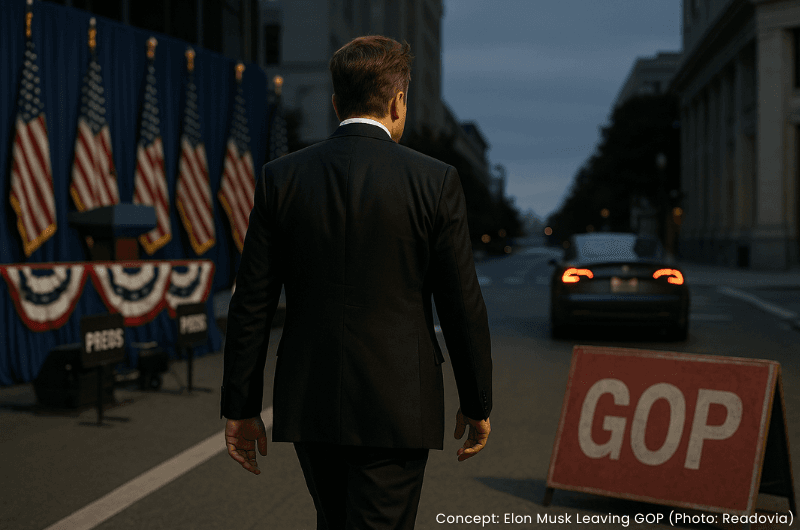
After pumping millions into Republican politics, the tech titan is tapping out — and the party is feeling it. The Republican Party just lost one of its biggest benefactors — and, arguably, its quirkiest — as Elon Musk signals a dramatic retreat from political spending. After pouring nearly $300 million into conservative causes during the 2024 election cycle, the Tesla CEO is now telling the GOP: Thanks, but I’m done. His reasoning? According to Musk himself, he’s already “done enough” in the political arena — and considering the financial firehose he turned on last year, it’s hard to argue. But not everyone is popping champagne. Republicans are privately scrambling over the loss of Musk’s mega-donations. His cash fueled everything from campaign ads to think tank strategy sessions (and possibly a few overpriced consultants who now need new clients). Most recently, he backed a conservative candidate in Wisconsin’s high-stakes Supreme Court race — a race that Democrat Susan Crawford won handily, despite Musk’s money machine. That loss may have sealed his decision to power down. Still, don’t assume Musk is vanishing from the political scene entirely. He remains involved in the Trump-aligned Department of Government Efficiency (known as DOGE) and maintains close ties to some within the president’s inner circle. Translation: he might be pulling the plug on donations, but he’s not logging off just yet. The GOP, meanwhile, finds itself in a tricky position: recalibrating without one of its most high-profile backers — who also happens to be known for tweeting before thinking and investing before blinking. Some political observers note that Musk’s departure removes both a major funding stream and a headline-generating personality. His unique blend of tech-world bravado and political disruption won’t be easily replaced — especially by a party still defining its post-Trump identity. Whether Musk’s departure helps the GOP clean up its image — or leaves it cash-starved and confused — remains to be seen. But for now, Republicans are staring down a post-Elon future… and wondering if there’s a new billionaire on deck. The Author
Harvard Wins Round One: Judge Blocks Trump Crackdown on International Student Enrollment

Federal Court Sides with Harvard in Showdown Over Student Visas In a second major legal defeat for the Trump administration this week, a federal judge on Friday issued a ruling that temporarily blocks the government from cutting off Harvard University’s ability to enroll international students — a move the school called “unconstitutional retaliation.” The decision by U.S. District Judge Allison Burroughs halts the Department of Homeland Security’s surprise effort to strip Harvard’s federal certification to host foreign students, pending the outcome of a newly filed lawsuit. The court’s response comes just days before graduation, as campus officials warned of mass legal and academic fallout. “Without International Students, Harvard Is Not Harvard” The university’s legal filing, submitted Friday morning, argues that the government’s actions violate the First Amendment and threaten the status of more than 7,000 foreign nationals currently enrolled at Harvard. Most are graduate students, many serving as lab assistants, researchers, teaching fellows, and even athletes — roles that anchor the university’s daily operations. “With the stroke of a pen, the government has sought to erase a quarter of Harvard’s student body,” the lawsuit reads. Officials said the decision would have an “immediate and devastating effect,” leaving international students in legal limbo — unable to transfer, unsure of their visa status, and uncertain whether they can stay in the country at all. The Accusations — and the Pushback The Department of Homeland Security, led by Secretary Kristi Noem, accused Harvard of fostering an “unsafe campus environment,” citing alleged violence toward Jewish students and ties to “anti-American, pro-terrorist agitators.” The agency also referenced claims of past coordination with the Chinese Communist Party, saying Harvard had trained members of a Chinese paramilitary group as recently as 2024. Harvard has denied the allegations and says it has already submitted thousands of data points in response to the government’s April request. The university called Noem’s latest demands “vague, retaliatory, and lacking legal basis.” What’s at Stake: Graduate Schools, Global Talent, and Harvard’s Future The impact of a full ban would be most severe at graduate-level programs, such as the Harvard Kennedy School (where nearly half of students are international) and the Harvard Business School (where roughly a third come from outside the U.S.). If the government’s move stands, Harvard warned it would be barred from admitting any new international students for at least the next two academic years — and unable to reapply for federal certification for at least 12 months after that. The ripple effects would be long-term. Harvard argued that even the threat of losing international student access could chill global applications: “Future applicants may shy away from applying out of fear of further reprisals,” the filing stated. “This Is Madness,” Says Former Harvard President The decision has already sparked outrage from academic and diplomatic circles. Lawrence Summers, former Harvard president and U.S. Treasury Secretary, said the policy would alienate rising global leaders and damage long-term U.S. interests. “Some small fraction of these students are going to go on to be prime ministers,” Summers wrote. “They’ve now been turned into enemies of the United States. This is madness.” Legal Questions and Political Backdrop Harvard’s lawsuit notes that the Department of Homeland Security failed to follow its own procedures for revoking a school’s visa eligibility, which are typically based on administrative failures — not politics. Historically, schools have lost certification for reasons like losing accreditation, failing to maintain basic facilities, or hiring unqualified instructors. Harvard’s case is different — and, the university argues, deeply political. In a separate but related legal battle, Harvard is also suing the federal government over $2 billion in funding cuts that it claims were politically motivated. The Battle is Not Over The court’s decision to block the administration’s crackdown is temporary, but the implications are massive: This isn’t just about visas — it’s about academic freedom, immigration policy, and the power of the executive branch to punish dissenting institutions. As of now, Harvard’s doors remain open to its international students. But the legal and political battle over who gets to walk through them is far from over.
Back to Class: Federal Judge Blocks Trump’s Attempt to Dismantle Department of Education, Orders Reinstatement of Fired Employees
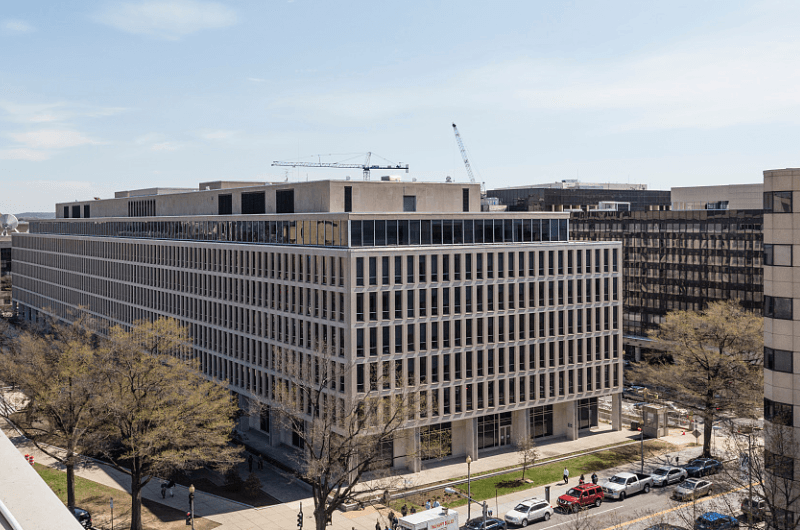
In a significant legal setback for the Trump administration, U.S. District Judge Myong Joun has issued a preliminary injunction halting President Donald Trump’s executive order aimed at dismantling the Department of Education. The ruling mandates the immediate reinstatement of approximately 1,300 employees who were laid off as part of the administration’s reduction-in-force announced in March . Judge Joun’s decision emphasizes that such a substantial reorganization of a federal agency requires congressional approval. He criticized the administration’s portrayal of the layoffs as a mere efficiency measure, stating that the actions effectively amount to dismantling the department without legislative authorization. The judge also blocked the administration’s plan to transfer key functions, including federal student loan management and special education programs, to other agencies. He highlighted concerns about the potential harm to students and educators, particularly those relying on federal aid and services . In response, the Trump administration has appealed the ruling, arguing that the executive branch has the authority to reorganize federal agencies to improve efficiency. However, critics contend that the administration’s actions overstep executive powers and undermine essential educational services. This ruling marks a pivotal moment in the ongoing debate over the scope of executive authority and the future of federal involvement in education. As legal proceedings continue, the Department of Education is required to restore its workforce and halt any further steps toward its dissolution.
Why America’s ‘Economic Recovery’ Doesn’t Feel Like One

The Numbers Look Fine. Life Doesn’t. The headlines say the economy is bouncing back. Unemployment is low. The stock market is up. Big tech is hiring again, and GDP growth looks stable. But ask anyone who’s tried to rent an apartment, buy groceries, or cover a medical bill lately, and you’ll hear a different story — one filled with shrinking budgets, rising anxiety, and the quiet feeling that the so-called “recovery” may be leaving real people behind. What the Data Doesn’t Say Inflation “slowed” — but prices never reset. Eggs aren’t $9 anymore, but they’re not $2 either. For many households, this is the new expensive normal. Wages are up — but so is everything else. While paychecks have grown in some sectors, housing costs, car insurance, childcare, and utilities have surged. Jobs are back — but they’re not the same. Many laid-off workers found jobs again… with lower pay, fewer benefits, or hybrid hours that stretch both time and wallet. The Psychological Gap Experts call it “vibecession” — the idea that people feel like the economy is still in trouble, even when the data looks stable. And it’s not just vibes. Credit card debt is at a record high. Savings accounts are shrinking. Renters are struggling to keep up. And while headlines focus on job growth, fewer jobs come with long-term security. “People aren’t just broke,” one social worker told Readovia. “They’re burned out — switching between apps just to track bills and splitting payments just to stay afloat. Every week feels like financial warfare.” Where It’s Hitting Hardest Young families facing daycare closures and rising food costs Renters navigating price hikes in cities and suburbs alike Boomer caregivers supporting both aging parents and adult children Freelancers and remote workers facing quiet layoffs and vanishing contracts Job seekers overwhelmed by a crowded, competitive market where dozens of applicants compete for every listing — and AI filters screen them out before a human ever looks The Whole Matter The economy may be “recovering” — but for millions of Americans, it doesn’t feel like relief. It feels like they’re still waiting to exhale. Until real recovery reaches rent, food, and basic security, the numbers alone won’t tell the full story. The Author
Trump Threatens 25% Tariff on iPhones Made Outside the U.S.
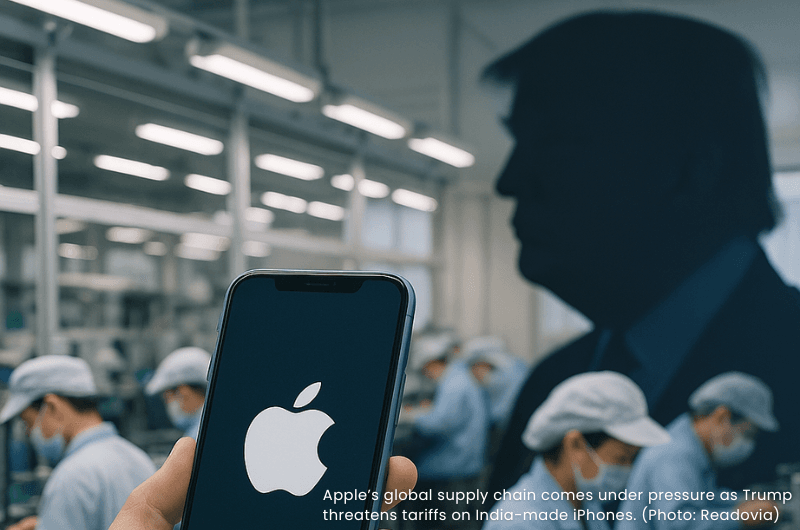
Apple’s India Expansion Draws Trump’s Wrath Over U.S. Jobs and Manufacturing President Donald Trump is once again targeting Apple — and this time, he’s threatening a 25% tariff on all iPhones not made in the United States. At the center of the clash is Apple’s growing production shift to India, where CEO Tim Cook recently confirmed that most U.S.-bound iPhones this fiscal quarter will be manufactured. The move is part of Apple’s broader effort to diversify away from Chinese factories — and it’s landed the company squarely in the middle of Trump’s escalating trade offensive. From China to India — But Not to America For years, Apple has depended on China’s massive industrial infrastructure to produce its most iconic product. That partnership allowed the company to scale quickly, maintain competitive pricing, and manage global supply chains with precision. But as U.S.–China tensions rise, Apple has accelerated its pivot toward Indian assembly lines. It’s a strategy driven not just by geopolitics, but economics: labor costs, supplier availability, and manufacturing speed. Still, bringing production to the U.S. remains unlikely. The American manufacturing base simply doesn’t offer the same scale — and the cost would be staggering. The Price of a “Made in America” iPhone According to multiple bank analysts, if Apple were forced to make its iPhones entirely in the U.S., the cost could skyrocket.A $1,200 iPhone today might retail for anywhere from $1,500 to $3,500 if built domestically, depending on tariffs, labor, and parts sourcing. That kind of price shock could ripple through the tech sector — and consumer wallets. Politics Meets Product Design Trump’s threat is the latest in a wave of policy pressure designed to bring tech manufacturing home. Supporters argue it’s time U.S. companies reinvest in domestic jobs. Critics warn that such moves could harm consumers and destabilize supply chains. So far, Apple hasn’t responded directly to Trump’s Friday comments. But in recent months, Cook has reiterated Apple’s commitment to “responsible global production” — and has signaled no plans to return large-scale iPhone production to American soil. Why U.S. iPhone Manufacturing Is Still a Long Shot Despite the political pressure, building iPhones in the U.S. remains highly unlikely — and prohibitively expensive. Apple’s supply chain, carefully built in China since the 1990s, is vast, deeply specialized, and not easily replicated. Analysts say that shifting this infrastructure to the U.S. would take years and billions of dollars, requiring new plants, trained labor, and entirely new logistics. Even in the best-case scenario, production might not begin before 2028 — if at all. “The concept of making iPhones in the U.S. is a nonstarter,” said Dan Ives, a veteran Apple analyst at Wedbush Securities. He estimates that a $1,000 iPhone made in China or India would balloon to $3,000 or more if manufactured in the U.S. “Price points would move so dramatically, it’s hard to comprehend.” Can Apple Absorb the Impact? For Now — Yes Apple did not immediately respond to Trump’s tariff threat, but on its most recent earnings call, CEO Tim Cook said the company was able to “optimize its supply chain” in the March quarter, limiting the damage from earlier tariffs. But he cautioned that it’s “very difficult” to predict beyond June, suggesting that further tariffs could disrupt even Apple’s fine-tuned global network. At some point, analysts say, the company may have to raise prices — especially if overseas suppliers continue to bear the brunt of the trade war. But for now, Apple has wiggle room, thanks to a secret weapon: services. Services Keep Apple’s Margins Strong Apple’s booming services division — which includes App Store revenue, iCloud subscriptions, and Apple Music — generated $96 billion last year. That revenue is untouched by tariffs and gives the company some breathing room. “Apple can absorb some of the tariff-induced cost increases without significant financial impact — at least in the short term,” said Forrester Research analyst Dipanjan Chatterjee. That buffer may allow Apple to hold the line on iPhone prices for now, but the question remains: For how long? Jobs, Not iPhones: Apple’s U.S. Investment Strategy To placate Trump earlier this year, Apple announced plans to invest $500 billion in the U.S. and add 20,000 new jobs by 2028. But the money won’t be going toward building iPhones. Instead, Apple is funding data centers and expanding its footprint in artificial intelligence infrastructure — a booming area of competition. U.S. Commerce Secretary Howard Lutnick, however, predicted a manufacturing shift was inevitable. “The army of millions and millions of human beings screwing in little screws to make iPhones — that kind of thing is going to come to America,” Lutnick said on CBS in April. But not everyone agrees. Skilled Labor Gap Still a Barrier In a 2017 appearance at a conference in China, Tim Cook questioned whether the U.S. had the vocational workforce to handle the precise and repetitive tasks needed on Apple’s assembly lines. The kind of fine motor work done in Chinese and Indian factories is difficult to scale in the U.S., both culturally and economically. Even when Apple tried domestic assembly — like at a Mac plant in Texas — it was more of a symbolic gesture. That plant opened in 2013, during the Obama administration, and was later toured by Trump in 2019. After the visit, Trump claimed credit “Today I opened a major Apple Manufacturing plant in Texas that will bring high paying jobs back to America,” he posted on Nov. 19, 2019. The Takeaway Trump’s threat to impose tariffs on foreign-made iPhones is about more than trade — it’s about optics, leverage, and long-standing pressure on American companies to “bring jobs home.” But the reality is clear: Apple isn’t building iPhones in America anytime soon — and if forced to, the price tag could be out of reach for millions of consumers. The question now is not whether Apple can make iPhones in the U.S. — but whether the cost of resisting Trump’s pressure will be higher than the cost of compliance. The Author
San Diego Jet Crash Kills Two Prominent Music Industry Figures, Destroys Neighborhood

In the early hours of May 22, a private jet crashed into the Murphy Canyon neighborhood of San Diego, killing several people — including two high-profile figures in the music world — and destroying homes and vehicles on the ground. The Cessna 550 Citation II had been approaching Montgomery-Gibbs Executive Airport around 3:45 a.m. when it struck power lines and plunged into a residential block. The impact sparked fires that engulfed multiple homes, sent eight people to the hospital, and forced the evacuation of nearly 100 residents. Authorities have confirmed six fatalities on board with no survivors, and at least two victims now publicly identified. The cause of the crash remains under investigation by the Federal Aviation Administration (FAA) and the National Transportation Safety Board (NTSB). Early reports suggest dense fog and limited visibility may have played a role during final approach. Music Industry Mourns Loss of Daniel Williams and Dave Shapiro Among those killed in the crash were: Daniel Williams, 39 Best known as the former drummer for the Christian metalcore band The Devil Wears Prada, Williams was a key force behind the band’s rise in the early 2000s. After parting ways with the group in 2016, he pursued a second act in tech and design, recently announcing a new role at Apple. Hours before the crash, Williams had posted photos from inside the cockpit — a moment now frozen in time. Fans and friends have described him as “passionate, creative, and fiercely loved by the underground music scene.” Dave Shapiro, 42 Shapiro co-founded Sound Talent Group, an agency that represented major acts including Sum 41, Underoath, and Vanessa Carlton. He was a behind-the-scenes powerhouse — shaping tours, championing emerging artists, and working to redefine the role of agents in a post-pandemic music landscape. He also owned the aircraft that crashed and was known to pilot privately. Shapiro’s unexpected death sent shockwaves through the industry. Tributes Pour In: ‘The Kind of People Who Make Music Happen’ Since the crash, artists and colleagues have shared messages of grief, admiration, and respect for the two men’s contributions. “Daniel made you feel the music in your chest — not just from his drums, but from how much he cared about the scene,” said one former bandmate. “Dave never wanted the spotlight. He wanted to build the spotlight and put artists in it,” a former client shared. “He changed careers for a lot of people.” On social media, hashtags like #RIPDanielWilliams and #ThankYouDave have emerged as fans post clips, memories, and concert photos. A Neighborhood Left Reeling Local residents described the crash as “a fireball out of nowhere.” First responders spent hours battling the blaze and clearing the wreckage. Officials say the jet fuel spill will require ongoing environmental cleanup, and displaced families are being assisted with temporary housing. The FAA and NTSB continue to examine flight data and weather conditions at the time of impact. Final Thoughts The loss of Daniel Williams and Dave Shapiro is not just a blow to their families, but to a music industry that thrives on creativity, resilience, and connection. Their work lives on in songs, stories, and the careers they shaped — and their legacy now joins the long, aching chord of lives gone too soon.
Readovia Exclusive – Inside ChatGPT: The AI That’s Quietly Powering a Digital Revolution

From Homework to Headlines — Meet the AI You Didn’t Know You Were Already Using Whether it’s drafting emails, explaining complex topics, generating code, or writing social media posts, ChatGPT has quickly become one of the most widely used — and least understood — tools on the planet. With over 100 million active users worldwide, this conversational AI, developed by OpenAI, is now a silent co-worker in homes, schools, startups, and Fortune 500 companies alike. How It Works (In Plain English) ChatGPT is built on something called a “large language model.” Picture feeding a supercomputer thousands of books, websites, and academic papers, then teaching it how to respond like a human in real time. The most advanced version, GPT-4, can handle a range of tasks including writing, explaining, summarizing, translating, and even analyzing images and data in certain formats. What makes it so powerful is that it doesn’t just retrieve information — it can write, explain, brainstorm, generate original content, and assist users across nearly every field imaginable. It can even think with you — in real time. Is There Just One ChatGPT? Not Even Close ChatGPT isn’t a single AI personality fielding questions for the entire planet. Instead, millions of individual instances are created — and quietly shut down — every day, each focused solely on one user’s request. And when we say “shut down,” we don’t mean anything dramatic. It’s simply how the system saves computing power once a session ends.Each conversation disappears when it’s over — unless memory is enabled, allowing the AI to remember past chats and respond in a more personalized way over time. Where You’ll See ChatGPT Next In apps, search engines, and websites In classrooms, creative studios, and corporate dashboards”” As a writer, analyst, assistant, tutor, or translator — depending on the need And this is just the beginning. OpenAI is already working on GPT-5, which is expected to offer even more advanced reasoning, personalization, and multi-modal capabilities later this year. The Takeaway You don’t need to be a tech expert to benefit from ChatGPT. In fact, many people using it every day don’t fully realize just how deeply it’s shaping the way we learn, create, and make decisions. In a world obsessed with productivity and speed, ChatGPT isn’t just another tool — it’s quietly becoming part of the way we think. The Author