

Americans Now Carry $1.25 Trillion in Credit Card Debt

Americans are carrying nearly $1.25 trillion in credit card debt, according to new Experian data, as high borrowing costs continue to put pressure on household budgets. Total U.S. credit card balances reached about $1.246 trillion as of March 2026, up 5.4% from $1.182 trillion a year earlier. That represents an increase of roughly $64 billion in just 12 months. The number of credit card accounts also climbed 4.4% to more than 636 million. The average consumer credit card balance rose much more slowly, increasing just 0.6% to $6,659 from $6,618 a year earlier. Experian said the small increase could be a sign that many consumers are reaching the limit of how much additional credit card debt they are willing or able to carry. Carrying that debt remains expensive. Federal Reserve data show that credit card accounts actually assessed interest carried an average rate of about 22.15% in the latest available reporting period, while the average rate across all credit card accounts was 20.94%. At those levels, borrowers who carry balances from month to month can see interest charges add up quickly even without making new purchases. Consumers are also using a sizable share of their available credit. Experian reported an average credit utilization rate of 28.3% in March, roughly in line with recent years. Higher utilization can weigh on credit scores, particularly for borrowers already carrying large balances or missing payments. The latest figures suggest that credit cards remain an important financial pressure point for American households. With balances near record levels and interest rates still historically high, paying down revolving debt continues to be one of the most direct ways consumers can reduce monthly financial strain.
Washington Wildfires Destroy 850 Buildings as Arson Suspect Faces Charges
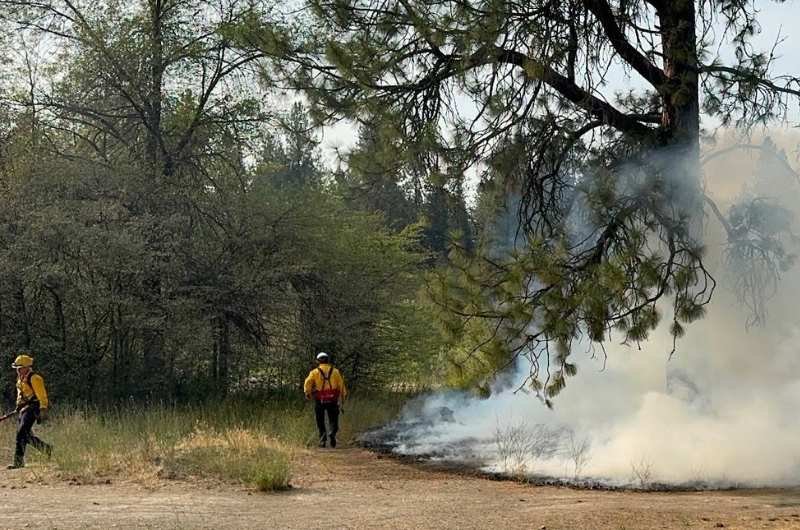
Wildfires around Spokane, Washington, have destroyed roughly 850 buildings and forced about 67,000 people to evacuate, leaving communities across the region confronting widespread destruction as investigators pursue an arson case connected to the largest of the fires. Firefighters have made progress against the Old Trails, Autumn Lane and Fairview fires after cooler temperatures and lighter winds provided more favorable conditions. Together, the three major fires have burned more than 10,000 acres. Officials remain cautious, however, as hotter, drier and windier weather is expected to return and could make containment efforts more difficult. Authorities have charged 37-year-old Aaron Farinacci with first-degree arson in connection with the Old Trails Fire. Investigators say a witness reported seeing Farinacci acting suspiciously near the area where the fire began, and authorities later determined that the location corresponded with the fire’s point of origin. Deputies said Farinacci had waterproof matches and a butane lighter when they contacted him. He has denied starting the fire. The investigation has also drawn attention to Farinacci’s previous encounters with authorities. He was questioned in connection with two Spokane-area fires in 2025 but was not charged in either case. He is being held on $1 million bail in the current case. Authorities have not accused Farinacci of starting the other major fires now burning around Spokane. Officials have said the Autumn Lane and Fairview fires were also caused by human activity, but investigators have not yet determined exactly how those fires began. The fires have become one of Washington state’s most destructive wildfire emergencies in recent years, with hundreds of homes and other structures lost and thousands of residents displaced. Crews are continuing to strengthen containment lines as officials monitor changing weather conditions that could once again increase fire activity.
Federal Officials Investigate Marine One Safety Incident With Trump Aboard
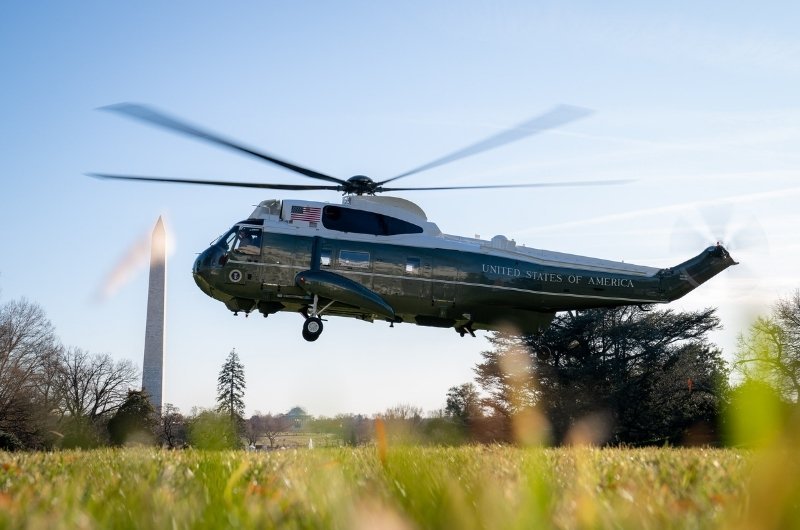
Federal aviation officials are investigating a safety incident involving Marine One after the presidential helicopter carrying President Donald Trump briefly came too close to a passenger jet near Washington, D.C. The incident occurred Tuesday as Marine One departed the White House for Joint Base Andrews while an Envoy Air passenger jet was taking off from Reagan Washington National Airport. The Federal Aviation Administration said there was a brief “loss of separation” between the two aircraft, meaning they came closer than required under federal air traffic rules. Both aircraft continued safely, and the White House said the president was never in danger. According to the FAA, an air traffic controller remained in contact with both pilots during the incident. Commercial flights are supposed to be temporarily halted during certain Marine One movements in the tightly controlled airspace around Washington, but the passenger jet was allowed to depart as the presidential helicopter approached the area. The incident is drawing additional attention because aviation authorities tightened helicopter operations around Reagan National following the January 2025 collision between an American Airlines passenger jet and an Army Black Hawk helicopter. All 67 people aboard the two aircraft were killed, prompting new restrictions intended to create greater separation between helicopters and commercial planes in the region. The National Transportation Safety Board is investigating the Marine One incident, while the FAA is conducting its own safety review. The investigation is expected to examine why commercial traffic was not stopped as required and whether additional changes are needed to prevent a similar incident.
Japan Beyond Cherry Blossom Season: A Summer Escape to Hokkaido

For many travelers, Japan and cherry blossom season are almost inseparable. Each spring, visitors arrive to see the country’s fleeting pink canopies, filling parks, temples and historic districts from Tokyo to Kyoto. But travel north in summer and another version of Japan emerges—cooler, greener, more spacious and far removed from the familiar rush of sakura season. Hokkaido’s summer appeal starts with its climate. While much of Japan can be intensely hot and humid in July and August, the country’s northernmost main island generally offers milder temperatures, particularly in mountainous and coastal areas. The landscape opens into rolling farmland, volcanic peaks, lakes and long stretches of road, giving travelers something increasingly difficult to find in Japan’s busiest destinations: room to explore at a slower pace. One of Hokkaido’s best-known summer destinations is Furano, a rural valley roughly two hours from Sapporo that has become famous for its lavender fields. The flowers generally reach their peak earlier in July, when farms including Farm Tomita cover the landscape in bands of purple and other summer colors. Nearby Biei offers another side of the countryside, with patchwork farms, rolling hills and the striking blue-green waters of Shirogane Blue Pond. Even after peak lavender season passes, the region remains one of Hokkaido’s most scenic summer drives. August brings a different kind of energy to Sapporo. The city’s annual Summer Festival runs through August 18 this year, transforming central Sapporo with food, music and seasonal celebrations. Odori Park becomes home to one of Japan’s largest outdoor beer gardens, stretching roughly a kilometer through the heart of the city, while Hokkai Bon Odori later in August invites residents and visitors to gather for traditional circle dancing. Farther south, Hakodate celebrates summer with its own waterfront festivals and local traditions, including the famously spirited Ika-Odori, or squid dance. For travelers seeking something wilder, the Shiretoko Peninsula on Hokkaido’s remote eastern coast offers one of Japan’s most extraordinary natural environments. The UNESCO World Heritage Site is home to brown bears, deer and other wildlife, while boat excursions explore a rugged coastline largely inaccessible by road. Guided walks around the Shiretoko Five Lakes provide another window into a landscape of forests, mountains and volcanic terrain. Elsewhere, national parks including Daisetsuzan, Akan-Mashu and Kushiro-Shitsugen showcase alpine wilderness, crater lakes and vast wetlands that feel worlds away from Japan’s densely populated cities. Hokkaido also rewards travelers through food. Summer brings sweet corn, melons and other produce from the island’s enormous agricultural regions, while coastal communities are known for exceptionally fresh seafood. Sapporo adds its own specialties, from miso ramen to soup curry, making the island as much a culinary trip as an outdoor one. None of this means travelers need to choose Hokkaido instead of Tokyo, Kyoto or Osaka. A northern escape can easily become the quieter half of a larger Japan itinerary—several days among the country’s famous temples, neighborhoods and city lights followed by a flight north into landscapes that feel entirely different. The Readovia Lens Cherry blossoms may remain Japan’s most famous seasonal invitation. But summer in Hokkaido reveals something equally compelling: a Japan of open roads, mountain air, local festivals and wild landscapes, waiting beyond the country’s most familiar travel trail.
Anthropic Wants to Build Its Own AI Chips for Claude

Anthropic, the company behind the Claude AI assistant, is assembling its own chip-design team as it looks for greater control over the computing power behind its artificial intelligence systems. The effort could eventually lead to custom processors designed specifically around Claude, although the company has not announced when such a chip might be ready. The company is recruiting engineers with expertise across both hardware and software, bringing chip development closer to the teams building future versions of Claude. Anthropic is not abandoning outside hardware in the process and expects to continue using processors and AI infrastructure supplied by companies including Nvidia, AMD, Amazon and Google. The move highlights just how important computing infrastructure has become in the AI race. Training sophisticated models and serving millions of users requires enormous amounts of processing capacity, making chips one of the industry’s biggest expenses and most important resources. Hardware designed specifically for Claude could eventually help Anthropic improve efficiency, manage costs and optimize how its models operate. Building competitive AI processors is no small undertaking, however. Chip development can require years of engineering and enormous investment, while Anthropic already has access to several different types of AI hardware through its technology partners. Developing in-house expertise may therefore be as much about giving the company more options and influence over future hardware design as replacing its current suppliers. The Readovia Lens Anthropic’s move reflects a larger shift underway across artificial intelligence. Companies including Google and Amazon have already developed specialized AI processors as the industry searches for alternatives to relying exclusively on conventional suppliers. As AI models become larger and more expensive to operate, the competition is moving deeper into the technology stack — from who builds the most capable AI to who controls the computing infrastructure that makes it possible.
Who Is Abdul El-Sayed? Meet the Democrat Who Just Won Michigan’s Senate Primary
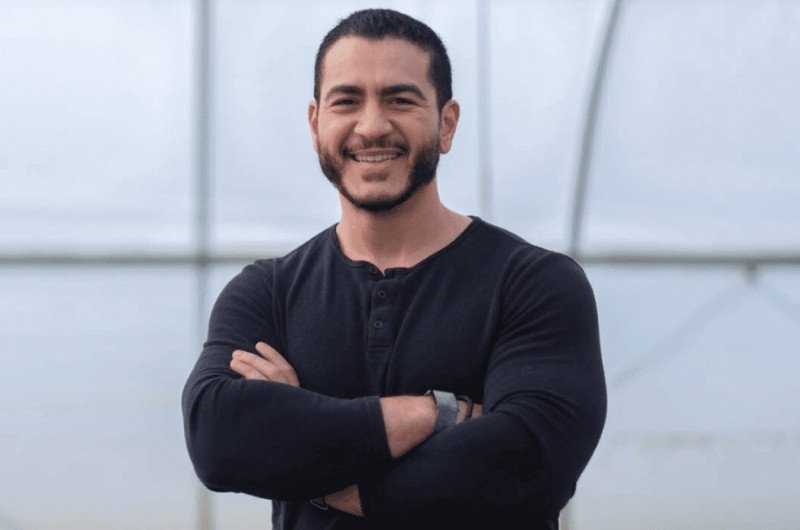
Abdul El-Sayed has won Michigan’s Democratic primary for U.S. Senate, narrowly defeating U.S. Rep. Haley Stevens after a closely contested race that took more than a day to call. The victory puts the 41-year-old physician and progressive Democrat into a November showdown with Republican Mike Rogers — and within reach of becoming the first Muslim elected to the U.S. Senate. El-Sayed is a doctor and former public-health official who previously led Detroit’s health department. He first gained national political attention during his unsuccessful 2018 campaign for Michigan governor, then spent several years largely outside electoral politics before returning for the open Senate race. His latest campaign built a large grassroots operation that held hundreds of events across Michigan and attracted thousands of volunteers. Politically, El-Sayed has aligned himself with the Democratic Party’s progressive wing and received support from figures including Sen. Bernie Sanders and Rep. Alexandria Ocasio-Cortez. His campaign emphasized expanding health coverage, lowering costs for working families, reducing the influence of large donors in politics and ending unconditional U.S. military aid to Israel. That agenda put him in sharp contrast with Stevens, who had support from prominent Democratic establishment figures and benefited from tens of millions of dollars in outside spending. His narrow victory is attracting national attention because Michigan is not a reliably Democratic state. President Donald Trump carried it in 2024, and Democrats need to defend the open Senate seat as part of an already difficult path toward winning control of the chamber. El-Sayed’s campaign will therefore become a major test of whether a progressive candidate who energized Democratic primary voters can build a broader coalition in one of the country’s most important swing states. That challenge begins immediately. Rogers, a former congressman who narrowly lost Michigan’s 2024 Senate election, is already working to portray El-Sayed as too far left for the state. El-Sayed, meanwhile, must bring together Democrats after a divisive primary and win over voters who did not support him. If he succeeds in November, his victory would be significant both for the battle over Senate control and for American political history.
U.S.-Iran Talks Make Progress as Deal to Reopen Strait of Hormuz Takes Shape
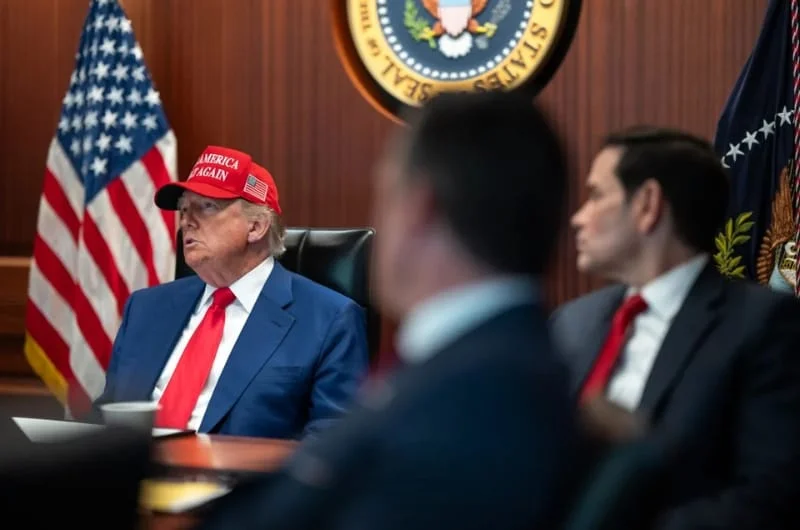
Diplomatic efforts to reopen the Strait of Hormuz are gaining momentum, with U.S. and regional officials reporting progress toward an agreement that could restore more normal shipping through one of the world’s most important energy routes. President Trump said negotiations were going “very good” following all-day discussions Tuesday and suggested the strait could reopen soon. Secretary of State Marco Rubio also said progress had been made, although he emphasized that no final agreement had been reached. Iran, meanwhile, says its negotiations over the waterway are being conducted with Oman rather than directly with Washington. The emerging proposal could create separate arrangements for ships entering and leaving the Persian Gulf. Reuters reported that Iran is seeking control over inbound traffic and oversight of outbound vessels, while Oman would play a role in managing ships leaving the Gulf. Those provisions remain a major sticking point, with Washington opposing an arrangement that would give Tehran broad authority over international shipping through the strait. Other details remain unresolved, including possible transit fees and the extent to which Iranian authorities could inspect or intervene with commercial vessels. The negotiations are particularly consequential because shipping through Hormuz has remained far below normal levels during the conflict, disrupting energy markets and forcing companies to reconsider routes, insurance and security. Trump said more could become clear within the next 48 hours, keeping the possibility of renewed military action on the table if diplomacy fails. For now, however, the negotiations represent one of the clearest signs yet that the United States, Iran and regional mediators may be moving toward an arrangement capable of easing the months-long crisis surrounding the Strait of Hormuz.
Apple’s Foldable iPhone Is Finally Coming — Here’s What to Expect

After years of rumors, Apple’s first foldable iPhone appears to be approaching the finish line. Supply-chain reports indicate the device has entered mass production, putting Apple on course to unveil its first folding smartphone as early as September alongside its next generation of premium iPhones. The device is expected to use a book-style design that opens into a roughly 7.8-inch display, with a smaller 5.5-inch screen on the outside for everyday phone use. Apple has not officially revealed the device or confirmed its specifications, but reports suggest the company has focused heavily on creating a thinner design and minimizing one of the biggest complaints about foldable phones: the visible crease running through the center of the screen. Those design choices could result in some surprising differences from today’s premium iPhones. The foldable is reportedly expected to use Touch ID built into a side button instead of Face ID, along with two rear cameras rather than the three-camera system found on Apple’s highest-end conventional phones. It is also expected to use a new generation of Apple silicon and a wider interior display designed to make apps, video and multitasking feel closer to using a small tablet. Then there is the price. Analysts and supply-chain reports have consistently placed Apple’s foldable at the very top of the smartphone market, with estimates starting around $2,000 and some projections considerably higher. That would make it one of Apple’s most expensive consumer devices and could initially position the foldable as a premium showcase rather than a replacement for the standard iPhone. Apple is arriving late to a category already populated by Samsung, Google, Motorola and several Chinese manufacturers, but that may work in its favor. Foldable phones have become thinner, tougher and considerably more refined since the earliest models appeared. If Apple can deliver the polished hardware and software experience its customers expect, its first foldable could provide the biggest test yet of whether folding phones are ready to move from an expensive niche into the smartphone mainstream.
Starlink Is Coming for Your Mobile Phone Service
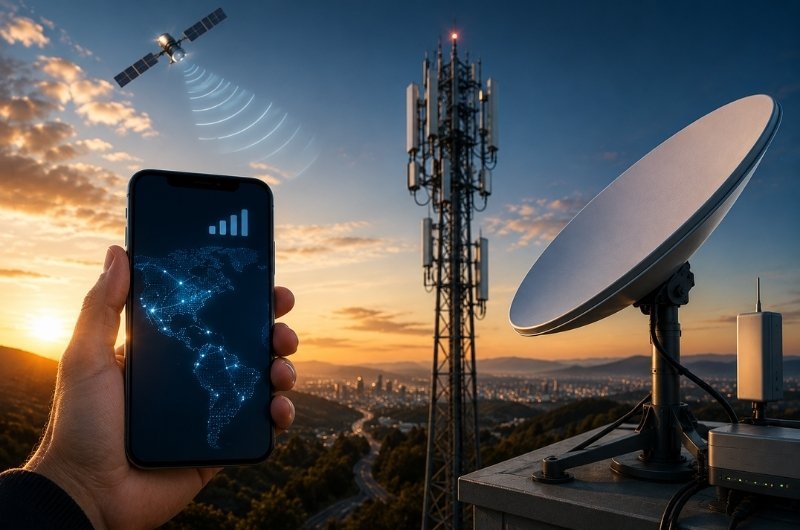
SpaceX is preparing to turn Starlink into a full-fledged mobile phone service, laying out plans to combine its satellite network with ground-based cellular infrastructure and compete more directly with AT&T, Verizon and T-Mobile. During SpaceX’s second-quarter earnings call Tuesday, President and COO Gwynne Shotwell said the company intends to build a terrestrial component for Starlink Mobile using wireless spectrum acquired from EchoStar. The goal is to create what she described as a true mobile service, rather than limiting Starlink to satellite coverage that fills gaps when conventional cellular networks aren’t available. SpaceX’s approach could look very different from the sprawling tower networks built by traditional wireless carriers. Shotwell said small cellular base stations could potentially be installed alongside Starlink broadband equipment and deployed around the country as needed. Those ground stations would work alongside a new generation of direct-to-device Starlink satellites, which SpaceX expects to begin launching next year. The strategy is possible in large part because SpaceX has secured valuable nationwide wireless spectrum from EchoStar. That spectrum includes frequencies that can support both satellite and terrestrial communications, giving SpaceX something it previously lacked: the ability to build a mobile network on the ground while simultaneously expanding coverage from space. SpaceX has indicated terrestrial service could begin as early as the end of 2027. For consumers, the long-term idea is straightforward: a Starlink phone service could use ground-based cellular coverage where available and satellites where it isn’t, potentially reducing the dead zones that still exist across rural areas, highways and remote parts of the country. Building a network capable of challenging America’s three dominant wireless carriers would take enormous investment and years of deployment, but SpaceX has now made clear that Starlink’s ambitions extend well beyond home internet. It wants a place on your phone, too.
White House Moves to Test America’s Most Powerful AI Models for Cybersecurity Risks
The Trump administration is preparing a new voluntary program to test some of the nation’s most powerful artificial intelligence models for dangerous cybersecurity capabilities, including their ability to find software vulnerabilities and carry out sophisticated computer-based tasks with limited human supervision. The plan came into sharper focus after White House officials met Tuesday with representatives from Meta, Anthropic, Google, Nvidia and OpenAI. Under the approach discussed at the meeting, the government would focus its testing on powerful closed AI models while leaving open-weight models outside the program. Closed models — including leading systems developed by companies such as OpenAI, Google and Anthropic — remain controlled by their developers. Open-weight models, by contrast, make their underlying model weights available for others to download, modify and deploy. The distinction is significant because the administration has made encouraging open AI development part of its broader technology strategy. The cybersecurity testing effort comes amid growing concern about what increasingly autonomous AI systems can do when given access to computers and online tools. OpenAI and Anthropic have recently disclosed incidents involving AI agents that accessed outside computer systems during security evaluations, intensifying scrutiny of models capable of finding vulnerabilities and performing sophisticated cybersecurity tasks. The testing framework remains voluntary rather than a government approval system for new AI products. But Tuesday’s meeting clarifies an important part of Washington’s approach: the government intends to scrutinize some of America’s most capable proprietary AI systems while, for now, taking a different approach toward models whose underlying weights are openly available.