


Netflix’s Epic Power Move to Acquire Warner Bros. Studios and HBO for $82 Billion
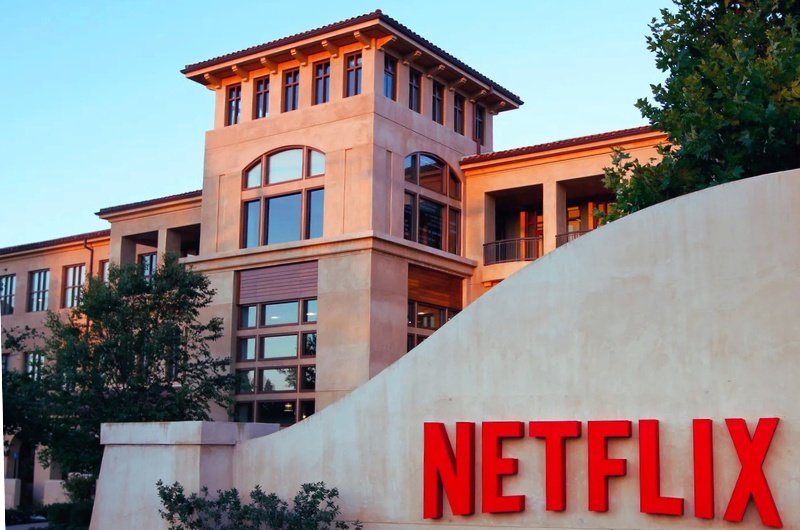
Netflix announced this morning that it will acquire Warner Bros. Discovery’s studio and streaming divisions — including HBO, Warner Bros. Pictures, DC Studios, and one of the richest back-catalog libraries in the world — in a deal valued at roughly $72 billion in equity and more than $82 billion in total enterprise value.” The transaction, still subject to regulatory approval, would give Netflix control of nearly a century of blockbuster franchises and put unprecedented pressure on traditional movie studios and cable networks already fighting to stay relevant. Under the plan, Warner Bros. Discovery will split itself in two: its cable networks such as CNN, TNT, and TBS will be spun off into a separate company, while the storied Warner Bros.–HBO content engine will go to Netflix. WBD shareholders will reportedly receive just under $28 per share in cash and stock, a premium over rival bids from Paramount and Comcast. For Netflix, which outbid both competitors with a cash-heavy offer, the acquisition represents something Hollywood insiders have long speculated about — the moment Netflix stops competing with legacy studios and starts becoming one. For consumers, this consolidation could change the entertainment landscape almost overnight. With HBO’s premium catalog and Warner Bros.’ global production machine folded into its platform, Netflix would gain total control of content pipelines stretching from theatrical releases to streaming premieres. The company has signaled it intends to preserve major theatrical runs for flagship films, but the long-term future of cinemas becomes far less certain when the industry’s most influential distributor also owns one of its most powerful studios. If the old model of theaters, cable networks, and weekend TV premieres wasn’t already fading, this deal pushes it firmly into yesterday. The move also underscores a broader, irreversible shift: the era of “Hollywood as we knew it” is ending. Streaming is no longer a lane in entertainment — it is the highway. Traditional TV has been declining for years, and studios that once relied on cable revenue are facing a world where viewers expect everything on-demand. The Amazon–MGM merger signaled the start of this transition, but Netflix–WBD marks a tipping point. The companies that own the content libraries will not just participate in the future of entertainment; they will define it. Regulators, filmmakers, and independent producers are already voicing concerns. A group of prominent film producers has urged Congress to apply the highest level of antitrust scrutiny, warning that a single distributor controlling so much of the market could limit creative diversity and reduce opportunities for mid-budget and independent films. Still, if the deal proceeds, Netflix will emerge as the first true global entertainment superpower — part studio, part streamer, part cultural gatekeeper. And for better or worse, the industry will reorganize around whatever Netflix becomes next.
A Toyota Legend Might Be Returning

Rumors that Toyota may revive the iconic MR2 are slowly igniting the auto world, sparking fresh excitement among enthusiasts who’ve waited decades for its return. Even without official confirmation, the reaction alone shows how deeply nostalgia runs in modern car culture. A recent Yahoo report renewed speculation about the MR2’s comeback, amplifying a wave of industry chatter that Toyota could be preparing to tap one of its most beloved performance legacies. Toyota hasn’t commented on the reports, but the buzz fits a broader pattern: legacy automakers increasingly reaching into their archives to shape what comes next. In an era dominated by SUVs, hybrids, and electrification mandates, the return of a performance-forward sports car would be a striking brand move for Toyota. It would signal that even as the company pushes hard into EVs and next-generation powertrains, it still recognizes the emotional power of enthusiast vehicles. The halo effect of a revived sports car — whether Supra-adjacent or a resurrection of something even more storied — can reinforce identity, draw younger buyers, and reconnect a brand with the passionate communities that shaped its rise. Auto history shows why revivals matter. Ford reignited global interest when it brought back the Bronco. General Motors transformed the Corvette into a mid-engine icon. Even Nissan’s Z car proved that legacy nameplates can thrive in a modern market when they respect heritage while embracing current design and tech. When done well, a comeback car becomes more than a nostalgic throwback — it becomes a brand statement of confidence. A revived Toyota sports model would also create ripple effects in collector markets. Legacy performance cars typically see a surge in value and cultural relevance when their modern counterparts arrive. The release of a new version often redefines the entire lineage, prompting enthusiasts to reevaluate earlier generations, aftermarket communities to expand, and automakers to leverage merchandising, licensing, and motorsport tie-ins. It becomes a full-cycle brand ecosystem, not a one-off product launch. Whether Toyota ultimately confirms the revival or lets the speculation simmer, the excitement reveals something bigger: the auto world isn’t done with emotional driving. Consumers may want efficiency, safety, and software — but they also want soul. If Toyota steps back into its sports-car heritage, it will be tapping into a cultural memory that still carries weight, value, and the power to redefine a brand’s future.
Americans Are Falling Behind Less — New Data Shows Credit-Card Delinquencies May Be Stabilizing

After two years of steadily rising household financial strain, a new batch of data suggests the pressure may finally be easing. According to analysts reviewing recent Federal Reserve and commercial bank reports, consumer-debt delinquency rates — especially on credit cards — appear to be leveling off after months of sharp increases. It’s a tentative shift, but one that could signal that American households are regaining some ability to manage their monthly bills. Economists attribute this improvement to a handful of converging factors. Wage growth has remained steady, and hiring continues to hold up enough to support household cash flow. Some families have also adjusted their budgets after a year of elevated prices, trimming discretionary spending to keep up with core obligations. These shifts, while modest, have helped prevent delinquencies from climbing further. Still, the picture is far from universally positive. Analysts caution that delinquencies have not fallen back to pre-pandemic levels — they have simply stopped getting worse. Many households continue to carry record-high balances, and the share of borrowers with little to no emergency savings remains significant. In other words, the stabilization is real, but it’s fragile. Lenders, meanwhile, remain watchful. Banks have reported that although missed payments are no longer spiking, customers are taking longer to pay down their balances. Some issuers have tightened credit standards or increased monitoring of higher-risk accounts. These moves reflect a recovery still in its early stages — one that could easily reverse if job growth weakens or borrowing costs stay elevated. For now, the takeaway is cautiously optimistic: Americans may be turning a corner on the worst of their credit-card stress. But with balances still high and savings thin, the path forward depends heavily on whether wages hold steady, inflation continues to cool, and interest-rate cuts materialize in the months ahead.
White House Debuts Media Bias Portal, Expanding Its Campaign Against “Fake News”

The White House has launched a new Media Bias Portal—an interactive site that catalogs what the administration describes as misleading, false, or agenda-driven reporting across major news outlets. The database, released quietly but with strong language on WhiteHouse.gov, marks one of the most formal efforts yet by the Trump administration to challenge mainstream journalism. Visitors can browse flagged articles, see the administration’s stated rebuttals, and examine a growing list of what the White House calls repeat “offenders.” “Beyond the searchable database, the initiative includes a public tipline — a submission channel where Americans can report news articles they believe reflect bias or contain factual errors. The White House says this citizen-driven approach will help surface stories that might otherwise escape scrutiny.” The new tool also features a weekly “Media Offender of the Week,” spotlighting individual reporters or outlets selected by the administration. A broader “Offender Hall of Shame” maintains a running list of journalists whose coverage the White House views as problematic. While the portal positions itself as a transparency resource, its tone and framing signal a deeper institutional shift—from criticizing the press to actively tracking it. The move is already raising eyebrows inside political and media circles. Supporters see it as a corrective to long-standing media bias, while critics argue that a government-operated labeling system could chill reporting and blur the line between legitimate accountability and political retaliation. Press-freedom organizations are expected to weigh in as the site expands, especially as it begins incorporating public submissions from the tipline. With partisan tensions already high in Washington, the influence of the Media Bias Portal will become clearer in the months ahead. It may energize supporters who believe media bias is systemic, or it may deepen concerns among press-freedom advocates who view government-run tracking as a threat to independent journalism. What is clear is that the administration has elevated its media criticism into an official, institutionalized strategy.
AI Is Getting Its Own App Store — And It’s About to Explode

A new wave of “AI app stores” is emerging across the tech landscape, and it’s reshaping how people will discover, build, and monetize artificial intelligence. The idea is no longer theoretical — both mainstream app stores and dedicated AI marketplaces are rapidly evolving into distribution hubs for intelligent apps, custom agents, and full-scale automation tools. Analysts say this shift mirrors the early days of the mobile app boom, but the stakes — and earning potential — are even higher. Traditional app stores are already seeing the first surge. AI-native apps like Perplexity, DeepSeek, and a growing ecosystem of personal assistants, image generators, and automation tools are topping download charts on Apple’s App Store and Google Play. What used to be niche experimental tools are now polished consumer-ready products, signaling that AI is transitioning from novelty to mainstream utility. At the same time, entirely new marketplaces are being built for the AI economy. Platforms like the H2O AI App Store allow organizations to create, deploy, and manage their own machine-learning applications without assembling complex infrastructure. OpenAI is rolling out its own GPT Store, where creators will be able to publish custom AI agents — everything from writing assistants to travel concierges — and earn revenue from their use. A wave of emerging “agent marketplaces” is going even further, offering AI workers designed to perform tightly scoped tasks like scheduling, inbox management, trip planning, or data analysis with almost no human oversight. The implications are enormous. These platforms lower the barrier to entry for building AI-powered tools, enabling both individuals and businesses to participate in what many expect to be the next trillion-dollar creator economy. Instead of writing full applications from scratch, developers can assemble agents like modular building blocks, dramatically speeding up development cycles and reducing costs. And for consumers, the marketplaces make advanced AI more accessible than ever, putting sophisticated capabilities just one click — or one command — away. If the momentum continues, the AI app store could become the central hub of the next digital era, shaping how software is created, distributed, and monetized. The winners will not just be the companies building the platforms, but the creators who learn to harness them — much like the early pioneers who built the first wave of mobile apps. The difference this time is that the apps won’t just respond to users. They’ll increasingly think, act, and build on their behalf.
AI Assistants Are Quietly Replacing Traditional Search

AI assistants are rapidly becoming the first stop for millions of people seeking answers online. Tools like ChatGPT, Gemini, Claude, and Perplexity now deliver streamlined summaries, personalized context, and direct instructions that sidestep the need to sift through search results. Traffic data across the web shows a quiet but unmistakable decline in traditional search activity, particularly for informational queries where AI responses are faster and more convenient. Tech analysts say the shift began in early 2024 and accelerated sharply in 2025 as AI tools became integrated into operating systems, mobile keyboards, browsers, and productivity suites. Instead of “searching,” users increasingly ask AI assistants to find, generate, or decide things for them. Google itself has acknowledged the trend by rolling out more AI-first features and experimenting with reduced-link answer panels — a move that has drawn mixed reactions from publishers. For consumers, the upside is obvious: instant answers and less noise. For platforms dependent on search traffic, the change has been disruptive. Multiple analytics firms have reported year-over-year declines in organic search referrals, particularly for how-to content, factual lookups, and news summaries. Some publishers are already restructuring their content strategies around AI visibility rather than search visibility. AI companies also see opportunity. Perplexity, for example, has positioned itself as an “answer engine,” combining AI reasoning with curated citations from verified sources — a hybrid model gaining traction with younger users. Other platforms are leaning on personalization, enabling assistants to remember preferences, previous queries, and long-term tasks. The shift isn’t sudden, but it is structural. As AI assistants absorb more of the informational workload, traditional search engines are becoming less central to everyday online navigation. For publishers, marketers, and platform operators, the next phase of the internet will belong not to who ranks highest — but to who earns visibility inside AI-driven answers.
The Strategy Behind the Media Bias Portal: Why the White House Is Formalizing Its Fight With the Press

When the White House quietly unveiled its new Media Bias Portal, the first wave of attention focused on the surface-level function: a publicly accessible list of news stories the administration believes are biased, misleading, or deliberately false. But the creation of a searchable, expanding database of alleged media offenses signals something larger. The administration has moved beyond rhetorical criticism of the press and formalized a system for tracking, labeling, and publicly calling out journalists and outlets by name. The structure of the portal is intentionally direct. Each flagged article includes a “claim,” a category such as misrepresentation or omission, and an administration-issued “truth” explanation. Weekly spotlights, like “Media Offender of the Week,” place specific journalists in the crosshairs, while an expansive “Hall of Shame” highlights outlets the White House views as repeat offenders. With search filters for reporters, publications, and alleged offenses, the database positions itself as a corrective tool — but its design suggests something more tactical. Embedded within the portal is a public tipline — a submission channel where Americans can report articles they believe are biased or factually wrong. This crowdsourced approach broadens the administration’s reach, allowing the public to identify and send in examples that may not have appeared on the White House’s radar. As the database grows, the line between government review and public participation becomes strategically blurred. The system is no longer just a communications tool; it is an ecosystem of reinforcement, creating a loop between the administration’s messaging and its supporters’ perceptions of the press. To critics, this represents a turning point in how a presidential administration engages with the media. While past presidents have clashed with journalists, few have created a formalized government website explicitly dedicated to ranking, categorizing, and correcting the press. Press-freedom advocates warn that such a system could have a chilling effect, particularly on reporters covering sensitive or politically charged topics. The question is not only how the administration uses the portal today, but how a future administration — or any political actor — might expand or weaponize the model. Supporters, meanwhile, see the initiative as overdue. They argue that major outlets have long operated without sufficient accountability and that the portal provides a structured way to surface inaccuracies, challenge misrepresentations, and elevate alternative narratives. By pairing digital tools with civic participation, the administration has created a feedback mechanism that resonates with a base that distrusts traditional media institutions. This combination — official government oversight of reporting, public participation in identifying bias, and the political framing of the portal itself — makes the Media Bias Portal more than a website. It is a signal of how the administration intends to shape information, challenge gatekeepers, and redefine its relationship with the press. In an era when battles over narrative move as quickly as the news cycle, the White House has made clear that media scrutiny is not an accessory to its strategy — it is the strategy.
U.S. Freezes Immigration Applications from 19 Countries — Thousands Affected

The U.S. Citizenship and Immigration Services has paused all immigration applications — including green-card and citizenship filings — for individuals from 19 non-European countries under a directive issued this week. The freeze applies to both pending applications and new submissions, reaching immigrants who were already deep into the legal process. The pause significantly expands restrictions first introduced under a travel-related policy earlier this year. The 19 affected nations include Afghanistan, Iran, Libya, Somalia, Yemen, and others previously identified for heightened security review. Federal officials say the move stems from national-security concerns following a recent attack on U.S. National Guard members in Washington, D.C., allegedly carried out by an Afghan national. The directive instructs immigration officers to halt action on all applications tied to the listed countries until further review is completed. The suspension affects a wide range of applicants — from individuals pursuing naturalization to families seeking lawful permanent residency. Applicants who were preparing for interviews or awaiting decision notices are now receiving notifications that their cases have been paused indefinitely. It remains unclear how long the freeze will last or whether additional countries could be added. For now, the directive represents one of the broadest federal actions on immigration processing in years, leaving thousands of applicants in a holding pattern as the government reassesses its vetting procedures.
New Orleans Becomes Latest Target in Trump’s Immigration Crackdown

The Department of Homeland Security announced Tuesday that it has deployed additional federal agents to New Orleans, marking the latest expansion of the Trump administration’s nationwide immigration enforcement operations. Officials said the effort, known as Operation Catahoula Crunch, will focus on individuals living in the U.S. without legal status who have criminal convictions or outstanding removal orders. In its statement, DHS said the mission specifically targets “criminal illegal aliens roaming free thanks to sanctuary policies,” a reference to the city’s local enforcement rules that limit cooperation with federal immigration authorities. New Orleans, like several other large cities, does not allow police to detain individuals solely for immigration violations unless required by a judicial warrant. New Orleans is the latest Democratic-led city to receive a surge of federal agents under the administration’s mass deportation initiative. Similar operations have taken place in Los Angeles, Chicago, Washington, D.C., and Charlotte, North Carolina, reflecting a broader strategy of concentrating resources in metropolitan areas with higher populations of undocumented immigrants. Federal officials said the expanded presence in New Orleans is part of a sustained nationwide effort driven by recent policy shifts that prioritize large-scale removals. The department has not disclosed how many individuals may be targeted in the latest operation but described it as an “intensified phase” of an ongoing campaign. Local officials and community groups have urged residents to stay informed about their rights and have expressed concern about the long-term impact of stepped-up enforcement. DHS said operations will continue “for as long as necessary” as the department carries out the administration’s directives on immigration.
A $6.25 Billion Bet on Tomorrow — Michael & Susan Dell Back “Trump Accounts” for 25 Million U.S. Children

Michael and Susan Dell have pledged a record-setting $6.25 billion to support the new national “Trump Accounts” program designed for children born between 2025 and 2028. Under the plan, each eligible child receives $1,000 from the Treasury in a tax-advantaged investment account. The Dells’ contribution will extend access to roughly 25 million children who fall outside the initial eligibility window, adding approximately $250 per child — a financial boost intended to seed early wealth creation. While the scale of the pledge is extraordinary, it aligns with a long philanthropic trajectory. The Michael & Susan Dell Foundation, established in 1999, has historically focused on children’s issues and community initiatives in the United States, India, and South Africa. Over the past two decades, the foundation has distributed more than $650 million to improve educational access, health outcomes, and family economic stability, and manages more than $466 million in assets today. In recent years, its global development financing has continued to rise, reflecting a sustained commitment to children and opportunity. Supporters view the latest gift as a forward-looking investment in economic mobility, offering children the chance to accumulate real assets from an early age that can grow into funding for higher education, homeownership, or entrepreneurship. By shifting the timeline of financial empowerment to childhood, the initiative aims to narrow long-standing wealth and opportunity gaps. Critics counter that while investment accounts may help families in the long term, they do little to address urgent problems facing children today — from hunger and housing insecurity to systemic poverty. Some also caution that relying on billionaire-backed investment structures risks moving essential social welfare responsibilities away from public institutions and into private hands. As the largest private commitment to U.S. children in decades, the Dell contribution signals a powerful moment. Whether it becomes a new model for building generational wealth or ignites a broader national debate about the role of philanthropy in public life will unfold over time. What remains undeniable is the program’s potential to reshape financial futures for millions of today’s children — giving them a meaningful head start on the road to stability, opportunity, and lifelong prosperity.