


Trump Considers Potential Withdrawal of U.S. Support for Ukraine

President Donald Trump indicated this week that his administration may reconsider the level of American support provided to Ukraine, raising questions about the future of U.S. involvement in the ongoing conflict with Russia. Speaking during recent remarks, Trump suggested that U.S. aid commitments could be reviewed as part of a broader reassessment of foreign policy priorities. While no formal policy change has been announced, the comments signal a potential shift from the current approach. The United States has been Ukraine’s largest source of military, financial, and humanitarian assistance since Russia’s full-scale invasion, with aid approved through successive congressional packages. Any adjustment to that support would represent a significant change in U.S. foreign policy. Trump’s remarks arrive as debates continue in Washington over defense spending, overseas commitments, and the scope of U.S. involvement in global conflicts. Lawmakers from both parties have previously expressed differing views on long-term aid to Ukraine. No timeline or specific details were provided regarding possible changes, and the administration has not issued additional clarification. For now, Trump’s comments stand as the clearest indication to date that U.S. backing of Ukraine may face renewed scrutiny.
Gas Prices Fall Below $3 in Most States, Offering Broad Relief for U.S. Drivers

The national average price for a gallon of regular gas has dropped below $3.00 for the first time since May 2021, bringing noticeable relief to American drivers as the year winds down. New data shows prices are now under that mark in a majority of U.S. states, easing a cost that has weighed heavily on household budgets for years. According to figures from GasBuddy, regular gas prices have fallen below $3 per gallon in 37 states, below $2.75 in 22 states, and below $2.50 in five states as of early December. The declines mark one of the broadest nationwide pullbacks in fuel prices in more than three years. The drop is being driven by a combination of lower global crude oil prices and the seasonal transition to winter-blend gasoline, which is cheaper to produce than the fuel used during peak summer driving months. Together, those factors have helped push prices downward at a speed not seen since before the inflation surge of the early 2020s. The White House has pointed to the declining prices as evidence that broader inflation pressures are continuing to ease, noting that fuel costs influence everything from commuting to food transportation. While officials highlight the trend as a positive economic signal, analysts caution that fuel markets remain sensitive to global events and supply disruptions. Still, for millions of drivers, the immediate impact is tangible. With fuel prices now well below recent highs, the decline offers rare breathing room for households adjusting to elevated costs across much of the economy — even if questions remain about how long the relief will last.
President Trump Plans Sweeping Executive Order to Establish Single National AI Rule

President Trump said Monday he will sign an executive order this week aimed at creating a single national rule governing artificial intelligence, a move designed to override the growing patchwork of state-level AI laws. The announcement signals a major federal push to centralize oversight of rapidly advancing AI technologies. Tech companies have long argued that inconsistent state regulations create costly complexity and slow innovation. By replacing multiple state frameworks with one national standard, the executive order would give companies a clearer path to developing and deploying AI systems across the country without navigating dozens of separate approval processes. The move is widely seen as a win for large technology firms, many of which have strengthened ties with the White House amid the escalating global race to lead in artificial intelligence. A unified rule could accelerate product rollouts in areas such as automation, data analysis, and advanced decision-making tools. However, the plan is expected to face resistance from both Democratic and Republican state leaders. Several governors and attorneys general have previously argued that states must retain the authority to regulate AI in order to protect residents from risks such as biased algorithms, data misuse, and consumer harm. With AI deployment accelerating faster than traditional regulation, the executive order sets the stage for a broader debate over who should control AI oversight in the United States — Washington or the states — and how innovation can be balanced with accountability as artificial intelligence becomes embedded in everyday life.
Why Falling Inflation Still Isn’t Showing Up in Everyday Household Budgets

Inflation has eased from its recent highs, and in some cases, prices are clearly coming down. At one point, the price of eggs felt like a runaway train, racing ahead of household budgets and turning a basic necessity into a talking point. Now, we’re seeing eggs priced under two dollars a dozen. But for many households, that hasn’t translated into a real sense of financial relief. The reason is simple: while certain items have become more affordable, the underlying cost structure of daily life is still elevated. Housing, insurance, utilities, healthcare, childcare, and interest payments continue to consume a larger share of household income than they did just a few years ago. Lower grocery prices help, but they don’t offset rent increases, higher mortgage payments, or rising insurance premiums. Wage growth has also been uneven. While higher earners and specialized professionals have seen meaningful pay gains, many middle-income and hourly workers find that modest raises are quickly absorbed by fixed expenses. Even as inflation cools on paper, households budgeting month to month may feel little practical difference in their financial breathing room. This disconnect fuels public skepticism around the idea of an “economic recovery.” When families still rely on credit cards to cover routine expenses or delay major purchases due to uncertainty, positive economic indicators can feel abstract or disconnected from reality. Improvements are often incremental — and easily outweighed by one unexpected bill. Economists note that sustained relief takes time, especially after a period of prolonged price increases. While signs of stabilization are emerging at grocery stores and gas stations, many households remain in a catch-up phase, working to rebuild savings and regain control over their budgets. Until broader costs come down or incomes rise more decisively, the recovery will continue to feel slower than the data suggests.
Paramount Attempts to Outbid Netflix to Acquire Warner Bros. Discovery

Paramount has launched a hostile takeover bid for Warner Bros. Discovery, attempting to disrupt a proposed acquisition that would bring the entertainment company under Netflix’s control. The move escalates a growing power struggle in Hollywood, where legacy studios and streaming giants are racing to secure scale, libraries, and long-term influence. The rival offer is aimed squarely at Warner Bros. Discovery shareholders, with Paramount proposing an all-cash deal it says delivers clearer and more immediate value. In its appeal, the company has underscored that its bid includes roughly $18 billion more in cash than Netflix’s proposal and argues that its structure stands a stronger chance of clearing antitrust review under the Trump administration. Meanwhile, Netflix has already begun framing the deal as transformational for consumers. In an email sent to subscribers on Saturday, December 6, the company told customers it plans to acquire Warner Bros., including its film and television studios, HBO Max, and HBO. Netflix described the combination as uniting its global platform with Warner’s iconic franchises — spanning everything from Harry Potter, Friends, The Big Bang Theory, and Game of Thrones to Netflix originals such as Stranger Things, Wednesday, Squid Game, Bridgerton, and KPop Demon Hunters. The competing bids highlight how aggressively companies are repositioning themselves as traditional cable revenues continue to shrink and streaming growth shows signs of maturity. Warner Bros. Discovery, home to some of the most valuable intellectual property in entertainment, has emerged as a centerpiece in the industry’s consolidation push. As shareholders and regulators evaluate the competing offers, the outcome could reshape the global media landscape. Whether Warner Bros. Discovery aligns with Netflix’s streaming empire or accepts Paramount’s counterstrike, the decision may help define who controls content creation, distribution, and cultural influence in the next era of entertainment. —————— Related: Netflix’s Epic Power Move to Acquire Warner Bros. Studios and HBO for $82 Billion
Trump Announces $12 Billion Aid Package for U.S. Farmers Amid Market Strain

President Donald Trump announced a $12 billion aid package for American farmers, aimed at offsetting significant financial losses caused in part by reduced exports to China. The emergency assistance targets growers hit by falling crop prices and lost foreign sales after China sharply curtailed purchases of U.S. agricultural products. The administration described the funding as a bridge for farmers producing staple crops such as soybeans, corn, wheat, cotton, and rice — commodities that once relied heavily on Chinese demand. Before trade disruptions, China was the largest buyer of U.S. soybeans, and the sudden decline in exports left many farmers with oversupply and diminished income. As Chinese buyers shifted to alternative suppliers in South America and elsewhere, American farmers were forced to sell at lower prices or store excess crops, further straining already tight margins. Combined with rising costs for seed, fertilizer, and fuel, the loss of access to the Chinese market has had a lasting impact on farm profitability. Supporters of the plan say the $12 billion package acknowledges those losses and provides necessary relief for rural communities that absorbed the economic shock of disrupted trade flows. The payments are expected to be distributed through existing federal agriculture programs, allowing funds to reach farms relatively quickly. Critics argue that while the assistance helps address short-term damage, it does not resolve the longer-term challenge of rebuilding export markets once dominated by China. Still, the announcement signals a renewed effort by Washington to stabilize the farm economy while broader trade negotiations and market adjustments continue.
AI Agents Take Center Stage at AWS re:Invent 2025

When AWS closed out its flagship cloud conference in Las Vegas today, the message was unmistakable: AI is quickly becoming the center of enterprise technology. At re:Invent 2025, Amazon unveiled a sweeping lineup of tools, chips, and intelligent services that together signal a new phase in computing: one where AI is embedded deeply into business infrastructure rather than added on top of it. For companies, developers — and ultimately everyday users — this marks a turning point in how modern software will be built and operated. At the heart of AWS’s announcements is a major push into what it calls agentic AI — autonomous systems designed to make decisions, plan tasks, and manage complex workflows without constant human oversight. These aren’t simple chatbot assistants. They are persistent agents capable of acting for hours or even days, coordinating processes across cloud applications, and adapting to new information as they work. AWS also introduced its next-generation Nova models, a new tool for building custom enterprise AIs, and advanced silicon designed to run massive workloads with greater efficiency and lower cost. One of the most striking shifts showcased at re:Invent is the move toward fully automated business operations. Customer-service platforms can now deploy AI agents that not only interact with callers but analyze context, determine next steps, and complete follow-up tasks end-to-end. Legacy software systems can be modernized more quickly using AI-driven refactoring tools. And for developers, new cloud-native workflows promise to eliminate much of the repetitive labor involved in deployment, testing, and maintenance — potentially freeing teams to focus more on innovation. But even with stunning technical progress on display, a lingering question remains: Are enterprises ready? Building and deploying autonomous agents at scale requires strong data governance, risk controls, and internal trust — areas where many organizations are still catching up. Some early adopters will sprint ahead, but for others, the transition to AI-driven infrastructure may unfold gradually as companies learn how to balance efficiency with oversight and accountability. For the broader tech world — and for consumers who will eventually use the products powered by these systems — AWS re:Invent 2025 signals a clear direction for the future. AI will not be a feature. It will be the foundation. As 2026 approaches, the landscape is shifting fast toward intelligent apps, self-operating cloud systems, and business processes driven by autonomous logic. In short: the next era of technology is already here.
Why Sweet Potatoes Deserve a Place at the Table

Sweet potatoes have earned their reputation as one of the most nutrient-dense foods you can add to your diet — and for good reason. Packed with vitamins, minerals, fiber, and antioxidants, they deliver powerful health benefits in every serving. Whether baked, roasted, or blended into soups, this vibrant root vegetable offers far more than sweetness and comfort. One of the biggest advantages of sweet potatoes is their support for healthy blood pressure. They’re naturally rich in potassium — a mineral that helps the body counteract sodium, relax blood vessel walls, and stabilize blood pressure levels. Combined with magnesium and fiber, sweet potatoes create a nutritional trio that supports healthy circulation and overall cardiovascular function. For individuals monitoring hypertension, adding them to meals can be a simple, delicious way to stay on track. At only 100–114 calories, sweet potatoes deliver impressive nutritional power without weighing you down. They’re packed with vitamins A and C, potassium, fiber, and slow-digesting carbohydrates — a combination that supports steady energy, digestive health, and immune function. Their naturally high potassium content also plays a key role in helping maintain healthy blood pressure. Gut health gets a boost as well. The high fiber content — especially soluble fiber — helps balance digestion, feed beneficial gut bacteria, and promote healthy cholesterol levels. Because sweet potatoes are naturally gluten-free and gentle on the digestive system, they’re ideal for people with sensitivities or those looking to improve overall digestive wellness. Best of all, sweet potatoes fit effortlessly into everyday meals. Toss roasted cubes into salads, blend them into smoothies, pair them with lean proteins, or enjoy them simply baked with a drizzle of olive oil. Adding a sprinkle of cinnamon and a touch of honey can also help satisfy late-night sweet cravings. With their versatility and impressive nutritional profile, sweet potatoes offer one of the easiest — and tastiest — ways to nourish your body from the inside out.
Congress Braces for a High-Stakes Government Funding Showdown
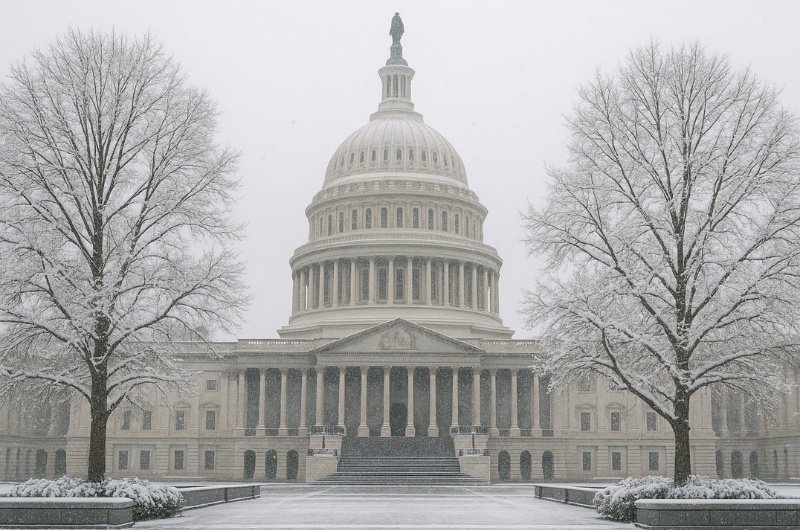
Congress is once again racing against the clock as another government funding deadline looms. Lawmakers have yet to finalize the full slate of appropriations bills, and without action, large parts of the federal government could grind to a halt. The political urgency has escalated as both chambers face mounting pressure to avoid a shutdown that would reverberate across the economy and disrupt essential public services. Earlier this year, the House passed a temporary funding measure to keep the government open, but long-running disagreements in the Senate have stalled progress. Deep divides remain over spending levels and policy riders, making even short-term compromise difficult. What started as routine budget negotiations has quickly transformed into one of the most consequential fiscal standoffs of the year. If Congress fails to reach a deal in time, the impacts would be immediate. Hundreds of thousands of federal workers could face furloughs or unpaid work. Non-essential agencies may pause or scale back operations, while delays could ripple through federal programs, grants, research institutions, and state-level services that depend on federal support. The uncertainty alone carries economic consequences, unsettling markets and eroding public trust in Washington’s ability to govern effectively. This latest standoff reflects a deeper, long-term problem: Congress has struggled for decades to pass all of its required spending bills on schedule. Instead, lawmakers have grown increasingly reliant on stopgap measures and last-minute negotiations, creating a cycle of recurring fiscal crises. The pattern underscores not only partisan polarization but also the structural fragility of the federal budgeting process itself. As the deadline approaches, the stakes couldn’t be clearer. Congress can strike a deal — even a temporary one — to keep the government running, or allow ideological battles to push the country into another disruptive shutdown. For millions of Americans who rely on federal services, the clock is ticking, and the consequences of inaction would be felt far beyond Capitol Hill.
TSA Introduces New $45 Identity Verification Option for Travelers Without REAL ID Starting February 1

Travelers who haven’t upgraded to a REAL ID will soon have a new fallback when passing through airport security. Beginning February 1, 2026, the Transportation Security Administration (TSA) will allow passengers without a REAL ID-compliant license to pay a $45 on-site identity verification fee, giving them a same-day option to complete airport screening rather than being turned away. The new fee is designed as a temporary bridge as the federal REAL ID mandate moves closer to full enforcement. Under the updated process, passengers who arrive without REAL ID will undergo a more extensive identity check performed directly by TSA officials. The agency says the $45 charge reflects the additional time, staffing, and verification steps required. While the new option allows travelers to proceed through security, TSA emphasized that it is not a substitute for obtaining the federally compliant ID ahead of the May 7, 2025 deadline. Millions of Americans are expected to travel in 2025 without a REAL ID-compliant license, raising concerns about delays and screening disruptions—especially during peak travel seasons. The new fee-based alternative could help ease congestion at security checkpoints, particularly at major airports where traveler volumes remain above pre-pandemic levels. For passengers, the change introduces both flexibility and cost. Those relying on the $45 verification process should expect longer screening times and additional documentation requirements. TSA still recommends that travelers update to a REAL ID as soon as possible to avoid the fee and streamline future airport security experiences. With the mandate less than four months away, the agency is preparing for a final nationwide push to educate travelers. The new fee option may help prevent last-minute travel disruptions, but TSA’s message remains clear: the easiest and least expensive route is still upgrading to REAL ID before enforcement begins.