


Paramount Ups the Pressure With $40B Guarantee in Bid for Warner Bros. Discovery
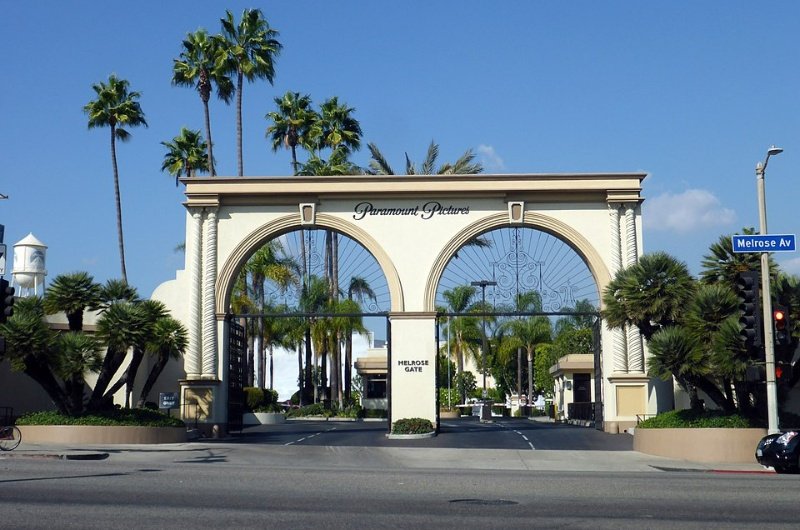
Paramount Skydance has escalated its aggressive push to acquire Warner Bros. Discovery, unveiling a dramatically revised offer that includes a $40.4 billion personal financial guarantee from Oracle co-founder Larry Ellison. The updated move is designed to reinforce the strength of Paramount’s financing and counter concerns raised by Warner Bros.’ board about the certainty of the deal. The company’s hostile bid seeks to acquire all outstanding shares of Warner Bros. Discovery at $30 per share in cash, valuing the studio at roughly $108.4 billion — significantly higher than the competing offer already accepted from Netflix. Paramount is positioning its bid as the stronger choice for shareholders, emphasizing its all-cash certainty and its intention to acquire the full company rather than a partial stake. A Takeover Battle Intensifies Warner Bros. Discovery’s board, however, has urged shareholders to reject the hostile offer, calling it risky and inferior to its existing merger agreement with Netflix. That deal combines Warner Bros.’ film and TV assets — including HBO and HBO Max — with Netflix’s global streaming infrastructure in a stock-and-cash transaction the board says offers greater stability. In a clear sign that Paramount intends to continue the fight, its revised bid also raises the reverse termination fee to match Netflix’s terms and extends its tender offer deadline into January, keeping the pressure on as the industry heads into the new year. The Stakes for Hollywood Whoever prevails in this battle will shape the future of the entertainment landscape. A Paramount-led takeover would unite two major studios under one roof, potentially altering the balance of power in film, television, and streaming. Both proposals will likely face intense regulatory scrutiny in the United States and abroad, and analysts expect a prolonged review process before any path forward becomes clear. For now, Paramount and Netflix are locked in a high-stakes competition — and Warner Bros. Discovery shareholders hold the next decisive move. ——————– Related: Netflix’s Epic Power Move to Acquire Warner Bros. Studios and HBO for $82 Billion Paramount Attempts to Outbid Netflix to Acquire Warner Bros. Discovery Warner Bros. Discovery Rejects Paramount’s $108.4 Billion Bid
Nvidia Prepares to Ship Advanced H200 AI Chips to China by February
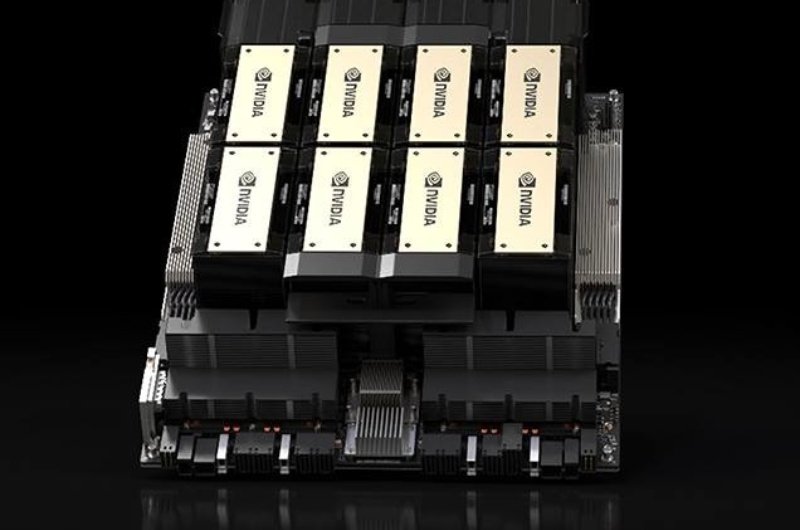
Nvidia is preparing to begin shipments of its next-generation H200 AI accelerators to China as early as mid-February, marking a significant development in the global competition for advanced semiconductor hardware. The move comes as companies across Asia search for high-performance chips that comply with U.S. export restrictions while still offering powerful AI training capabilities. The H200 — a successor to the industry-leading H100 — delivers faster memory, improved efficiency and higher throughput, making it one of the most sought-after chips for AI development. While the company cannot sell its most powerful models under the current U.S. export rules, the China-compliant H200 variant is designed to remain within regulatory limits while still giving Chinese firms a substantial performance lift. A Shift in the AI Hardware Balance Analysts say the carefully calibrated H200 rollout highlights the delicate balance Nvidia must strike: sustaining revenue from a major global market while remaining aligned with Washington’s national security constraints. The company has already developed multiple tailored chips for China following increasingly strict rules on AI hardware exports. The planned February timeline signals that Nvidia has completed technical and regulatory adjustments needed to resume broader sales in the region — a development being watched closely by both industry competitors and U.S. policymakers. The Wider Lens China remains one of the world’s largest consumers of AI-specific hardware, and even scaled-back chips tend to sell at high volumes. Nvidia’s ability to maintain presence in the market could influence everything from global supply chains to the pace of AI development in Asia. Meanwhile, U.S. officials continue monitoring how much computing power exported chips provide, arguing that limiting access to cutting-edge hardware is essential to prevent military-grade AI systems from being built abroad.
Suspect in Brown University Shooting Found Dead in New Hampshire Storage Facility

The suspect wanted in connection with the deadly shooting at Brown University — an attack that left two students dead and nine others wounded — was found dead late Thursday night inside a storage unit in Salem, New Hampshire, authorities confirmed. The discovery ends a multi-day manhunt that spanned multiple states following the Saturday afternoon massacre on campus. Police said an unexpected tip came from a homeless man who spotted a suspicious vehicle near campus in the hours after the Brown University shooting. He posted what he saw in a Reddit thread, and the details quickly caught investigators’ attention, ultimately helping police identify the suspect’s car and move the case forward. Officials identified the suspect as Claudio Manuel Neves Valente, 48, a former Brown University graduate student. Investigators say he died from an apparent self-inflicted gunshot wound. His body was discovered in a storage unit he rented, where authorities had tracked him after days of coordinated surveillance and investigative leads. Valente is also believed to be responsible for the fatal shooting of an MIT professor earlier in the week. According to investigators, the professor was found dead in his Brookline, Massachusetts home on December 15, and evidence recovered from both scenes suggested the same gunman. Police say there is no indication that anyone else was involved in either attack. The motive remains under investigation, and authorities are now turning their attention to reconstructing the suspect’s movements in the hours and days following both shootings. The Brown University attack unfolded inside the Barus & Holley engineering building, where students had gathered for a review session ahead of finals. Two students were killed and nine others were wounded before the shooter fled, prompting an urgent, widespread search that concluded with Thursday’s discovery. Officials are expected to release additional details as the investigation progresses.
Australia Launches Gun Buyback After Sydney Beach Attack

Australia’s prime minister Anthony Albanese has announced a sweeping national gun buyback program, marking the country’s most significant firearms reform effort in nearly three decades. The move comes after the deadly Bondi Beach attack earlier this month, where a gunman opened fire during a Hanukkah celebration, killing 15 people and reigniting urgent calls for stronger gun control. Albanese said the government will introduce legislation early next year to launch a coordinated national buyback that will target newly banned weapons, illegal firearms, and surplus guns already in circulation. Officials expect it to become the largest such effort since the landmark reforms that followed the 1996 Port Arthur massacre. The prime minister highlighted that Australia now has more than four million firearms in private hands — more than at the time of the Port Arthur attack — and warned that the nation cannot “assume past success guarantees future safety.” He called the buyback and new restrictions essential steps to reduce the risk of mass violence. In addition to the buyback, the government plans to tighten gun laws by capping how many firearms an individual can own, speeding up development of a national firearms register, and strengthening eligibility requirements for gun licenses. State and territory leaders have agreed to work with the federal government on rollout and enforcement details. The announcement reflects a growing national consensus that Australia must update its gun laws to meet modern threats. Full legislative details are expected to be released in the coming weeks.
Trump Announces $1,776 ‘Warrior Dividend’ Payout for U.S. Troops

President Donald Trump announced Wednesday night that roughly 1.45 million U.S. service members will receive a one-time bonus of $1,776 before Christmas — a symbolic nod to the nation’s founding year. The White House is calling the payment a “warrior dividend,” describing it as a holiday boost for active-duty troops and certain reservists. According to the administration, the payout will go to service members up to the rank of O-6, including those deployed overseas. Trump said the money would be funded through tariff revenues and a reallocation of existing Pentagon resources — a move that is already prompting questions from lawmakers about whether the executive branch can redirect those funds without congressional approval. The announcement comes at a politically charged moment, with Trump using the primetime address to argue that his economic agenda is strengthening the country and supporting those “who serve on the front lines of America’s defense.” The White House framed the bonus as both a thank-you to the military and a preview of broader policy plans heading into 2026. Critics, however, warn that redirecting money originally intended for military housing and infrastructure could create long-term challenges for a force already grappling with aging barracks, maintenance backlogs, and quality-of-life concerns. Military advocacy groups say they welcome the extra support for troops but worry about what might be sacrificed in exchange. For service members, the payments are expected to arrive as part of year-end processing — providing a symbolic and financial lift during the holiday season. Whether the “warrior dividend” becomes a recurring benefit or remains a one-time gesture will likely depend on political negotiations in the months ahead.
Blue Origin to Launch First Wheelchair User Into Space on Historic Flight
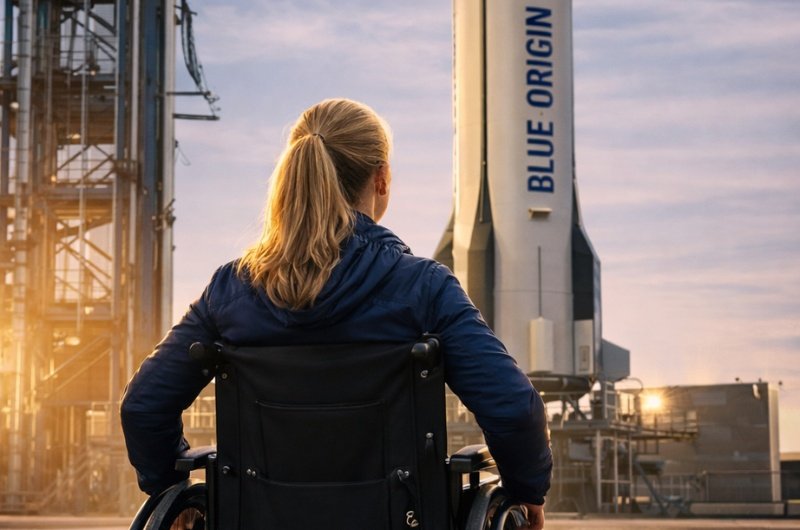
Blue Origin is preparing to make spaceflight history this week as aerospace engineer Michaela “Michi” Benthaus becomes the first person who uses a wheelchair to travel into space. The milestone mission is scheduled to lift off from West Texas aboard the company’s New Shepard vehicle, marking a major step toward accessible space tourism. Benthaus, an accomplished engineer with deep experience in spacecraft design, has used a wheelchair since a 2018 spinal cord injury. Despite the physical challenges that followed, she continued pushing forward in her field — and will now join a crew of six on a brief suborbital journey that lasts approximately ten minutes from launch to landing. Advertisement To accommodate her needs, Blue Origin designed several modifications to the cabin environment, including specialized seating and additional assistive harnessing to ensure she can safely experience weightlessness. Engineers involved with the flight say the adjustments were minor compared to the symbolic impact of the mission itself. Blue Origin calls the launch a “breakthrough moment” for the future of civilian space travel. Advocates for accessibility say it represents a powerful shift in who gets to participate in humanity’s next era of exploration. For decades, spaceflight was reserved for elite, physically screened astronauts; now, commercial space companies are pushing to broaden the definition of who belongs among the stars. If successful, Benthaus’ journey could pave the way for more inclusive participation in future missions — and expand the possibilities of space travel far beyond traditional limits.
Disney Strikes Three-Year AI Deal With OpenAI Covering Hundreds of Characters

Walt Disney has entered a three-year partnership with OpenAI that will allow more than 200 of its iconic characters to be used in AI-generated images and video, marking one of the most expansive licensing agreements yet between a major entertainment company and an artificial intelligence platform. Under the agreement, characters from across Disney’s portfolio — including Mickey Mouse, figures from Inside Out and Frozen, and Marvel superheroes — will be available for photo generation within ChatGPT and video creation through OpenAI’s Sora platform. The content will be created by users of those tools, rather than by Disney directly. Disney will retain the right to showcase select user-generated videos on Disney+, integrating AI-created content into its streaming ecosystem while maintaining control over how its intellectual property is presented. The arrangement positions Disney to benefit from the growing popularity of generative AI without surrendering ownership of its characters. The deal reflects a broader shift in how entertainment companies are approaching artificial intelligence, moving from defensive postures around copyright to structured partnerships that monetize access while setting boundaries. It also gives OpenAI one of the most recognizable character libraries ever licensed for generative use. The partnership was announced Dec. 11 and comes as studios across Hollywood explore how AI tools can coexist with traditional content creation, licensing models, and distribution platforms.
Venezuela Slams Trump’s Oil Blockade Order as ‘Warmongering Threat’

Venezuela sharply condemned the Trump administration on Tuesday after President Donald Trump announced an order targeting Venezuelan oil shipments, calling the move an “irrational military blockade” and a direct threat to the country’s sovereignty. In a statement released by the Venezuelan government, officials said the order amounts to “warmongering threats” aimed at choking off the nation’s primary source of income and destabilizing President Nicolás Maduro’s government. Venezuela reaffirmed its sovereignty over its natural resources and asserted its right to free navigation and trade in the Caribbean Sea. Trump announced the blockade directive in a post on his Truth Social platform but provided no details on how the order would be enforced. The statement did not clarify whether U.S. forces would intercept or seize oil tankers, as the administration has done in recent maritime actions involving sanctioned vessels. The announcement follows a significant U.S. military buildup in waters north of Venezuela. Over the past two weeks, the administration has deployed thousands of troops and nearly a dozen naval vessels to the region, including the world’s largest aircraft carrier, escalating tensions between Washington and Caracas. Venezuelan officials accused the United States of using military pressure to undermine the country’s economy, calling the blockade effort a “grotesque threat” designed to strip Venezuela of its wealth under the guise of sanctions enforcement.
Warner Bros. Discovery Rejects Paramount’s $108.4 Billion Bid
The board of Warner Bros. Discovery has formally rejected a $108.4 billion hostile takeover proposal from Paramount Skydance, telling shareholders that the offer lacks credible financial backing and carries unacceptable risk. In a statement released Wednesday, the board said Paramount’s all-cash bid of $30 per share failed to provide sufficient proof that financing was firmly secured. Directors cited concerns over the structure and transparency of the funding, saying it did not offer the certainty required for a transaction of this size. Warner Bros. Discovery reaffirmed its support for an existing merger agreement with Netflix, which values the company at $27.75 per share. The board described that deal as binding and fully financed, with clearer commitments that reduce execution and regulatory uncertainty. Shareholders were urged to reject the Paramount proposal ahead of a forthcoming vote. The rejection comes amid weakening momentum behind Paramount’s bid. A key financial backer recently withdrew from the effort, further undermining confidence in the offer and its ability to close. Paramount has not publicly responded to the board’s decision. Shares of Warner Bros. Discovery and Paramount both slipped following the announcement, while Netflix shares edged higher, reflecting investor reaction to the board’s endorsement of the streaming giant’s deal. ——————– Related: Netflix’s Epic Power Move to Acquire Warner Bros. Studios and HBO for $82 Billion Paramount Attempts to Outbid Netflix to Acquire Warner Bros. Discovery
Trump Expected to Sign Order Accelerating Cannabis Reclassification

President Donald Trump is expected to sign an executive order this week aimed at accelerating the federal reclassification of cannabis, a move that would mark a significant shift in U.S. drug policy and regulatory oversight. According to officials familiar with the matter, the order would direct federal agencies to expedite the review process under the Controlled Substances Act, where marijuana is currently listed in the most restrictive category. Reclassification would reduce federal barriers that have long limited medical research and complicated regulatory frameworks for cannabis-related activity. The administration has framed the move as a way to modernize federal policy, particularly in areas related to scientific study and medical use. Trump has said easing restrictions could unlock broader research opportunities that are currently constrained by marijuana’s classification under federal law. While the executive order would not legalize cannabis nationwide, it could reshape how federal agencies regulate the substance and how states align their own policies. A lower classification could also ease compliance burdens for researchers and clarify legal uncertainties that have affected businesses operating in states where cannabis is already legal. The White House has not released specific details on the timeline or scope of the reclassification process, but the expected order signals growing momentum toward a federal reassessment of marijuana policy after decades of unchanged classification.