

BREAKING NOW: Nick Reiner, Son of Hollywood Power Couple, to Face Double Murder Charges, Prosecutor Says
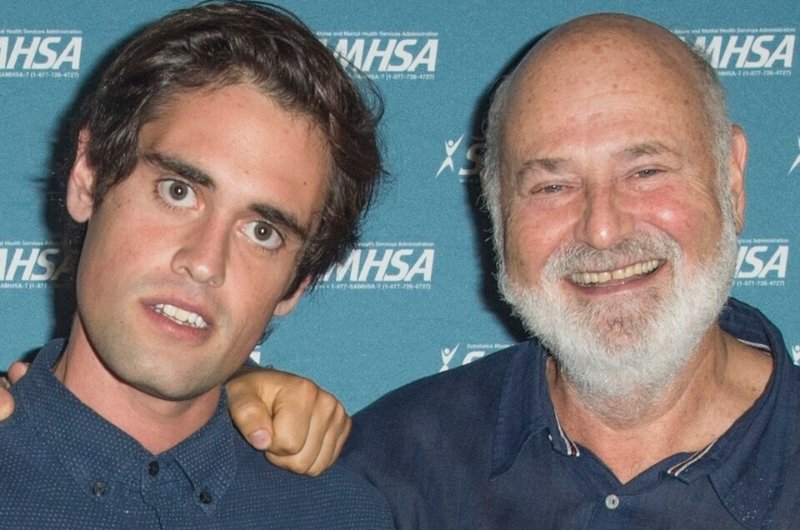
4:15 pm (EST) Los Angeles County prosecutors are expected to formally file double murder charges this afternoon against Nick Reiner, the 32-year-old son of acclaimed filmmaker Rob Reiner and producer Michele Singer Reiner, according to the district attorney’s office. District Attorney Nathan Hochman announced that the case will move forward with two counts of murder, along with a special allegation involving the use of a deadly weapon. Prosecutors allege that a knife was used in the killings, elevating the severity of the charges and potential penalties. The announcement marks a significant escalation in a case that has drawn national attention due to the prominence of the victims and the familial relationship at the center of the investigation. Authorities have not publicly disclosed a motive, and additional details surrounding the circumstances of the deaths remain limited. Nick Reiner remains in custody as the case advances. Prosecutors are expected to outline the charges in greater detail once filings are officially entered later today. ——————– Related: UPDATE: Hollywood Director Rob Reiner and Wife Found Dead at Los Angeles Home Michelle Obama Responds to Trump’s Remarks With a Personal Tribute to the Reiners
Michelle Obama Responds to Trump’s Remarks With a Personal Tribute to the Reiners

Former First Lady Michelle Obama revealed that she and former President Barack Obama were scheduled to spend time with longtime friends Rob and Michele Reiner on the very night the couple was found dead at their Los Angeles home. Speaking during a late-night television appearance, Obama described the moment as deeply shocking, noting that the news reached them just as plans were supposed to unfold. The Obamas had known the Reiners for many years, and the loss struck not only as a public tragedy but as a profoundly personal one. The filmmaker and his wife were found dead in what authorities are investigating as a double homicide. Their son has since been arrested in connection with the case, adding another devastating layer to an already grim situation. During the interview, Michelle Obama also addressed public commentary that followed the deaths, pushing back strongly against remarks made by President Trump, who suggested the Reiners were “deranged.” Obama rejected that characterization outright, offering a forceful defense of their character and values. “Let me just say this: unlike some people, Rob and Michele Reiner are some of the most decent, courageous people you ever want to know,” she said. “They are not deranged or crazed. What they have always been are passionate people. In a time when there’s not a lot of courage going on, they were the kind of people who were ready to put their actions behind what they cared about. And they cared about their family, they cared about this country, and they cared about fairness and equity. And that is the truth — I do know them.” Her remarks blended grief with a broader rebuke of political rhetoric, underscoring how moments of personal loss are increasingly pulled into the national political conversation. What might once have remained a private mourning instead became another flashpoint in a deeply polarized public discourse. ————– Related: UPDATE: Hollywood Director Rob Reiner and Wife Found Dead at Los Angeles Home
U.S. Unemployment Hits Four-Year High as Job Cuts Begin to Spread

The U.S. labor market is showing clear signs of strain, according to newly released employment data covering both October and November. The unusually combined report reflects months of disrupted data collection during a prolonged federal government shutdown, offering a rare, uneven snapshot of an economy losing momentum. Employers cut roughly 105,000 jobs in October, followed by a modest rebound of 64,000 jobs added in November. While the November gain helped offset part of the earlier decline, it fell short of expectations and underscored how fragile hiring has become as businesses pull back on expansion plans. The unemployment rate climbed to 4.6% in November, its highest level in four years, signaling that job losses and slower hiring are beginning to affect more workers. Economists caution that the figure may still understate the broader slowdown, as gaps in survey responses during the shutdown likely left some labor market stress uncounted. Job growth in November was concentrated in a narrow set of sectors, including healthcare, construction, and social assistance, while manufacturing employment continued to contract. At the same time, wage growth cooled sharply, with average hourly earnings rising only modestly — one of the slowest monthly increases in years — adding to concerns that workers are losing leverage after several years of strong gains. The delayed data release itself has become part of the story. The 43-day federal government shutdown disrupted labor surveys, furloughed hundreds of thousands of federal workers, and created unusual gaps in reporting, making it harder for policymakers and businesses to assess real-time economic conditions. Taken together, the figures reinforce a broader shift underway. Hiring momentum has slowed, businesses are growing more cautious, and wage pressures are easing — trends that align with the Federal Reserve’s decision to cut interest rates multiple times in 2025 as officials respond to cooling economic activity. While the labor market remains far from collapse, the latest data suggests the era of easy job gains has passed. What replaces it — a soft landing or a deeper slowdown — will likely hinge on whether hiring stabilizes in the months ahead or continues to weaken under mounting economic pressure.
ChatGPT 5.2 Brings AI Closer to the Way Top Professionals Think

OpenAI has released GPT-5.2, the latest update to ChatGPT, signaling a continued shift toward more reliable, work-ready artificial intelligence. The model was introduced on December 11, 2025, following an announcement earlier in the week, and is now being integrated directly into ChatGPT for users across multiple plans. The rollout began with paid subscribers, including Plus, Pro, Go, Business, and Enterprise users, with access for free users expanding gradually. Rather than introducing flashy new features, GPT-5.2 focuses on under-the-hood improvements designed to make the system more dependable in everyday and professional use. GPT-5.2 is available in three variants: Instant for fast, everyday interactions, Thinking for deeper reasoning and multi-step analysis, and Pro for advanced and sustained workloads. OpenAI says the model delivers stronger reasoning, improved long-context handling, and fewer factual errors compared with GPT-5.1, particularly in tasks that require careful analysis or research. Performance improvements are also evident in how the model behaves. GPT-5.2 responds more smoothly, with faster output and reduced lag, making interactions feel more fluid and responsive. More notably, OpenAI says the model demonstrates measurable gains on internal benchmarks tied to knowledge-work tasks, with performance approaching — and in some cases exceeding — human-level results in specific professional scenarios, including research, analysis, and structured reasoning. Without making sweeping claims, the benchmark results suggest a narrowing gap between human expertise and AI-assisted work — a shift with growing implications for how professionals research, decide, and create.
U.S. Military Strikes Three Suspected Drug Boats in Eastern Pacific, Killing Eight

The U.S. military has carried out targeted strikes on three vessels in the eastern Pacific Ocean linked to narcotics trafficking, killing eight people on board, according to defense officials. The operation marks the latest escalation in a campaign aimed at disrupting maritime smuggling routes used by transnational drug networks. According to U.S. military officials, the operation was not a seizure mission but a targeted military action. On December 15, Joint Task Force Southern Spear carried out “lethal kinetic strikes” against three vessels operated by designated terrorist organizations along known narco-trafficking routes in the Eastern Pacific. Intelligence officials said the ships were actively engaged in narcotics trafficking, and all three vessels were destroyed during the operation. Eight suspected narco-terrorists were killed across the three vessels. The Pentagon said it has not released additional operational details publicly due to the sensitive nature of the intelligence involved. The operation is part of a broader strategy that has intensified since early fall, as the administration expands the role of the U.S. military in combating the flow of illicit narcotics into the United States. Officials have framed the campaign as a necessary response to the fentanyl crisis, increasingly characterizing major drug trafficking organizations as national security threats rather than purely criminal enterprises. That framing has drawn growing scrutiny from lawmakers and legal experts, who are questioning the legal basis for using military force in operations traditionally handled through law enforcement and interdiction. Concerns have centered on whether such strikes comply with international humanitarian law, particularly when conducted far from declared combat zones and against individuals not formally designated as combatants. Pentagon leaders and senior administration officials are expected to brief members of Congress in the coming days, addressing questions about rules of engagement, oversight, and the scope of authority underpinning the campaign. Lawmakers from both parties have signaled a desire for clearer boundaries as the operations expand in frequency and geographic reach. While officials argue the strikes are weakening smuggling networks, the campaign has raised broader questions about precedent and long-term consequences. As military force becomes a more prominent tool in the fight against drug trafficking, the debate is shifting beyond tactical success to whether the approach reshapes U.S. policy in ways that could carry lasting legal and geopolitical implications.
Tesla Shares Surge on Confirmation of Driverless Robotaxi Testing

Tesla shares jumped sharply Monday after CEO Elon Musk confirmed the company is testing fully driverless robotaxis on public roads without onboard safety monitors, a development that reignited investor optimism around Tesla’s long-term autonomous vehicle ambitions. The stock climbed to its highest level in nearly a year, reflecting renewed confidence among traders and long-term shareholders who see autonomous technology as a key driver of Tesla’s future valuation. The surge pushed the company’s market capitalization higher as investors reacted to what they viewed as tangible progress toward full autonomy. Tesla’s robotaxi initiative is central to Musk’s broader vision of transforming the company beyond electric vehicle manufacturing and into a leader in autonomous transportation and robotics. Earlier testing phases included human safety monitors, making the confirmation of unsupervised testing a significant milestone in the program’s evolution. Still, analysts remain divided. While advances in autonomy continue to fuel bullish expectations, concerns around electric vehicle demand, regulatory hurdles, and execution risks persist. Monday’s rally underscores how quickly market sentiment can shift when Tesla signals progress on its most closely watched technologies.
UPDATE: Hollywood Director Rob Reiner and Wife Found Dead at Los Angeles Home
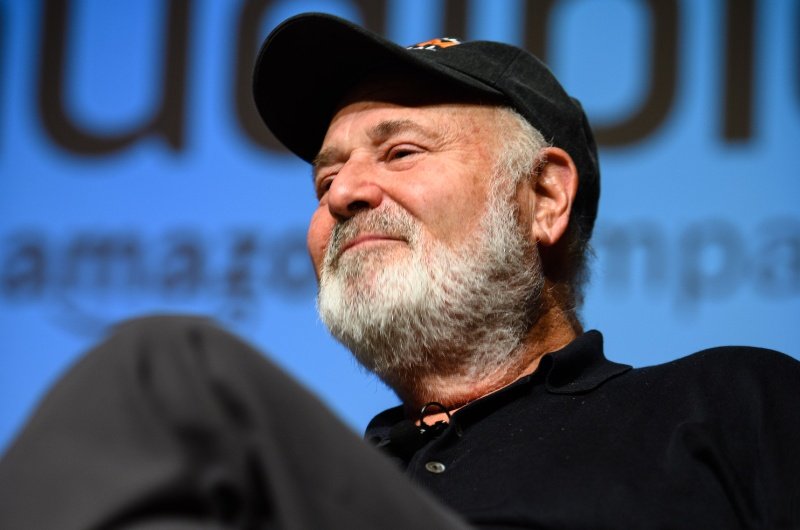
——————————– 10:51 a.m. (Eastern) UPDATE: Reiners’ Son Arrested in Stabbing Deaths of Director and Wife Authorities have arrested the adult son of actor and director Rob Reiner following the deaths of Reiner and his wife, who were found stabbed at their Los Angeles home over the weekend. Law enforcement officials said the suspect was taken into custody without incident and is expected to face criminal charges. Investigators said there is no ongoing threat to the public as the case remains under active investigation. ——————————– Actor and director Rob Reiner and his wife were found dead Sunday at their Los Angeles home, according to reports, prompting an active investigation by local authorities. Emergency responders were called to the residence after a welfare check request. Upon arrival, officers discovered two deceased individuals inside the home. Officials have not released further details about the circumstances surrounding the deaths. Authorities said there is no indication of an immediate threat to the public. The investigation remains ongoing as detectives work to determine the events leading up to the discovery. Reiner, a prominent figure in American film and television, is best known for directing acclaimed works including The Princess Bride, When Harry Met Sally…, and This Is Spinal Tap, as well as his early acting role on All in the Family. No official statement has been released by the family.
Mass Shooting at Bondi Beach Kills at Least 15 in Sydney

At least 15 people were killed and dozens more wounded in a mass shooting Sunday evening at Sydney’s Bondi Beach, where hundreds had gathered for a Hanukkah celebration near the iconic shoreline, Australian authorities said. Police said two armed men opened fire on attendees in a park area near the beach, turning what had been a festive community gathering into a scene of panic and violence. Officers responded quickly, killing one suspect at the scene and taking the second into custody in critical condition. Authorities later classified the attack as an act of terrorism targeting the Jewish community during the first day of the holiday. Investigators identified the attackers as a father and his adult son, who officials said acted alone and were not part of a broader terror network. Authorities said they expect to bring criminal charges against the surviving suspect once his medical condition allows. At least 38 people remain hospitalized, with victims ranging in age from 10 to 87. Emergency responders described chaotic scenes as families and children fled amid gunfire. Authorities said the older suspect, a 50-year-old man, was shot and killed by police. His 24-year-old son remains hospitalized in a coma. The father had lived in Australia for decades after arriving on a student visa in the late 1990s and legally possessed a firearm through a recreational hunting license. Neither suspect had a known criminal history, though the younger man had previously come to the attention of police several years ago. Intelligence officials said no evidence of radicalization had been found at that time. Police also confirmed that two improvised explosive devices were discovered at the scene and safely disabled. A bystander who intervened and disarmed one of the attackers was seriously injured and remains hospitalized. Officials praised his actions, saying his bravery likely saved lives. National leaders condemned the attack and said discussions are underway about strengthening Australia’s gun laws, including potential limits on firearm ownership and tighter licensing requirements. Authorities said the investigation remains ongoing and that additional details will be released as they become available.
Home Price & Mortgage Outlook for 2026

As Americans head into 2026, housing market forecasts point toward a year of gradual stabilization rather than dramatic shifts. After years of sharply rising prices and elevated borrowing costs, analysts now expect slower home price growth, modestly lower mortgage rates, and incremental improvements in affordability for prospective buyers. National projections suggest home prices will continue rising next year, but at a much slower pace than in recent years. Instead of double-digit gains, growth is expected to flatten in many regions, signaling a cooling market that may ease pressure on buyers who have been priced out. Mortgage rates, while still elevated by historical standards, are expected to drift lower in 2026. Analysts anticipate rates settling into a more manageable range, offering modest relief for borrowers without returning to the ultra-low levels seen during the pandemic era. Affordability is likely to improve gradually rather than dramatically. Slower price growth combined with steady wage gains could help stabilize monthly housing costs, though high interest rates and limited inventory will continue to challenge many households. Sales activity is expected to remain mixed. Some markets may see renewed buyer interest as conditions improve slightly, while others—particularly those that overheated in recent years—could experience price corrections as inventory builds and demand softens. Overall, 2026 is shaping up to be a transitional year for U.S. housing. While the market is unlikely to swing decisively in favor of buyers, the era of runaway price growth appears to be fading, replaced by a more balanced landscape where patience and regional strategy matter more than timing alone.
IRS Staffing Shortages Could Make the 2026 Tax Season a Rough One

As Americans prepare for the upcoming tax season, growing concerns are emerging over the Internal Revenue Service’s ability to handle the workload. Deep staffing reductions across the agency, including reports that some departments are operating with as little as one-third of their normal workforce, are raising red flags about delays and service disruptions in 2026. The IRS has lost a significant number of employees over the past year through retirements, buyouts, and budget-driven cuts. While workforce reductions have affected the agency broadly, internal operations tied to taxpayer assistance, return processing, and backend support have been hit particularly hard. The timing is notable, coming just as tax filings are expected to rise and rules continue to grow more complex. Fewer staff members could translate into longer wait times for taxpayers seeking help, slower processing of returns, and delays in issuing refunds. Call centers may struggle to keep up with demand, and taxpayers facing issues or errors could find it harder to reach a live representative during critical filing windows. The strain may also extend beyond customer service. Reduced staffing could limit the agency’s ability to conduct audits, resolve disputes, and manage compliance efforts efficiently, potentially affecting both revenue collection and enforcement consistency. For taxpayers, the message heading into 2026 is one of caution and preparation. Filing early, double-checking returns, and avoiding last-minute submissions may become more important than ever as the IRS navigates a tax season with fewer resources and rising demands.