

DHS Agents Visit D.C. Restaurants Demanding I-9 Records, Stirring Fear Among Workers

(Updated May 9, 2025) A surprise wave of federal immigration enforcement swept through Washington, D.C., this week, as agents from the Department of Homeland Security (DHS) visited over 100 local restaurants in a single day. The unannounced inspections, which began Tuesday morning, left restaurant owners, employees, and patrons stunned — and raised new concerns about the Trump administration’s aggressive immigration tactics. Among the establishments visited were popular eateries like Chef Geoff’s, Millie’s, Pupatella, and Ghostburger. In each case, agents requested I-9 employment verification forms but made no arrests. Some restaurants were told agents would return within days to collect additional documentation. The visits were part of a broader “worksite enforcement” initiative, according to DHS. In a statement, the agency said the operation was designed to ensure businesses comply with U.S. immigration and employment laws. However, many restaurant owners described the visits as disruptive and intimidating. Bo Blair, owner of Millie’s in Spring Valley, said eight agents entered his restaurant through multiple doors just as it was opening for lunch. “They asked to speak to employees,” Blair said. “We told them no.” The agents then requested employee records, which were not kept on-site. The sudden inspections have had immediate consequences Some employees have not returned to work, citing fear and uncertainty. “Two people didn’t come into work today,” Blair noted. “We’re concerned with people being too scared to come into work.” D.C. Mayor Muriel Bowser expressed strong disapproval of the raids “I have heard those reports. I’ve been getting them all morning. I am disturbed by them,” Bowser said. “It appears as though ICE is at restaurants, or even at neighborhoods, and it doesn’t look like they’re targeting criminals, and it does look like they’re disrupting.” The Restaurant Association of Metropolitan Washington also criticized the approach Shawn Townsend, the association’s president, stated, “There is a sense of fear. It’s alarming, it’s concerning. Immigrants make up a large amount of workers in our restaurants in the district. I think there could have been a better way to get the information that these ICE agents, from what I’m told, were looking for.” This enforcement action is part of the Trump administration’s intensified efforts to bolster border security and enforcement within the U.S. These operations have included visible warnings of future raids and community apprehension that led to canceled Cinco de Mayo celebrations. As the city grapples with the aftermath, many are left questioning the broader implications. The raids have not only disrupted business operations but have also instilled fear within immigrant communities, highlighting the human cost of such enforcement strategies.
Trump and Starmer Sign US-UK Trade Deal — But Call It ‘Just the Beginning’

A new trade chapter may be opening — but no one’s calling it a final draft. Today, President Donald Trump and UK Prime Minister Keir Starmer signed a preliminary US-UK trade agreement that both sides hailed as a step toward stronger economic ties. The deal, unveiled in a joint press conference, includes tariff reductions on key goods such as steel, aluminum, and automobiles — a notable development amid years of fluctuating post-Brexit trade relations. While the White House framed the deal as a “historic milestone,” other U.S. officials were quick to temper expectations, calling the agreement “the end of the beginning” rather than a sweeping resolution. Key details — including future negotiations on digital trade, agriculture, and financial services — remain unresolved. What’s in the deal? Tariffs on U.S.-made steel and cars entering the UK will be eased British-made aluminum and EV components will receive expanded access to U.S. markets A commitment to further negotiations aimed at reducing red tape for small and mid-sized exporters What’s not in the deal? No movement yet on contentious agricultural standards No clarity on data privacy or tech-sector regulation No full free-trade agreement — at least not yet Why now? Both leaders face intense domestic pressure: Trump is seeking to boost his economic credentials ahead of a likely re-election bid, while Starmer is aiming to stabilize the UK’s trade posture post-Brexit and amid sluggish growth. Critics on both sides say the deal is heavy on symbolism and light on substance. Still, it marks a rare moment of international cooperation in a polarized political year. What comes next? A second round of talks is expected in the fall, with negotiators hoping to broaden the agreement into a more comprehensive economic partnership. For now, though, Trump and Starmer are content to call it progress — and signal that the “special relationship” still has room to grow.
Google Unveils Gemini 2.5 Pro: A Leap Toward Human-Like Reasoning in AI

Google is back in the AI spotlight — and this time, it’s not just playing catch-up. Tuesday, the tech giant unveiled Gemini 2.5 Pro, the latest iteration of its generative AI model, and early testers are calling it the most human-like yet. Trained on multimodal data and built to handle complex reasoning across text, image, and code, Gemini 2.5 Pro is Google’s most aggressive answer to OpenAI’s GPT-4 and Anthropic’s Claude. What’s different this time? Context — and a lot more of it. Google says Gemini 2.5 can retain and reference significantly more information across sessions. That means smoother conversations, better task completion, and the ability to understand your intent even if you don’t spell it out. This upgrade also packs serious capabilities in code writing, advanced math, and image analysis — a trifecta designed to appeal to developers, enterprises, and everyday users alike. But beyond specs, Gemini 2.5 Pro is Google’s chance to reclaim thought leadership in the AI arms race.After a shaky rollout of Bard and delays in integrating Gemini into its ecosystem, Google has a lot riding on this version. The release comes just ahead of Google I/O 2025, where the company is expected to announce full Gemini integration across Workspace, Android, and YouTube. “We want to build AI that’s helpful and responsible,” said one Google spokesperson, emphasizing the model’s improved safety guardrails and fact-checking features. But critics still point to transparency issues — especially when it comes to how Gemini is trained and how user data may be processed in future enterprise applications. So, is Gemini 2.5 Pro the model to watch? Possibly. But one thing is clear: AI models are no longer just answering questions — they’re thinking through them. And in a world flooded with bots, Gemini 2.5 Pro might just be Google’s smartest move yet. The Author
Social Security Could Run Short by 2035 — What It Means for Younger Americans

If you’re under 50, there’s a decent chance your Social Security check may look very different than your parents’. According to the latest annual report from the Social Security Board of Trustees, the program’s trust fund could run dry by 2035 — just ten years from now. While this doesn’t mean Social Security will disappear altogether, it does mean future benefits could be reduced by up to 20% if no reforms are made. Here’s what that means in plain terms: You may still get a monthly payment — just a smaller one. And if you’re under 40, the odds of needing to rely on personal retirement savings, side income, or private investments are higher than ever. The looming shortfall is tied to a combination of factors: An aging population with more retirees drawing benefits Fewer workers per retiree contributing to the system A political system that’s been punting hard decisions down the road for decades So what happens if nothing changes? Starting in 2035, the program would have enough income from payroll taxes to pay about 80% of scheduled benefits. That could mean smaller checks, delayed retirements, and bigger pressure on Gen Z and millennials — generations already juggling inflation, student debt, and housing instability. Lawmakers have proposed fixes, but none have passed. Ideas range from raising the retirement age and increasing payroll taxes to adjusting benefit formulas or introducing private investment options. But in an election year, bold moves on Social Security tend to be more political risk than reward. For now, the message is clear: younger Americans can’t count on Social Security alone. Whether it’s through employer plans, side hustles, or long-term investing, the retirement strategy for future generations may require a very different playbook. The Author
Cartel Leader Among 16 Arrested in Historic U.S. Fentanyl Bust

In what authorities are calling a landmark moment in the fight against fentanyl trafficking, U.S. federal agents have arrested 16 individuals — including a high-ranking cartel boss — tied to a sprawling drug ring that funneled the deadly opioid across the U.S. The operation, which spanned multiple states, culminated in a coordinated sweep earlier this week. At the heart of the arrests: a suspected leader of the notorious Beltrán-Leyva cartel, a criminal organization long linked to drug smuggling, violence, and transnational crime. According to officials, the group was using a network of couriers and stash houses to move massive quantities of fentanyl-laced pills and powder into American communities. Several of those arrested had direct ties to Mexico and were allegedly coordinating shipments with cartel operators south of the border. Seized during the bust were more than 100,000 pills, multiple firearms, and large sums of cash — reinforcing concerns over how deeply entrenched fentanyl trafficking has become in the U.S. criminal underworld. Authorities also uncovered encrypted messaging systems the group reportedly used to avoid detection. “This is one of the most significant takedowns in recent history involving fentanyl trafficking and cartel leadership,” said one official close to the investigation. “We’re not just talking about street-level dealers. We’re talking about people at the top of the chain.” The arrests arrive at a time when fentanyl remains the leading cause of overdose deaths in the U.S., with synthetic opioids responsible for nearly 75,000 deaths in 2023 alone. Law enforcement officials say this operation not only disrupts a major supply channel but sends a strong signal to other trafficking networks. Despite the win, agencies caution that the fight is far from over. “This isn’t the end. But it’s a critical blow to one of the most dangerous sources of fentanyl in America,” an agent said.
Netflix’s Trillion-Dollar Vision: From Streaming Giant to Global Entertainment Empire
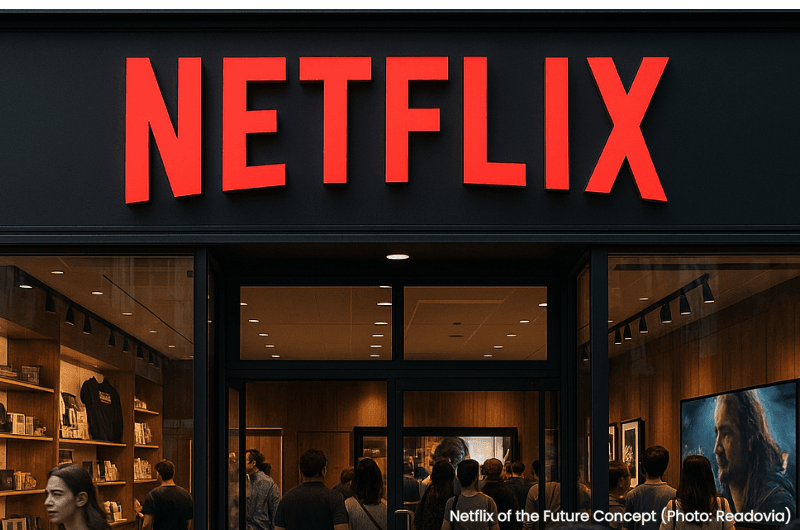
Netflix is stepping into a new era — one that stretches far beyond your living room screen. Co-CEO Ted Sarandos just unveiled an ambitious growth strategy aimed at turning the world’s biggest streaming platform into a trillion-dollar entertainment empire. And investors are all in. The company’s stock surged this week after Sarandos laid out a bold plan to grow Netflix’s reach — not just by adding subscribers, but by turning shows into real-world experiences, expanding into live events, pushing further into advertising, and even exploring new content formats like video podcasts. The Plan: From Streaming to Physical Spaces, Broadway, and Beyond Speaking at the Semafor World Economy Summit, Sarandos revealed that in Netflix’s most mature markets, the company still only captures about 5% of total consumer spending — and just 10% of TV watching time. Translation? There’s still massive room to grow. One of the most talked-about announcements is the upcoming launch of Netflix House, immersive retail and dining venues opening in Dallas and Philadelphia later this year. These locations will bring hit shows like Stranger Things and Bridgerton to life, offering fans a chance to literally step inside the stories they love. Netflix is also making its theatrical debut with Stranger Things: The First Shadow on Broadway, a move that signals just how serious the company is about expanding its creative footprint. Wall Street Reacts: Netflix Stock Surges The company’s vision is already paying off. Netflix shares soared this week as analysts and investors responded positively to the strategy shift. The company expects to bring in between $43.5 and $44.5 billion in revenue this year, with an operating margin of 29%. With that kind of momentum, Wall Street is eyeing the possibility of Netflix becoming a trillion-dollar brand in the not-so-distant future. Big Goals: More Subscribers, More Ads, and New Content Formats Netflix currently boasts over 300 million global subscribers, but Sarandos and Co-CEO Greg Peters have their sights set on 410 million by 2030. A big part of that growth will come from international markets where broadband access is expanding rapidly. They’re also betting big on advertising, aiming to generate up to $9 billion annually from ads by 2030. And they’re not stopping there — the company is exploring video podcasts, a move that could pull in more creators and expand its content universe. What It All Means Netflix isn’t just doubling down on streaming — it’s transforming into something bigger: a global entertainment ecosystem. From Broadway to interactive fan spaces and advertising to podcasts, the company is rewriting what a modern media powerhouse looks like. And judging by the latest stock spike, investors are ready to go along for the ride. The Author
Visa and Mastercard Launch AI Shopping Agents, Ushering In a New Era of E-Commerce

Visa and Mastercard are stepping boldly into the future with the debut of AI-powered shopping platforms designed to handle purchases on behalf of consumers — turning routine transactions into intelligent, automated experiences. Visa’s Intelligent Commerce: Letting AI Shop on Your Behalf Visa’s new “Intelligent Commerce” platform empowers users to delegate everyday shopping tasks to AI agents. Whether it’s ordering groceries, booking a trip, or reordering household staples, these agents can search, compare, and even purchase items — all based on your preset preferences and spending limits. To keep transactions secure, Visa uses tokenization and payment passkeys, adding a strong layer of protection while ensuring purchases remain frictionless. Users retain control, with AI agents handling the busywork but never bypassing final approval when needed. Visa has partnered with major players like Microsoft, Samsung, Stripe, and several leading AI labs to ensure the technology integrates seamlessly across platforms. Mastercard’s Agent Pay: Built for the Age of Conversational Commerce Mastercard is taking a different but equally ambitious approach. Its “Agent Pay” service brings payment capabilities directly into AI-driven chat platforms. Picture this: You’re chatting with an AI about new running shoes, and it not only recommends a pair — it can buy them for you on the spot. By embedding payment tools into the conversation itself, Mastercard is turning recommendations into real-time transactions — reducing friction and reimagining what online shopping can feel like. Where E-Commerce Is Headed Both companies are betting that tomorrow’s shoppers will expect faster, smarter, and more personalized digital experiences — with AI agents not just helping, but actively shopping on their behalf. From impulse buys to daily essentials, AI-driven commerce is no longer a futuristic concept — it’s happening now, and it’s changing the way we interact with brands, platforms, and purchases.
Surviving the Next Blackout: How to Prepare for Power Outages Before They Strike

A blackout can happen anywhere, anytime, without notice — and when it happens, no one knows how long they may be without power. But when the lights go out, panic shouldn’t be your first reaction. Monday’s sweeping blackout across Spain and Portugal — now referred to as “Dark Monday” — was a powerful reminder that modern life can be brought to a halt in seconds. And while we can’t predict every outage, we can prepare for them. Here’s a simple, Readovia-approved checklist to help you stay safe and steady for at least 3 days without power. Add more items and make it your own. Power Outage Preparedness Checklist 1. Light Sources Flashlights with extra batteries Battery-powered lanterns (safer than candles) Solar-powered lights or hand-crank flashlights Candles (if you are including lighters, please store safely away from children) 2. Food & Water Canned goods (and a manual can opener) Dry snacks (granola bars, crackers, trail mix) At least 1 gallon of water per person per day (aim for 3-day supply) 3. Communication Fully charged power banks for phones Battery-powered emergency radio (with extra batteries) Paper list of emergency contacts 4. Heating & Cooling Blankets and warm clothing (for cold-weather outages) Battery-operated fans or cooling towels (for hot climates) 5. First Aid & Medications Stocked first aid kit At least 3-day supply of prescription meds Personal hygiene items (wet wipes, sanitizer, toothpaste, etc.) 6. Cash on Hand Cash in small bills — ATMs and card readers may be down during blackouts 7. Home Readiness Know how to manually open your garage door Surge protectors or unplugging devices to avoid damage Backup power source, like a generator (used safely outdoors) 8. Fuel Keep your gas tank at least half full. Bonus Tip: Have a blackout box, bag, or backpack Designate one bin or bag for essentials — flashlight, batteries, radio, etc. — and store it where it’s easy to reach in the dark. The Author
VA Halts Key Mortgage Relief Program, Leaving Thousands of Veterans at Risk of Foreclosure

The U.S. Department of Veterans Affairs (VA) has officially ended its VA Servicing Purchase (VASP) program as of May 1, 2025. This initiative had provided critical mortgage relief to thousands of veterans, helping them avoid foreclosure and maintain homeownership. Its sudden end now leaves tens of thousands in financial limbo with limited alternatives. VASP was launched to fill a gap in mortgage relief options for veterans who had fallen behind on their VA-backed home loans. The program allowed the VA to purchase delinquent mortgages and restructure them into low-interest loans — often the only affordable path forward, especially with today’s mortgage rates hovering near 7%. Housing advocates and veterans’ organizations are sounding the alarm. Without VASP, many veterans and their families could face the devastating possibility of losing their homes. Calls are growing louder for Congress to step in with a legislative replacement. Meanwhile, the VA has stopped accepting new applicants and cited the lack of congressional authority as the reason for ending the program. The timing couldn’t be worse. Nearly 90,000 VA loans are seriously delinquent, and about 33,000 are already in the foreclosure process. For many, VASP was a last line of defense. The program’s termination follows a previous wave of mortgage relief rollbacks that left thousands of veterans scrambling. After public outcry and a temporary foreclosure pause, VASP was introduced to stem the crisis — but now it too is gone. Veterans like Kevin Conlon, who completed two combat tours in Iraq and has owned his upstate New York home for over a decade, now face an uncertain future. “Without VASP or immediate access to something similar, many of us will be forced to sell or lose our homes,” he said. With no clear replacement yet in place, the pressure is on lawmakers to act. For now, thousands of veterans — many of whom served the country faithfully — are left hoping for help that hasn’t arrived.
Gemini’s Ascent: Can Google’s Smart AI Crack the Top Tier?

Alright, let’s talk AI. Google’s got their contender, Gemini, and it’s reportedly racking up users faster than you can say “neural network.” But in a crowded field of digital brains, is Gemini just the enthusiastic newcomer, or does it have the smarts to really challenge the reigning AI heavyweights? We’ll dive into Gemini’s growth spurt and see if it’s on a trajectory to truly compete at the top. So, what’s fueling Gemini’s rising popularity? Is it the seamless integration with Google’s sprawling ecosystem – kind of like that comfy pair of sneakers that just works with everything? Or maybe its unique bag of AI tricks is finally resonating with users. We’ll analyze where this growth is happening and how it stacks up against the adoption rates of its well-established rivals. Spoiler alert: the AI leaderboard is a tough nut to crack. The AI Titans Gemini is Eyeing Think of the current AI landscape as a tech Olympics. A few players have already snagged the gold medals, boasting massive user bases, deeply ingrained integrations, and the kind of brand recognition that makes them practically household names in the digital realm. We’ll examine what gives these frontrunners their edge and the considerable ground Gemini needs to cover. Gemini’s Strengths: The “Aha!” Moments (and Potential “Hmm…” Areas) Every AI has its signature moves. Gemini’s got some impressive capabilities, like its knack for juggling text, images, and even video – a true multimodal maestro. Plus, its cozy relationship with the Googleverse is a definite plus. But are there areas where it’s still in AI training wheels compared to the seasoned pros? We’ll offer a balanced perspective on Gemini’s current toolkit. Google’s Strategy Playbook Google isn’t known for sitting on the sidelines. Their strategy to boost Gemini’s profile likely involves deeper integration across their suite of products (imagine Gemini subtly enhancing your Google Docs… or maybe even your search for that perfect pizza recipe). They’re also probably forging partnerships and definitely pouring resources into making Gemini even smarter. We’ll dissect their game plan. The Developer Factor: Building the Future of AI For an AI to truly flourish, it needs a vibrant community of developers creating innovative applications. How does Gemini’s developer support stack up against the competition? A thriving ecosystem can be the secret sauce for long-term success. Think of it as providing the best LEGO bricks for the most creative builders. The Crystal Ball: Gemini’s Chances of Reaching the Summit So, the million-dollar question: can Gemini actually elbow its way to the top of the AI hierarchy? It’s a marathon, not a sprint. We’ll speculate on the key milestones and breakthroughs that could propel Google’s AI to the forefront. The AI landscape is constantly shifting, so buckle up. What the Smart Folks Are Saying To get a well-rounded view, we’ll likely tap into the insights of AI analysts and industry experts. Their perspectives can offer a valuable reality check and shed light on Gemini’s true potential. The Takeaway Gemini’s growing user base is a clear signal that Google is serious about the AI race. But to truly contend with the leaders, they’ll need to leverage Gemini’s unique strengths, strategically address any shortcomings, and continue to innovate at a rapid pace. The quest for AI supremacy is on, and Gemini is definitely a contender to watch.