


Trump Wins Appeal, Temporarily Keeps National Guard in L.A. After Legal Showdown with Gov. Newsom

In a dramatic legal twist, former President Donald Trump scored a temporary victory Friday morning when a federal appeals court ruled in his favor, allowing National Guard troops to remain deployed in Los Angeles despite a prior court order mandating their removal. The ruling comes just days after California Governor Gavin Newsom successfully sued the Trump administration, arguing the deployment was unconstitutional and escalated tensions during ongoing protests. Newsom’s win in federal court on Thursday was seen as a swift and significant check on federal authority, with U.S. District Judge Carla Henley ordering the immediate withdrawal of all National Guard units from Los Angeles by midnight. The ruling was hailed by civil rights groups and state officials, who argued that the presence of troops was inflaming unrest and undermining local leadership. But the victory was short-lived. Early Friday, a three-judge panel on the 9th Circuit Court of Appeals issued an emergency stay, effectively pausing the lower court’s order and permitting the continued presence of National Guard troops—at least for now. The panel scheduled a hearing for Tuesday, signaling that a more permanent ruling is forthcoming. The legal tug-of-war sets up a high-stakes confrontation between state and federal authority as tensions mount across Southern California. With protests still underway and political tempers flaring, Tuesday’s hearing could shape the limits of federal deployment powers during moments of domestic unrest.
Too Real? AI-Generated TV Ads Are Fooling Viewers — and Threatening the Ad Industry

AI-generated TV commercials are becoming so realistic, viewers can’t tell they’re synthetic. Discover how this tech is reshaping advertising — and why the industry is on edge. AI-generated commercials are no longer just test runs buried on YouTube — they’re hitting the airwaves, and most viewers can’t even tell. From voiceovers to video production, advertisers are quietly rolling out fully AI-generated TV ads using tools like Runway, Synthesia, ElevenLabs, and Sora. The results? Slick, cost-effective spots that blur the line between human creativity and machine output — and send shivers through the traditional ad world. Some of these commercials are shockingly convincing. AI avatars speak with emotional nuance. Virtual actors blink, gesture, and smile naturally. Entire 30-second spots — voice, video, and copy — can now be generated in a matter of hours. What once required full production crews, set rentals, casting calls, and costly edits can now be executed from a laptop. The advertising industry is watching all of this with a mix of awe and dread. Agencies worry they’ll lose major contracts. Voice actors and video editors see automation closing in on their livelihoods. SAG-AFTRA has already raised concerns about the unauthorized use of performers’ voices and likenesses — particularly as deepfake realism improves. There’s also growing fear that synthetic ads could be used to manipulate, mislead, or simply saturate audiences with low-effort, high-volume content. Brands, of course, are thrilled. AI lets them churn out dozens of ad variations for regional audiences, languages, or demographics — all without reshoots. In a competitive landscape where speed and personalization are king, AI offers a seductive edge. A marketing exec at one consumer goods company recently told AdWeek off the record: “If we can make six ad spots in a day for the cost of one? That’s a no-brainer.” But as synthetic ads flood digital and broadcast media, questions loom. Should viewers be told when an ad is AI-generated? Should regulations step in to label synthetic content? And how far can this technology go before it erodes trust in what we see and hear? For now, the industry is racing ahead. One thing is clear: the era of the fully human-made TV commercial is officially over. The Author
Protein Overload? What Your Body Actually Needs vs. What the Hype Sells

From protein chips and high-protein yogurt to shakes, bars, and powders, America is deep in a protein boom. It’s being marketed as the ultimate health hack — promising to build muscle, boost metabolism, and keep you full longer. But with protein-packed versions of everything lining grocery shelves, a question emerges: how much is too much? The Protein Push There’s no denying protein is essential. It supports muscle repair, hormone production, immune function, and energy. Fitness culture, especially, has pushed high-protein diets as the gold standard — and brands have responded, turning nearly every snack into a muscle-friendly option. But the average adult in the U.S. already gets more than enough protein through regular meals. For most sedentary adults, the Recommended Dietary Allowance (RDA) is about 0.8 grams per kilogram of body weight — that’s roughly 46 grams a day for women and 56 grams for men. Even active individuals don’t need to double those numbers unless they’re training heavily or bodybuilding. Is There Such a Thing as Too Much? Yes. While your body can handle moderate surpluses, excessive protein intake over time may strain the kidneys, especially in people with underlying health issues. High-protein diets can also crowd out other important nutrients — especially fiber — if they rely heavily on animal sources and supplements. For example, chasing 100+ grams of protein a day through shakes and bars might seem “fitfluencer-approved,” but it’s not necessary for most people. And if it comes at the expense of balanced nutrition, the long-term benefits start to shrink. Final Thought Protein is important — but it’s not a miracle macronutrient. Most people meet their daily needs with regular meals that include a mix of meat, dairy, legumes, eggs, grains, and vegetables. Instead of aiming for “as much as possible,” aim for enough — consistently, and from a variety of sources.
Trump Ends California EV Mandate, Plans Windmill Ban — Calls It “One of the Greatest Scams”

During a trio of bill signings at the White House today, President Trump laid out a bold shift in auto and energy policy. One of the new laws strikes down California’s mandate requiring all new cars sold in the state to be zero-emission by 2035. Another targets the renewable energy sector, with Trump announcing a plan to stop new wind turbines projects. He called California’s electric vehicle rule “outrageous,” arguing that no single state should control what kind of cars Americans are allowed to drive. Trump claimed the mandate forced automakers to juggle two different sets of rules, creating unnecessary costs and confusion. Trump said the bills he signed today would “kill the California mandates forever.” Then, turning to wind energy, Trump ramped up his long-standing criticism of windmills — calling them “ugly,” expensive, unreliable, and often abandoned when they break down. He described the push for wind power as “one of the greatest scams,” and promised to block new projects unless deemed essential. The Author
Trump’s Military Parade Sparks Nationwide “No Kings” Protests
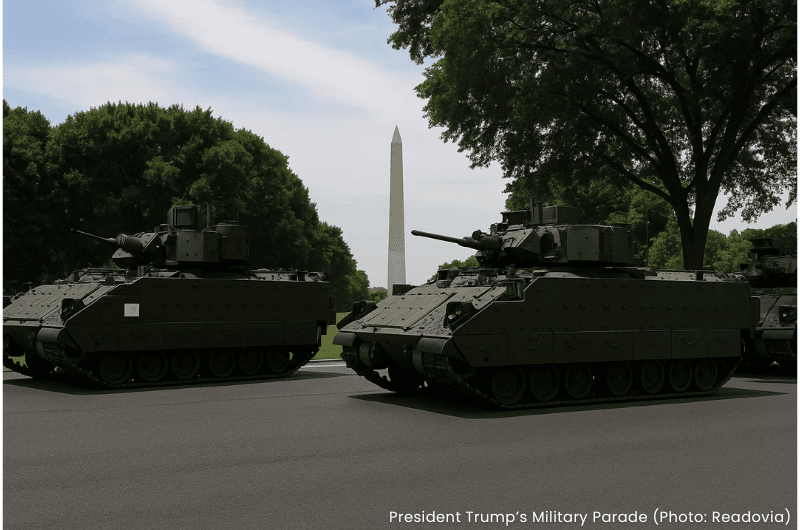
With a $25–45 million military parade scheduled for Saturday in Washington, D.C., President Trump is facing a wave of backlash — not just from lawmakers, but from the streets. The event, originally pitched as a patriotic celebration, is now fueling what organizers call “No Kings Day,” a massive nationwide protest movement expected to span over 1,500 cities. Critics of the parade call it a dangerous spectacle that glorifies authoritarianism and wastes public funds. Protesters are planning marches, rallies, and counter-events from coast to coast — turning June 14, which also marks Trump’s birthday, into a day of national dissent. Civil rights groups, veterans, artists, and students have joined forces, framing the protest as a stand for democracy and a rejection of what they see as militarized showboating. Organizers say the goal is to remind America that no leader is above the people — and certainly not above the Constitution. The parade is scheduled for Saturday, June 14, in Washington, D.C., and will begin at 10 a.m. on Pennsylvania Avenue, according to the official event notice. With tanks, flyovers, and active-duty units participating, federal officials have ramped up security preparations around the National Mall. With tensions high and public sentiment sharply divided, the weekend could mark a defining moment in the country’s ongoing clash over power, protest, and presidential spectacle. The Author
MAX Highlights for June: Premieres, Fan-Favorites, and More

Max is heating up this June with a mix of buzzy new releases and fan-favorite returns. Whether you’re craving fresh drama, deep documentaries, or weekend comedy binges, there’s something for every mood this month. Here are a few of the must-watch picks lighting up the platform in June: House of the Dragon – Season 2 (June 16): The Targaryen civil war begins. Expect more dragons, darker alliances, and bloodshed as Westeros descends into chaos. The Great Lillian Hall (June 1): Jessica Lange delivers a powerful performance in this intimate portrait of a Broadway legend facing her final curtain call. Am I OK? (June 6): A tender, funny film starring Dakota Johnson as a woman coming into her own later in life, navigating identity and friendship in modern-day L.A. Caught! (June 13): True-crime fans, this one’s for you — a docuseries spotlighting wild real-life getaways caught on camera. The Debut of New Looney Tunes Shorts (June 27): Classic chaos returns with all-new episodes featuring Bugs, Daffy, and the whole gang. More to Stream Of course, June also brings a deep library of recent releases and old favorites. Look for popular movies like Dune: Part Two and Barbie to join the lineup, along with a handful of HBO Originals making their streaming debuts. Whether you’re watching solo or planning a group binge, Max’s June lineup is stacked with options worth queuing up. The Author
Why Prices Still Feel So High — Even as the Economy Grows

The economy may be growing on paper, but most Americans still feel like they’re falling behind. Inflation has slowed from its pandemic-era peak, but everyday prices remain stubbornly high — and that’s reshaping how people spend, save, and survive. Recent government reports show inflation easing slightly, with annual consumer price increases now hovering just above 3%. But after years of rising costs, many Americans aren’t seeing meaningful relief. Grocery bills, rent, insurance premiums, and utilities are still significantly higher than they were just a few years ago — and wages haven’t kept up. The Cost of “Normal” Is Now Higher Even with inflation technically cooling, the price of “normal life” has reset. Milk, gas, and car insurance are all still well above pre-2020 prices. A growing number of households are cutting back on spending, dipping into savings, or relying on credit to keep up. Many economists say we’re in a “vibecession” — where hard data shows growth, but consumer sentiment remains negative. For working-class and middle-income Americans, it’s not just about inflation slowing down; it’s about the fact that things never got cheaper. So, When Will It Feel Like a Recovery? That’s the trillion-dollar question. Until core necessities become more affordable — or wages rise enough to offset higher costs — the disconnect between macroeconomic headlines and kitchen-table reality will likely continue. For now, the recovery is real, but it’s also uneven — and for many, it doesn’t feel like one at all. The Author
New ‘Touch Law’ Cracks Down on Phone Use in 31 States — Even at Red Lights

You might want to think twice before picking up your phone at a red light. A sweeping new hands-free driving regulation — dubbed the “Touch Law” — is now in effect across 31 U.S. states, including Pennsylvania, which officially adopted the rule on June 5, 2025. The law makes it illegal to physically touch any electronic device while driving, including while stopped at intersections or in traffic. That means no swiping, no holding, and no tapping — unless you’re using voice commands or a mounted hands-free system. What the Law Covers Holding or touching phones, tablets, or smart devices while driving — including at stop signs and red lights Manual texting, scrolling, GPS input, or app use Taking or making calls without a hands-free device What Is Allowed Voice-activated commands and Bluetooth systems Emergency calls Device use while legally parked off the road The 31 States Now Enforcing “No-Touch” Driving Laws Arizona California Connecticut Delaware Georgia Hawaii Idaho Illinois Indiana Iowa Louisiana Maine Maryland Massachusetts Michigan Minnesota Missouri Nevada New Hampshire New Jersey New York North Carolina Oregon Pennsylvania Rhode Island Tennessee Vermont Virginia Washington West Virginia Wisconsin Plus District of Columbia Puerto Rico Guam Northern Mariana Islands U.S. Virgin Islands What Happens If You Break this Law? In Pennsylvania, drivers will receive only warnings for the first year. But starting June 5, 2026, violators will be fined $50 plus court costs for using a handheld device behind the wheel — even if the car is stopped. In other states, fines vary but can reach up to $450, especially for repeat offenders. And here’s the serious part: if distracted driving results in a death, criminal charges could follow — including up to five years in prison in Pennsylvania. Bottom Line No phone is worth the ticket — or the risk. With hands-free tech more accessible than ever, the message is simple: mount it, mute it, or park it.
Tragedy in Graz: Ten Killed in Austria’s Worst School Shooting

Austria is in mourning today after a horrific school shooting in the city of Graz left ten people dead and at least twelve others injured. The incident occurred early Tuesday morning at a local secondary school, marking the deadliest school attack in the country’s modern history. Authorities say the gunman was a 21-year-old former student who entered the school premises heavily armed before opening fire. The shooter reportedly took his own life before police could intervene. Witnesses described scenes of chaos and terror as students fled classrooms and teachers scrambled to secure doors. “It was like a war zone,” said one parent waiting outside the school. “We never imagined something like this could happen here.” The Austrian government has declared a national day of mourning, and Chancellor Anna Eisenberg delivered an emotional address, vowing to strengthen gun control laws and school safety measures. “This is a dark day for our country,” she said. “We stand with the victims, their families, and the entire Graz community.”
Trump Sends 700 Marines, Thousands More Guard Troops to L.A.—State Leaders Push Back

Los Angeles is now the flashpoint in a deepening political and legal battle after President Trump ordered the deployment of more than 700 active-duty Marines and 4,000 National Guard troops to the city. The move, intended to support ICE operations and protect federal sites amid mounting immigration protests, has been met with swift and vocal backlash from California officials. The Pentagon has stated that the troops are operating under Title 10 authority, with strict orders to protect federal personnel and property only. Rules of engagement reportedly require unloaded weapons unless absolutely necessary, with an emphasis on de-escalation. California Governor Gavin Newsom has condemned the deployment as “illegal” and “politically motivated,” filing a formal lawsuit challenging the federal action. Los Angeles Mayor Karen Bass echoed the criticism, stating the city had not requested military assistance and warning the presence of troops could do more harm than good. LAPD leadership also voiced concern, noting that the uncoordinated arrival of federal forces could disrupt local security strategies and create confusion during ongoing protests, which have remained largely peaceful. Trump Speaks Out President Trump defended his decision to deploy federal troops in Los Angeles with a fiery message on Truth Social. In the post, he claimed the military presence prevented widespread destruction and took aim at California’s state and city leaders over permitting delays and alleged mismanagement. Behind the scenes, frustration is growing among law enforcement and community organizers alike. Many of the National Guard units deployed have yet to be given clear operational roles, and some remain stationed at armories without active assignments. As legal challenges take shape, the political fallout is already underway. California lawmakers argue the president is abusing military authority for political gain, while the White House maintains it is acting to preserve public order and federal jurisdiction. For now, the streets of Los Angeles remain tense but calm, as thousands of troops stand by in a city still grappling with the balance between public safety, immigration enforcement, and civil liberties.