


Nearly 100 Million Americans Face Dangerous Heat as Late-Summer Heat Wave Expands

Nearly 100 million Americans are under heat advisories as a sprawling late-summer heat wave pushes dangerous temperatures across the central and southern Plains, lower Mississippi Valley and parts of the Southeast. The National Weather Service says the extreme conditions are expected to persist into next week, with more than a dozen states facing potentially hazardous heat. Temperatures are reaching the triple digits in some areas, while high humidity is making conditions feel substantially hotter. Parts of Kansas and Missouri could experience heat index values as high as 115 degrees, and some communities may see overnight temperatures remain near or above 80 degrees, limiting the body’s opportunity to recover from daytime heat. The timing is creating additional challenges as schools reopen across the country and students return to outdoor sports and activities. Some districts have restricted practices and other outdoor events, while communities in affected areas are opening cooling centers and encouraging residents to stay hydrated and limit strenuous activity during the hottest parts of the day. Prolonged heat can be especially dangerous for older adults, young children, outdoor workers and people without reliable access to air conditioning. Heat-related illness can develop quickly, particularly when high humidity makes it more difficult for the body to cool itself through sweating. Forecasters are urging residents in affected areas to drink plenty of fluids, avoid unnecessary outdoor exertion and check on vulnerable family members and neighbors. The heat is not expected to disappear with the weekend. National Weather Service forecasts indicate dangerous conditions will continue across portions of the central and southern Plains and Southeast into next week, with the possibility of record-tying or record-breaking temperatures in parts of the South.
Trump Takes $400 Million White House Ballroom Fight to Supreme Court

President Trump’s administration asked the U.S. Supreme Court on Friday to allow construction of his $400 million White House ballroom to continue, escalating a legal battle over whether a president can undertake a major transformation of the White House complex without approval from Congress. A divided federal appeals court ruled last week that the administration must halt the project because Congress never authorized it. The 90,000-square-foot ballroom is being built on the site of the demolished East Wing and is already about 65% complete. The appeals court delayed its order for two weeks to give the administration time to seek Supreme Court intervention, with the construction halt scheduled to take effect August 21 unless the justices step in. The dispute reaches beyond the ballroom itself. In its 2-1 decision, the U.S. Court of Appeals for the D.C. Circuit concluded that the president does not have unilateral authority to fundamentally reshape the White House. The lawsuit was brought by the National Trust for Historic Preservation, which argues the administration began the massive project without obtaining the congressional authorization required for changes to federal property. The Trump administration argues that stopping construction would create national-security risks. Solicitor General D. John Sauer told the Supreme Court that leaving the East Wing site unfinished would threaten security, while Trump has described the larger project as a “military center.” Administration officials say the complex includes security infrastructure intended to better protect the president and other White House officials. The Readovia Lens The Supreme Court is now being asked to decide whether construction can continue while the administration pursues its appeal, rather than issuing a final ruling on the legality of the ballroom itself. But the dispute could ultimately force the justices to confront a much larger question about presidential power: how far a president can go in altering one of the country’s most important federal properties without first receiving authorization from Congress.
11 Charged in Alleged Scheme Behind More Than 1,000 Fraudulent Marriages

Federal prosecutors have charged 11 people in an alleged nationwide immigration fraud operation that arranged more than 1,000 sham marriages over at least a decade, allowing foreign nationals to seek legal permanent residency in the United States. The Justice Department says the operation was centered in New York but extended across several states. Foreign nationals, primarily from China, allegedly paid facilitators as much as $100,000 to be paired with U.S. citizens willing to enter fraudulent marriages. Participating Americans could receive as much as $30,000, according to prosecutors. The alleged operation went far beyond arranging introductions. Prosecutors say participants staged wedding ceremonies and photographs, opened joint bank and other accounts, and prepared documents intended to make the marriages appear legitimate. Participants were also allegedly coached on how to answer questions from immigration officials and conceal the true nature of their relationships. Some of the marriages allegedly involved active-duty U.S. service members, and the broader network stretched into states including Connecticut, Massachusetts, Pennsylvania, Kentucky, Tennessee, Georgia and Florida. Prosecutors estimate that the operation collected tens of millions of dollars from foreign nationals seeking lawful permanent resident status. The defendants face federal conspiracy charges related to marriage and immigration fraud and allegedly encouraging the unlawful residence of immigrants in the United States. Attorney General Todd Blanche described the case as one of the largest marriage-fraud prosecutions in U.S. history. The charges are allegations, and the defendants are presumed innocent unless proven guilty.
U.S. Military Set to Leave Iraq by September 30, Ending a Two-Decade Presence

The United States is on track to withdraw its remaining military forces from Iraq by September 30, bringing to a close a U.S. military presence that began with the 2003 invasion and evolved through more than two decades of war, counterterrorism operations, and security assistance. U.S. and Iraqi officials have confirmed that the withdrawal remains on schedule. Iraqi Prime Minister Ali al-Zaidi reaffirmed the September 30 deadline this week following talks with U.S. Central Command chief Adm. Brad Cooper, calling the date final for ending the U.S.-led coalition’s military mission in Iraq. The departure represents the final stage of a drawdown that has been underway for years. American combat forces formally left Iraq in 2011, but U.S. troops returned in 2014 after the rise of ISIS. In recent years, the American mission has focused largely on advising and assisting Iraqi security forces and supporting operations against the militant group. Most U.S. forces have already departed, with the remaining presence concentrated primarily in Iraq’s northern Kurdish region. The withdrawal comes at a particularly volatile moment in the Middle East. U.S. facilities and forces in Iraq have repeatedly faced threats from Iran-backed armed groups, and regional tensions have intensified during the conflict involving the United States, Israel and Iran. Iraq is also confronting the politically difficult task of bringing armed groups operating outside direct government control under state authority. The Readovia Lens For Washington and Baghdad, September 30 will mark more than another troop reduction. It will close one of the longest chapters in modern U.S. military history while shifting the relationship between the two countries toward bilateral security cooperation without a permanent American military presence in Iraq.
The “Youth” Protein Activated by Exercise May Help Protect Muscle and Bone

Researchers studying CLCF1 found an association between lower levels of the protein and aging. Human experiments also showed increases in CLCF1 following resistance training, providing evidence that exercise can influence this signaling pathway. The strongest evidence for CLCF1’s effects on muscle and bone, however, comes from animal research. In aged mice, researchers found that administering CLCF1 improved measures of physical performance and bone health. Blocking CLCF1 also reduced some of the benefits associated with exercise, suggesting that the protein may be one of the biological mechanisms through which physical activity supports the aging body. Those findings are promising, but they don’t yet establish CLCF1 as an anti-aging treatment in humans. Larger human studies will be needed to determine exactly how important the protein is and whether it could eventually have therapeutic applications. The Bigger Picture The research adds to a growing understanding that skeletal muscle does far more than help us move. Active muscle releases signaling molecules — often called myokines — that can communicate with other tissues throughout the body. That makes resistance training particularly interesting as scientists study healthy aging. Maintaining muscle strength becomes increasingly important later in life, while weight-bearing activity can also help support bone health and physical independence. CLCF1 may eventually provide scientists with another piece of the puzzle explaining why those benefits occur. Supporting CLCF1 Through Exercise For now, there is no special “CLCF1 workout,” and researchers have not established an exercise prescription specifically designed to maximize the protein. The human findings do, however, strengthen the case for resistance training as part of a healthy-aging routine. Prioritize resistance training. Weight training, resistance bands and appropriately performed body-weight exercises can help preserve strength and muscle as we age. Be consistent. Long-term exercise habits matter more for overall health than occasional intense workouts. Include weight-bearing movement. Activities that safely place demands on the muscles and bones can help maintain physical function. Progress gradually. Increasing resistance or difficulty over time can help the body continue adapting. Allow time for recovery. Adequate nutrition, protein and rest support muscle repair and adaptation following exercise. The Takeaway CLCF1 is an intriguing new piece of the healthy-aging puzzle. Early research suggests that the protein responds to resistance exercise and may be involved in protecting muscle and bone, but scientists are still determining exactly how significant that role is in humans. What doesn’t require waiting for the next study is the broader lesson. Resistance training is already supported by extensive evidence as an important tool for preserving strength, mobility and physical function with age. The discovery of CLCF1 may eventually help explain some of the biology behind those benefits — another reminder that when muscles work, they may be doing considerably more for the body than we can see.
Trump’s Former Defense Attorney Todd Blanche Becomes U.S. Attorney General

Todd Blanche has been sworn in as the 88th attorney general of the United States, formally taking control of the Justice Department after a narrow Senate confirmation and a contentious fight over his leadership of one of the federal government’s most powerful agencies. The Senate confirmed Blanche 50–49 on Saturday, August 8, after two Republicans — Sens. Susan Collins of Maine and Lisa Murkowski of Alaska — joined Democrats in opposing his nomination. Blanche took the oath of office at the White House on Monday, August 10, with federal appeals court judge Emil Bove, another former attorney for President Donald Trump, administering the oath. Blanche had already been leading the Justice Department as acting attorney general since April, when Trump removed Pam Bondi from the position. Before entering the administration, Blanche worked as a federal prosecutor and later became one of Trump’s personal criminal-defense attorneys. He represented Trump in the New York criminal case that resulted in Trump’s 2024 conviction and also worked on his defense in federal criminal cases before joining the administration as deputy attorney general in 2025. Blanche’s confirmation nearly collapsed over a proposed $1.8 billion “Anti-Weaponization Fund” created as part of the settlement of Trump’s $10 billion lawsuit against the IRS. The fund was intended to compensate people who claimed they had been unfairly targeted by the federal government, potentially including Trump allies. Republican Sens. John Cornyn and Thom Tillis withheld their support for Blanche until he provided written assurances that the Justice Department would rescind the fund. Blanche ultimately issued an order ending it, helping clear the way for his confirmation. Blanche now assumes the office with considerably more history inside the department than a typical incoming attorney general. During his months as acting attorney general, he established a National Fraud Enforcement Division, pursued antitrust investigations involving meatpacking operations and directed new Justice Department initiatives involving human trafficking, child exploitation and religious-liberty protections. His confirmation converts that temporary authority into a Senate-confirmed tenure at the helm of the Justice Department as the administration continues reshaping federal law-enforcement priorities.
Credit Card Rates Are Still Above 20% — What That Actually Costs You

Credit card interest rates remain above 20%, making revolving card debt one of the most expensive forms of borrowing for American households. The average rate is 22.2% on new credit-card offers and 20.94% across existing accounts, according to WalletHub’s latest credit-card data. For someone carrying a balance, those percentages can translate into serious money. A $5,000 balance at 20.94% represents roughly $1,047 in interest over a year using a simple annual estimate if the balance remained unchanged. At $10,000, that figure rises to about $2,094. Actual credit-card interest is generally calculated using a daily periodic rate, and payments and new purchases change the balance throughout the month, but the examples show just how expensive revolving debt can become. The problem becomes more serious when cardholders make only minimum payments. Paying the minimum can keep an account current, but it may reduce the principal slowly while interest continues accumulating. That can stretch repayment over years and substantially increase the total cost of purchases that were originally much less expensive. How to Pay Less Interest on Credit Card Debt Consumers carrying balances can start by checking the APR on each card rather than focusing only on how much they owe. Paying more than the minimum, directing extra money toward high-interest balances and limiting new charges can reduce interest costs. A lower-rate personal loan or 0% balance-transfer offer may also help in some situations, although borrowers should consider transfer fees, promotional deadlines and the regular APR that takes effect when an introductory period ends. High credit-card balances can affect more than monthly cash flow. They can also increase credit utilization — the percentage of available revolving credit being used — which is an important factor in credit scoring. Paying those balances down can therefore provide two potential benefits: reducing expensive interest charges while lowering credit utilization, which may help strengthen a consumer’s overall credit profile.
FDA Tightens Food Safety Guidance After a String of Produce Outbreaks

The Food and Drug Administration has finalized new safety guidance for companies that process fresh-cut fruits and vegetables, as recent outbreaks linked to lettuce and jalapeños refocus attention on the safety of America’s produce supply. The guidance focuses on ready-to-eat produce that has been chopped, sliced, peeled, shredded or otherwise altered before reaching consumers. Unlike whole fruits and vegetables, these products typically receive no cooking or other treatment capable of killing harmful microorganisms before they are eaten. The FDA is urging processors to strengthen sanitation, refrigeration, supplier verification and other controls designed to prevent contamination. The action comes after several high-profile foodborne illness outbreaks. A large cyclospora outbreak linked to iceberg lettuce sickened people across multiple states this summer, while health officials have also investigated salmonella infections associated with fresh jalapeño peppers. Products containing jalapeños have been recalled as investigators work to contain the outbreak. Despite the recent headlines, Acting FDA Commissioner Kyle Diamantas has urged consumers not to abandon fresh produce. The agency’s new guidance is primarily about preventing contamination before food reaches grocery shelves and restaurants, including keeping processing equipment clean, maintaining safe temperatures and controlling potential hazards throughout the supply chain. Consumers can still take basic precautions at home. The FDA recommends washing fresh fruits and vegetables under running water before preparing or eating them, keeping produce separate from raw meat and cutting away damaged or bruised areas. The larger responsibility, however, rests upstream: the new guidance is intended to help food processors prevent dangerous organisms from reaching ready-to-eat produce in the first place.
Total Solar Eclipse Will Darken Skies Across Europe Today

A total solar eclipse will sweep across parts of the Northern Hemisphere today, briefly turning daylight to darkness for people positioned along a narrow path stretching from northern Russia through Greenland and Iceland before reaching Spain and a small corner of Portugal. Some of the most dramatic views will come late in the day. Totality reaches Iceland at about 1:45 p.m. Eastern time before crossing the North Atlantic and arriving in Spain at about 2:30 p.m. Eastern. In Reykjavík, the Sun will be completely covered for roughly a minute, while several locations in Spain will experience totality shortly before sunset. Millions more people outside the path of totality will still see a partial eclipse. London and Paris will see more than 90% of the Sun covered, while Madrid will come extremely close to totality at about 99%. Parts of the United States and Canada will also get a smaller glimpse of the event. Fairbanks, Alaska, will see about 37% coverage, while Boston will see 16%, New York City 9% and Washington, D.C., about 4%. NASA scientists will use the eclipse as a research opportunity as well as a spectacle. A NASA-funded team plans to fly a WB-57 high-altitude research aircraft along the Moon’s shadow to study the Sun’s corona, while university teams in Iceland and Spain will launch scientific balloons to examine how the temporary loss of sunlight affects Earth’s atmosphere. The wait for the next total solar eclipse will be much shorter: another will occur on August 2, 2027, with a path of totality crossing parts of southern Europe, North Africa and the Middle East.
Trump Says Security Threat Forced Secret Air Force One Switch in Turkey
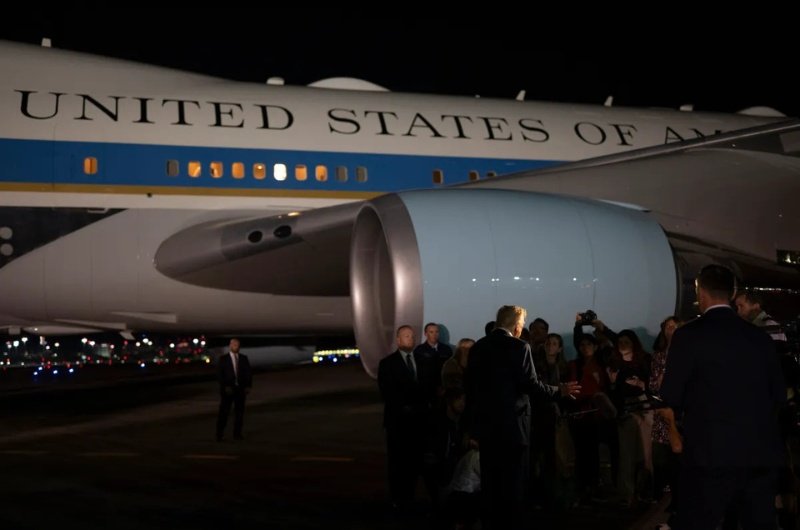
President Trump has confirmed that security concerns prompted an extraordinary operation last month in which he secretly switched aircraft while leaving Turkey, even as journalists and some White House staff believed he was traveling aboard Air Force One. The maneuver took place July 8 following a NATO summit in Ankara. Trump was seen boarding Air Force One at Ankara Esenboğa Airport, but he was later moved from the aircraft in an airport catering vehicle and taken to a smaller Air Force C-32A military jet. Air Force One then departed with members of the press and White House staff aboard, effectively serving as a decoy while the president traveled separately. Trump addressed the operation publicly Tuesday, saying the military and Secret Service wanted him to take a different flight because of a security threat. Reports have linked the heightened security to concerns about a possible Iranian threat against the president following U.S. military action against Iran. Trump said threats are an expected part of the presidency and indicated he followed the recommendations of his security team. The unusual operation also meant that people aboard Air Force One were not told the president had been moved to another aircraft. Trump flew separately to the United Kingdom, where he later transferred to the newer presidential aircraft for the trip back to Washington. The administration had not publicly disclosed the decoy operation at the time. Asked why Air Force One was considered too dangerous for him while staff and journalists remained aboard, Trump said he believed the smaller aircraft he used may actually have faced greater risk. The episode offers a rare glimpse into the security measures surrounding presidential travel — and the lengths U.S. officials were prepared to take when they believed a potential threat could target the president’s aircraft. The Readovia Lens Presidential travel has always balanced visibility with vulnerability, and this episode shows how far that balance can bend when intelligence points to a credible threat. Decoy operations aren’t new — Clinton’s 2000 flight into Pakistan and the post-9/11 relocation of George W. Bush both drew on the same instinct to separate the president from predictable movement. What sets the Ankara operation apart is the scale of secrecy involved: even the people flying beside the commander in chief didn’t know he wasn’t there. As reporting continues to fill in the details, the episode leaves a lasting reminder that the machinery protecting a president often stays invisible until circumstances force it into daylight.