

The 90-Day Credit Repair Kit

A damaged credit score can make borrowing more expensive and limit your financial options. But credit scores aren’t permanent. As balances change, accounts age, new payment history is reported and inaccurate information is corrected, your credit profile can change too. The challenge for many people is simply knowing where to begin. That’s why Readovia created The 90-Day Credit Repair Kit — a practical, step-by-step system designed to help you understand what’s on your credit reports, dispute questionable information and start building stronger credit habits over the next 90 days. The 90-Day Credit Repair Kit — Just $7.99 Digital download • Instant access The kit walks you through three straightforward stages: reviewing all three credit reports and identifying potential problems; sending appropriate disputes and working to reduce credit utilization; and following up on results while establishing habits that can support stronger credit over time. It also includes the tools to help you do the work yourself: ready-to-use dispute and debt-validation letter templates, a cease-contact letter, credit-report review checklist, dispute tracker, credit-utilization worksheet and a week-by-week 90-day action plan. No expensive credit-repair service. No promise of an overnight transformation. And no guarantee that you’ll reach a particular score in 90 days. Just a clear plan for understanding where your credit stands, taking action where you can and starting the rebuilding process. Start Rebuilding Your Credit for $7.99 Instant digital download. Get the 90-Day Credit Repair Kit >>> The 90-Day Credit Repair Kit is provided for educational and informational purposes only and is not legal, financial or credit-repair advice. Results vary based on individual circumstances. Readovia does not guarantee any specific change in a credit score or credit report.
American Airlines Announces Major Cabin Upgrade With Screens at Every Seat
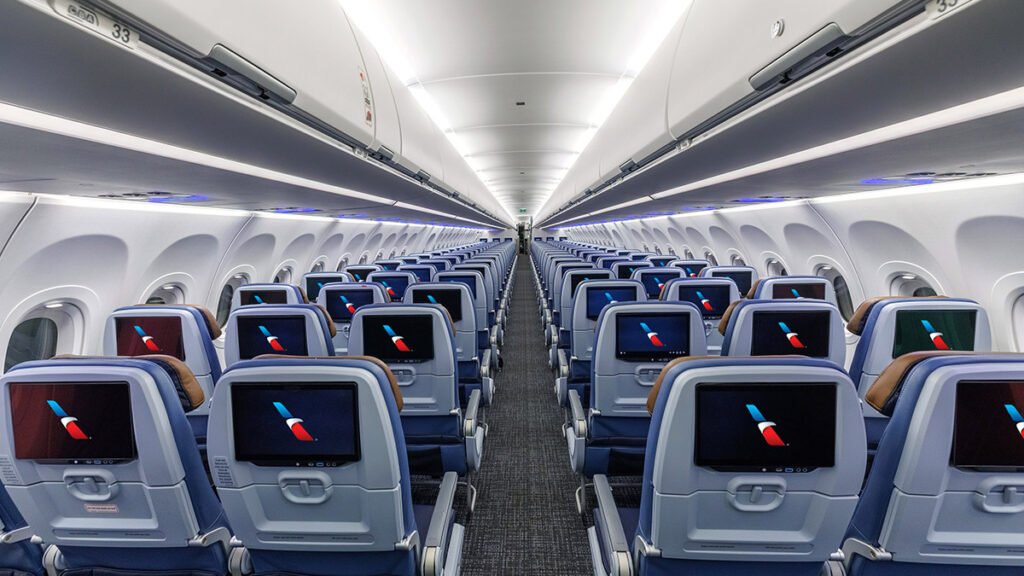
American Airlines is planning a sweeping upgrade of its narrowbody fleet, with seatback entertainment screens coming to every seat and substantially more room being devoted to First Class and extra-legroom options. The airline announced Tuesday that new Airbus and Boeing aircraft deliveries will begin arriving with the screens in 2028, while existing narrowbody aircraft will be retrofitted. American expects the fleetwide installation to be completed by early next decade. The new entertainment systems will include 4K displays, Bluetooth connectivity for wireless headphones and earbuds, USB-C fast charging and personalized movie and show recommendations. American is also preparing to install high-speed Starlink Wi-Fi on its narrowbody aircraft beginning in 2027, giving passengers more ways to stay connected and entertained while flying. The changes extend well beyond the screens. Premium seating currently accounts for about 25% of seats on American’s narrowbody departures, but the airline expects that figure to grow to roughly 40% in the coming years. Airbus A319 and A320 aircraft are being retrofitted with an additional row of First Class, while the majority of the narrowbody fleet will receive more Main Cabin Extra seating. American also plans refreshed interiors with redesigned seats, additional storage and enhanced lighting. Taken together, the changes represent one of American’s largest investments in its onboard experience and a significant shift toward more premium cabins. For travelers, the result should be easy to see: more upgraded seating choices, newer interiors, faster connectivity and a personal entertainment screen waiting at every seat.
Indiana Shifts to Recovery After Historic Flooding Leaves Seven Dead

Indiana is shifting from emergency response to recovery in some of its hardest-hit communities after days of severe storms and historic flooding left at least seven people dead, displaced more than 1,000 residents and caused widespread damage across the state. Floodwaters have begun receding in parts of central Indiana, but the danger has not disappeared. Several rivers remain under flood warnings, roads and other infrastructure have been damaged, and some communities are still dealing with high water. In northwest Indiana, tens of thousands of customers also remained without electricity Tuesday as crews worked to repair damage from last week’s powerful storms. The flooding followed repeated rounds of heavy rain that began Aug. 11, with some areas receiving more than 11 inches in two days. The White River reached historic levels in several communities, forcing evacuations and leaving homes, businesses and roads underwater. The seven people killed during the storms included a 4-year-old boy. Indiana has now activated its State Disaster Relief Fund, offering emergency grants of up to $5,000 to help displaced residents pay for necessities such as food and clothing. Temporary housing assistance is also being made available as officials work to move families from emergency shelters into hotels and other accommodations. The Readovia Lens State and federal teams are beginning damage assessments that will help determine what additional assistance may be available. For many residents, however, the immediate challenge is already clear: returning to damaged homes, replacing lost belongings and beginning what could be a lengthy recovery from one of Indiana’s most destructive flooding events in decades.
Meta Heads to Court as Opening Arguments Begin in Landmark Child Safety Case

Meta is heading into one of the most consequential court battles in social media history Tuesday as opening arguments begin in a federal trial over allegations that Facebook and Instagram were deliberately designed with features that encourage compulsive use among children and teenagers. The case, unfolding in federal court in Oakland, California, stems from a broader lawsuit brought by 29 states. California, Colorado, Kentucky and New Jersey are leading this phase of the litigation, accusing Meta of misleading the public about the safety of its platforms while using features such as infinite scrolling and frequent notifications to keep younger users engaged. The states also allege Meta collected personal information from children under 13 without parental consent, in violation of federal law. Meta denies the allegations and says it has spent years developing protections for young users, including parental controls and other safety features. The stakes extend well beyond financial penalties. The states are seeking changes to how Meta operates Facebook and Instagram, including restrictions on features they contend encourage compulsive use. Meta has said potential penalties under the states’ theories could reach as high as $1.4 trillion, although any actual award would depend on how the court ultimately rules. Meta CEO Mark Zuckerberg and Instagram chief Adam Mosseri are expected to testify during the trial, which could last several weeks. An advisory jury will hear the case, but U.S. District Judge Yvonne Gonzalez Rogers will make the final decision — a ruling that could influence how social media companies design and operate platforms used by millions of young Americans.
Claude Is About to Leave an Invisible Watermark on the Words It Writes

Anthropic is preparing to embed invisible watermarks into text generated by new Claude models, a move designed to make AI-created writing detectable even after it has been copied and pasted elsewhere. But the technology is already stirring concern among writers, professionals and other users who rely on AI for more than simply generating finished work. Anthropic says the watermark will not visibly alter Claude’s writing or add hidden characters to the text. Instead, it will create a detectable statistical pattern without changing the meaning or quality of the output. The company says the system will not require additional tokens or increase costs, and the watermark will contain no identifying information that could be traced to a particular user, organization or conversation. Anthropic also notes that Claude will not be alone: new European Union rules require AI providers serving the EU market to mark AI-generated content, and other major model developers that signed the EU’s Code of Practice are expected to introduce their own watermarking systems. The technology is being introduced as Anthropic moves to comply with transparency requirements under the European Union’s AI Act, which requires certain AI-generated content to be identifiable in a machine-readable format. Anthropic has chosen to implement the watermark globally rather than limit it to users in Europe. That decision has generated pushback from some Claude users who worry about what happens when AI is used primarily as an editor. A person might write an article, report or other document independently, then ask Claude to improve the grammar, reorganize paragraphs or polish the language. If enough of Claude’s wording remains, the finished work could still contain a detectable watermark — even though describing the entire document as AI-written would be misleading. The Readovia Lens Anthropic stresses that detecting its watermark indicates Claude was involved in producing text, not that Claude necessarily authored the work. The distinction could become increasingly important as AI becomes embedded in everyday writing and professional workflows. What began as a technical solution for identifying synthetic content may ultimately force employers, educators and publishers to confront a more complicated question: where does AI assistance end and AI authorship begin?
Elon Musk Owns 48.4% of SpaceX — but Controls More Than 82% of the Vote
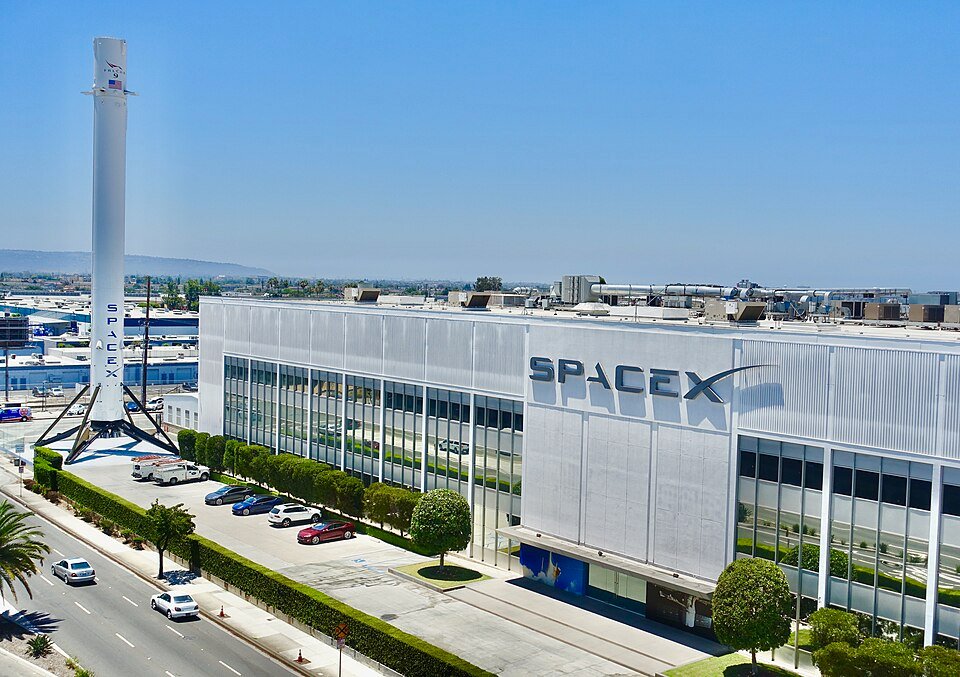
Elon Musk owns nearly half of SpaceX but maintains overwhelming control of the company, according to a new regulatory disclosure detailing his holdings following SpaceX’s historic public offering. Musk beneficially owned approximately 6.42 billion shares as of June 30, representing 48.4% of the company on an as-converted basis and a position now valued at more than $900 billion. His influence is even greater than that ownership figure suggests. SpaceX’s dual-class share structure gives Musk more than 82% of the company’s voting power, allowing him to maintain decisive control over major corporate decisions despite owning less than half of the company’s economic equity. How Musk Maintains Control The difference comes largely from SpaceX’s Class B shares, which carry substantially more voting power than the Class A shares available to public investors. Dual-class structures are designed to allow founders to raise outside capital without surrendering control of the companies they created, and SpaceX’s structure leaves Musk with an unusually commanding position. The 48.4% figure also requires some context. Musk said following the disclosure that a portion of the shares included in the calculation remain tied to performance conditions and have not fully vested. That means his currently vested ownership is lower than the regulatory figure, although his voting control remains substantial. The disclosure offers investors one of the clearest pictures yet of who controls SpaceX after its June public-market debut. Outside investors now own a meaningful portion of one of the world’s most valuable companies, but the balance of power remains firmly with its founder. For shareholders betting on SpaceX’s future in rockets, Starlink, artificial intelligence and other emerging businesses, they are also making a long-term bet on Musk’s continued control of the company.
Why Borrowing Costs Are Staying High Even as Inflation Cools

Stocks are hitting record highs and inflation has shown signs of cooling, but Americans looking to borrow money are still facing historically expensive interest rates. The disconnect is especially visible in housing, where the average 30-year fixed mortgage remains at 6.67%, according to Freddie Mac, even as investors celebrate improving inflation data and another record for the S&P 500. The reason is that mortgage rates and other long-term borrowing costs aren’t determined solely by what the Federal Reserve does with its benchmark interest rate. They are heavily influenced by the bond market, where investors are demanding relatively high yields to lend money for long periods. This week, the Treasury sold 30-year government bonds at the highest auction yield in 25 years, underscoring how expensive long-term money remains even as shorter-term inflation fears ease. Why Long-Term Rates Are Staying High One major pressure is the enormous amount of borrowing taking place. The federal government continues issuing large quantities of debt to finance budget deficits, while technology companies are also borrowing heavily to fund the AI infrastructure boom. Alphabet, Amazon and Meta alone have raised nearly $220 billion through bond markets so far in 2026. That competition for capital can push yields higher as borrowers offer investors more attractive returns. For consumers, those bond-market pressures can show up in mortgage rates and other forms of long-term credit. A Federal Reserve rate cut or pause can influence borrowing costs, but it does not guarantee that mortgage rates will fall alongside it. Investors also consider inflation expectations, government debt, economic growth and the supply of bonds available in the market when deciding what return they require. That helps explain today’s unusual financial landscape. Investors can push stocks to record highs because corporate earnings and the economy remain relatively resilient while simultaneously demanding higher returns for lending money over decades. For consumers, the message is less celebratory: cooling inflation is encouraging, but bringing borrowing costs meaningfully lower may require more than a friendly inflation report.
Google Is Reshuffling Its AI Empire as the Race for the Best Model Intensifies

Google is reorganizing the leadership of its artificial intelligence operation as it faces mounting pressure to move faster in the increasingly competitive race against OpenAI and Anthropic. The shakeup puts longtime DeepMind executive Koray Kavukcuoglu in charge of day-to-day operations and all Gemini model development, while DeepMind co-founder Demis Hassabis moves into a more research-focused leadership role. Hassabis, who has led DeepMind for more than a decade, is becoming chairman of Google DeepMind and chief scientist of parent company Alphabet. Kavukcuoglu, previously DeepMind’s chief technology officer and Google’s chief AI architect, will serve as senior vice president of Google DeepMind and report directly to Google CEO Sundar Pichai. The shift gives Kavukcuoglu considerably more control over Google’s effort to turn cutting-edge AI research into products capable of competing at the front of the industry. The restructuring comes amid internal pressure to accelerate Gemini development. Google co-founder Sergey Brin has become increasingly involved in the company’s AI efforts, while some Gemini teams have been moved closer to Google’s broader commercial operations. At the same time, several prominent AI researchers are leaving the company, including longtime Google scientist Jeff Dean, who is departing after nearly three decades to help launch Discovery Loop, a new AI venture focused on scientific discovery. Google is already showing signs of the faster product cadence the overhaul is intended to produce. On Thursday, the company introduced Gemini 3.7 Flash, which Google describes as its most intelligent workhorse model yet for coding and AI agents. The model is designed for tasks that increasingly matter to businesses adopting generative AI, including software development, complex workflows and autonomous systems capable of completing multistep tasks. The stakes extend well beyond which company can claim the top-performing model. Google has enormous advantages in Search, Android, YouTube, cloud computing and its own AI infrastructure, giving it ways to put Gemini in front of billions of users. But OpenAI and Anthropic continue to compete aggressively for developers, businesses and consumers. Google’s leadership overhaul suggests the company is increasingly focused on converting its vast AI resources into faster execution — and making sure the next major shift in artificial intelligence doesn’t happen without it.
The Case for Connection: Why Socializing Matters in Uncertain Times

Social connection can play an important role in protecting mental and physical health, especially during stressful or uncertain times. Research has linked strong relationships to better well-being and lower risks of depression, heart disease and other serious health problems. The benefits don’t require a packed social calendar or dozens of friends. What matters is having relationships that provide a sense of belonging, support and being valued. The CDC reports that roughly one in three U.S. adults experiences loneliness, while about one in four says they lack adequate social and emotional support. Social isolation and loneliness have also been associated with higher risks of depression, anxiety, heart disease, stroke, dementia and premature death. Connection can also help us manage the ordinary pressures of life. A conversation with a friend, dinner with family, a walk with a neighbor or simply spending time around people we trust can provide perspective and emotional support when work, finances, relationships or the broader world feel overwhelming. Strong relationships don’t eliminate stress, but they can make difficult periods feel less isolating and give us people to turn to when we need help. That doesn’t mean everyone needs to become more extroverted. Meaningful connection can be quiet and simple: calling someone you’ve been meaning to check on, joining a community or volunteer group, having coffee with a friend, exercising with someone else or putting the phone away during a conversation. Even small efforts to nurture existing relationships can help rebuild the sense of connection that easily gets lost in busy, digitally saturated lives. The Readovia Lens In uncertain times, socializing can feel optional — something to return to once everything else is handled. The evidence increasingly suggests the opposite. Relationships are part of the foundation that helps people cope, adapt and stay well. We may not be able to control everything happening around us, but making time for the people who matter is one meaningful way to strengthen the life we’re living right now.
When the Work Starts Teaching You

Some of the best ideas aren’t the ones we start with. They’re the ones we discover along the way. Every creative project begins with an intention — a direction, a goal, maybe even an outline. You start building, convinced you know where you’re going. Then, if you stay with the work long enough, something unexpected happens: the project starts showing you possibilities you couldn’t see at the beginning. It happens through the ordinary work of creating — questioning assumptions, refining ideas, removing what doesn’t belong, noticing what still feels incomplete. Eventually you realize the thing you’re making has changed. That may sound backwards, but anyone who has built something meaningful has probably felt it. Some of our best ideas aren’t forced into existence. They emerge because we’ve given the work enough time to develop and ourselves enough time to recognize where it’s leading. When the Better Idea Arrives Later Sometimes we don’t see how an idea is evolving until we’re deeply engaged in developing the work. I experienced this while writing a recent essay about online visibility. What began as a fairly straightforward discussion gradually became something larger. As I worked through it, new concepts started surfacing — digital breadcrumbs, discovery ecosystems, and eventually a simple distinction that became the heart of the piece: “Visibility is an outcome. Discoverability is the strategy.” None of those ideas existed in the opening draft. I didn’t sit down intending to write them. They appeared through the process of writing, reconsidering, and refining what was already there — proof, to me, that the most valuable insights often arrive after the obvious ones have been exhausted. “The irony of our accelerated creative age may be that technology allows us to create faster than ever while our most valuable ideas still refuse to be rushed.” Letting It Simmer In May 2009, during a rehearsal for what would become his final shows, Michael Jackson stopped his band and told them: “We gotta let it simmer. We got a moment where it has to simmer.” It’s a small moment, but it’s stayed with me. The pop legend wasn’t talking about writing, but he could have been. A great article, a memorable speech, a successful business, a meaningful life — none of these are built in a single draft. We create. We review. We tweak. We step away. We sit with it for a while and let it breathe. Letting something simmer isn’t simply taking a break from it. It’s allowing time for your own understanding of it to evolve. Sometimes that space is exactly what allows us to see what the work needs next. Something that seemed essential gets removed, and something we barely noticed becomes the center of everything. “We gotta let it simmer.” What Happens When We Fill Every Quiet Moment? We’ve become remarkably good at eliminating boredom. Waiting in line, check the phone. Sitting in an airport, scroll. A few unexpected minutes alone, there’s always another video, headline, or notification waiting to fill them. Artificial intelligence has only sharpened this instinct. It’s made it possible to brainstorm, draft, and revise faster than ever, which is genuinely useful. But it also feeds the belief that because something can be finished quickly, it should be. Those tiny gaps we’ve engineered away once gave our minds somewhere to wander. Boredom created room for reflection, daydreaming, and unrelated thoughts to bump into one another. Sometimes nothing happened. But sometimes an idea appeared. Original thought doesn’t always cooperate with a deadline. Sometimes it needs to sit overnight. Sometimes the problem you couldn’t solve becomes obvious while you’re driving the next morning. The irony of our accelerated creative age may be that technology allows us to create faster than ever while our most valuable ideas still refuse to be rushed. Perhaps that’s one of the great misconceptions about creativity — that inspiration arrives first and craftsmanship follows. Often the opposite is true. Craftsmanship creates the conditions where inspiration can finally appear. The best creative work isn’t rushed into existence. It’s discovered through the process of making it — and that’s only possible when we’re quiet enough to listen. In the end, the work starts teaching us what it’s trying to become.