

Judge Temporarily Blocks Deportation Flights of Guatemalan Minors

A federal judge has halted deportation flights carrying Guatemalan children, issuing a temporary order that immediately suspends the program. The ruling came late Friday night following a wave of legal challenges from advocacy groups arguing the flights posed humanitarian risks and violated protections for minors. The program, which sought to expedite removal of children who had recently crossed the southern border, has been under scrutiny from immigration lawyers and human rights organizations. Critics contend the process lacked sufficient safeguards, leaving children vulnerable to unsafe conditions upon return. Federal officials, however, had defended the flights as a necessary enforcement tool amid record border crossings. By blocking the deportations, the court has placed a spotlight on the fragile balance between immigration enforcement and child welfare. The decision now forces federal agencies to reevaluate protocols for handling minors in custody, even as broader immigration policies remain a flashpoint in Washington’s political battles. For families and communities on both sides of the border, the ruling offers temporary relief—but it also signals a protracted legal fight ahead over how the U.S. treats its youngest migrants. The Author
Mass Exodus: Over 1.2 Million Immigrants Exit U.S. Labor Force

New figures show that more than 1.2 million immigrant workers have left the U.S. labor force between January and July 2025. This sweeping departure spans both undocumented and legal immigrants, leaving critical gaps across the economy. Industries heavily reliant on immigrant labor—such as agriculture, construction, and home-health care—are experiencing major disruptions. Crops are going to waste, construction projects are stalling, and health services are struggling to keep up with demand. This marks the first decline in the country’s foreign-born population since the 1960s, a demographic shift that could have long-term consequences for the U.S. workforce and economic growth. Why This Matters Economic shockwaves: Labor shortages are rippling across critical sectors, threatening productivity and stability. Social and demographic shift: The immigration decline signals a potential long-term change in population and labor trends. Labor Day relevance: As Americans observe Labor Day, these trends highlight the growing strain between labor demand and a shrinking workforce. Final Thoughts While the labor shortage is hitting agriculture, construction, and health care the hardest, the ripple effects are wider. For millions of American workers, the sudden absence of immigrant labor could mean a less crowded job market—with new opportunities opening up in industries once dominated by foreign-born workers. But experts warn that what looks like relief today may translate into slower growth, higher prices, and fewer services tomorrow if the gaps aren’t filled.
Mystery Cruises: The Luxury Travel Trend to Watch for 2026

For years, luxury travel has been defined by meticulous planning: curated itineraries, hand-picked resorts, and destinations chosen months in advance. But as travelers crave deeper experiences — and a little thrill — a bold new concept is setting sail: mystery cruises. These voyages invite guests aboard without revealing exactly where they’re headed, transforming the journey itself into the ultimate luxury. Unlike traditional cruises, mystery itineraries unfold in real time. Guests may board in Barcelona and wake up two days later in an undisclosed Mediterranean gem or set sail from Miami with no idea which private island awaits them. The secrecy adds an element of anticipation that no itinerary can match. Luxury operators like Uniworld and Windstar are already experimenting with these surprise-driven sailings, with bookings opening now for 2026. What makes mystery cruises resonate with the modern traveler is the marriage of indulgence and intrigue. Suites are as opulent as ever, dining is world-class, and onboard wellness experiences rival five-star resorts. But instead of instagramming every port weeks in advance, guests embrace the unknown. For high-end travelers, this shift is about luxury reframed as curiosity, the rarest commodity in an over-scheduled world. And there’s business potential, too. For travel brands like Travelocity, mystery cruises offer a new way to engage customers who want more than just a trip — they want a story to tell. Expect exclusive booking opportunities, limited sailings, and packages designed for discerning adventurers who want to be the first to say: I sailed into the unknown, and it was unforgettable. Mystery cruises may be trending, but for 2026, they’re shaping up to be the defining symbol of a new era of luxury travel: one where the best destination is the one you didn’t see coming.
Calmcations: The New Wave of Silent Luxury Escapes

In today’s hyper-connected world, even vacations have become noisy. Travelers are bombarded with social feeds, over-scheduled itineraries, and the pressure to capture every moment for the perfect post. But a new luxury travel trend is rewriting the rules: calmcations. These quiet escapes are built on the idea that the rarest indulgence isn’t five-star dining or designer suites — it’s stillness. Resorts from Nantucket to Hawaii are leaning into this shift, creating curated experiences that put silence, reflection, and wellness at the center of the journey. What sets calmcations apart is their intentional design. Guests are invited to power down devices, step into serene landscapes, and embrace restorative practices ranging from forest bathing and guided meditation to biofeedback sessions tailored for deep relaxation. At the Greydon House in Nantucket, travelers check into rooms stripped of TVs and tech, while at Sensei Lānaʻi in Hawaii, visitors move through calming gardens, spa rituals, and nutrition programs built to reset the body and mind. It’s luxury, but reimagined — where well-being, not Wi-Fi, is the main amenity. This shift also reflects a larger cultural moment. After years of wellness chatter, travelers are no longer satisfied with surface-level spa treatments or a single yoga class by the pool. They’re seeking immersive, meaningful experiences that deliver a true sense of renewal. For high-end resorts, calmcations have become a differentiator — appealing to discerning guests who value depth over dazzle, substance over spectacle. It’s a trend that redefines status: the ability to unplug, to disappear, to step away from noise. For the modern explorer, calmcations are more than a pause; they’re a recalibration. They answer a craving that’s growing louder in a restless world — the need for space, silence, and a deeper connection to self. In that way, calmcations may be less of a fleeting travel fad and more of a blueprint for the future of luxury escapes.
Behind the $10B Meta-Google Deal: Power, Privacy, and the Price of AI

Meta has inked a sweeping six-year deal with Google worth more than $10 billion, tapping into Google’s vast cloud network to accelerate its AI ambitions. The pact represents one of the largest AI infrastructure alignments to date, as Big Tech consolidates control over the computing muscle that powers the next generation of artificial intelligence. The deal ensures Meta will have access to Google’s cutting-edge chips, data centers, and storage systems—critical ingredients for building and scaling generative AI models. By outsourcing much of its infrastructure needs, Meta is effectively admitting that the cost and complexity of building enough internal capacity alone is no longer practical. Instead, the company is buying time in a race where speed and scale decide who dominates. Analysts say the move highlights a new reality: AI breakthroughs are increasingly shaped not by research talent alone, but by who controls the pipelines of compute power. That concentration raises questions about competition, as only a handful of firms—Google, Microsoft, Amazon, and now Meta—control access to the hardware and cloud ecosystems necessary for training trillion-parameter models. Smaller startups risk being locked out, unable to match the sheer capital needed to participate. Privacy and pricing are also on the line. As Big Tech firms tighten their grip on cloud infrastructure, enterprises and consumers may face higher costs and fewer choices for where their data is stored and processed. For Meta, the partnership with Google shores up its AI strategy just as rivals like OpenAI and Anthropic deepen their ties with Microsoft and Amazon, respectively. It’s a strategic hedge in an AI economy where alliances may decide survival. For the public, this isn’t just a business story—it’s a glimpse into the scaffolding of a new digital era. Cloud infrastructure deals like this determine who sets the rules of AI access, how secure personal data remains, and whether the costs of innovation are shared widely—or concentrated among a few tech giants at the top. The Author
“They Saved Lives”: Teachers and Children Praised as Heroes in Minneapolis Mass Shooting

The horror that tore through a Minneapolis Catholic church Wednesday morning during a Mass was met with extraordinary courage. As a gunman sprayed bullets through the stained-glass windows of Annunciation Church, teachers and older students scrambled to shield the youngest worshippers. Two children—described by the school principal as “two angels”—were killed, and 17 others wounded in the attack. Annunciation Catholic School Principal Matthew DeBoer’s voice shook as he recounted how staff and students reacted in the chaos. “Within seconds, our heroic staff moved students under the pews,” he said. “Adults were protecting children. Older children were protecting younger children. It could have been significantly worse without their action.” Minneapolis Mayor Jacob Frey echoed the tribute, calling the split-second bravery “nothing short of heroic.” He noted that by shielding others—often at risk to themselves—faculty and students likely prevented a death toll that could have been far higher. Police officers who arrived within minutes evacuated the church, escorting frightened children and teachers to safety. For families, the grief is overwhelming. Parents reunited outside police barricades, clinging to loved ones while absorbing the devastating news. DeBoer urged the community to surround the victims’ families with love and prayer, adding: “Please lift up these families and these children in prayer during this difficult time.”
Southwest Airlines Tightens Plus-Size Refund Policy, Sparks Traveler Backlash
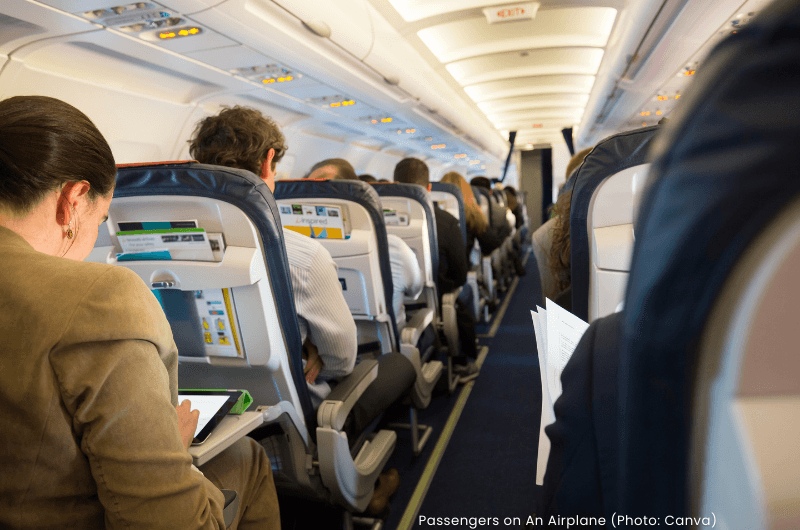
Southwest Airlines will limit refund eligibility for plus-size passengers who purchase a second seat. Starting Jan. 2026, refunds will only be issued if flights have open seats and certain conditions are met—ending the airline’s long-standing goodwill approach. Advocates say the move penalizes larger travelers and erodes accessibility, while industry analysts note it’s part of broader cost-cutting measures ahead of Southwest’s shift to assigned seating. The airline insists the change will improve “fairness” and seating logistics, but critics argue it could discourage travel among customers who already face stigma and higher costs.
Health Insurance Premiums Likely to Rise in 2026

Analysts warn U.S. health insurance premiums are set to increase again in 2026, driven by higher care utilization, new drug costs, and broader system inflation. Employers may respond with narrower networks and higher deductibles, putting more strain on households already squeezed by everyday expenses. The rising costs are also expected to complicate negotiations during open enrollment season, with many families weighing whether employer-sponsored coverage still feels affordable. Between the Lines Even with headline inflation easing, the real cost of health care is heading up. GLP-1 drugs and pent-up demand are reshaping risk pools, meaning families could see slimmer coverage even if wages inch higher.
Musk Sues Apple and OpenAI, Claims AI Antitrust Collusion
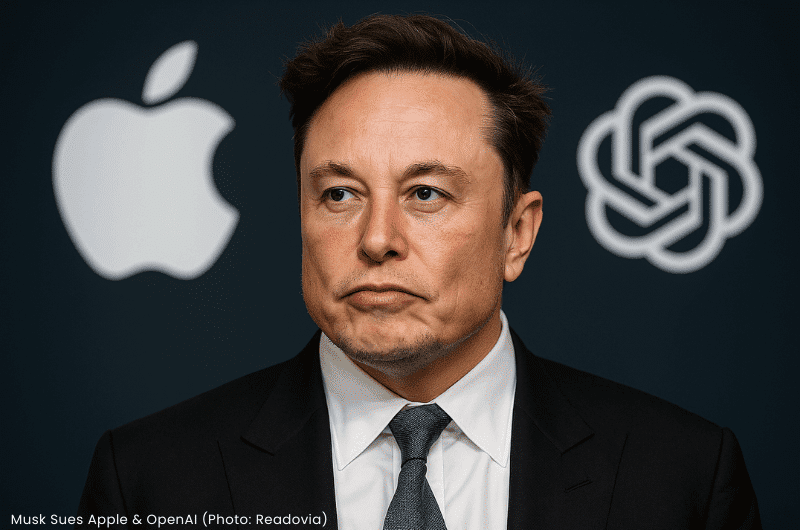
Elon Musk has opened a new front in his war on Big Tech, filing a lawsuit in Texas that accuses Apple and OpenAI of colluding to stifle competition in artificial intelligence. The case alleges Apple’s deepening ties with OpenAI—including reported exclusivity around advanced models—are shutting out rivals such as Musk’s own Grok platform. The suit escalates long-running tensions between Musk and OpenAI, the company he co-founded in 2015 before splitting with its leadership. Musk has argued that OpenAI strayed from its nonprofit mission and has since locked its most powerful AI tools behind paywalls and closed partnerships. By targeting Apple, Musk is also taking on one of the world’s most valuable companies, accusing it of tilting the playing field by bundling OpenAI features into its devices. Legal experts say the case could break open rarely seen details about how AI partnerships are negotiated, raising questions about whether exclusivity deals amount to antitrust violations. Apple and OpenAI, for their part, have so far declined to comment—but both are expected to mount vigorous defenses that frame their cooperation as consumer benefit, not collusion. The lawsuit lands as regulators in Washington, Brussels, and Asia are already sharpening their scrutiny of AI’s winners and gatekeepers. A ruling in Musk’s favor could ripple globally, forcing more open access to frontier AI systems. But even if the case stalls, it injects fresh political and market pressure into a sector already teetering between hype and hard questions about power. Between the Lines Musk’s lawsuit pushes a critical question into the open: who controls access to the most powerful AI systems? If the courts side with him, exclusivity deals could be reined in and transparency forced on partnerships that have quietly shaped the industry. If not, Apple and OpenAI may solidify their role as gatekeepers—tightening the funnel of innovation and leaving rivals scrambling on the outside. The Author
Powerball Jackpot Surges Toward $1B: Frenzy Builds Ahead of Weekend

The Powerball jackpot climbed to $950 million after no winning ticket was drawn Wednesday night. It’s now one of the largest prizes in U.S. lottery history, and ticket sales are expected to soar through the weekend as Americans chase the dream of a life-changing windfall. The staggering prize comes with odds of just 1 in 292 million, yet history shows jackpots of this size ignite coast-to-coast buying sprees—often boosting state revenues earmarked for schools and infrastructure. That’s all for now. Now, if you’ll excuse me, I’ve got an errand to run. The Author