

This Week: Comey Indicted as Trump Signs Sweeping New Tariffs
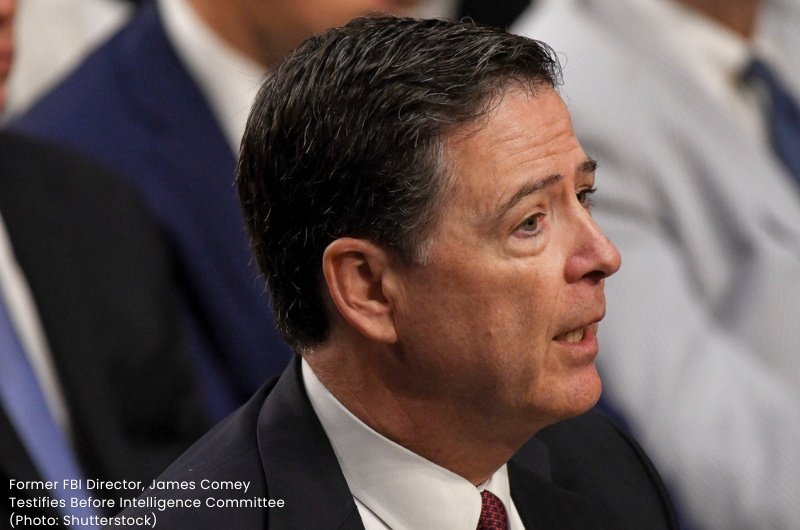
This week brought two major developments out of Washington: the indictment of former FBI Director James Comey and President Trump’s signing of sweeping new tariffs. Comey, charged with obstruction and making false statements to Congress, denied any wrongdoing and said the case is politically motivated. The move deepens tensions between the Justice Department and the Trump administration, raising fresh concerns over the independence of federal institutions. Meanwhile, Trump approved steep new tariffs — 100% on branded drugs, 25% on heavy trucks, and 50% on kitchen cabinets — set to take effect October 1. Economists warn these measures could drive up consumer prices and further strain supply chains already under pressure. Together, the indictment and tariffs represent one of the sharpest escalations yet in the clash between politics, justice, and economics at the national level. The Author
Shutdown Crisis: White House Orders Agencies to Prepare for Mass Firings

In a bold escalation of its budget standoff, the White House has instructed federal agencies to prepare for widespread layoffs in the event of a government shutdown — a far more aggressive posture than in past fiscal impasses. What’s happening An internal memo from the Office of Management and Budget (OMB) directs agencies to develop “reduction in force” plans for programs that will lose funding — unless they align with the president’s priorities. Historically, non-essential federal workers were merely furloughed during shutdowns and rehired once funding resumed. This time, the White House is signaling that many jobs may be permanently cut. The memo instructs agencies to retain only the “minimal number of employees” necessary to fulfill legally mandated functions. Political response & stakes House Republicans have pushed for a short-term continuing resolution (CR) to keep the government operating for another seven weeks — without negotiating additional health-care or social policy changes. Democratic leaders have denounced the White House memo as intimidation. One leader vowed: “We will not be intimidated by your threat to engage in mass firings.” Analysts warn that mass firings would deepen instability in a federal workforce already weakened by earlier cuts, including those tied to recent “efficiency” drives. Some previously terminated workers — especially in the General Services Administration — are being asked to return to duty, with deadlines set for early October. What to watch Will Congress pass a stopgap funding bill before the deadline, or let the shutdown begin? If a shutdown proceeds, can legal challenges or political pressure halt or reverse large-scale firings? How will federal personnel and essential services cope if agencies are forced to slim down staffing drastically? What messaging pivot will the White House employ if this strategy backfires politically or legally? The Author
Trump Touts “Major Progress” on Autism — Pushes Bold New Research Initiatives

This week, President Trump joined administration officials to declare what he called “major progress in understanding the root causes of autism” and to unveil a slate of new initiatives aimed at tackling what he described as an autism epidemic. A sweeping announcement The White House linked a surge in autism diagnoses over the past two decades to potential environmental and medical factors, placing special emphasis on acetaminophen use during pregnancy. The FDA has been directed to pursue new labeling for acetaminophen products, warning of potential developmental risks. A therapeutic pathway has been opened for folinic acid treatments, intended to address folate deficiencies in children with autism. A $50 million federal research program, branded the “Autism Data Science Initiative,” will fund large-scale studies on autism’s origins, spanning genetics, environmental triggers, and treatment outcomes. https://youtu.be/s8-xoV70o_U?si=zTSVxcJZ1IFnPlXT Fierce pushback Medical and scientific groups quickly pushed back, stressing that the evidence linking acetaminophen and autism is not conclusive. Experts warn that correlation does not prove causation, and that untreated pain or fever during pregnancy can itself create health risks. Critics also argue that the administration’s messaging risks fueling confusion, distrust, and stigma while overshadowing ongoing autism research. The Takeaway This story boils down to a high-stakes clash between politics and science over autism’s causes. The announcement marks one of the most sweeping government interventions into autism policy in years — potentially reshaping medical guidance, research priorities, and public perception. Supporters see bold action. Skeptics fear politics is outpacing science. The Author
BREAKING NEWS: FBI Investigates Dallas Immigration Facility Shooting, Finds Anti-ICE Messages
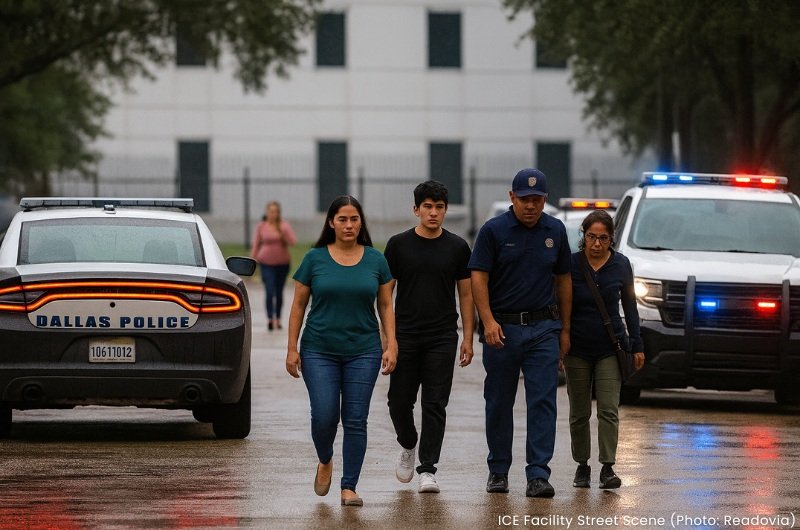
Three people, including detainees, were shot Wednesday morning at a U.S. Immigration and Customs Enforcement (ICE) facility in Dallas before the suspected gunman died from a self-inflicted wound, according to federal authorities. Acting ICE Director Todd Lyons confirmed the attack during an interview on CNN, while Homeland Security spokesperson Tricia McLaughlin later told Fox News that no ICE agents were injured. “We believe he was shooting at law enforcement and detainees from an apartment building,” McLaughlin said. “Detainees were among the victims of the shooting.” The Attack Gunfire erupted around 6:40 a.m. outside an ICE field office near a detention center. Witnesses described chaos as staff and detainees scrambled for safety, with police converging on the scene within minutes. One detainee was killed and two others were injured. Latest Update Dallas Police Chief Eddie Garcia said investigators discovered anti-ICE messages etched onto shell casings found near the shooter. The FBI confirmed it is treating the case as “an act of targeted violence.” Homeland Security Secretary Kristi Noem condemned the shooting as “unprecedented violence” against immigration enforcement. Texas Senators Ted Cruz and John Cornyn denounced the act as politically motivated, while Vice President JD Vance called it “an obsessive attack on law enforcement.” The FBI is now leading the probe, examining the shooter’s communications and possible links to extremist groups.
U.S. Cabinet Members Pay Tribute to Charlie Kirk

In the wake of Charlie Kirk’s shocking assassination on a university campus last week, tributes continue to pour in — not only from students and supporters, but also from inside the halls of power. This week, members of the President’s cabinet stepped forward with their own memories of the conservative activist, underscoring the weight of his sudden loss. While their perspectives varied, the common thread was a recognition of Kirk’s influence. Several described him as “fearless” in his convictions and noted how his voice often drove conversations far beyond the campus stage. Others spoke with visible emotion about their personal encounters, recounting moments when Kirk had challenged them, encouraged them, or simply reminded them of the urgency of public service. https://youtu.be/UEdSH6rku2g?si=y7YemRkQHgCTwIQX The video, which quickly circulated across social media, captures raw reflections from officials who rarely show such candor. It offers a glimpse into how Kirk’s words and work reverberated across Washington, even in places where he was often considered an adversary. For many Americans, this marks a turning point — not only in the political landscape, but in how dissent, debate, and safety on campus are understood. With cabinet members now adding their voices to the chorus of grief, it’s clear that Kirk’s legacy, however divisive, will not fade quietly. The Author
Lighten Up — Enjoy Ranch Dressing Again

For many people, ranch dressing is a guilty pleasure. Creamy, tangy, and addictive — but also a calorie bomb. A traditional homemade batch made with ranch salad dressing seasoning, mayonnaise, and buttermilk can add up to nearly 890 calories in total. That’s more than some full meals. But a new, healthier version of ranch is trending on social media — and this one lets you enjoy the flavor without the calorie overload. The Traditional Recipe Hidden Valley’s iconic recipe calls for: 1 cup mayonnaise 1 cup buttermilk or milk 1 seasoning packet Calories add up quickly. The mayo alone brings in about 800 calories, the buttermilk around 60–70, and the seasoning about 30. Delicious, yes — but diet-friendly, not quite. The Lighter Ranch: A Trending Alternative The healthier recipe swaps heavy ingredients for high-protein, low-fat options: 1 tbsp Hidden Valley Ranch seasoning ¾ cup nonfat or light Greek yogurt 2 tbsp fat-free mayo 1½ tbsp skim milk 1 tbsp fresh dill Juice of ½ lemon The entire batch clocks in at just 150 calories — with 20 grams of protein, 15 grams of carbs, and only 1 gram of fat. That’s fewer calories in the whole batch than in a single serving of traditional ranch. Why It Works Greek yogurt provides creaminess and protein, the lemon juice adds brightness, and dill brings fresh flavor. Together, they deliver the ranch taste people love — without the calorie baggage. Stored in a squeeze bottle, this lighter ranch keeps in the fridge for up to 7 days, making it easy to drizzle on salads, veggies, or even grilled chicken. Final Words Food swaps like this show how small changes add up. By tweaking one of America’s favorite dressings, you can cut calories, boost protein, and still enjoy what you crave. It’s not about giving up flavor — it’s about upgrading it.
Apple Foldable iPhones: Mass Production in India by 2026

Apple’s foldable iPhone has moved from rumor to roadmap. According to reports, the company has begun preparing a pilot production line in Taiwan, with plans to shift mass manufacturing to India in time for an expected 2026 launch. The strategy marks Apple’s boldest supply-chain shift in years—one that could redefine how and where the company builds its most advanced devices. From Taiwan Pilot to Indian Production The pilot line in Taiwan will allow Apple to iron out technical challenges unique to foldables: hinge durability, crease-resistant displays, and production yield issues that can derail mass rollout. Once the kinks are solved, Apple plans to transition manufacturing to India, signaling both confidence in India’s capabilities and a determination to diversify away from China. Why India? India is emerging as Apple’s fastest-growing production hub. Government incentives, a growing skilled workforce, and Apple’s desire to avoid over-reliance on Chinese factories are converging to make India a manufacturing centerpiece. If successful, the move would place India at the center of one of Apple’s most ambitious product launches in years—solidifying its role beyond assembly lines to high-end, next-generation devices. Technical & Supply Chain Hurdles Foldable smartphones are far more complex than standard devices. Dual or triple hinges, flexible OLED panels, and unique battery designs raise costs and complicate mass production. Pilot runs in Taiwan give Apple a controlled environment to troubleshoot before scaling in India. At the same time, balancing suppliers across borders—Taiwan for R&D, India for production—adds logistical complexity. But for Apple, the upside is clear: less dependency on China, and more geographic diversity in its supply chain. A Global Manufacturing Shift Apple isn’t alone in betting big on India. Competitors like Samsung have already expanded their Indian production footprint, but Apple’s decision to entrust a flagship category launch to India sends a different signal. This isn’t just about volume—it’s about credibility. For India, the payoff could be enormous: jobs, technology transfer, and a new status as a global hub for premium device manufacturing. For Apple, it’s a way to show investors and consumers that its supply chain strategy is future-proof. Between the Lines — The Readovia Cut Apple’s foldable iPhone represents a turning point. By anchoring production in India after years of reliance on China, the company is reshaping both its product strategy and its global footprint. The device will test Apple’s ability to innovate while also proving whether India can deliver at the scale the world’s most valuable company demands. ______________ Related Story: The Smartphone Showdown: Samsung’s Tri-Fold vs Apple’s Next Move The Author
Trump’s $100K H-1B Visa Fee Rocks U.S. Tech Hiring

For decades, America’s tech industry has relied on a steady stream of foreign engineers, designers, and developers to fill critical roles. That reliance just became far more expensive. On September 21, 2025, the Trump administration imposed a $100,000 fee on all new H-1B visa applications—a change so sweeping it could redefine how U.S. companies source global talent. What Is the H-1B Visa? The H-1B is a temporary, nonimmigrant visa that allows U.S. employers to hire highly educated foreign professionals in “specialty occupations.” These roles usually require at least a bachelor’s degree or equivalent experience, and are most common in fields like technology, engineering, mathematics, and medical sciences. Paid by U.S. employers, an H-1B visa is typically granted for an initial three-year period, with the option to extend for a maximum of six years. For decades, it has been a key pathway for global talent to contribute to America’s innovation economy. What Changed The new rule applies only to new H-1B petitions. Existing visa holders and renewals are not affected. Employers—not applicants—must cover the cost, which the administration argues will discourage misuse of the visa program and encourage hiring of American workers. But with the price of a new visa now rivaling the cost of an executive hire, companies say it’s an unprecedented financial burden, especially for smaller firms and startups that lack the deep pockets of Big Tech. Employer Reactions Major players like Microsoft, Amazon, and Google are scrambling to reassess hiring strategies. Startups, which often depend on H-1B workers for specialized technical skills, face even harder choices: either absorb the fee, automate, or shift work overseas. The fee is so steep that many employers are questioning whether they can justify hiring foreign candidates at all, potentially reshaping the landscape of the U.S. innovation economy. Worker and Immigrant Perspective For potential applicants, the new policy introduces new barriers—and new fears. Many foreign workers already in the U.S. are safe, but others abroad are reconsidering whether to apply at all. Families are anxious about travel and re-entry, uncertain whether future opportunities will be financially viable. Global Consequences The impact won’t stop at America’s borders. India, the country with the highest number of H-1B applicants, has already warned of “humanitarian consequences” and economic fallout. For decades, the H-1B pipeline has been a bridge between India’s talent pool and Silicon Valley’s demand. Now that bridge looks unstable. Other countries are watching closely. If the U.S. closes its doors, Canada, the U.K., and Australia are poised to scoop up talent eager to work in tech-friendly economies. Economy and Innovation Risks Supporters of the fee argue it will protect U.S. jobs and level the playing field. Critics counter that it risks undermining America’s competitive edge. Without access to global expertise, U.S. firms could face slower growth, weaker innovation, and more outsourcing abroad. The balance between protecting domestic labor and fueling a world-leading tech industry has never been more fragile. Between the Lines The $100,000 H-1B fee is more than a price tag—it’s a signal. The U.S. is recalibrating its stance on immigration, placing cost barriers on global talent that was once welcomed. The question now isn’t whether companies will adapt. It’s whether America can afford the innovation slowdown that may follow.
The Smartphone Showdown: Samsung’s Tri-Fold vs Apple’s Next Move
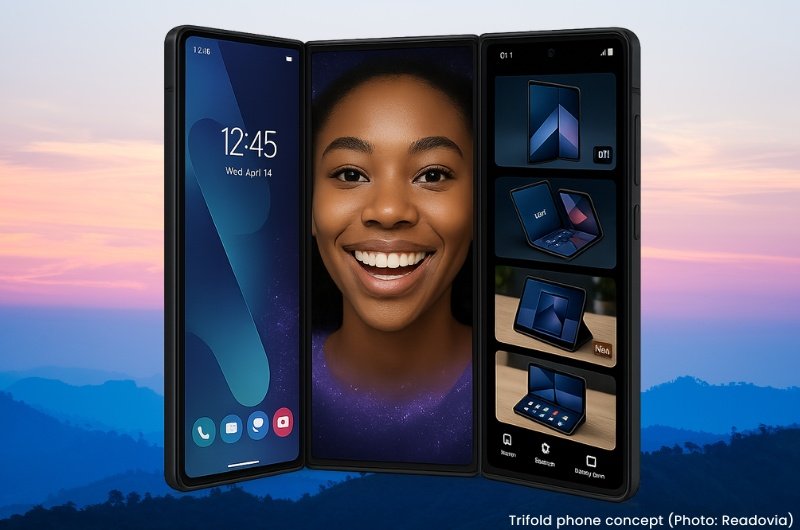
The smartphone wars are entering a new dimension. Samsung is preparing to launch the world’s first tri-fold phone, while Apple is chasing thinness with its next iPhones—even as leaks suggest a foldable iPhone is coming in 2026. It’s a battle of vision: durability and design versus innovation and wow factor. And for once, Samsung isn’t following Apple’s lead—it’s leaping first. Samsung’s Big Swing According to reports, Samsung’s tri-fold phone could be unveiled as soon as September 29, 2025, with limited availability starting in November. The design folds twice, creating a device that can expand into a tablet-sized 12.4-inch display before collapsing back into a pocket-friendly form. Production is expected to be limited—around 50,000 units at launch—targeting markets like South Korea and China before a broader rollout. As for price, industry sources suggest a range of $2,500 to $3,500, reflecting the cost of developing a three-hinge mechanism, multiple batteries, and complex software. If confirmed, this would make it Samsung’s most expensive phone to date. Apple’s Thin Play—and the Fold to Come On the other side of Silicon Valley, Apple is chasing the opposite frontier: thinner devices. Its upcoming iPhone line, tipped to include an “iPhone 17 Air”, will spotlight sleek design over folding tricks. Apple believes lighter and thinner still matters. But make no mistake—Apple is also working behind the scenes on a foldable. The company has not officially confirmed a foldable iPhone for 2026, but multiple credible reports point to a device codenamed “V68” that could launch in the latter half of 2026, likely as part of the iPhone 18 lineup. Early leaks suggest a large internal display with new crease-reducing screen tech, a unique camera system, and Touch ID instead of Face ID. Pricing could land near $2,000, putting it in line with other premium foldables. Apple’s challenge will be marrying its obsession with polish and durability to a form factor that’s notoriously fragile. And as always, the company seems content to enter the race late—confident that when it does, it will redefine the category. The Stakes for Smartphones This showdown underscores a new phase in mobile: Samsung bets on radical form—a phone that can be three devices in one. Apple bets on refinement first—and enters the foldable race later, on its own terms. Consumers face the trade-offs—price, practicality, durability, and bragging rights. The tri-fold could redefine productivity on the go—or flop as a gimmick. Apple’s thinner iPhones may feel evolutionary, not revolutionary. But with its foldable expected in 2026, Apple is ensuring it won’t be left behind. Between the Lines Foldables are no longer “if,” but “when.” Samsung’s tri-fold is a bold play to own the future of the smartphone. Apple’s restraint signals confidence: it doesn’t need to be first, just flawless. The real question is whether consumers want a $2,500 to $3,500 experiment—or if the market will wait until Apple decides it’s ready to bend. The Author
Banner’s Hallmark Files for Bankruptcy

Banner’s Hallmark, a Virginia mainstay known for greeting cards and gifts, has entered Chapter 11 bankruptcy as of September 14, 2025. Nearly 40 Hallmark Gold Crown stores are affected, marking a serious financial crossroads for a brand rooted in tradition and sentiment. For now, the doors remain open. But the filing underscores the harsh reality of running a seasonal, nostalgia-driven business in an era when consumer habits and retail economics are rapidly shifting. Inside the Bankruptcy Filing Court records show Banner’s carrying $10 million to $50 million in assets and liabilities, with significant debts owed to Hallmark Marketing Co. ($6.4 million), Crown MAC ($5.3 million), and PNC Bank ($3 million). The company cited rising operating costs, seasonal revenue swings, and mounting debt pressure as reasons for seeking protection. The broader trend is unmistakable: Hallmark’s physical presence has shrunk dramatically. In just five years, U.S. Gold Crown stores have declined from around 2,000 to about 1,146. While Americans still exchange cards, a growing share of greetings now happen digitally, and budget-conscious shoppers are turning to big-box retailers or online alternatives. Chapter 11: Breathing Room, Not Closure Chapter 11 offers Banner’s Hallmark a temporary reprieve, allowing management to restructure debt and operations while keeping stores running. It’s a chance to reset—but not a guarantee of survival. Success will hinge on whether the chain can adapt quickly to modern consumer behavior, where convenience and cost often outweigh tradition. The Bigger Picture for Retail Banner’s Hallmark is far from alone. Legacy retailers with seasonal or niche offerings are facing the same pressures: Unsteady cash flow tied to holiday and occasion-driven peaks. Changing buying patterns with e-cards, digital gifts, and online shopping eroding traffic. High fixed costs in leases, payroll, and supply chains that leave little flexibility. Each factor erodes margins, and together they create the kind of financial strain that leads to bankruptcy court. Between the Lines Banner’s Hallmark shows how even brands built on emotion and nostalgia can run headlong into financial brick walls. Tradition alone doesn’t secure the bottom line. For retailers, landlords, and lenders, the warning is clear: sentiment sells cards, but it doesn’t pay the rent.