


Beyond the Threshold: OpenAI’s Path to a Trillion-Dollar IPO

OpenAI — the powerhouse behind ChatGPT — is setting the stage for what could become the most consequential initial public offering (IPO) of the decade. Reports indicate the company is preparing to go public with a target valuation of up to $1 trillion (USD), a figure that would place it among the most valuable firms ever to debut on a stock exchange. Setting the Stage OpenAI’s potential IPO would mark a new era — not only for artificial intelligence but for the modern technology market itself. Sources familiar with the company’s plans told Reuters that OpenAI is quietly assembling the financial and structural framework for a listing as early as 2027, following a likely filing period in late 2026. If executed as envisioned, the offering could raise at least $60 billion, providing OpenAI with the capital to expand its computing infrastructure and accelerate development toward artificial general intelligence (AGI). Why Now? This move comes as OpenAI transitions from a capped-profit hybrid into a more conventional corporate structure — one designed to invite public investors while maintaining its original mission under a redefined governance model. Microsoft remains OpenAI’s largest strategic backer, holding roughly 27 percent after several funding rounds. Yet the company has worked to lessen its dependency on the tech giant, both to preserve autonomy and to position itself as an independent leader ready for Wall Street scrutiny. At the same time, the artificial intelligence sector is maturing. Capital requirements are skyrocketing as model training costs soar into the billions, data-center construction becomes mission-critical, and global competition from Anthropic, Google DeepMind, and Meta intensifies. Going public could be the most direct path for OpenAI to sustain its ambitions without relying solely on private funding. The Pillars of the Deal Valuation target: Up to $1 trillion. Estimated raise: At least $60 billion. Expected filing: Second half of 2026. Possible listing: 2027. Corporate model: Transitioned from capped-profit to open for-profit structure. While no specific exchange has been named, the New York Stock Exchange (NYSE) and NASDAQ are both reportedly contenders. Insiders expect a dual-class share structure, giving OpenAI’s leadership — including CEO Sam Altman — greater long-term control. Implications for the Market A successful OpenAI IPO could reshape how the world values artificial intelligence. Beyond its staggering valuation, it would symbolize AI’s transition from private innovation to a publicly traded industrial force. For investors, the move provides a direct route to participate in AI’s long-term growth rather than relying on indirect exposure through Microsoft. For markets, it would set a new precedent — likely drawing comparisons to the historic public debuts of Apple, Google, and Meta, each of which defined a generation of technology investing. For competitors, it may trigger a race to revalue, merge, or go public themselves as the industry realigns around scale, data, and computational capacity. The Broader View While the valuation headlines capture attention, the real story lies in what this means for accountability, governance, and long-term direction. Once public, OpenAI will face quarterly reporting, regulatory oversight, and institutional investor expectations — conditions that can test even the strongest corporate missions. Will OpenAI balance its lofty AGI vision with the demands of shareholders? Will transparency and profit expectations alter its trajectory? Those are the questions defining this next chapter. What to Watch Filing confirmation: when OpenAI submits its S-1 filing to the U.S. Securities and Exchange Commission (SEC) Lead underwriters: which investment banks take the deal Revenue transparency: what financial disclosures reveal about real monetization of ChatGPT and enterprise licensing Governance balance: how OpenAI aligns investor returns with its original “benefit of humanity” clause Regulatory climate: how evolving AI legislation in the U.S. and Europe may affect market appetite The Wallet Perspective For entrepreneurs, executives, and investors alike, this IPO represents the market’s declaration that artificial intelligence has become a core industry shaping global economics. When OpenAI rings the opening bell, it will officially mark the dawn of a new economic era powered by intelligence itself.
The Rise of the AI Reporter: How Business Insider Is Testing the Next Era of Journalism

In a move certain to redefine newsroom workflows, Business Insider has introduced a new byline — “Business Insider AI” — to publish articles generated by artificial intelligence and refined by human editors. The shift marks one of the first large-scale adoptions of AI-assisted authorship by a major media outlet, sparking both intrigue and unease across the journalism industry. Introducing the AI Byline For years, automation in newsrooms has quietly supported journalists through data analysis, earnings reports, and sports summaries. But a visible AI byline — publicly credited on published stories — signals a turning point. According to The New York Post, the company confirmed that “Business Insider AI” is now producing content that blends machine-generated drafts with human editorial oversight. These stories undergo fact-checking and stylistic refinement before publication, ensuring that while AI handles structure and speed, humans preserve tone, accuracy, and editorial integrity. It’s a hybrid workflow — one where machine efficiency meets human judgment — and it could reshape how media companies scale content amid rising demand and shrinking budgets. Zooming In News organizations have long faced a paradox: audiences want more content, but trust in media is fragile. Introducing AI into the byline raises new questions — not just about authenticity, but accountability. Who’s responsible when an error occurs? How transparent should publications be about the role of automation in what readers consume? For Business Insider, the move appears both pragmatic and strategic. By openly crediting its AI system, it’s pre-empting future criticism of hidden automation while testing reader tolerance for machine-assisted journalism. If successful, it could encourage other outlets to follow — especially those struggling with high output expectations in an era of fewer human writers. The Industry Context The timing isn’t coincidental. As generative AI becomes more sophisticated, newsroom experiments are multiplying: The Associated Press uses AI to automate financial summaries. Bloomberg employs AI to speed up data-driven reporting. Gizmodo and others faced backlash for running unreviewed AI content earlier this year. By branding the AI author as a transparent collaborator rather than a ghostwriter, Business Insider aims to rebuild what earlier missteps damaged: public trust. It’s also a test of market acceptance. Can audiences embrace AI-authored journalism if they know it’s still human-guided? The Bigger Picture This is about identity. Newsrooms once defined themselves by their voices — the blend of reporter instincts, editor polish, and organizational ethos. Introducing a synthetic author challenges that definition. But for digital publishers under relentless pressure to scale, the economics are undeniable. AI can produce a first draft in seconds, freeing journalists to focus on deeper analysis, sourcing, and storytelling — the elements that algorithms still can’t convincingly replicate. The real question is how transparently AI will write stories — and how well editors can manage that collaboration. Between the Lines The “AI byline” may become the new intern. It can’t break news, build relationships, or sense tone — but it can structure, summarize, and draft faster than any reporter. What remains uniquely human is judgment, empathy, and voice. For now, Business Insider’s experiment is more about augmentation than automation. Yet it reveals an industry inching closer to a future where editorial desks are hybrid — powered equally by creativity and computation.
Beauty’s Truth Era: Beyond the Filter, Real Skin Wins in 2025

After years of airbrushed perfection and algorithmic beauty standards, a new wave is reshaping the industry — one built on authenticity, transparency, and truth. Across runways, campaigns, and social feeds, real skin is back — pores, freckles, and all. The Great Unfiltering Consumers are tired of impossible ideals. What began as a quiet rebellion against hyper-filtered influencer culture has evolved into a global movement redefining what beauty looks like — and what it means. From major luxury houses to emerging indie brands, the industry is being challenged to step into what insiders call the “truth era.” Models appear makeup-free. Campaigns showcase diverse skin tones, textures, and ages. Even the language around beauty is shifting — from “perfect” and “flawless” to “healthy,” “radiant,” and “real.” What’s happening is anti-illusion. The Shift in Consumer Psychology The psychology behind this movement is as compelling as its aesthetic. After years of social media saturation, filters, and facial-editing apps, consumers — especially Gen Z and Millennials — are gravitating toward authenticity as a form of self-care. According to McKinsey’s State of Beauty 2025 report, 72% of consumers now say they value honesty and transparency from brands more than image-driven perfection. This shift aligns with the rise of skin-positive communities, minimalist routines, and ingredient-driven formulas that prioritize results over marketing promises. In short, consumers no longer want to look retouched — they want to feel restored. How Brands Are Adapting Leading beauty and skincare brands are taking note: Dove continues to set the tone with its “Real Beauty” campaigns, now entering their third decade. Glossier has embraced unfiltered skin photography and models who visibly glow rather than conceal. Estée Lauder Companies and L’Oréal are pivoting their marketing to emphasize efficacy, health, and emotional confidence. Luxury houses such as Chanel and Dior are featuring older models and relaxed skin textures in editorial photography — signaling that refinement doesn’t require retouching. The most successful brands are blending science and sincerity — merging dermatological credibility with emotionally intelligent storytelling. The New Luxury: Confidence Over Concealment Luxury beauty is evolving beyond formulas and price points. In the new landscape, luxury is not about excess — it’s about self-trust. Minimalist routines, clean ingredients, and time-efficient rituals are now status symbols. Consumers are drawn to products that empower rather than conceal, that feel personal rather than performative. In this context, confidence has become the new couture. Between the Lines The “truth era” is redefining artistry. Authenticity can coexist with aspiration. What’s changing is the lens: beauty now reflects humanity, not perfection. For brands, influencers, and media alike, the message is clear — real skin wins.
Unemployment Shock: How the U.S. Is Facing a Perfect Storm of Layoffs, Shutdowns, and Stalled Hiring
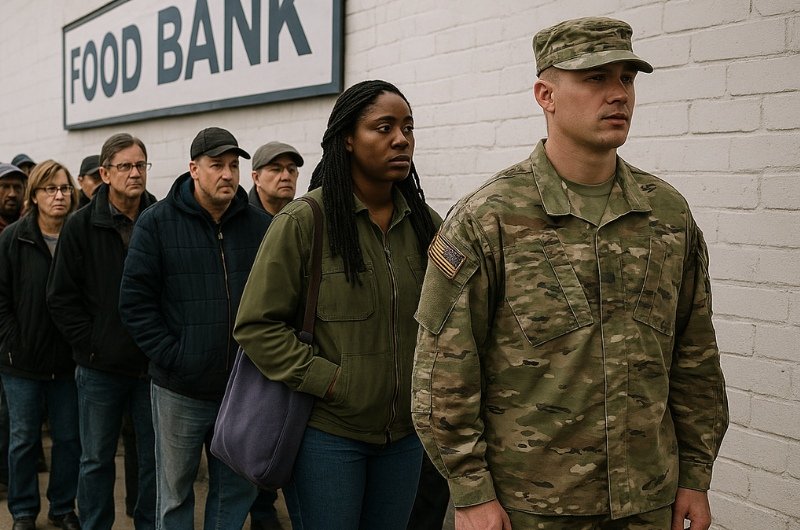
The convergence of a prolonged government shutdown, sweeping corporate layoffs, and an AI-driven labor shift is redefining America’s economic stability. 1. The Perfect Labor Storm Three converging forces are reshaping the U.S. job market into a crisis unlike any in recent memory. The federal government shutdown, now stretching through October, has left hundreds of thousands of federal employees furloughed or working without pay. In the private sector, major corporations are cutting deep—especially in technology, retail, and logistics—while hiring has largely frozen. Although the national unemployment rate remains just above 4%, the broader picture tells a different story: slower hiring, longer job searches, and shrinking opportunities for mid-level professionals displaced by automation. Many economists warn that even as companies tout “efficiency,” the human cost of this recalibration is becoming harder to ignore. 2. Unpaid Federal Workers and the Strain on Savings As the shutdown lingers, more federal workers are now missing entire pay cycles. Some are tapping emergency savings, while others are resorting to hardship withdrawals from retirement accounts such as 401(k) plans. Unlike past shutdowns, the current one coincides with higher consumer costs and interest rates, leaving even those with modest savings unable to stretch their pay gaps for long. Federal contractors, many of whom are not eligible for back pay, face even greater uncertainty about how long their jobs—and their benefits—will remain intact. 3. Low-Income Families and Food Bank Demand Low-income families are among the first to feel the strain of economic shocks. With layoffs mounting and the shutdown halting public assistance programs in some areas, demand at food banks is climbing. Organizations across the country are reporting longer lines, reduced inventories, and increased reliance on donations that can’t keep pace with need. The combination of job losses, rising rents, and stalled benefits has pushed more working families into food insecurity than at any point since the pandemic. 4. The Economic Ripple Effect The ripple effects of this crisis reach far beyond the unemployment line. Each additional week of the government shutdown is expected to cost the United States economy roughly 15 billion dollars in lost Gross Domestic Product (GDP), with a month-long impasse potentially adding tens of thousands of new unemployed workers. Corporate hiring freezes and AI-driven job consolidation compound the problem. Businesses that once relied on human labor for operations, logistics, and administration are increasingly replacing those roles with automation and generative AI systems. The result is an economy that looks stable on paper but feels increasingly brittle on the ground—one where growth depends less on people and more on productivity algorithms. 5. The Human Equation What’s unfolding is more than a fiscal issue—it’s a human one. Families juggling missed paychecks, rising food costs, and uncertain futures are confronting a form of economic fatigue that defies statistics. Workers who once viewed their jobs as secure are now reevaluating their place in a shifting labor landscape that values automation over longevity. The Wallet Perspective For millions of Americans, this moment feels less like an economic cycle and more like a reckoning. Paychecks have stopped, jobs are vanishing, and savings accounts are shrinking at the very moment people need them most. The numbers may read like policy statistics, but behind every data point is a grocery bill, a mortgage payment, or a family standing in a food-bank line. The question now is how many Americans will be financially standing when the economy recovers.
Hurricane Melissa Slams Cuba After Devastating Jamaica

Hurricane Melissa made landfall in eastern Cuba early Wednesday, striking the island’s southern coast with maximum sustained winds of about 120 mph (195 kph), just hours after devastating Jamaica with record-breaking intensity. Cuban authorities said more than 735,000 people were evacuated from coastal towns and flood-prone areas before the storm came ashore near Guamá in Santiago de Cuba province. State media reported widespread flooding, power outages, and landslides across eastern provinces, while communications were disrupted in several areas. On Tuesday, Melissa pummeled Jamaica with winds up to 185 mph, flattening homes, uprooting trees, and cutting power to more than half a million residents. Officials described the hurricane as the strongest ever to hit the island, and rescue teams are still searching for people missing in the aftermath. In Cuba, early images showed flooded streets, damaged roofs, and debris strewn across neighborhoods already coping with chronic shortages of fuel, food, and electricity. Emergency crews worked through the morning to clear blocked roads and restore communication lines as torrential rain continued to fall. The U.S. National Hurricane Center warned that Melissa will continue moving north across the Caribbean Sea on Wednesday, bringing life-threatening storm surge, flash flooding, and landslides to parts of Cuba and the Bahamas before gradually weakening later in the week. Meteorologists say unusually warm ocean temperatures helped intensify the storm, making it one of the most powerful late-season hurricanes on record in the region. Readovia Insights Hurricane Melissa’s back-to-back strike on Jamaica and Cuba highlights the escalating force of tropical systems fueled by warming seas. The twin disasters have left tens of thousands displaced and both nations facing a long recovery, as the wider Caribbean braces for what could become one of its costliest hurricane seasons in recent years.
“A Tale of Two Wallets” — U.S. Card Spending Rises While Savings Shrink

Spending Up, Resilience Down Across the U.S., consumer card spending continues to rise even as household savings decline. The average family’s financial cushion has thinned noticeably over the past year, and the national saving rate now sits near record lows. The surface strength in spending masks a deeper fragility — one that hints at growing financial strain beneath the numbers. Growing Divide Between Income Tiers Higher-income households remain active in travel, dining, and discretionary purchases, while lower- and middle-income consumers are pulling back. Economists expect overall consumer-spending growth to slow through 2025, with inflationary pressure quietly reshaping everyday habits. The Hidden Fragility Many households are increasingly relying on credit to maintain their lifestyles. Non-essential purchases are being reconsidered, and monthly subscriptions are being cancelled as saving patterns continue to erode. The result is a slow shift from confidence to caution — a quiet tightening of the wallet that could ripple through key sectors by year’s end. Brand & Strategic Implications For consumer brands and financial institutions, the message is clear: sustained spending doesn’t necessarily mean stability. The emerging “two-wallet” economy — one resilient, one stretched — demands segmentation, empathy, and precision in how companies engage, price, and communicate with their audiences. Readovia Insight In a landscape where spending persists but savings fade, the most forward-looking enterprises will pivot from velocity and volume to value, loyalty, and resilience. The question is which consumers will spend, and on what terms.
Category 5 Hurricane Melissa Nears Jamaica’s Shores — Officials Warn of Catastrophic Impact

Hurricane Melissa has maintained Category 5 intensity as it approaches Jamaican shores, driving sustained winds near 175 mph and threatening catastrophic, life-threatening flooding and storm surge, according to the National Hurricane Center. Forecasters expect the storm to make landfall around 11:30 am ET today, potentially as the strongest hurricane ever to strike the island. A Slow-Moving Monster Melissa is crawling northwest at just 7 mph, giving the storm more time to unleash torrential rain and destructive winds. Surge levels could reach 13 feet along the southern coast, with rainfall totals exceeding 40 inches in higher elevations — conditions likely to trigger widespread flooding and landslides. ‘The Worst in a Century’ Prime Minister Andrew Holness has ordered mandatory evacuations in vulnerable coastal and low-lying regions, stressing that residents must secure property, move to designated shelters and heed all directives without delay. Officials warn that Melissa could be the most devastating hurricane to hit Jamaica in more than a century. Neighboring nations, including Cuba and the Bahamas, are now preparing for potential impacts later this week. Though the U.S. mainland is outside the direct path, forecasters say the storm will still generate dangerous surf, rip currents, and coastal flooding along parts of the Florida and East Coast shorelines. Human Toll and Infrastructure Risks Even before landfall, power outages have swept through coastal towns, and communication lines are beginning to fail. Shelters are at capacity, with tens of thousands of residents waiting out the storm. Early assessments suggest more than a million people may be directly affected once the eye crosses the coast. The Bigger Picture Melissa’s sheer strength and endurance highlight how warming oceans are fueling more powerful, slower, and wetter storms. Its combination of sustained winds, extreme rainfall, and prolonged movement makes it uniquely destructive — prolonging danger long after the center moves inland. Readovia Insight Hurricane Melissa is a wake-up call. As climate-driven storms intensify, the economic and operational risks to entire regions are becoming impossible to ignore. From supply chains and agriculture to tourism and insurance, the storm’s ripple effects will reach far beyond Jamaica, testing both resilience and recovery in an era defined by extremes.
Cozy, Nostalgic & Resilient — 2025’s Home Design Reflects Wellness and Weather-Proofing

Comfort Reimagined The modern home has entered a new era — one defined as much by comfort and security as by style. In 2025, design trends are merging aesthetic nostalgia with climate resilience, giving rise to spaces that feel emotionally grounding yet structurally prepared for what’s next. Across the country, homeowners are downsizing formal rooms, emphasizing cozy corners, and incorporating natural light and tactile textures. Plush seating, soft woods, and muted earth tones are replacing the sterile minimalism of the past decade. The Return of the Personal Sanctuary What once began as a post-pandemic return to “home as sanctuary” has evolved into a sustained lifestyle shift. People are spending more time indoors, investing in what designers call emotional architecture — layouts and materials that promote calm, focus, and a sense of renewal. Even high-end buyers are prioritizing comfort over prestige, turning attention to functionality, sustainability, and spaces that feel lived in rather than displayed. Designing for the New Normal Beyond comfort, resilience is the new must-have feature. Whole-home battery backups, weather-resistant exteriors, and smart flood barriers are appearing alongside solar installations and sustainable materials. In regions prone to hurricanes or wildfires, “climate-ready design” has become a selling point, not an afterthought. Builders and remodelers are adapting, blending aesthetics with practicality. Today’s design conversation is no longer about what looks good — but what lasts. The Emotional Equation The resurgence of vintage décor and nostalgic color palettes signals something deeper than taste: a craving for continuity in an uncertain world. In every way, the 2025 home reflects the emotional state of its inhabitants — grounded, resourceful, and quietly optimistic. Readovia Insight The new home aesthetic is less about trend and more about truth — a return to the kind of living that values comfort, preparedness, and personal connection over spectacle. As climate and culture reshape how people live, the homes that endure will be those that blend heart with resilience.
Amazon to Cut 14,000 Corporate Jobs in AI-Driven Restructure

Amazon has confirmed plans to eliminate approximately 14,000 corporate roles as part of a sweeping restructuring effort tied to its growing focus on artificial intelligence and automation. The cuts mark one of the company’s largest workforce reductions since the pandemic era and reflect a broader push to streamline operations and accelerate AI-powered efficiencies across its business units. While the layoffs represent a fraction of Amazon’s global headcount, the decision underscores a deeper shift taking hold across the corporate world. Major technology and service companies are re-aligning their talent models around automation, data-driven decision-making, and productivity systems powered by generative AI. The affected roles are expected to span multiple divisions, including corporate services, advertising, human resources, and elements of Amazon Web Services — the company’s most profitable arm. The restructuring comes amid rising investment in AI infrastructure, cloud computing, and next-generation logistics systems designed to cut costs and improve output. The Strategic Underpinnings Leadership has framed the move not as a retreat, but as a reconfiguration — aimed at flattening hierarchies, reducing duplication, and redeploying resources into high-growth areas. Amazon’s leadership has publicly stated that AI will increasingly shape how the company manages its workforce and delivers value, and this round of changes signals that vision becoming operational. The Wider Lense Beyond Amazon, the announcement reflects an inflection point in how corporations are approaching efficiency. The next wave of workforce evolution is about redesigning entire organizational structures for an AI-first world. As automation absorbs repetitive tasks, the focus of human work shifts toward creativity, strategy, and oversight — roles where judgment and innovation still matter most. Readovia Insight This restructuring signals a new rule for the age of intelligent systems: adaptability is the new measure of progress – not workforce growth. Companies that learn to blend AI capability with human capital strategy will define the next generation of competitive advantage. The challenge ahead is how to redeploy talent into a future where technology changes faster than tradition.
President Trump Suggests He “Would Love” a Third Term as Shutdown Drags On
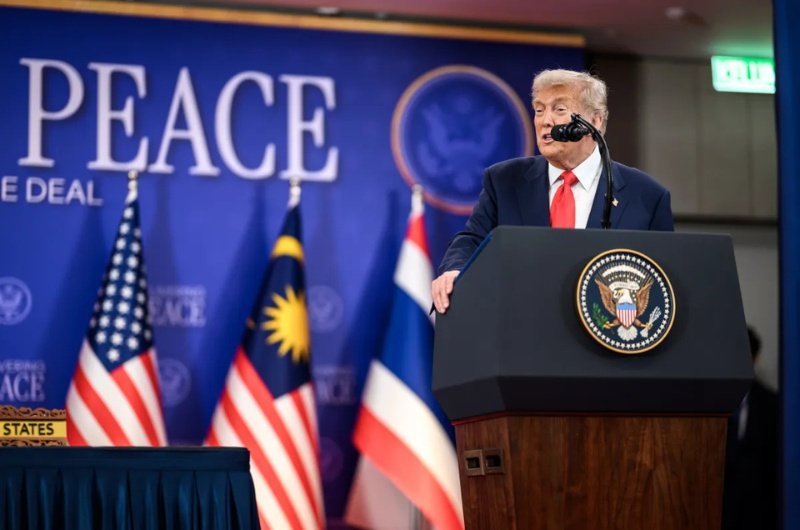
With the government shutdown entering its fourth week, President Donald Trump reignited controversy overseas by suggesting he would “love” to seek a third term in office — a remark that instantly sparked debate over presidential limits and political norms already under strain. A Remark That Hit a Nerve Speaking to reporters during his Asia trip, Trump dismissed questions about when the shutdown might end, instead pivoting to what he described as his “long future ahead.” When pressed on whether that future could include a third campaign, he smiled and replied, “I would love to do it.” The comment landed sharply in Washington, where lawmakers remain deadlocked over a federal funding bill. For many, it underscored how Trump’s rhetoric continues to blur the line between humor and constitutional challenge — and how political fatigue is deepening after nearly a month of gridlock. A Government at a Standstill The shutdown, now stretching past 27 days, has furloughed thousands of federal workers and shuttered key operations. Negotiations have faltered over competing spending priorities and immigration funding, with the Senate failing to pass multiple procedural votes. Public frustration is mounting, and pollsters say confidence in Congress has dipped to its lowest level in two years. Yet on social media, Trump’s remarks about a potential third term quickly overtook coverage of the stalled talks, highlighting how personality politics continues to eclipse governance. A Test of Boundaries Under the 22nd Amendment, presidents are limited to two elected terms — a cornerstone of modern American democracy. But in an era when political conventions are often treated as flexible, Trump’s offhand suggestion struck many observers as a deliberate provocation. Analysts say the comment may serve a dual purpose: energizing his base by projecting longevity while baiting critics into outrage that keeps him dominating the news cycle. Either way, it reflects a reality reshaping Washington — one where political theater increasingly defines the agenda itself. Between the Lines For a country still emerging from years of polarization, the combination of governing paralysis and performative power is testing the resilience of American institutions. Each shutdown, each boundary-pushing remark, becomes less an exception and more a pattern — proof that the structure of U.S. governance now depends as much on restraint as on law.