

America Prepares for Historic 250th Birthday Celebration

On July 4, 2026, the United States will mark a milestone few nations ever reach: the 250th anniversary of the signing of the Declaration of Independence. While the date itself is still months away, preparations are already underway as federal officials, community organizations, and historical institutions begin planning what is expected to be one of the most significant national commemorations in modern American history. Earlier this year, the White House established Task Force 250, a federal initiative designed to coordinate planning efforts across government agencies ahead of the anniversary. The broader effort, often referred to as “America 250,” aims to recognize the nation’s founding, celebrate its achievements, and encourage Americans to reflect on the people, events, and ideas that have shaped the country over the past two and a half centuries. The anniversary is expected to include a wide range of events, educational programs, historical exhibitions, community celebrations, and patriotic activities taking place across the country. From major cities to small towns, organizations are beginning to develop plans that highlight local history while connecting communities to the larger story of America’s founding and evolution. For many Americans, the celebration may also provide an opportunity to revisit the nation’s origins. The Declaration of Independence, adopted on July 4, 1776, marked the formal separation of the thirteen colonies from Great Britain and laid the foundation for what would become the United States. Nearly 250 years later, the anniversary offers a moment to reflect not only on the country’s history, but also on its continuing journey. While much of the planning is still taking shape, one thing is already clear: America’s 250th birthday will be more than a single day of celebration. It is shaping up to be a nationwide reflection on the nation’s past, present, and future — a rare milestone that will connect generations of Americans to one of the most important moments in the country’s history.
Costco’s Strong Quarter Highlights America’s Ongoing Search for Value

Costco’s latest earnings report offered a fresh look at how Americans are spending their money in 2026. The warehouse retailer reported quarterly revenue of approximately $70.5 billion, up roughly 12% from a year ago, as shoppers continued turning to bulk purchases, discounted fuel, and everyday essentials. The results suggest that even as economic conditions evolve, value remains a powerful force shaping consumer behavior. Behind the strong quarter is a trend that has become increasingly visible across the retail industry: consumers are still spending, but they are paying closer attention to value. Rather than eliminating purchases altogether, many households appear to be seeking out retailers that can help stretch their budgets further. For Costco, that strategy has long been central to its business model. Founded on a membership-based warehouse concept, Costco has built its reputation around offering quality merchandise at competitive prices. Today, the company operates hundreds of warehouse locations worldwide and serves millions of members who pay annual fees for access to its stores, services, and exclusive pricing. The model has helped create a loyal customer base that often returns for both necessities and discretionary purchases. The company’s continued growth may also reflect a broader shift in how consumers shop. Bulk buying, once associated primarily with large families and small businesses, has increasingly become part of mainstream household budgeting. As food, transportation, and everyday living costs remain important considerations for many Americans, warehouse clubs continue to offer an alternative to traditional retail shopping. While economic forecasts remain mixed, Costco’s latest quarter suggests that value-driven retailers remain well positioned. In an environment where consumers are carefully weighing every dollar, companies that can consistently deliver savings and convenience may continue to hold a competitive advantage.
The Growing Importance of “Third Places” in Modern Life

You may not know the term “third place,” but chances are you’ve been looking for one. In sociology, a “third place” refers to spaces outside of home and work where people gather, relax, socialize, or simply exist around other people. Coffee shops, bookstores, parks, walking trails, gyms, libraries, neighborhood restaurants, and even hotel lounges can all serve as third places — environments that offer connection without the pressure of formal social plans. As remote work, digital communication, and social media continue reshaping modern routines, many people are beginning to realize how much everyday life has changed. For millions of adults, the daily rhythm now revolves almost entirely around home and work, with fewer casual interactions in between. The result can feel surprisingly isolating, even in a hyper-connected world. Advertisement That shift may help explain why spaces designed for comfort, conversation, and quiet presence are gaining renewed attention. Across the country, people are increasingly gravitating toward cozy coffee shops, walking clubs, boutique gyms, public markets, and community-driven spaces that offer a sense of atmosphere and belonging without requiring constant engagement. In many ways, third places are becoming less about productivity and more about emotional balance. Some people go to a café not because they need coffee, but because they want to be around life. Others seek out bookstores, parks, or neighborhood gathering spots simply to step away from screens and routines that can feel repetitive or mentally exhausting. The concept is also emerging at a time when loneliness and digital fatigue remain major cultural conversations. While technology has made communication easier than ever, it has not necessarily replaced the value of physical spaces where people can casually interact, observe, recharge, or feel part of a community. Modern life may be faster and more connected than ever before — but for many people, the simple act of finding a comfortable place outside of work and home is quietly becoming one of the most valuable parts of the day.
Inflation Is Rising Again — And Americans Are Starting to Feel It

The annual inflation rate climbed to roughly 3.8% in April — its highest level in nearly three years — as rising energy and food costs pushed consumer prices higher across the United States, according to newly released economic data. The increase marked an acceleration from the 3.3% annual inflation rate recorded in March and is raising fresh concerns about the direction of the U.S. economy heading into summer. According to data from the Bureau of Labor Statistics, surging energy and food prices — fueled in part by ongoing conflict and instability in the Middle East — were among the primary drivers behind the latest increase. After months of cautious optimism surrounding cooling inflation and a resilient stock market, the new figures suggest price pressures may once again be building across key parts of the economy. Gas prices, grocery costs, and household expenses remain major concerns for many consumers even as Wall Street continues climbing on the back of strong artificial intelligence and technology investment. The latest inflation report also adds new pressure on the Federal Reserve, which has been closely watching whether inflation would continue easing after years of elevated prices. Persistent inflation could complicate expectations for future interest rate cuts and increase uncertainty for borrowers, businesses, and financial markets alike. At the same time, investors remain heavily focused on the booming AI economy, which continues fueling optimism across technology and infrastructure sectors. Companies tied to artificial intelligence, semiconductors, cloud infrastructure, and energy demand have helped push major market indexes toward record territory despite broader economic concerns. The growing divide between Wall Street optimism and everyday economic pressure is becoming one of the defining financial stories of 2026. For some Americans, investment portfolios and retirement accounts may be benefiting from the market rally. But for others, the rising cost of groceries, utilities, insurance, and transportation continues to shape daily financial decisions in ways that are becoming increasingly difficult to ignore.
Space Stocks Are Surging Again as Investors Chase the Next Big Boom

Space-related stocks jumped sharply Wednesday as renewed excitement surrounding SpaceX and the broader commercial space industry fueled another wave of investor momentum across the sector. Much of the enthusiasm followed SpaceX’s latest Starship test activity and growing speculation surrounding a future IPO, which many investors believe could become one of the largest public offerings in modern market history. Even though SpaceX remains privately held, its growing influence is increasingly lifting publicly traded companies connected to satellite communications, launch systems, and orbital infrastructure. Advertisement Among the biggest gainers was AST SpaceMobile, (ASTS) whose stock surged as investors poured back into companies tied to the future of space-based communications networks. The company has attracted growing attention for its satellite-to-cellphone technology and partnerships tied to major telecom providers, positioning it as one of the most closely watched names in the emerging space communications race. The rally reflects a broader shift happening on Wall Street, where investors are increasingly viewing space not simply as exploration, but as a potential long-term infrastructure economy involving internet connectivity, defense systems, satellite data networks, and global communications. In many ways, the sector is beginning to resemble the early excitement surrounding artificial intelligence infrastructure stocks. Still, analysts caution that many space-related companies remain highly volatile and speculative, with sharp swings often driven by headlines, launch milestones, and investor sentiment rather than consistent profitability. But for now, momentum is clearly returning to the sector — and investors appear eager to position themselves early if the commercial space economy continues expanding. The Readovia Lens Wall Street is constantly searching for the next transformational growth story. For years, that narrative centered around artificial intelligence. Now, investors are increasingly beginning to wonder whether the next massive infrastructure race could be unfolding above Earth — powered by satellites, communications networks, defense technology, and the growing commercialization of space.
Supreme Court Sides With Trump in High-Stakes Immigration Speech Dispute

The U.S. Supreme Court delivered a significant legal victory to the Trump administration Tuesday in a closely watched case involving speech restrictions placed on federal immigration judges, adding new momentum to the broader national debate surrounding immigration policy, executive authority, and constitutional rights. The dispute centered on a policy requiring immigration judges to seek approval before making certain public comments connected to immigration matters or their official roles. Critics argued the restrictions violated First Amendment protections and raised concerns about judicial independence inside the nation’s immigration court system. Rather than issuing a sweeping ruling on free speech itself, the Supreme Court focused primarily on procedural issues tied to how the case was handled in lower courts. The justices determined that an appeals court relied too heavily on arguments that were not directly presented by the plaintiffs, sending the case back for further review. While the ruling does not fully settle the broader constitutional questions surrounding the policy, it gives the Trump administration a major legal advantage for now and preserves the restrictions as the case continues moving through the judicial system. Supporters of the policy argue the rules help maintain neutrality and professionalism within immigration courts, while opponents view the restrictions as government overreach that limits open discussion on issues of public importance. The decision arrives at a time when immigration remains one of the most politically charged issues in the country, with legal disputes over border enforcement, deportation policies, and federal authority continuing to intensify ahead of the next election cycle. The Readovia Lens Immigration battles are increasingly evolving into larger constitutional fights involving executive power, federal oversight, and the limits of speech within government institutions. Cases like this reflect how deeply immigration policy is now intertwined with broader questions about transparency, accountability, and authority inside the American legal system.
Anthropic Says AI Could Help Unlock a Nobel Prize-Level Discovery Within a Year

Artificial intelligence may be approaching a turning point that extends far beyond chatbots and productivity tools. According to Anthropic co-founder Jack Clark, AI systems could help humans achieve a Nobel Prize-level scientific breakthrough within the next year — a prediction that is fueling growing debate across the technology and research communities. Clark made the remarks during a recent lecture discussing the rapid pace of AI advancement and the expanding role these systems may soon play in scientific discovery. The prediction reflects a broader belief among some AI leaders that advanced models are beginning to move beyond information retrieval and coding assistance into areas involving scientific reasoning, hypothesis generation, and complex research support. The idea may sound ambitious, but recent developments are already beginning to reshape how researchers view AI’s capabilities. Advanced reasoning models have shown increasing potential in mathematics, biology, chemistry, and data analysis, leading some scientists to believe artificial intelligence could eventually accelerate discoveries that might otherwise take humans years to uncover. At the same time, AI companies are aggressively expanding into scientific research itself. Major firms are investing heavily in AI-assisted drug discovery, biological research, and advanced laboratory workflows as the race to commercialize scientific AI accelerates. Still, skepticism remains. Critics argue that AI-generated breakthroughs continue to rely heavily on human interpretation, validation, and scientific direction. Others warn that growing dependence on AI systems for intellectual work could eventually weaken human creativity and independent problem-solving. The Readovia Lens The real story may not be whether artificial intelligence helps produce a Nobel Prize-level discovery within a year. It may be that humanity is entering an era where AI increasingly participates in the discovery process itself. If that shift continues, artificial intelligence could evolve from being a tool humans use into an active collaborator in some of humanity’s most important scientific advances.
White House Expands TrumpRx.gov to Include More Everyday Medications

The White House announced this week that TrumpRx.gov has expanded to include hundreds of additional generic medications, giving Americans more tools to compare prescription drug prices and explore lower-cost options online. The administration said the updated platform is designed to improve transparency around everyday medicines as pressure over healthcare affordability continues across the country. According to the White House, the expanded TrumpRx.gov database now includes more than 600 generic prescription drugs commonly used to treat conditions such as high blood pressure, diabetes, infections, and chronic pain. The platform allows consumers to search medications, compare pricing information, and review pharmacy options directly through the website. The administration described the expansion as part of President Donald Trump’s broader effort to reduce prescription drug costs and increase consumer access to pricing information that has traditionally been difficult for many Americans to navigate. Healthcare pricing has long been criticized for lacking transparency, with patients often discovering major price differences between pharmacies for the same medication. The move also reflects a growing national focus on direct-to-consumer healthcare tools, including online pharmacy services and digital pricing platforms that allow patients to compare medication costs before filling prescriptions. In recent years, companies such as Amazon and Cost Plus Drugs have helped popularize consumer-facing prescription pricing models aimed at lowering costs and increasing visibility into medication pricing. While supporters argue the expansion could help Americans save money on routine prescriptions, critics continue to debate how much influence pricing platforms alone can have on the broader cost of healthcare in the United States. Even so, the issue of prescription affordability remains one of the most closely watched economic and healthcare concerns facing millions of Americans.
FBI Report Points to Major Drop in Violent Crime Nationwide

Violent crime across the United States dropped significantly in 2025, according to newly released FBI data showing one of the sharpest nationwide declines in decades. The preliminary report found violent crime fell 9.3% compared to the previous year, with major decreases reported in murder, robbery, aggravated assault, and rape. The numbers arrive as crime and public safety continue to dominate political debate heading into the election cycle. The White House pointed to the report as evidence that the administration’s pro-law enforcement policies are helping improve safety in American communities, while supporters of local reform efforts argue that multiple factors are contributing to the decline. According to the FBI’s early data, murders dropped by more than 14%, while robberies and aggravated assaults also posted notable declines nationwide. The agency said the findings are based on information submitted by thousands of law enforcement agencies across the country and represent one of the earliest comprehensive looks at national crime trends for the year. Crime analysts caution that national numbers often tell only part of the story. While many major cities have reported improving conditions, some communities continue to struggle with violent offenses, property crime, and repeat offender issues. Researchers also note that crime trends are influenced by a wide range of factors, including policing strategies, economic conditions, community programs, and post-pandemic social stabilization. Even so, the latest FBI figures suggest the United States may be experiencing a broader cooling of the violent crime surge that followed the pandemic era. Whether the decline continues into next year could become one of the most closely watched public safety stories in the country.
America’s Electricity Grid Is Stepping Into the AI Economy
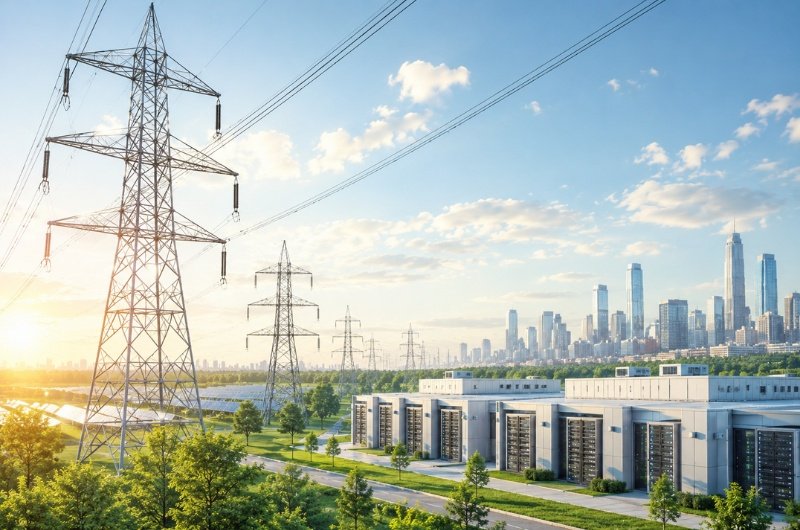
The artificial intelligence boom is beginning to reshape a part of the economy few investors expected: America’s power industry. A massive proposed merger involving two of the nation’s largest energy companies is drawing new attention to how quickly electricity demand is becoming one of the defining forces behind the next phase of the AI economy. The deal would create one of the most powerful utility operators in the United States at a time when artificial intelligence is driving an unprecedented expansion of data centers across the country. Advertisement For years, AI was largely viewed as a software revolution unfolding through chatbots, algorithms, and digital platforms. But behind the scenes, the technology depends on something far more physical: enormous amounts of electricity. Training and operating advanced AI systems now requires sprawling data centers filled with high-performance chips running around the clock. Those facilities consume massive amounts of energy for computing, cooling, and infrastructure support — and demand is rising rapidly as AI adoption accelerates across business, government, healthcare, finance, and consumer technology. The shift is beginning to change how Wall Street views utility companies and energy infrastructure. Investors who once treated power companies as slow-moving defensive plays are increasingly recognizing them as critical participants in the AI economy itself. In some regions, utility providers are already racing to expand grid capacity to support a growing wave of AI-related construction projects. Virginia has emerged as one of the clearest examples of the transformation underway. Already home to one of the world’s largest concentrations of data centers, the state has become a major hub for the infrastructure powering artificial intelligence. Similar expansions are beginning to spread into other parts of the country as technology firms compete to secure long-term energy access for future AI growth. The implications could stretch well beyond the technology sector. As AI infrastructure expands, energy demand is expected to fuel new investment in grid modernization, transmission systems, battery storage, renewable energy, and nuclear power. Some analysts now believe electricity availability itself could become one of the most important competitive factors in the global AI race. At the same time, the rapid growth of AI infrastructure is raising broader economic questions. Building and powering massive data centers requires billions of dollars in long-term investment, and some experts believe the growing strain on regional grids could eventually place upward pressure on electricity costs in heavily concentrated markets. The emerging reality is becoming harder to ignore: artificial intelligence may be digital, but the economy supporting it is deeply physical. For investors, the shift is becoming increasingly difficult to ignore. As artificial intelligence expands beyond software into full-scale infrastructure, utilities, grid operators, energy producers, and data center companies are beginning to attract renewed attention from Wall Street. The AI economy may ultimately create winners far beyond traditional technology firms. The Readovia Lens We’ve said it before – the next phase of the AI boom may depend less on apps and more on infrastructure. Behind every intelligent system is a growing network of power plants, transmission lines, cooling systems, and data centers consuming extraordinary amounts of electricity. In the years ahead, the companies supplying that energy may quietly become some of the most important players in the modern economy.