


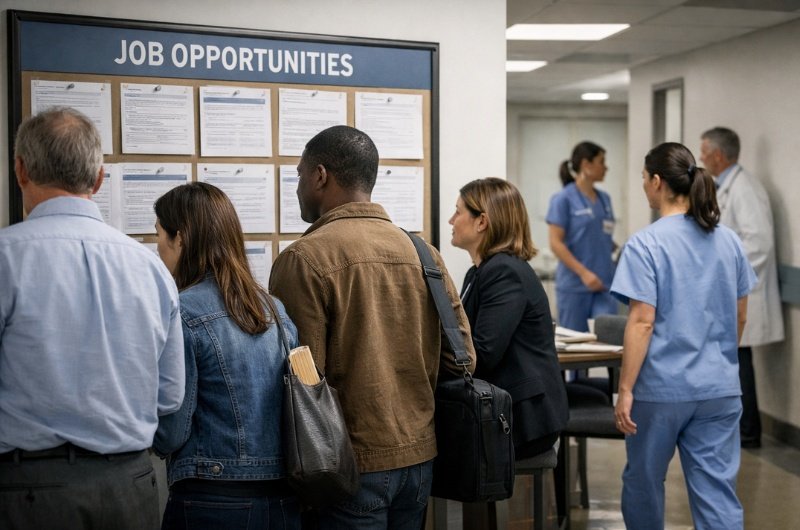
U.S. private-sector hiring slowed significantly at the start of 2026, pointing to a cooling labor market as employers remain cautious about expanding payrolls. New data show that companies added roughly 22,000 jobs in January, a decline from revised gains in December and far below what economists had anticipated.
Job growth was heavily concentrated in education and health services, which added tens of thousands of positions and accounted for the bulk of overall gains. Outside of those areas, hiring was weak. Professional and business services saw substantial job losses, while manufacturing continued to shed positions, extending a downturn that has been underway for much of the past year.
The pattern reflects what economists describe as a “low-hire, low-fire” environment. Employers are largely avoiding large-scale layoffs, but many are also postponing new hiring as they weigh inflation pressures, borrowing costs, and uncertain consumer demand. Instead, companies appear focused on retaining existing workers rather than bringing on new staff.
Despite the slowdown in hiring, wage growth remained steady. Workers who stayed in their jobs continued to see solid year-over-year pay increases, while those who changed roles experienced even stronger gains, signaling that competition for labor has eased but not disappeared.
Economists characterized January’s data as evidence of a labor market that is cooling rather than collapsing. With the government-issued January employment report delayed due to a federal shutdown, the private payroll data offers the clearest view so far of how the job market is starting the year.
The Readovia Lens
January’s hiring slowdown highlights an economy that is gradually losing momentum without tipping into widespread job losses. For households, this means employment may remain relatively stable, but opportunities to switch jobs or negotiate higher pay could become more limited if cautious hiring persists into the spring.