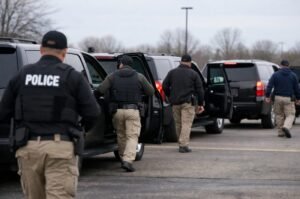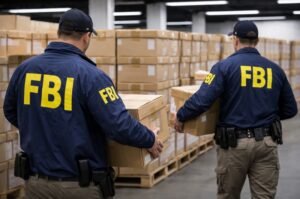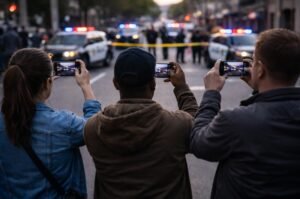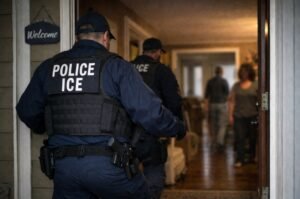



The killing of Alex Petti during a federal immigration operation in Minnesota over the weekend has ignited a familiar and deeply unsettling national debate: what happens when official statements do not appear to align with what the public can plainly see. In a press briefing following the incident, the Department of Homeland Security described a confrontation that, according to authorities, justified the use of deadly force. But video footage circulating online has prompted many Americans to question whether the events involving Petti unfolded as described.
According to federal officials, Petti posed a threat during the operation and resisted law enforcement. Video recorded at the scene, however, appears to show a markedly different sequence of events, one that has fueled public skepticism and intensified scrutiny. The footage, widely shared and closely examined, has become central to how the public understands the incident, raising questions that extend beyond a single encounter.
At the heart of the controversy is not only what happened in Minnesota, but how Americans are being asked to reconcile competing versions of reality. In an era where video evidence is often immediate and unavoidable, public trust increasingly depends on whether official narratives can withstand direct visual comparison. When there appears to be a gap between what authorities assert and what citizens believe they are seeing, confidence in institutions erodes quickly.
Calls for transparency have grown in the days since the shooting. Civil rights advocates, community leaders, and several lawmakers are urging an independent investigation to establish a clear and verifiable account of the events. They argue that credibility cannot be restored through statements alone, but through an open process that allows evidence, including video, to be reviewed impartially.
The incident also unfolds amid heightened national tensions surrounding immigration enforcement and the role of federal agents in local communities. For Immigration and Customs Enforcement, the moment underscores a broader challenge: maintaining public trust while operating in environments where nearly every interaction may be recorded, replayed, and questioned in real time.
Ultimately, this case is not just about one operation or one life lost — it is about whether truth is established through evidence or dictated through statements, and whether public trust can survive when Americans are asked to doubt what they have already seen with their own eyes.