

What Washington Is Prioritizing — and What’s Being Quietly Delayed
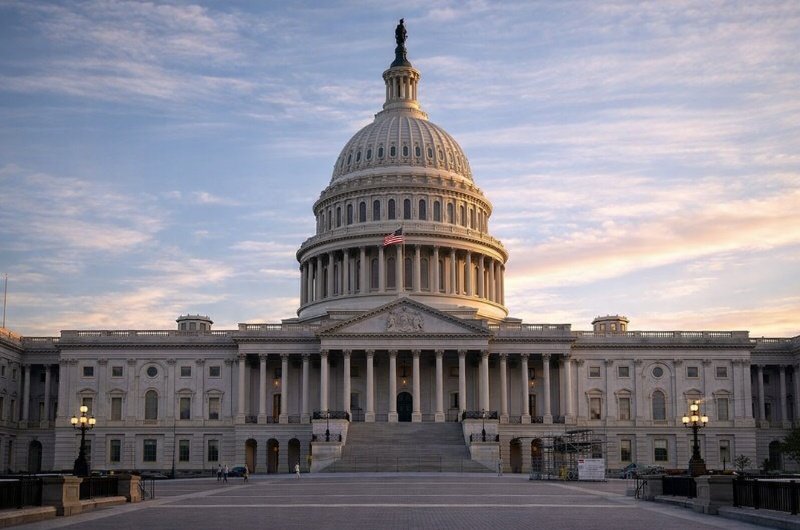
As Washington settles into the rhythm of 2026, the gap between policy priorities and unresolved issues is becoming clearer. While lawmakers continue to focus on high-visibility topics, several long-standing challenges remain stalled, quietly pushed further down the agenda as political attention shifts elsewhere. Economic pressures, healthcare affordability, and housing access continue to dominate public concern, yet progress on comprehensive solutions has been uneven. Lawmakers have advanced targeted measures and short-term extensions, but broader reforms remain entangled in negotiations, budget constraints, and competing legislative timelines. Behind the scenes, aides and analysts say much of Congress’s energy is being directed toward managing existing programs and preventing disruptions rather than advancing sweeping new initiatives. That approach has helped maintain stability in some areas, but it has also slowed momentum on issues that require structural change. The result is a policy environment defined less by decisive breakthroughs and more by incremental movement. While some priorities advance in pieces, others linger in committee discussions or await future compromise, leaving uncertainty about when — or if — they will resurface in a meaningful way. As the year unfolds, the political test may not be which proposals dominate headlines, but which delayed issues lawmakers ultimately choose to confront once the immediate pressures ease.
U.S. Army Secretary Returns to Role as Russia-Ukraine Negotiator

The Trump administration has once again turned to the U.S. Army secretary, Dan Driscol, to play a central role in diplomatic efforts aimed at ending the war between Russia and Ukraine. The move places a senior military official back at the negotiating table as talks continue over the future of the nearly four-year conflict. President Donald Trump has increasingly relied on a small circle of trusted officials to represent U.S. interests in discussions involving Moscow and Kyiv. The Army secretary’s renewed involvement signals an approach that blends military perspective with diplomatic engagement as negotiations remain complex and unresolved. An Unconventional Diplomatic Role The position of Army secretary is traditionally focused on overseeing the administration, readiness, and operations of the U.S. Army. Direct participation in international peace negotiations is rare, making the role notable as talks continue to address some of the most difficult issues surrounding the war. The secretary has previously participated in negotiations related to the conflict, and this latest involvement suggests continuity in the administration’s strategy as discussions move forward. The talks are expected to focus on long-standing points of contention, including territorial control, security guarantees, and conditions for a potential ceasefire. High-Level Talks Continue Current negotiations are taking place alongside other senior U.S. envoys, as well as Russian and Ukrainian representatives. While details of the discussions have been closely held, the renewed participation of the Army secretary underscores the administration’s effort to maintain pressure for progress while keeping military considerations closely aligned with diplomatic objectives. Officials familiar with the talks have indicated that the discussions remain challenging, with both sides holding firm positions on key issues. Any potential breakthrough is expected to require further negotiation and sustained engagement. What Comes Next Despite continued dialogue, a comprehensive agreement has yet to emerge. Observers note that the path forward will likely involve incremental steps rather than a single sweeping resolution, as negotiators work to narrow gaps on security, sovereignty, and enforcement mechanisms. For now, the Army secretary’s return to the negotiating role reflects the administration’s ongoing attempt to balance diplomacy and defense expertise as the war enters another critical phase.
LIVE: Trump Addresses World Leaders at Davos, Says Europe Is “Not Heading in the Right Direction”
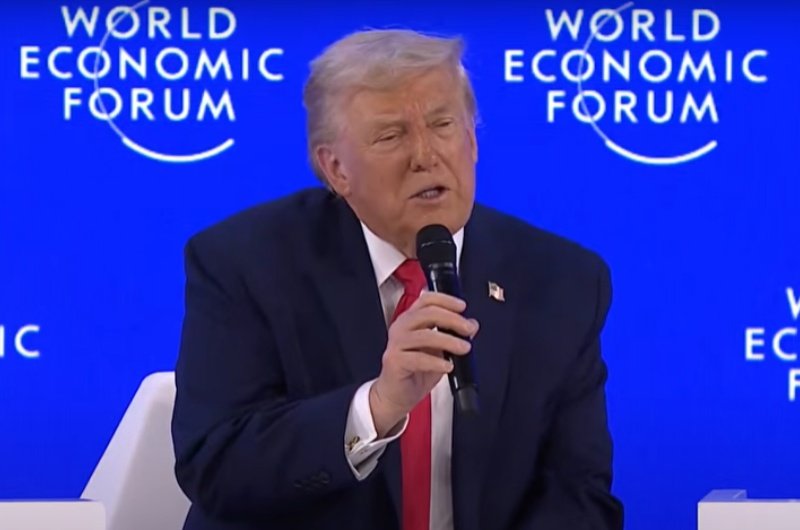
President Donald Trump told global leaders gathered at the World Economic Forum on Wednesday that Europe is “not heading in the right direction,” offering a frank assessment of economic conditions as he outlined his administration’s priorities on trade, energy, and global competitiveness. Speaking in Davos, Trump pointed to challenges facing European economies, including growth concerns, regulatory pressures, and energy policy, while contrasting them with the U.S. approach to domestic manufacturing and energy production. He framed his remarks within a broader discussion about economic direction and long-term competitiveness in a changing global landscape. Trump’s comments came as world leaders and investors closely monitor policy signals amid ongoing geopolitical and economic uncertainty. His remarks suggested the United States will continue emphasizing trade negotiations and economic leverage as key tools of foreign policy during his second term. The address also highlighted differing perspectives between Washington and European capitals on globalization, climate policy, and regulation — areas that continue to shape transatlantic discussions. Davos is traditionally a forum for global dialogue and coordination. Trump’s remarks underscored how divergent economic views and national priorities are increasingly influencing global policy conversations in 2026.
President Trump Reviews 2025 Accomplishments At White House Press Briefing
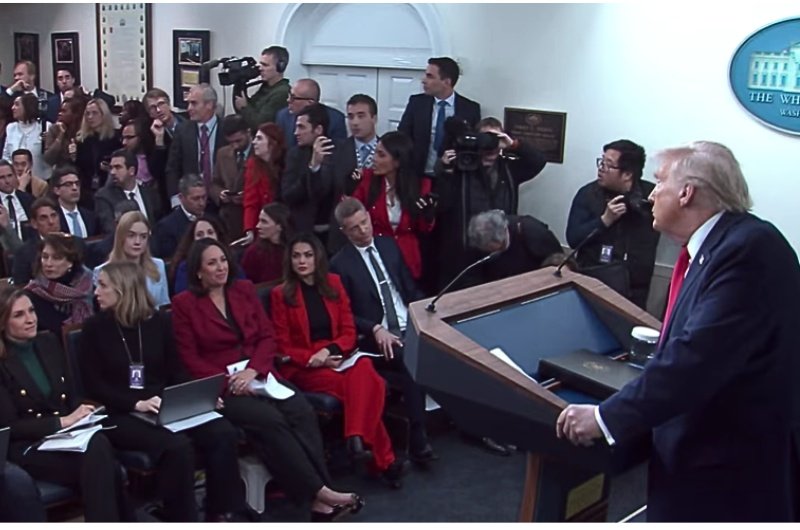
Today marks one year since President Donald Trump resumed office for a second term. During a White House press briefing, the president reviewed his administration’s 2025 accomplishments, touching on the economy, inflation, trade, taxes, drug pricing, manufacturing, border security, and other policy priorities as his second term enters its second year. The briefing comes as the administration seeks to frame its policy record heading into the second year of the term, with the president highlighting what he described as progress across several major areas. The remarks outlined priorities the White House says are shaping economic conditions, government spending, and national security, while signaling areas of continued focus in the months ahead. ——————– RELATED: Markets, Rates, and Prices: What to Watch After Today’s White House Briefing
Republicans Break Ranks With Trump Over Greenland Strategy
President Trump’s push to assert U.S. control over Greenland is facing rare resistance from within his own party, as several Republican leaders publicly criticize the strategy and warn of long-term consequences for U.S. alliances. Prominent Republicans have expressed concern that threatening tariffs — and floating more aggressive measures — against NATO allies could fracture relationships that have anchored U.S. foreign policy for decades. Some lawmakers described the approach as risky, arguing it underscores the need for diplomacy rather than economic or political pressure. Several GOP figures emphasized that Greenland’s future cannot be dictated unilaterally and cautioned that escalating tensions with European partners could weaken NATO’s collective strength. Others pointed to Congress’s constitutional role in foreign policy and defense matters, signaling limits to executive authority. Behind the scenes, congressional leaders are reportedly working to reassure European counterparts that the United States remains committed to cooperation and alliance stability, even as the White House escalates its rhetoric. The internal pushback marks one of the clearest foreign-policy splits within the Republican Party in recent years and reflects broader unease about the direction of U.S. engagement with long-standing allies.
Senate Republicans Block Vote to Limit Military Authority on Venezuela
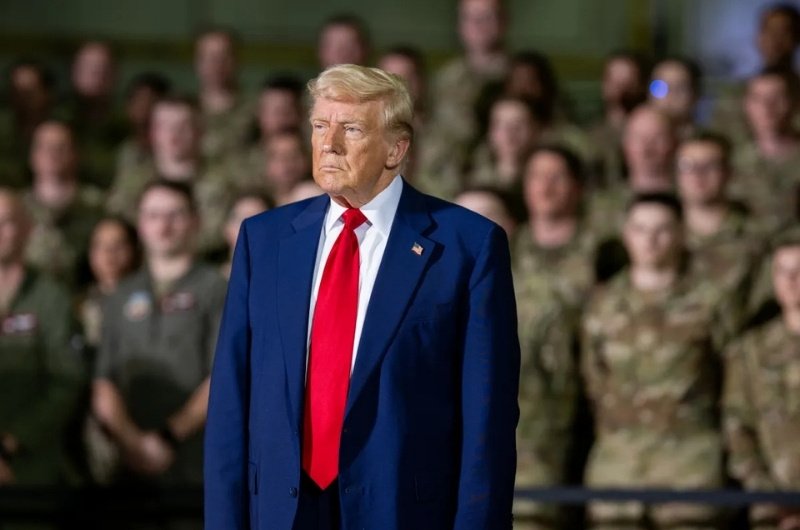
Senate Republicans moved Wednesday to block a Democratic-led effort that would have required congressional approval before the U.S. could take certain military actions involving Venezuela. The proposal aimed to reaffirm Congress’s role in decisions related to war and military force. Supporters said it was a safeguard against the president acting alone on matters that could draw the U.S. into deeper involvement abroad. Republicans rejected the measure, arguing it would limit the president’s ability to respond quickly to international threats. GOP leaders said existing law already provides sufficient oversight and warned that additional restrictions could weaken U.S. foreign policy flexibility. The blocked vote underscores a familiar divide in Washington over who should have the final say on military action. While the measure will not advance, it highlights growing tensions as lawmakers debate the scope of presidential power amid ongoing global instability.
Real Wages Rising as Inflation Remains in Check, White House Says
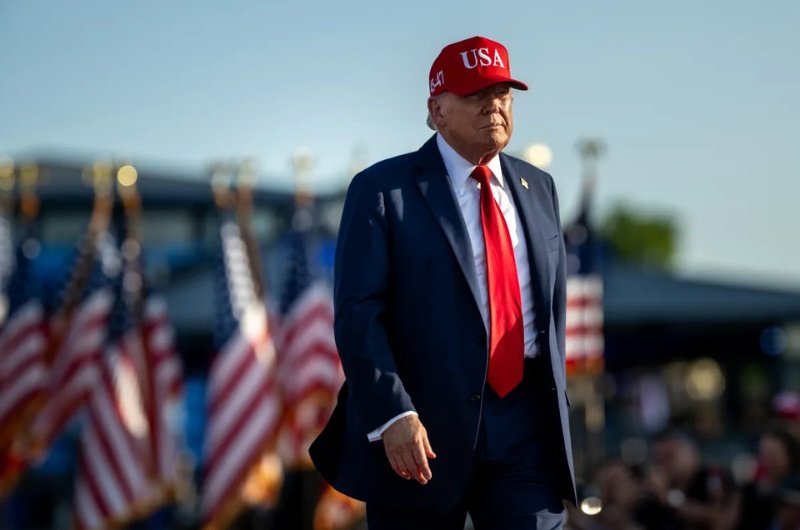
The White House today emphasized that American workers are seeing real wage gains at a time when inflation remains relatively low, painting the latest economic data as a sign of renewed purchasing power for households and blue-collar earners. According to the administration’s economic assessment, inflation has stabilized at levels below those inherited from the prior year, while real private-sector earnings are projected to grow faster than price increases. That dynamic suggests many workers could regain some of the purchasing power lost amid high cost pressures in recent years. The advance in real wages is notable across several sectors of the economy, particularly among goods-producing and construction workers. These gains are being framed as evidence that middle- and working-class Americans are beginning to benefit from broader economic shifts, including changes in pricing dynamics for key goods such as automobiles. Administration officials have tied these developments to a series of fiscal and regulatory actions aimed at easing cost pressures while stimulating private-sector growth. They argue that, with inflation under control, wage growth becomes a more meaningful contributor to household financial health — a contrast to periods when price increases outpaced earnings. At the same time, the broader labor market shows mixed signals. While real earnings are climbing in several industries, overall job growth has been modest and uneven, leaving questions about the durability and inclusiveness of the current recovery. For many Americans, the interplay between stable prices and rising wages could ease budget strains and translate into tangible improvements in day-to-day living costs. However, economists caution that while headline numbers are positive, underlying factors such as labor force participation and sectoral job trends will be key to sustaining broader gains.
Senate Advances War Powers Resolution to Curb Trump’s Authority on Venezuela

In a rare bipartisan move, the U.S. Senate voted Thursday to advance a war powers resolution aimed at limiting Donald Trump’s ability to take military action against Venezuela without explicit congressional approval. Five Republican senators broke with party leadership to join Democrats in allowing the measure to move forward, signaling growing unease on Capitol Hill over executive authority in matters of war. The resolution would require the president to seek authorization from Congress before engaging U.S. forces in hostilities involving Venezuela, except in cases of imminent threat. Supporters of the measure argue that the Constitution clearly assigns Congress the power to declare war, and that recent actions toward Venezuela risk drawing the United States into a broader conflict without sufficient debate or oversight. They say the vote reflects concern not only about Venezuela specifically, but about preserving the balance of power between the legislative and executive branches. The White House has pushed back forcefully, warning that the resolution could weaken the president’s ability to respond quickly to international threats and undermine U.S. credibility abroad. Administration allies argue that flexibility is essential when dealing with unstable regimes and rapidly evolving security situations. While the resolution faces an uncertain path ahead — including the likelihood of a presidential veto — Thursday’s vote marks a notable moment of bipartisan resistance. It underscores rising tension between Congress and the executive branch as lawmakers reassert their role in shaping U.S. military engagement and foreign policy decisions.
Sara Carter Confirmed as Nation’s Drug Czar, Becoming First Woman to Lead U.S. Drug Policy
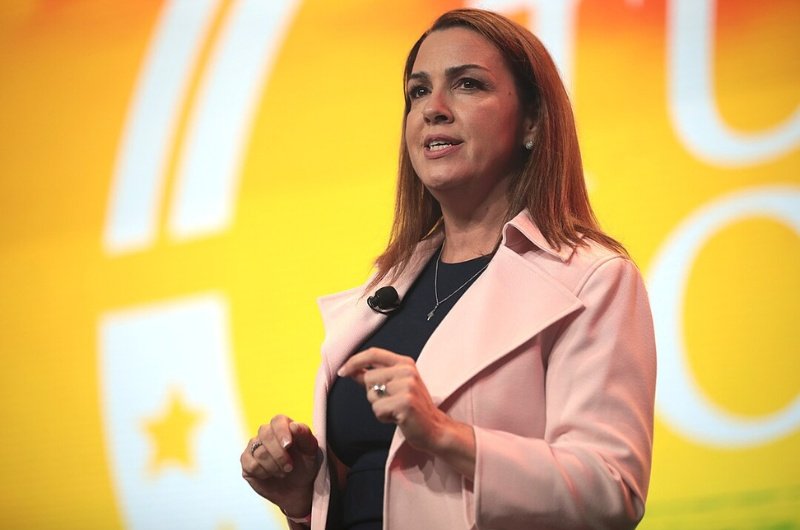
Sara Carter has been confirmed by the U.S. Senate as Director of the Office of National Drug Control Policy, placing her at the helm of the federal government’s efforts to combat drug trafficking, addiction, and overdose nationwide. Her confirmation marks a historic milestone, as Carter becomes the first woman to lead the nation’s drug control policy. The Senate vote was closely divided, underscoring the political sensitivities surrounding drug enforcement, public health strategy, and border security. Carter was nominated by President Trump and now assumes responsibility for coordinating federal drug policy across multiple agencies, including prevention, treatment, law enforcement, and international cooperation. In remarks following her confirmation, Carter emphasized a commitment to protecting American families and communities from the harms of illicit drugs. She signaled a dual focus on holding traffickers accountable while also supporting prevention and recovery efforts aimed at reducing addiction and overdose deaths. Carter brings a nontraditional background to the role, having built her career as an investigative journalist covering cartel activity, drug trafficking routes, and organized crime, particularly along the U.S.–Mexico border. Supporters argue that her field experience provides firsthand insight into the networks driving the drug trade, while critics have questioned how that background will translate into managing a large federal policy operation. The Office of National Drug Control Policy plays a central role in shaping the federal government’s response to drug-related challenges, including coordination between domestic agencies and international partners. The director’s influence can extend across public health initiatives, criminal enforcement priorities, and diplomatic efforts aimed at disrupting trafficking organizations. Carter takes office at a time when the United States continues to grapple with fentanyl-related overdoses, cartel-driven drug flows, and ongoing debates over how best to balance enforcement with treatment. Her leadership will be closely watched as the administration moves to define its approach to one of the country’s most persistent and complex policy challenges.
Why the U.S. Has Pursued Nicolás Maduro for Years — And What Comes Next
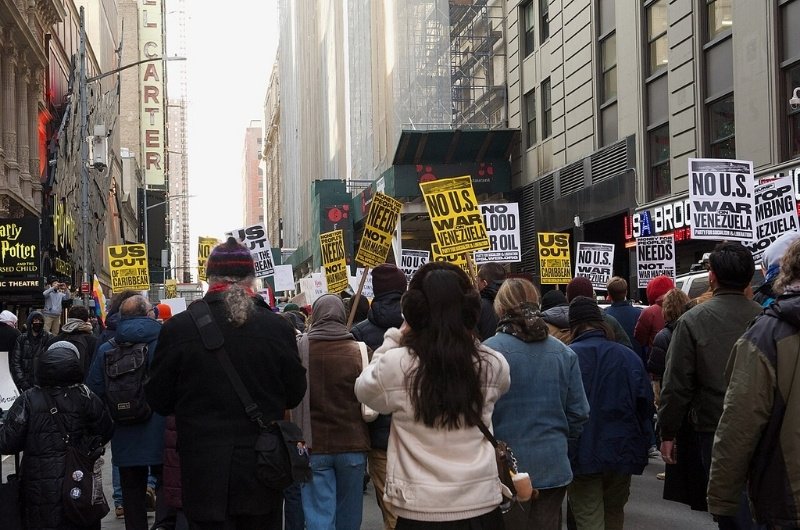
For more than half a decade, U.S. authorities have pursued Nicolás Maduro, accusing Venezuela’s long-time leader of using the power of the state to facilitate drug trafficking, corruption, and violence. What once appeared to be a distant standoff between Washington and Caracas has now moved squarely into the U.S. legal system, marking a rare and consequential escalation in international accountability. At the center of the case are allegations that Maduro oversaw and protected a sprawling drug-trafficking operation while in office. U.S. prosecutors say he relied on elements of the Venezuelan government and military to enable cocaine shipments bound for the United States, while using intimidation and corruption to maintain control at home. The charges include conspiracy to commit narco-terrorism, large-scale drug trafficking, and weapons-related offenses tied to organized criminal groups. The U.S. pursuit of Maduro became public in 2020, when federal authorities unsealed an indictment and announced a reward of up to $50 million for information leading to his arrest. Prosecutors accused him of leading the so-called Cartel of the Suns, a network allegedly embedded within Venezuela’s military structure and designed to shield drug shipments from interception. Now in U.S. custody, Maduro has rejected the accusations and challenged the legitimacy of the case itself. He told the court that he was taken by force and brought to the United States, calling the operation a violation of international law. He has also insisted that he remains Venezuela’s legitimate president, a position his legal team is expected to use in challenging U.S. jurisdiction and the circumstances of his detention. What comes next will test both legal precedent and geopolitical boundaries. The case moves into pretrial proceedings as courts weigh claims of sovereignty against allegations of transnational crime, all under intense international scrutiny. However the legal process unfolds, the prosecution of a former foreign leader inside a U.S. courtroom signals a clear message: allegations of state-backed criminal activity may no longer remain beyond the reach of American courts. ——————– Related: Maduro Pleads Not Guilty in New York Court to Narco-Terrorism and Drug Trafficking Charges