

Trump’s Face Could Appear on a New $250 Bill as Treasury Prepares for Potential Approval
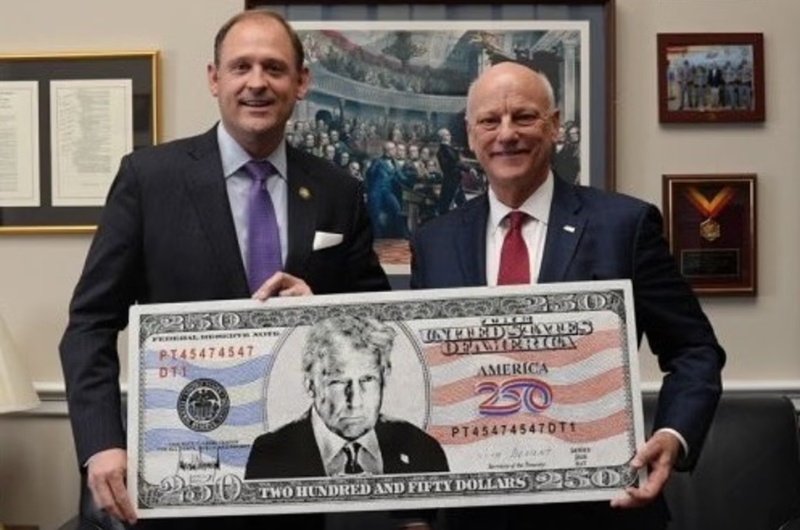
A proposal that once seemed unlikely is moving closer to reality after Treasury officials confirmed preparations for a potential $250 bill featuring President Donald Trump. The development follows growing support among some lawmakers and allies of the president who argue that Trump’s influence on modern American politics warrants consideration for a new denomination tied to the nation’s upcoming 250th anniversary celebration. Recent reports indicate the Treasury Department has already prepared preliminary designs should Congress ultimately authorize the move. The proposal faces a significant hurdle. Current federal law generally prohibits living individuals from appearing on U.S. currency, meaning Congress would need to change longstanding rules before any such bill could be issued. Supporters view the idea as a way to commemorate a president they believe reshaped American politics, while critics argue that placing a living political figure on U.S. currency would break with long-established traditions intended to keep the nation’s money above contemporary political disputes. The discussion comes as the United States prepares for a series of events marking the country’s 250th anniversary. The semiquincentennial celebration has become a major priority for the administration, with officials emphasizing patriotism, national heritage, and America’s founding story. In that context, the proposed $250 bill has evolved from a symbolic political idea into a broader debate about how the nation chooses to recognize influential leaders and historic moments. Even if Congress were to approve the proposal, a new denomination would represent a significant departure from modern U.S. currency practices. The highest denomination currently circulated is the $100 bill, and economists have long questioned whether larger notes would serve a practical purpose in an increasingly digital economy. Still, the proposal has succeeded in capturing national attention, ensuring that the debate extends far beyond the design of a single piece of currency. Whether the idea ultimately becomes reality or remains a political symbol, the conversation highlights a larger question: how should America honor the figures who shape its history? As the nation’s 250th birthday approaches, that debate is likely to continue well beyond the halls of Congress.
America Prepares for Historic 250th Birthday Celebration

On July 4, 2026, the United States will mark a milestone few nations ever reach: the 250th anniversary of the signing of the Declaration of Independence. While the date itself is still months away, preparations are already underway as federal officials, community organizations, and historical institutions begin planning what is expected to be one of the most significant national commemorations in modern American history. Earlier this year, the White House established Task Force 250, a federal initiative designed to coordinate planning efforts across government agencies ahead of the anniversary. The broader effort, often referred to as “America 250,” aims to recognize the nation’s founding, celebrate its achievements, and encourage Americans to reflect on the people, events, and ideas that have shaped the country over the past two and a half centuries. The anniversary is expected to include a wide range of events, educational programs, historical exhibitions, community celebrations, and patriotic activities taking place across the country. From major cities to small towns, organizations are beginning to develop plans that highlight local history while connecting communities to the larger story of America’s founding and evolution. For many Americans, the celebration may also provide an opportunity to revisit the nation’s origins. The Declaration of Independence, adopted on July 4, 1776, marked the formal separation of the thirteen colonies from Great Britain and laid the foundation for what would become the United States. Nearly 250 years later, the anniversary offers a moment to reflect not only on the country’s history, but also on its continuing journey. While much of the planning is still taking shape, one thing is already clear: America’s 250th birthday will be more than a single day of celebration. It is shaping up to be a nationwide reflection on the nation’s past, present, and future — a rare milestone that will connect generations of Americans to one of the most important moments in the country’s history.
Inflation Is Rising Again — And Americans Are Starting to Feel It

The annual inflation rate climbed to roughly 3.8% in April — its highest level in nearly three years — as rising energy and food costs pushed consumer prices higher across the United States, according to newly released economic data. The increase marked an acceleration from the 3.3% annual inflation rate recorded in March and is raising fresh concerns about the direction of the U.S. economy heading into summer. According to data from the Bureau of Labor Statistics, surging energy and food prices — fueled in part by ongoing conflict and instability in the Middle East — were among the primary drivers behind the latest increase. After months of cautious optimism surrounding cooling inflation and a resilient stock market, the new figures suggest price pressures may once again be building across key parts of the economy. Gas prices, grocery costs, and household expenses remain major concerns for many consumers even as Wall Street continues climbing on the back of strong artificial intelligence and technology investment. The latest inflation report also adds new pressure on the Federal Reserve, which has been closely watching whether inflation would continue easing after years of elevated prices. Persistent inflation could complicate expectations for future interest rate cuts and increase uncertainty for borrowers, businesses, and financial markets alike. At the same time, investors remain heavily focused on the booming AI economy, which continues fueling optimism across technology and infrastructure sectors. Companies tied to artificial intelligence, semiconductors, cloud infrastructure, and energy demand have helped push major market indexes toward record territory despite broader economic concerns. The growing divide between Wall Street optimism and everyday economic pressure is becoming one of the defining financial stories of 2026. For some Americans, investment portfolios and retirement accounts may be benefiting from the market rally. But for others, the rising cost of groceries, utilities, insurance, and transportation continues to shape daily financial decisions in ways that are becoming increasingly difficult to ignore.
Supreme Court Sides With Trump in High-Stakes Immigration Speech Dispute

The U.S. Supreme Court delivered a significant legal victory to the Trump administration Tuesday in a closely watched case involving speech restrictions placed on federal immigration judges, adding new momentum to the broader national debate surrounding immigration policy, executive authority, and constitutional rights. The dispute centered on a policy requiring immigration judges to seek approval before making certain public comments connected to immigration matters or their official roles. Critics argued the restrictions violated First Amendment protections and raised concerns about judicial independence inside the nation’s immigration court system. Rather than issuing a sweeping ruling on free speech itself, the Supreme Court focused primarily on procedural issues tied to how the case was handled in lower courts. The justices determined that an appeals court relied too heavily on arguments that were not directly presented by the plaintiffs, sending the case back for further review. While the ruling does not fully settle the broader constitutional questions surrounding the policy, it gives the Trump administration a major legal advantage for now and preserves the restrictions as the case continues moving through the judicial system. Supporters of the policy argue the rules help maintain neutrality and professionalism within immigration courts, while opponents view the restrictions as government overreach that limits open discussion on issues of public importance. The decision arrives at a time when immigration remains one of the most politically charged issues in the country, with legal disputes over border enforcement, deportation policies, and federal authority continuing to intensify ahead of the next election cycle. The Readovia Lens Immigration battles are increasingly evolving into larger constitutional fights involving executive power, federal oversight, and the limits of speech within government institutions. Cases like this reflect how deeply immigration policy is now intertwined with broader questions about transparency, accountability, and authority inside the American legal system.
White House Expands TrumpRx.gov to Include More Everyday Medications

The White House announced this week that TrumpRx.gov has expanded to include hundreds of additional generic medications, giving Americans more tools to compare prescription drug prices and explore lower-cost options online. The administration said the updated platform is designed to improve transparency around everyday medicines as pressure over healthcare affordability continues across the country. According to the White House, the expanded TrumpRx.gov database now includes more than 600 generic prescription drugs commonly used to treat conditions such as high blood pressure, diabetes, infections, and chronic pain. The platform allows consumers to search medications, compare pricing information, and review pharmacy options directly through the website. The administration described the expansion as part of President Donald Trump’s broader effort to reduce prescription drug costs and increase consumer access to pricing information that has traditionally been difficult for many Americans to navigate. Healthcare pricing has long been criticized for lacking transparency, with patients often discovering major price differences between pharmacies for the same medication. The move also reflects a growing national focus on direct-to-consumer healthcare tools, including online pharmacy services and digital pricing platforms that allow patients to compare medication costs before filling prescriptions. In recent years, companies such as Amazon and Cost Plus Drugs have helped popularize consumer-facing prescription pricing models aimed at lowering costs and increasing visibility into medication pricing. While supporters argue the expansion could help Americans save money on routine prescriptions, critics continue to debate how much influence pricing platforms alone can have on the broader cost of healthcare in the United States. Even so, the issue of prescription affordability remains one of the most closely watched economic and healthcare concerns facing millions of Americans.
FBI Report Points to Major Drop in Violent Crime Nationwide

Violent crime across the United States dropped significantly in 2025, according to newly released FBI data showing one of the sharpest nationwide declines in decades. The preliminary report found violent crime fell 9.3% compared to the previous year, with major decreases reported in murder, robbery, aggravated assault, and rape. The numbers arrive as crime and public safety continue to dominate political debate heading into the election cycle. The White House pointed to the report as evidence that the administration’s pro-law enforcement policies are helping improve safety in American communities, while supporters of local reform efforts argue that multiple factors are contributing to the decline. According to the FBI’s early data, murders dropped by more than 14%, while robberies and aggravated assaults also posted notable declines nationwide. The agency said the findings are based on information submitted by thousands of law enforcement agencies across the country and represent one of the earliest comprehensive looks at national crime trends for the year. Crime analysts caution that national numbers often tell only part of the story. While many major cities have reported improving conditions, some communities continue to struggle with violent offenses, property crime, and repeat offender issues. Researchers also note that crime trends are influenced by a wide range of factors, including policing strategies, economic conditions, community programs, and post-pandemic social stabilization. Even so, the latest FBI figures suggest the United States may be experiencing a broader cooling of the violent crime surge that followed the pandemic era. Whether the decline continues into next year could become one of the most closely watched public safety stories in the country.
White House Launches Moms.gov as Trump Honors Mothers at Rose Garden Event

The White House this week launched Moms.gov, a new federal resource platform designed to give expecting and new mothers centralized access to health information, benefits, and family support programs across the federal government. The rollout came as President Trump hosted a Mother’s Day Rose Garden luncheon honoring Angel Moms and Gold Star Mothers in what the administration described as a tribute to families who have experienced profound loss and sacrifice. According to the White House, Moms.gov is intended to simplify access to government services for mothers navigating pregnancy, early childhood care, and family assistance programs by bringing multiple federal resources together in a single online hub. First Lady Melania Trump also used the week to highlight progress tied to the “Fostering the Future” executive initiative, marking 180 days since the order was introduced. The White House says the initiative has already produced 10 measurable achievements aimed at improving support systems and long-term outcomes for foster youth across the country. The announcements reflect a broader effort by the administration to place family policy and motherhood initiatives more visibly at the center of its domestic messaging heading deeper into the election cycle.
The Immigration Debate Is Expanding Into State Health Systems

Several Republican-led states are moving beyond federal immigration reporting requirements by directing public health agencies to assist more directly with deportation-related enforcement efforts, adding a new layer to the national immigration debate. North Carolina recently became the latest state to require health agencies to flag Medicaid recipients to the Department of Homeland Security if questions arise about their immigration status, while similar measures are advancing in states including Tennessee and Oklahoma. The moves come as the Trump administration continues expanding its immigration crackdown through broader government data-sharing efforts. The controversy centers on Medicaid administrative and enrollment information — including names, addresses, phone numbers, birth dates, and immigration-status indicators — not detailed medical records. Earlier this year, a federal judge allowed limited sharing of certain Medicaid enrollee data with Immigration and Customs Enforcement to resume while ongoing legal challenges continue. Supporters of the policy argue the measures help identify people who may be receiving benefits unlawfully and strengthen coordination between federal and state agencies. Critics warn the growing use of health-related systems for immigration enforcement could discourage vulnerable communities from seeking emergency medical care or cooperating with healthcare providers. The broader legal battle is still unfolding. More than 20 states have challenged the federal government’s Medicaid data-sharing practices in court, arguing the information was originally collected for healthcare administration — not immigration enforcement. While courts have allowed limited sharing of basic biographical information to continue, judges have blocked broader access to sensitive medical data as litigation proceeds.
Musk’s Court Fight With OpenAI Exposes a Bigger Battle Over AI’s Future

The courtroom battle between Elon Musk and OpenAI reached a critical stage this week as closing arguments wrapped in one of the most closely watched technology cases in the world. At the center of the dispute is Musk’s claim that OpenAI abandoned the nonprofit mission it was originally founded upon and transformed itself into a profit-driven artificial intelligence powerhouse fueled by corporate partnerships and billions of dollars in investment. OpenAI and CEO Sam Altman have denied wrongdoing, arguing the company evolved in response to the extraordinary cost and complexity of developing advanced AI systems. But beneath the legal arguments and Silicon Valley drama, the trial has opened a much larger public debate — one that stretches far beyond the courtroom itself. What began nearly a decade ago as a research-focused organization built around the idea of developing artificial intelligence safely and openly has since become one of the most strategically important technology companies on Earth. OpenAI now sits at the center of a global race involving governments, cloud infrastructure giants, chipmakers, investors, and competing AI labs all pushing toward increasingly powerful systems. The transformation has been staggering. Artificial intelligence is no longer viewed simply as experimental software or futuristic consumer technology. It is increasingly becoming infrastructure — economic infrastructure, workplace infrastructure, information infrastructure, and potentially even geopolitical infrastructure. The companies building the most advanced models are now shaping how people search for information, write software, conduct business, create media, and interact with digital systems. That evolution helps explain why the Musk-OpenAI conflict has attracted such intense attention. The case is no longer just about whether promises were broken between former collaborators. It has become a public argument over what happens when organizations founded around idealism collide with the enormous financial and strategic pressures surrounding artificial intelligence. OpenAI was originally launched with a mission centered on benefiting humanity and openly sharing research. But the modern AI race quickly became extraordinarily expensive. Training frontier AI systems now requires massive computing infrastructure, specialized chips, vast data resources, and billions of dollars in investment. As competition intensified with rivals including Google, Anthropic, Meta, and Musk’s own xAI venture, the economics of AI development changed dramatically. Microsoft’s multibillion-dollar partnership with OpenAI became one of the defining examples of that shift. The relationship helped propel OpenAI into the center of the commercial AI boom while also raising new questions about influence, governance, and corporate control. Musk’s legal team has argued the company drifted far from its original nonprofit vision. OpenAI maintains that its current structure was necessary to continue competing and scaling safely. The broader implications extend far beyond Silicon Valley personalities. The trial is unfolding during a moment when governments worldwide are racing to regulate AI while simultaneously investing heavily in its development. Businesses are restructuring around AI tools, investors are pouring unprecedented capital into AI infrastructure, and nations increasingly view advanced AI systems as matters of economic and national security. In many ways, the courtroom fight reflects a deeper reality emerging across the technology industry: artificial intelligence is becoming too important, too expensive, and too powerful to remain insulated from corporate influence and geopolitical competition. The idealistic early vision of open collaboration around AI now collides with a marketplace driven by scale, speed, infrastructure dominance, and global strategic advantage. The case has also exposed a growing philosophical divide inside the AI world itself. One side argues that advanced artificial intelligence should remain closely controlled and carefully governed due to the risks associated with increasingly capable systems. Others believe concentrating AI power inside a small number of companies may create an entirely different set of dangers involving influence, access, transparency, and accountability. As the trial moves closer to a verdict, the legal outcome may ultimately matter less than the larger conversation now unfolding around it. The public is beginning to see that the future of artificial intelligence may not be shaped solely by engineering breakthroughs, but also by power struggles over who controls the systems, who funds them, and whose interests they ultimately serve. The Musk-OpenAI battle may have started as a dispute between former allies. It is increasingly becoming something much larger: a defining argument over the future governance of artificial intelligence itself.
Trump and Xi Prepare for High-Stakes Summit as the Global AI Race Intensifies

President Donald Trump and Chinese President Xi Jinping are preparing for a high-stakes summit in Beijing scheduled for May 14-15, 2026, to address intense competition regarding AI, semiconductor manufacturing, trade, and global economic influence. The summit comes at a pivotal moment for the global economy. While both countries are attempting to stabilize relations after years of tariff battles and supply chain disruption, tensions remain elevated over advanced chip exports, manufacturing independence, cybersecurity, and the race to control the infrastructure powering the next era of AI. Markets are also closely watching the talks for signals about future trade policy, rare earth mineral access, and the broader direction of the global economy. The meeting also arrives as geopolitical pressure continues to build in other regions, including renewed instability involving Iran and rising concerns about global energy prices. Analysts say the combination of economic uncertainty, military tensions abroad, and the accelerating AI race has placed extraordinary pressure on both Washington and Beijing to avoid further disruption to global markets and manufacturing networks. Artificial intelligence is expected to remain one of the defining issues behind closed doors. The United States has continued tightening restrictions on advanced semiconductor exports to China, while Beijing has accelerated efforts to strengthen domestic chip production and reduce dependence on Western technology. At the same time, both countries are investing heavily in AI infrastructure, cloud computing, robotics, and advanced manufacturing as they compete for long-term technological leadership. For investors and global businesses, the summit represents far more than a diplomatic meeting. The outcome could influence everything from inflation and supply chains to energy markets, manufacturing costs, technology investment, and the future balance of economic power between the world’s two largest economies.