


Family’s Quick Action Stops Planned Airport Shooting in Atlanta
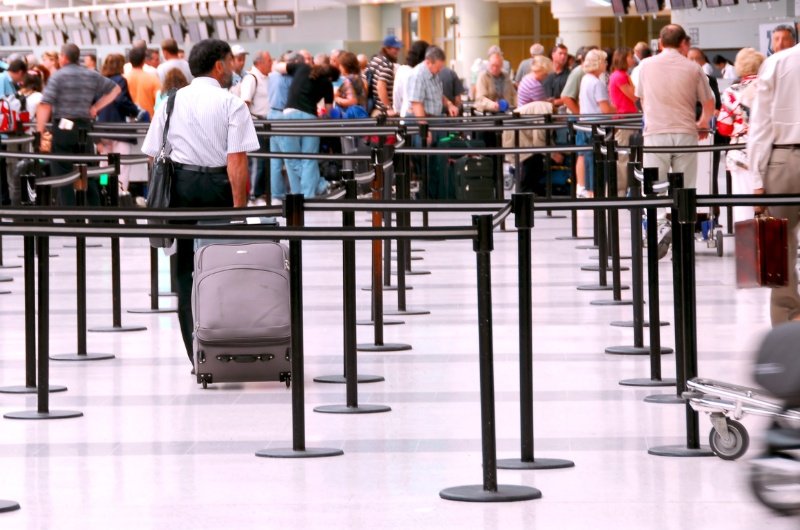
A Georgia family’s courage to speak up prevented what could have been a mass tragedy at one of the world’s busiest airports. Police arrested 49-year-old Billy Joe Cagle at Hartsfield-Jackson Atlanta International Airport after relatives reported he was livestreaming threats to “shoot it up.” Officers found an AR-15 rifle and 27 rounds of ammunition in his truck parked just outside the terminal. Atlanta’s police chief credited the family’s intervention for saving lives, calling the incident “a success, not a tragedy.” Cagle faces multiple felony charges, including making terroristic threats and illegal firearm possession. Authorities confirmed he had a prior felony record and was not legally permitted to own a gun. The case underscores a crucial truth: when families and communities speak up, lives can be saved. Atlanta’s mayor praised both vigilance and divine grace, saying, “We’re thankful to God and to good people for this crisis being averted.” Cagle’s longtime friend said he suffered from schizophrenia and had been taking medication, raising broader questions about mental health and firearm access. Final Thoughts Security technology is vital, but human awareness remains the strongest defense. One family’s quick decision to “say something” transformed a potential national tragedy into a case study in prevention — proof that when people speak up, danger can be stopped before it starts.
Brown University Rejects Trumps Proposed “Compact for Academic Excellence”

Brown University has declined the Trump administration’s offer to sign onto a highly controversial “Compact for Academic Excellence in Higher Education,” becoming the second Ivy League institution to reject it. What the Compact Would Require Issued to nine leading universities, the compact would tie preferential access to federal funding to sweeping conditions. Among the terms: Capping international undergraduate enrollment at 15% Prohibiting consideration of race or sex in hiring and admissions Defining gender strictly on a biological basis Applying new “merits” criteria for research funding beyond traditional scientific merit Rights & Ramifications Our course, institutions have the right to refuse the compact. But the administration has warned that institutions that refuse could lose access to certain federal benefits, while those that comply would be prioritized for new programs and grants. Brown’s Rejection and Its Reasoning In a letter to Education Secretary Linda McMahon, Brown University President Christina Paxson stated that accepting the compact’s terms would “restrict academic freedom and undermine the autonomy of Brown’s governance” — values she described as central to the university’s mission. She noted that Brown already has a prior agreement with the administration that reaffirms the federal government’s lack of authority to dictate academic content or governance, and said the new compact fails to include those same protections. Broader Context & Reactions MIT recently became the first institution to publicly reject the compact, citing similar concerns about independence and free inquiry. Brown’s decision follows that example, signaling growing resistance among top-tier universities. The proposed compact has drawn criticism from higher-education advocates and constitutional scholars, who argue it represents ideological coercion packaged as reform. They warn that linking academic funding to compliance with political mandates could redefine the boundaries between education and government influence for decades to come.
Judge Blocks Trump Administration’s Mass Layoff Plan Amid Shutdown

A federal judge has temporarily blocked the Trump administration’s move to lay off thousands of federal employees during the ongoing government shutdown — a sweeping plan that had already cost roughly 4,000 workers their jobs. The emergency order, issued today, pauses additional terminations while the court reviews whether the layoffs violate federal labor and employment laws. The case stems from a lawsuit filed by multiple unions, arguing that the administration overstepped its authority by firing workers while government operations remain unfunded. The unions claim the move not only breaks existing labor protections but also undermines public safety by thinning the federal workforce in critical agencies. White House officials, led by acting chief of staff Kash Patel, have defended the layoffs as part of the president’s broader push to “cut waste and streamline Washington,” projecting up to 10,000 job losses if the shutdown continues. The administration says the reductions are necessary to offset costs tied to what it calls “Democrat-run programs” that would otherwise remain unfunded. The court’s decision injects fresh urgency into the three-week shutdown standoff, deepening tensions between Congress and the White House as hundreds of thousands of unpaid workers brace for uncertainty — and Washington faces its most volatile political and economic moment in years.
Supreme Court Rejects Alex Jones’ Appeal in $1.4 Billion Defamation Case
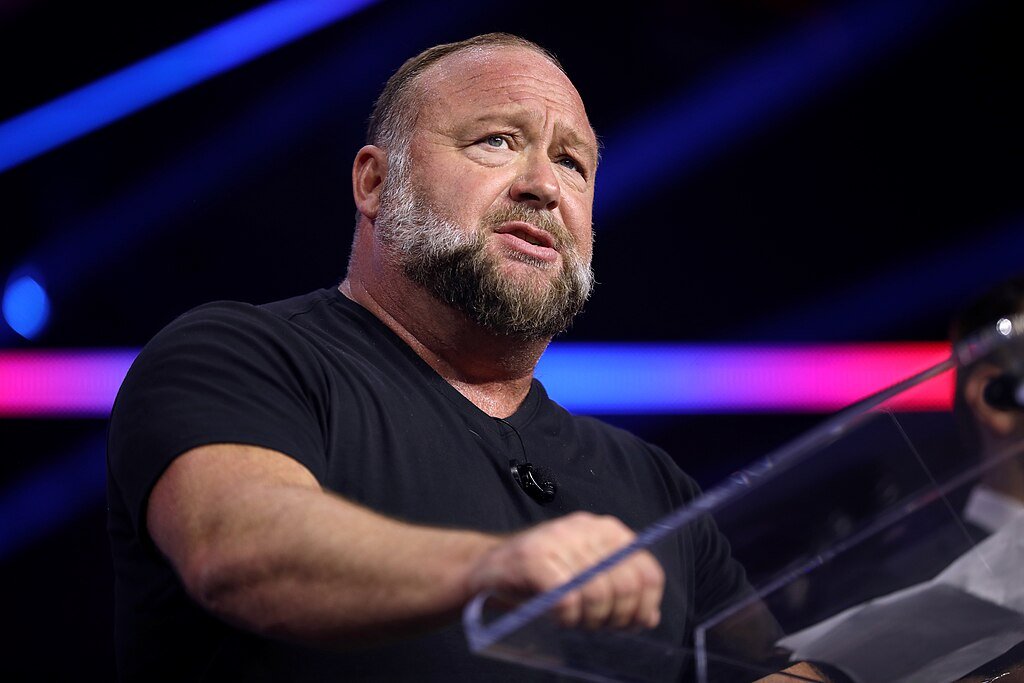
The U.S. Supreme Court has refused to hear Alex Jones’ challenge to the staggering $1.4 billion defamation judgment against him — effectively ending his years-long legal battle over false claims that the 2012 Sandy Hook Elementary School shooting was a hoax. The decision leaves intact prior court rulings that found Jones and his media company, Infowars, liable for spreading deliberate misinformation about one of the nation’s deadliest school shootings. Families of the victims argued that his repeated false statements caused them relentless emotional harm and threats from conspiracy followers. The massive award, issued by courts in Connecticut and Texas, includes compensatory and punitive damages to multiple families of Sandy Hook victims, as well as an FBI agent who responded to the scene. Jurors found that Jones profited from years of spreading lies, using his media platform to amplify conspiracy theories while increasing traffic and sales for his supplements and merchandise business. Jones’ attorneys had asked the high court to review the case on First Amendment grounds, but the justices declined without comment. The move cements one of the largest defamation awards in U.S. history and underscores the growing legal accountability for those who profit from disinformation.
Beloved Actress Diane Keaton Dies at 79

Oscar-winning actress Diane Keaton, whose quick wit, timeless charm, and singular sense of style made her one of Hollywood’s most enduring icons, has died at the age of 79. Her family confirmed the news, saying she passed away in California on Saturday, October 11. Keaton’s career spanned more than five decades, beginning with her breakout performance as Kay Adams in The Godfather (1972) and soaring with her Oscar-winning role in Annie Hall (1977). With her trademark turtlenecks, bowler hats, and offbeat humor, she became synonymous with authenticity — a rare blend of vulnerability and confidence that defined an era of American cinema. Across films like Manhattan, Reds, Something’s Gotta Give, and Father of the Bride, Keaton embodied complex women navigating love, ambition, and self-discovery. She worked with nearly every major director of her generation — including Woody Allen, Francis Ford Coppola, and Nancy Meyers — and inspired generations of actresses to embrace individuality over image. In addition to acting, Keaton was an accomplished author, photographer, and preservationist. She championed architectural restoration in Los Angeles and shared her passion for design and storytelling in several acclaimed memoirs. Her death marks the end of an extraordinary chapter in film history. Tributes from across Hollywood have poured in, celebrating Keaton not only as a cinematic legend but as a cultural touchstone whose humor, grace, and fearless originality left an indelible mark on audiences worldwide.
BREAKING NEWS: Powerful Storm to Bring Damaging Winds and Flooding to East Coast This Weekend
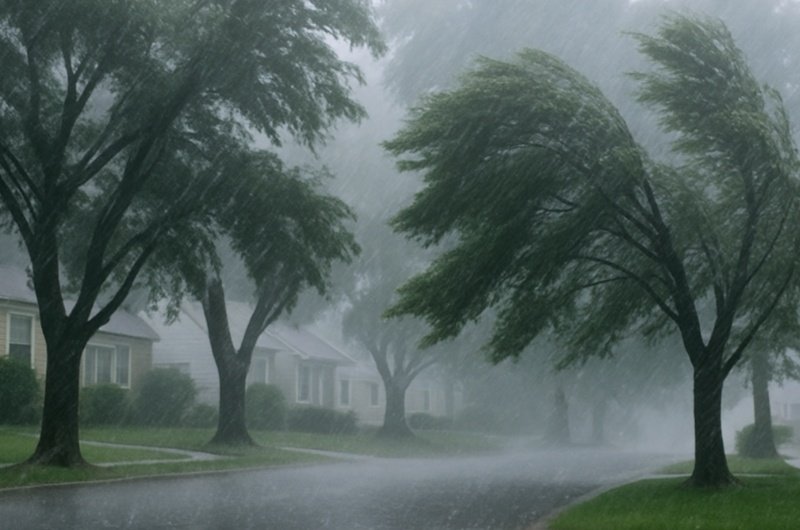
A sprawling coastal storm is strengthening off the Atlantic, and forecasters warn it will lash the Eastern Seaboard with dangerous winds, coastal flooding, and heavy rain through the weekend. From the Carolinas to New York, millions are now under weather alerts as the system moves north, threatening communities already saturated by weeks of unsettled weather. The storm’s wide reach could bring wind gusts topping 60 miles per hour along exposed coastlines, with isolated bursts approaching hurricane force. Low-lying areas from the Outer Banks to Long Island are expected to face storm surges of one to three feet, and forecasters say localized flooding could reach higher in vulnerable zones. Air travel delays, power outages, and beach erosion are likely as the system intensifies. Officials are urging residents to secure property, avoid coastal roads, and prepare for possible evacuations if water levels rise faster than expected. Emergency crews in multiple states have pre-positioned high-water vehicles and response teams in anticipation of flash flooding and downed power lines. The timing of the storm — hitting during high tides in several regions — increases the risk of severe inundation. While the storm is not expected to reach hurricane status, meteorologists emphasize that its slow movement and broad structure make it especially dangerous. Heavy rainfall totals could exceed six inches in some areas, overwhelming storm drains and swelling rivers already running high. Residents are advised to monitor local forecasts closely and heed any evacuation orders issued through the weekend. As the storm tracks northward, it will test the readiness of coastal infrastructure once again — and remind East Coast communities that in an era of warming seas and stronger systems, preparation remains the best defense against the next round of wind and water.
Shutdown Turbulence: Flight Delays and Cancellations Leave Travelers Grounded

As the federal government shutdown stretches on, America’s skies are showing the strain. Across major airports, travelers are canceling flights, rerouting itineraries, and questioning whether it’s worth the risk. What was supposed to be a long weekend getaway for some travelers has turned into a logistical gamble — one that’s eroding confidence in the nation’s air travel system. The ripple effects are immediate. With federal employees unpaid and staffing stretched thin, flight delays and cancellations are climbing. Air traffic controllers and TSA workers, already working under high stress, are reporting burnout and absenteeism. Airlines are bracing for more turbulence if the shutdown extends into next week, a scenario that could deepen operational disruptions and dent public trust further. For travelers, the uncertainty is creating a new kind of fatigue. Business flyers are pushing meetings to virtual platforms. Families are shelving vacation plans. International tourists, already wary of long security lines, are choosing alternate destinations. This is beyond inconvenience. It’s an erosion of reliability in an industry built on precision and predictability. The economic toll is building as well. The U.S. travel sector, one of the country’s most resilient post-pandemic industries, is facing another confidence test. Analysts estimate billions in potential losses if air travel continues to slow through October. Each delayed flight represents not only stranded passengers but missed hotel bookings, idle rental cars, and lost tourism revenue. Final Word If the shutdown persists, the damage could linger well beyond the runways. The longer travelers remain uncertain, the harder it becomes to restore the sense of stability that underpins the entire system. For now, the message from weary passengers and overstretched crews is the same: America’s airways can’t afford a prolonged political standoff.
Trump Confirms Diddy’s Team Asked for a Pardon — But He’s Leaning Toward A “No”

President Trump confirmed that members of Sean “Diddy” Combs’ circle reached out to request a presidential pardon — but said he’s “not inclined” to grant one. Speaking to reporters outside Mar-a-Lago, Trump said he would “take a look” and consult with the Department of Justice, but hinted that Combs’ high-profile legal troubles and previous criticism of him could weigh heavily against approval. “I don’t know. We’ll see. He’s said some things — not so nice things — but I’ll look at it,” Trump told reporters. Combs, who is currently serving time following a conviction on prostitution-related charges, has denied personally requesting clemency. His legal team told People that “neither Mr. Combs nor his attorneys have made any formal request for a pardon,” though others “close to him” reportedly made inquiries on his behalf. The conflicting accounts have fueled another media storm around the embattled music mogul, who has been under intense scrutiny since his conviction. Trump, meanwhile, has been fielding multiple high-profile pardon questions — including one related to Ghislaine Maxwell — reigniting debate over his controversial clemency record. If granted, a pardon for Diddy would mark one of Trump’s most contentious moves yet. Critics argue that such a decision would signal favoritism toward celebrity figures, while allies say it shows the former president’s willingness to entertain requests from all corners. For now, Trump appears to be signaling hesitation. “He’s asked. People have asked,” he said. “But I’m leaning toward no.” Between the Lines Trump’s response hits two familiar notes: tease the possibility, then retreat to plausible distance. It’s a move that keeps him at the center of the story — and forces Diddy’s camp to keep reacting. Whether this was a serious request or simply a signal flare from Diddy’s inner circle, one thing’s certain: the intersection of fame, politics, and power isn’t cooling off anytime soon.
Silent Tower: How Burbank Went Dark During a Critical Shutdown Crisis

For nearly five hours Monday, Burbank’s air traffic control tower stood empty—yet planes still flew. The event exposed a fragile system, shifting control to remote operators and underscoring a latent danger in America’s airspace. The autumn sun dipped low over the San Fernando Valley on Monday, casting long shadows across Hollywood Burbank Airport. Inside the glassed control tower—normally the pulsing heart of flight coordination—no one was watching. From roughly 4:15 p.m. to 10:00 p.m., the tower sat empty. Staffing shortages tied to the ongoing federal government shutdown forced controllers to stay home, leaving one of the nation’s busiest regional airports without local oversight. During that time, the Southern California TRACON facility in San Diego took over remotely, guiding aircraft by radio while ground crews relied on “non-towered” procedures more common to rural airfields. Despite the absence of on-site control, flights continued—though not without disruption. Many departures faced delays exceeding two hours, and several were canceled altogether. For travelers, it was another ripple effect of a shutdown that has turned the nation’s most vital systems into endurance tests. For aviation experts, it was something more alarming: proof of how fragile America’s air network becomes when a single node goes silent. The Human Cost of “Essential” Work Air traffic controllers are classified as essential workers, required to report for duty even when government funding halts. But essential doesn’t mean exempt from financial hardship. With paychecks now delayed, many are facing mounting bills, emotional strain, and burnout. Insiders say morale is deteriorating as the shutdown stretches on. Some controllers have begun calling out sick, others are working double shifts, and training programs have been paused indefinitely. The result is a thinning workforce operating under increasing stress—and fewer layers of protection in a system that depends on redundancy. In Burbank’s case, no safety incidents occurred. Still, the image of an unmanned tower in a major metropolitan area sent shockwaves through the industry, reigniting debates about whether contingency plans are sufficient when politics stops the paychecks that keep essential infrastructure running. A Ripple Across the Nation The Burbank episode is not isolated. Airports in Denver, Phoenix, Las Vegas, and Newark have all reported heightened delays amid staffing shortages, some operating with as much as fifty percent fewer controllers. Industry officials warn that if the shutdown persists, more “ATC Zero” events—when a facility cannot safely provide air traffic services—could occur. For airlines, that means more ground holds and diversions. For passengers, more missed connections and overnight waits. Behind it all are the human hands that make America’s skies safe. When those hands are forced to stop working—or to keep working unpaid—the entire system starts to wobble. After the Lights Returned At 10 p.m., the Burbank tower lights flickered back on, controllers returned, and local operations resumed. The incident passed without tragedy. But for aviation veterans, it left a lasting unease. A silent control tower is a symptom of systemic vulnerability. In the air, as in government, the margin for error is small. And when the people who keep planes safely separated can’t afford to show up, the nation’s confidence in its own flight path begins to shake.