

AI Is Helping Inspect Aircraft Engines Faster and More Accurately
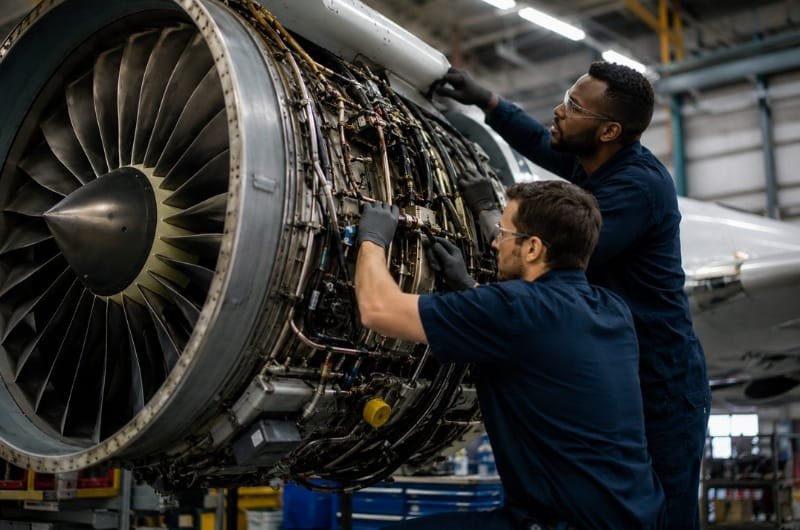
Artificial intelligence is taking on a growing role in aviation maintenance, helping inspectors identify potential aircraft engine issues more quickly and accurately while reducing the time required for routine inspections. Pratt & Whitney announced it is expanding the use of AI-powered inspection technology to assist technicians in evaluating engine components. The system is designed to help detect signs of wear and damage that could be difficult to identify through traditional visual inspections alone. The company said the technology is intended to support, rather than replace, experienced maintenance professionals by providing another layer of analysis during the inspection process. Faster inspections can also help reduce aircraft downtime while maintaining high safety standards. The announcement reflects a broader trend of artificial intelligence moving beyond chatbots and consumer applications into industries such as aviation, manufacturing and healthcare, where AI is increasingly being used to improve efficiency, accuracy and decision-making.
We May Be the Last Generation of Traditional Work

For generations, the path to a successful career followed a familiar pattern. Get an education. Learn a profession. Find a good job. Build a career. Retire. Artificial intelligence is beginning to rewrite that formula—and faster than many people expected. For millions of workers, this isn’t a distant possibility. It’s already happening. Companies are reducing hiring for some entry-level positions, automating tasks that once required teams of employees, and rethinking roles that have existed for decades. What began as a tool to improve productivity is rapidly becoming a force that is reshaping which jobs businesses need—and which they don’t. The first wave of artificial intelligence helped people work faster. The next wave is beginning to perform the work itself. The Great Career Shift Has Already Begun Every major technological revolution has changed the way people work. The Industrial Revolution transformed manufacturing. Computers reshaped the modern office. The internet connected the world and created entirely new industries. Artificial intelligence is different. For the first time, businesses have access to technology capable of performing many routine cognitive tasks that once required human employees. Instead of simply helping people do their jobs, AI is increasingly completing those tasks on its own. Businesses are making rational economic decisions. Organizations continuously look for ways to improve efficiency, reduce costs, increase productivity, and remain competitive. Artificial intelligence is allowing many companies to accomplish those goals while fundamentally changing how work is organized and which positions remain essential. That shift is no longer theoretical. IBM CEO Arvind Krishna said in 2023 that the company expected to pause hiring for roles where roughly 7,800 jobs could be replaced by artificial intelligence, particularly in back-office functions such as human resources. He also said about 30% of non-customer-facing roles could be replaced by AI and automation within five years. The First Jobs Already Disappearing Not every profession will disappear. But many individual jobs—and in some cases, entire categories of routine work—are already beginning to vanish as organizations discover they can accomplish the same work with artificial intelligence. Across multiple industries, businesses are adopting AI to automate routine documentation, customer support, software development, standardized reporting, medical transcription, marketing content creation, financial analysis, and other highly structured tasks that once required significant human time and attention. Some technology leaders are warning that early-career workers may feel the shift first. Anthropic CEO Dario Amodei said AI could eliminate a significant share of entry-level white-collar jobs within the next several years, particularly in technology, finance, law, consulting, and other knowledge-work professions. A recent labor market analysis by Anthropic also found that occupations such as computer programming, customer service, and financial analysis are among those most exposed to AI because many of their routine tasks can already be performed—or significantly assisted—by today’s large language models. Many of these roles have traditionally served as entry points into long-term careers. As those positions become increasingly automated, younger workers may find themselves entering a labor market that looks dramatically different from the one their parents experienced. This isn’t simply about replacing employees. It’s about replacing specific kinds of work. As artificial intelligence continues to improve, businesses will increasingly evaluate every repetitive, predictable, and rules-based task through a new lens: Does this still require a human? It’s Not Just About Technology This transformation isn’t happening because businesses are abandoning people. It’s happening because the economics are changing. Every business faces constant pressure to become more efficient while delivering better products and services. When artificial intelligence can perform certain tasks with increasing speed, consistency, and scalability, organizations naturally begin redesigning the way work is done. Recent workforce data already suggests the trend is accelerating, with artificial intelligence increasingly cited as a factor in workforce reductions and changes to hiring strategies. That’s why this story is much bigger than artificial intelligence itself. It’s about the beginning of a fundamental shift in the global labor market. The Questions AI Is Forcing Us to Ask Artificial intelligence isn’t just changing the jobs people do. It’s prompting economists, technology leaders, and policymakers to ask much bigger questions about the future of work itself. If AI continues to automate more routine tasks, how will societies adapt? Could shorter work weeks become the norm? Will people spend more time creating, caring for others, or pursuing entrepreneurship? And could ideas such as Universal Basic Income (UBI)—once considered fringe—become part of mainstream economic discussion? Those questions remain unanswered, but they’re beginning to move from academic debate into public conversation. In the months ahead, Readovia will take a closer look at these emerging ideas and what they could mean for workers, businesses, and society. The Next Chapter Every generation inherits a different economy. Previous generations helped build the industrial economy and later the digital economy. We may become the first generation to build careers in an economy where intelligence itself has become abundant. Whether that future brings unprecedented opportunity, widespread disruption, or something in between remains to be seen. But one thing is becoming increasingly difficult to ignore: we may be the last generation to experience work the way previous generations did. One day, younger generations may look back on traditional careers the way many people today look back on rotary telephones—essential in their time, but products of a very different era. ——————– Readovia: AI Is Reshaping the Tech Job Market — and Entry-Level Workers Are Feeling It First
Wall Street Braces for Critical Week as Earnings and Inflation Take Center Stage

Wall Street is entering one of its busiest weeks of the summer as investors prepare for a wave of corporate earnings, fresh inflation data, and several closely watched economic events that could influence markets in the weeks ahead. The unofficial start of second-quarter earnings season begins Tuesday, with major financial institutions including JPMorgan Chase, Goldman Sachs, Citigroup, Wells Fargo, and Bank of America scheduled to report results. Investors will be looking for clues about consumer spending, loan demand, and the overall health of the U.S. economy. The week’s economic calendar is equally important. The June Consumer Price Index (CPI) is scheduled for release Tuesday, followed by the Producer Price Index (PPI) on Wednesday and retail sales data later in the week. Together, the reports are expected to shape expectations for future Federal Reserve interest-rate decisions. Adding to the uncertainty are tensions in the Middle East and testimony from Federal Reserve Chair Kevin Warsh before Congress. Investors will be watching both developments closely for signs of how geopolitical risks and monetary policy could affect financial markets during the second half of the year. While market volatility is likely throughout the week, many analysts believe the combination of earnings reports, inflation data, and Federal Reserve signals will provide a clearer picture of the economy’s direction—and could help determine whether Wall Street’s recent rally has room to continue.
Only 15% of Americans Show Strong Financial Literacy, New Test Finds

Only 15% of U.S. adults answered seven or eight questions correctly on a new financial literacy test, while more than one-third managed no more than two correct answers. The results point to widespread difficulty understanding money concepts that affect everyday decisions about saving, borrowing, insurance and investing. The eight-question P-Fin 8 Index was developed by the TIAA Institute and the Global Financial Literacy Excellence Center as a shorter version of their broader 28-question Personal Finance Index. Each question represents one area of personal finance, including earning, spending, saving, investing, debt management, insurance, risk and identifying reliable financial information. On average, adults answered 46% of the questions correctly. Sixty percent scored four or fewer out of eight, including 36% who answered no more than two correctly. Another 24% scored three or four, while 24% answered five or six correctly. Some questions proved especially challenging. Only 27% correctly identified disability insurance as the coverage a healthy 25-year-old worker would most likely need in the near term. Just 40% understood how quickly a loan carrying 20% annual compound interest would double, while fewer than half correctly answered questions involving inflation, financial risk and investment advice. The findings suggest that many Americans are making consequential financial choices without a strong understanding of the principles behind them. Improving financial literacy cannot eliminate rising prices, debt or economic uncertainty, but it can help people make better-informed decisions about their money and recognize costly mistakes before they happen. Think you can beat the national average? Take the official eight-question P-Fin 8 financial literacy quiz and compare your score with the national results. The test is available here.
AI Tech Stocks Climb as Investor Confidence Continues to Build

Shares of several AI technology companies moved higher Thursday as investors continued to express confidence in the long-term growth of artificial intelligence, despite ongoing geopolitical uncertainty and broader market volatility. Chipmakers and other companies supporting the AI economy led the gains, with memory and semiconductor firms benefiting from continued optimism surrounding data center expansion and enterprise AI investment. Analysts say the technology powering artificial intelligence—including advanced chips, networking equipment, cloud computing and data storage—remains one of the market’s strongest long-term growth themes. Among the companies drawing investor attention were Micron Technology, Marvell Technology, SanDisk and Broadcom, all of which play important roles in supplying the hardware behind modern AI systems. Continued spending by major technology companies on AI infrastructure has helped reinforce confidence across the sector. The gains came even as investors monitored geopolitical developments overseas. Rather than retreating from AI-related investments, many market participants appear to be separating near-term global uncertainty from the long-term demand for computing power, data centers and next-generation semiconductor technology. While daily market movements remain unpredictable, investor interest in AI technology companies continues to reflect a broader belief that artificial intelligence will remain one of the defining economic and technological trends of the decade.
Why ‘Little Treat Culture’ Is Resonating With So Many People

Stopping for a specialty coffee after a difficult day. Picking up a favorite pastry on the way home. Buying a small item simply because it brings a smile. These everyday indulgences have become known as “little treat culture,” a trend that has gained momentum as people look for simple ways to lift their spirits during uncertain times. Psychologists say the appeal is easy to understand. Small rewards can trigger the release of dopamine, a brain chemical associated with pleasure and motivation. After a demanding day at work or a stressful week, even a modest purchase can create a brief sense of comfort and accomplishment. For many people, these moments are less about the item itself and more about creating a pause in an increasingly busy world. The challenge comes when occasional rewards become automatic responses to stress. While there’s nothing inherently wrong with enjoying a favorite coffee or dessert, daily habits can quietly become expensive over time. More importantly, relying on purchases as the primary way to feel better may prevent people from discovering other forms of renewal that offer longer-lasting benefits. Fortunately, many of the most meaningful rewards cost little or nothing at all. Taking a walk through a local park, reading a favorite book, preparing a home-cooked meal, enjoying a hot cup of your favorite tea or cocoa, calling a close friend, spending time with family, or simply unplugging for a quiet evening can provide many of the same emotional benefits while encouraging healthier long-term habits. The goal isn’t to eliminate life’s small pleasures—it’s to make sure they remain intentional rather than automatic. Perhaps that’s the real lesson behind little treat culture. Everyone deserves moments of joy. But some of the most rewarding experiences aren’t found in a shopping bag or a coffee cup. They’re found in the routines, relationships, and quiet moments that help us recharge long after the receipt has been thrown away.
Researchers Say Another Cholesterol Test May Better Predict Heart Disease Risk

Millions of adults know their LDL cholesterol number, but new research suggests another measurement may provide an even better understanding of heart disease risk for some people. Researchers are drawing increased attention to apolipoprotein B (apoB), a blood test that measures the number of cholesterol-carrying particles circulating through the bloodstream. According to the study, apoB may offer a more accurate assessment of cardiovascular risk than LDL cholesterol alone because it focuses on the particles that can contribute to plaque buildup inside the arteries. Advertisement For decades, LDL cholesterol has been one of the most common ways doctors estimate heart disease risk. New research suggests another measurement—known as apolipoprotein B, or apoB—may provide an even clearer picture for some patients. Traditional LDL cholesterol tests measure how much cholesterol is being carried through the bloodstream. ApoB testing takes a different approach by measuring the number of cholesterol-carrying particles themselves. Researchers say that particle count may provide a more accurate picture of heart disease risk because each particle has the potential to contribute to plaque buildup inside the arteries. The findings are particularly noteworthy because some people with normal LDL cholesterol levels still experience heart attacks or develop cardiovascular disease. Researchers believe that in certain cases, an individual may have a normal amount of cholesterol overall while still carrying a higher-than-expected number of cholesterol particles. ApoB testing can help identify that additional risk. The research is expected to contribute to the ongoing discussion about how cardiovascular disease is assessed and prevented. While LDL cholesterol remains an important part of routine screening, many experts believe apoB testing may become an increasingly valuable tool for evaluating overall heart health, particularly for patients with additional risk factors such as diabetes, obesity, or metabolic syndrome. The findings don’t mean LDL cholesterol testing should be ignored or that everyone needs additional testing. Instead, the research suggests apoB may become an increasingly valuable tool for assessing cardiovascular risk in some patients. Anyone with questions about cholesterol testing should discuss the options with their healthcare provider, who can recommend the most appropriate approach based on individual health and risk factors. As researchers continue searching for better ways to predict and prevent heart disease, studies like this may help doctors identify higher-risk patients earlier, allowing for more personalized treatment and prevention strategies. The Readovia Lens Medical research continues to move toward more personalized healthcare. Rather than relying on a single measurement, researchers are increasingly combining multiple indicators to better understand an individual’s overall health and risk. As science advances, the future of preventive care may depend on creating a more complete picture rather than relying on any one number alone.
U.S. Employers Added Just 57,000 Jobs in June as Hiring Slows

The U.S. labor market lost momentum in June as employers added just 57,000 jobs, a sharp slowdown from previous months and well below economists’ expectations, according to the latest employment report released Thursday. While hiring cooled, the unemployment rate edged down to 4.2% from 4.3% in May. However, much of that decline was driven by fewer Americans participating in the labor force rather than a surge in new employment, offering a more nuanced picture of the nation’s job market. Advertisement The report also revised April and May payroll figures downward by a combined 74,000 jobs, suggesting hiring has been weaker than previously believed. Over the past three months, job growth has continued to moderate after a stronger start to the year. Professional and business services led job creation in June, followed by gains in social assistance and health care. Meanwhile, the leisure and hospitality sector posted a notable decline in employment, weighing on the overall total. Markets Welcome the Report Although slower job growth can raise concerns about the economy, financial markets reacted positively to Thursday’s report. Investors viewed the softer employment data as reducing the likelihood that the Federal Reserve will raise interest rates in the near term. Lower borrowing costs can support consumer spending, business investment, and stock prices, particularly in interest-rate-sensitive sectors. A Labor Market Still Showing Resilience Despite the slowdown, the report does not point to a collapsing labor market. Many employers continue to hire, layoffs remain relatively modest, and several industries are still adding workers. At the same time, economists will be watching future employment reports closely to determine whether June marks the beginning of a broader cooling trend or simply a temporary slowdown. The June employment report arrives as policymakers continue balancing efforts to control inflation while supporting economic growth, making the labor market one of the most closely watched indicators in the months ahead.
German Space Manufacturer Chooses Texas for First U.S. Factory
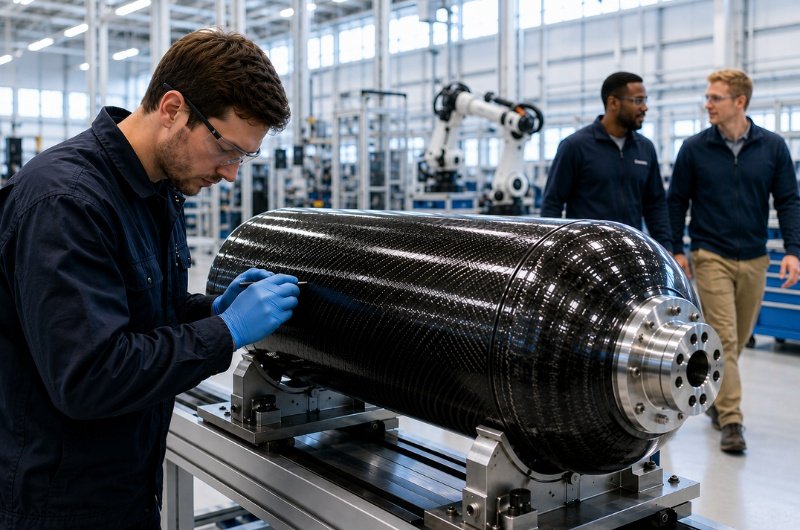
German aerospace manufacturer Blackwave is expanding into the United States with plans to open its first American manufacturing facility in Texas, underscoring the continued growth of the nation’s commercial space industry. The company will establish operations at Port San Antonio, where it plans to invest approximately $2.5 million to renovate a 35,000-square-foot facility that will serve as its U.S. production hub. The Texas facility will manufacture composite overwrapped pressure vessels, or COPVs. These lightweight, high-strength tanks are designed to safely store pressurized gases and are widely used in launch vehicles, satellites, and other spacecraft where reducing weight is critical. Advertisement Blackwave expects to hire more than 30 employees during its first year of operations, with long-term plans to grow its workforce to approximately 250 people as production expands. Company officials said establishing a manufacturing presence in the United States will allow Blackwave to better serve North American customers while reducing shipping times and navigating an increasingly complex global trade environment. The company also sees opportunities to supply components to leading commercial space companies. While no customer agreements have been announced, executives said businesses such as SpaceX represent the type of growing launch providers that could benefit from the larger pressure vessels produced at the Texas facility. The Readovia Lens The announcement is another sign that the U.S. space economy continues to attract international investment. As demand for rockets, satellites, and advanced spacecraft grows, manufacturers from around the world are expanding their presence in the United States to support the next generation of space exploration and commercial launch services. For Texas, the investment further strengthens the state’s position as one of America’s leading aerospace and advanced manufacturing hubs, joining a growing network of companies helping build the technologies that power the modern space industry.
Supreme Court Issues Landmark Ruling on Transgender Athletes in School Sports

The U.S. Supreme Court on Tuesday ruled that states may enforce laws restricting transgender girls and women from competing on girls’ and women’s sports teams, marking one of the Court’s most closely watched decisions of the year. The 6-3 ruling allows Idaho and West Virginia to enforce their laws while also strengthening similar measures already adopted in more than two dozen states. The Court concluded that the laws are consistent with the Constitution and federal law. Advertisement The legal challenge centered on whether the state laws unlawfully discriminated against transgender students. Supporters argued the restrictions help preserve fairness in girls’ and women’s sports by basing eligibility on biological sex. Opponents argued the laws unfairly exclude transgender students from participating in school athletics. The Supreme Court ultimately sided with the states, reversing lower court rulings that had prevented the laws from taking effect. The decision is expected to influence similar cases across the country as additional legal challenges move through the courts. The ruling gives states greater authority to set eligibility rules for school sports teams and is likely to shape future debates over athletics, education policy, and transgender rights. Because more than 25 states have enacted similar laws, the decision could have nationwide implications. The decision was one of several major rulings issued by the Supreme Court on the final day of its current term, alongside cases involving birthright citizenship and campaign finance.