


Indiana Shifts to Recovery After Historic Flooding Leaves Seven Dead
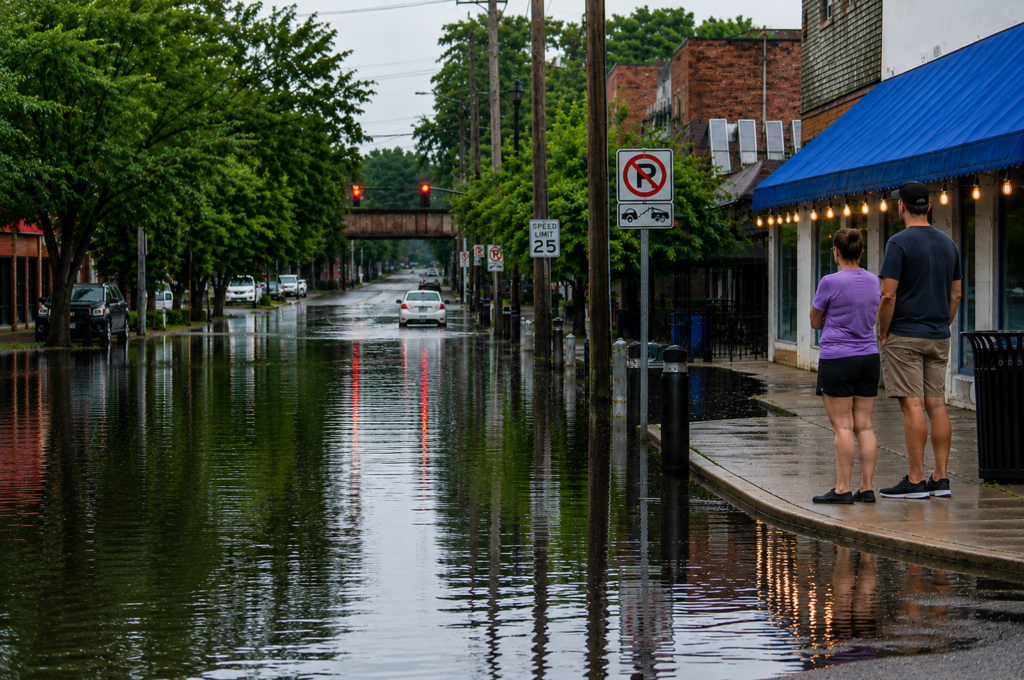
Indiana is shifting from emergency response to recovery in some of its hardest-hit communities after days of severe storms and historic flooding left at least seven people dead, displaced more than 1,000 residents and caused widespread damage across the state. Floodwaters have begun receding in parts of central Indiana, but the danger has not disappeared. Several rivers remain under flood warnings, roads and other infrastructure have been damaged, and some communities are still dealing with high water. In northwest Indiana, tens of thousands of customers also remained without electricity Tuesday as crews worked to repair damage from last week’s powerful storms. The flooding followed repeated rounds of heavy rain that began Aug. 11, with some areas receiving more than 11 inches in two days. The White River reached historic levels in several communities, forcing evacuations and leaving homes, businesses and roads underwater. The seven people killed during the storms included a 4-year-old boy. Indiana has now activated its State Disaster Relief Fund, offering emergency grants of up to $5,000 to help displaced residents pay for necessities such as food and clothing. Temporary housing assistance is also being made available as officials work to move families from emergency shelters into hotels and other accommodations. The Readovia Lens State and federal teams are beginning damage assessments that will help determine what additional assistance may be available. For many residents, however, the immediate challenge is already clear: returning to damaged homes, replacing lost belongings and beginning what could be a lengthy recovery from one of Indiana’s most destructive flooding events in decades.
Meta Heads to Court as Opening Arguments Begin in Landmark Child Safety Case

Meta is heading into one of the most consequential court battles in social media history Tuesday as opening arguments begin in a federal trial over allegations that Facebook and Instagram were deliberately designed with features that encourage compulsive use among children and teenagers. The case, unfolding in federal court in Oakland, California, stems from a broader lawsuit brought by 29 states. California, Colorado, Kentucky and New Jersey are leading this phase of the litigation, accusing Meta of misleading the public about the safety of its platforms while using features such as infinite scrolling and frequent notifications to keep younger users engaged. The states also allege Meta collected personal information from children under 13 without parental consent, in violation of federal law. Meta denies the allegations and says it has spent years developing protections for young users, including parental controls and other safety features. The stakes extend well beyond financial penalties. The states are seeking changes to how Meta operates Facebook and Instagram, including restrictions on features they contend encourage compulsive use. Meta has said potential penalties under the states’ theories could reach as high as $1.4 trillion, although any actual award would depend on how the court ultimately rules. Meta CEO Mark Zuckerberg and Instagram chief Adam Mosseri are expected to testify during the trial, which could last several weeks. An advisory jury will hear the case, but U.S. District Judge Yvonne Gonzalez Rogers will make the final decision — a ruling that could influence how social media companies design and operate platforms used by millions of young Americans.
Claude Is About to Leave an Invisible Watermark on the Words It Writes

Anthropic is preparing to embed invisible watermarks into text generated by new Claude models, a move designed to make AI-created writing detectable even after it has been copied and pasted elsewhere. But the technology is already stirring concern among writers, professionals and other users who rely on AI for more than simply generating finished work. Anthropic says the watermark will not visibly alter Claude’s writing or add hidden characters to the text. Instead, it will create a detectable statistical pattern without changing the meaning or quality of the output. The company says the system will not require additional tokens or increase costs, and the watermark will contain no identifying information that could be traced to a particular user, organization or conversation. Anthropic also notes that Claude will not be alone: new European Union rules require AI providers serving the EU market to mark AI-generated content, and other major model developers that signed the EU’s Code of Practice are expected to introduce their own watermarking systems. The technology is being introduced as Anthropic moves to comply with transparency requirements under the European Union’s AI Act, which requires certain AI-generated content to be identifiable in a machine-readable format. Anthropic has chosen to implement the watermark globally rather than limit it to users in Europe. That decision has generated pushback from some Claude users who worry about what happens when AI is used primarily as an editor. A person might write an article, report or other document independently, then ask Claude to improve the grammar, reorganize paragraphs or polish the language. If enough of Claude’s wording remains, the finished work could still contain a detectable watermark — even though describing the entire document as AI-written would be misleading. The Readovia Lens Anthropic stresses that detecting its watermark indicates Claude was involved in producing text, not that Claude necessarily authored the work. The distinction could become increasingly important as AI becomes embedded in everyday writing and professional workflows. What began as a technical solution for identifying synthetic content may ultimately force employers, educators and publishers to confront a more complicated question: where does AI assistance end and AI authorship begin?
Google Is Reshuffling Its AI Empire as the Race for the Best Model Intensifies

Google is reorganizing the leadership of its artificial intelligence operation as it faces mounting pressure to move faster in the increasingly competitive race against OpenAI and Anthropic. The shakeup puts longtime DeepMind executive Koray Kavukcuoglu in charge of day-to-day operations and all Gemini model development, while DeepMind co-founder Demis Hassabis moves into a more research-focused leadership role. Hassabis, who has led DeepMind for more than a decade, is becoming chairman of Google DeepMind and chief scientist of parent company Alphabet. Kavukcuoglu, previously DeepMind’s chief technology officer and Google’s chief AI architect, will serve as senior vice president of Google DeepMind and report directly to Google CEO Sundar Pichai. The shift gives Kavukcuoglu considerably more control over Google’s effort to turn cutting-edge AI research into products capable of competing at the front of the industry. The restructuring comes amid internal pressure to accelerate Gemini development. Google co-founder Sergey Brin has become increasingly involved in the company’s AI efforts, while some Gemini teams have been moved closer to Google’s broader commercial operations. At the same time, several prominent AI researchers are leaving the company, including longtime Google scientist Jeff Dean, who is departing after nearly three decades to help launch Discovery Loop, a new AI venture focused on scientific discovery. Google is already showing signs of the faster product cadence the overhaul is intended to produce. On Thursday, the company introduced Gemini 3.7 Flash, which Google describes as its most intelligent workhorse model yet for coding and AI agents. The model is designed for tasks that increasingly matter to businesses adopting generative AI, including software development, complex workflows and autonomous systems capable of completing multistep tasks. The stakes extend well beyond which company can claim the top-performing model. Google has enormous advantages in Search, Android, YouTube, cloud computing and its own AI infrastructure, giving it ways to put Gemini in front of billions of users. But OpenAI and Anthropic continue to compete aggressively for developers, businesses and consumers. Google’s leadership overhaul suggests the company is increasingly focused on converting its vast AI resources into faster execution — and making sure the next major shift in artificial intelligence doesn’t happen without it.
Nearly 100 Million Americans Face Dangerous Heat as Late-Summer Heat Wave Expands

Nearly 100 million Americans are under heat advisories as a sprawling late-summer heat wave pushes dangerous temperatures across the central and southern Plains, lower Mississippi Valley and parts of the Southeast. The National Weather Service says the extreme conditions are expected to persist into next week, with more than a dozen states facing potentially hazardous heat. Temperatures are reaching the triple digits in some areas, while high humidity is making conditions feel substantially hotter. Parts of Kansas and Missouri could experience heat index values as high as 115 degrees, and some communities may see overnight temperatures remain near or above 80 degrees, limiting the body’s opportunity to recover from daytime heat. The timing is creating additional challenges as schools reopen across the country and students return to outdoor sports and activities. Some districts have restricted practices and other outdoor events, while communities in affected areas are opening cooling centers and encouraging residents to stay hydrated and limit strenuous activity during the hottest parts of the day. Prolonged heat can be especially dangerous for older adults, young children, outdoor workers and people without reliable access to air conditioning. Heat-related illness can develop quickly, particularly when high humidity makes it more difficult for the body to cool itself through sweating. Forecasters are urging residents in affected areas to drink plenty of fluids, avoid unnecessary outdoor exertion and check on vulnerable family members and neighbors. The heat is not expected to disappear with the weekend. National Weather Service forecasts indicate dangerous conditions will continue across portions of the central and southern Plains and Southeast into next week, with the possibility of record-tying or record-breaking temperatures in parts of the South.
Trump Takes $400 Million White House Ballroom Fight to Supreme Court

President Trump’s administration asked the U.S. Supreme Court on Friday to allow construction of his $400 million White House ballroom to continue, escalating a legal battle over whether a president can undertake a major transformation of the White House complex without approval from Congress. A divided federal appeals court ruled last week that the administration must halt the project because Congress never authorized it. The 90,000-square-foot ballroom is being built on the site of the demolished East Wing and is already about 65% complete. The appeals court delayed its order for two weeks to give the administration time to seek Supreme Court intervention, with the construction halt scheduled to take effect August 21 unless the justices step in. The dispute reaches beyond the ballroom itself. In its 2-1 decision, the U.S. Court of Appeals for the D.C. Circuit concluded that the president does not have unilateral authority to fundamentally reshape the White House. The lawsuit was brought by the National Trust for Historic Preservation, which argues the administration began the massive project without obtaining the congressional authorization required for changes to federal property. The Trump administration argues that stopping construction would create national-security risks. Solicitor General D. John Sauer told the Supreme Court that leaving the East Wing site unfinished would threaten security, while Trump has described the larger project as a “military center.” Administration officials say the complex includes security infrastructure intended to better protect the president and other White House officials. The Readovia Lens The Supreme Court is now being asked to decide whether construction can continue while the administration pursues its appeal, rather than issuing a final ruling on the legality of the ballroom itself. But the dispute could ultimately force the justices to confront a much larger question about presidential power: how far a president can go in altering one of the country’s most important federal properties without first receiving authorization from Congress.
11 Charged in Alleged Scheme Behind More Than 1,000 Fraudulent Marriages

Federal prosecutors have charged 11 people in an alleged nationwide immigration fraud operation that arranged more than 1,000 sham marriages over at least a decade, allowing foreign nationals to seek legal permanent residency in the United States. The Justice Department says the operation was centered in New York but extended across several states. Foreign nationals, primarily from China, allegedly paid facilitators as much as $100,000 to be paired with U.S. citizens willing to enter fraudulent marriages. Participating Americans could receive as much as $30,000, according to prosecutors. The alleged operation went far beyond arranging introductions. Prosecutors say participants staged wedding ceremonies and photographs, opened joint bank and other accounts, and prepared documents intended to make the marriages appear legitimate. Participants were also allegedly coached on how to answer questions from immigration officials and conceal the true nature of their relationships. Some of the marriages allegedly involved active-duty U.S. service members, and the broader network stretched into states including Connecticut, Massachusetts, Pennsylvania, Kentucky, Tennessee, Georgia and Florida. Prosecutors estimate that the operation collected tens of millions of dollars from foreign nationals seeking lawful permanent resident status. The defendants face federal conspiracy charges related to marriage and immigration fraud and allegedly encouraging the unlawful residence of immigrants in the United States. Attorney General Todd Blanche described the case as one of the largest marriage-fraud prosecutions in U.S. history. The charges are allegations, and the defendants are presumed innocent unless proven guilty.
U.S. Military Set to Leave Iraq by September 30, Ending a Two-Decade Presence
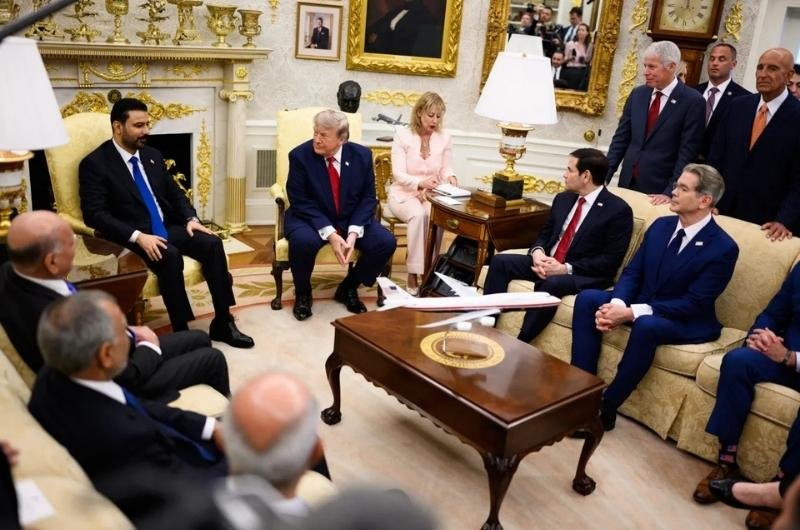
The United States is on track to withdraw its remaining military forces from Iraq by September 30, bringing to a close a U.S. military presence that began with the 2003 invasion and evolved through more than two decades of war, counterterrorism operations, and security assistance. U.S. and Iraqi officials have confirmed that the withdrawal remains on schedule. Iraqi Prime Minister Ali al-Zaidi reaffirmed the September 30 deadline this week following talks with U.S. Central Command chief Adm. Brad Cooper, calling the date final for ending the U.S.-led coalition’s military mission in Iraq. The departure represents the final stage of a drawdown that has been underway for years. American combat forces formally left Iraq in 2011, but U.S. troops returned in 2014 after the rise of ISIS. In recent years, the American mission has focused largely on advising and assisting Iraqi security forces and supporting operations against the militant group. Most U.S. forces have already departed, with the remaining presence concentrated primarily in Iraq’s northern Kurdish region. The withdrawal comes at a particularly volatile moment in the Middle East. U.S. facilities and forces in Iraq have repeatedly faced threats from Iran-backed armed groups, and regional tensions have intensified during the conflict involving the United States, Israel and Iran. Iraq is also confronting the politically difficult task of bringing armed groups operating outside direct government control under state authority. The Readovia Lens For Washington and Baghdad, September 30 will mark more than another troop reduction. It will close one of the longest chapters in modern U.S. military history while shifting the relationship between the two countries toward bilateral security cooperation without a permanent American military presence in Iraq.
Trump’s Former Defense Attorney Todd Blanche Becomes U.S. Attorney General

Todd Blanche has been sworn in as the 88th attorney general of the United States, formally taking control of the Justice Department after a narrow Senate confirmation and a contentious fight over his leadership of one of the federal government’s most powerful agencies. The Senate confirmed Blanche 50–49 on Saturday, August 8, after two Republicans — Sens. Susan Collins of Maine and Lisa Murkowski of Alaska — joined Democrats in opposing his nomination. Blanche took the oath of office at the White House on Monday, August 10, with federal appeals court judge Emil Bove, another former attorney for President Donald Trump, administering the oath. Blanche had already been leading the Justice Department as acting attorney general since April, when Trump removed Pam Bondi from the position. Before entering the administration, Blanche worked as a federal prosecutor and later became one of Trump’s personal criminal-defense attorneys. He represented Trump in the New York criminal case that resulted in Trump’s 2024 conviction and also worked on his defense in federal criminal cases before joining the administration as deputy attorney general in 2025. Blanche’s confirmation nearly collapsed over a proposed $1.8 billion “Anti-Weaponization Fund” created as part of the settlement of Trump’s $10 billion lawsuit against the IRS. The fund was intended to compensate people who claimed they had been unfairly targeted by the federal government, potentially including Trump allies. Republican Sens. John Cornyn and Thom Tillis withheld their support for Blanche until he provided written assurances that the Justice Department would rescind the fund. Blanche ultimately issued an order ending it, helping clear the way for his confirmation. Blanche now assumes the office with considerably more history inside the department than a typical incoming attorney general. During his months as acting attorney general, he established a National Fraud Enforcement Division, pursued antitrust investigations involving meatpacking operations and directed new Justice Department initiatives involving human trafficking, child exploitation and religious-liberty protections. His confirmation converts that temporary authority into a Senate-confirmed tenure at the helm of the Justice Department as the administration continues reshaping federal law-enforcement priorities.
Total Solar Eclipse Will Darken Skies Across Europe Today
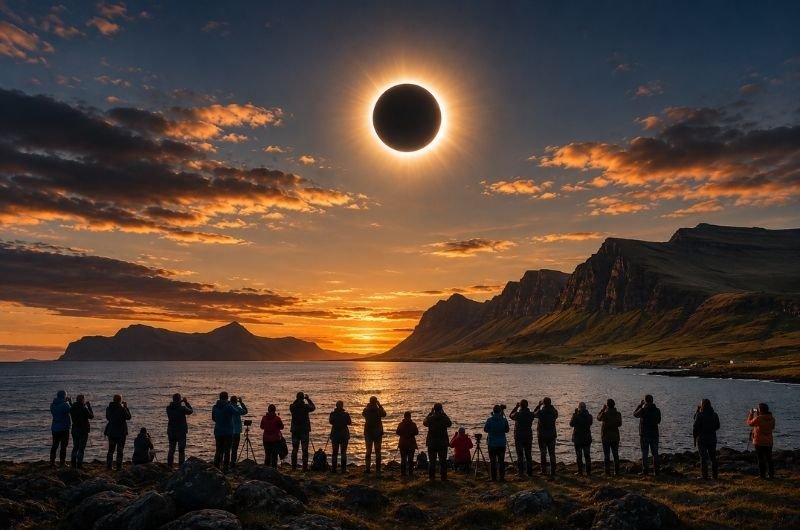
A total solar eclipse will sweep across parts of the Northern Hemisphere today, briefly turning daylight to darkness for people positioned along a narrow path stretching from northern Russia through Greenland and Iceland before reaching Spain and a small corner of Portugal. Some of the most dramatic views will come late in the day. Totality reaches Iceland at about 1:45 p.m. Eastern time before crossing the North Atlantic and arriving in Spain at about 2:30 p.m. Eastern. In Reykjavík, the Sun will be completely covered for roughly a minute, while several locations in Spain will experience totality shortly before sunset. Millions more people outside the path of totality will still see a partial eclipse. London and Paris will see more than 90% of the Sun covered, while Madrid will come extremely close to totality at about 99%. Parts of the United States and Canada will also get a smaller glimpse of the event. Fairbanks, Alaska, will see about 37% coverage, while Boston will see 16%, New York City 9% and Washington, D.C., about 4%. NASA scientists will use the eclipse as a research opportunity as well as a spectacle. A NASA-funded team plans to fly a WB-57 high-altitude research aircraft along the Moon’s shadow to study the Sun’s corona, while university teams in Iceland and Spain will launch scientific balloons to examine how the temporary loss of sunlight affects Earth’s atmosphere. The wait for the next total solar eclipse will be much shorter: another will occur on August 2, 2027, with a path of totality crossing parts of southern Europe, North Africa and the Middle East.