

Global CEOs Shift From Expansion Mode to Risk Containment

Corporate strategy is undergoing a subtle but meaningful shift. After years of aggressive expansion, many global companies are now pivoting toward risk containment — tightening capital allocation, slowing hiring growth, and reinforcing balance sheets. The move reflects a more cautious economic outlook shaped by geopolitical volatility, higher borrowing costs, and shifting consumer behavior. Earnings reports this quarter reveal a common theme: disciplined spending and selective investment. Companies are prioritizing automation, efficiency, and core revenue drivers over splashy new ventures. AI adoption, in particular, is being framed less as experimentation and more as a cost-optimization tool. Investors appear to welcome the prudence. Markets have responded favorably to firms demonstrating operational discipline rather than ambitious overreach. The tone of corporate leadership has changed. The focus is no longer growth at all costs — it’s resilience.
Washington Post Begins Major Layoffs, Reshapes Newsroom Operations

The Washington Post has begun a significant round of layoffs that will reshape large parts of its newsroom, signaling one of the most consequential restructurings in the paper’s modern history. Staff were informed this week that job cuts would affect multiple departments, including the elimination of the paper’s sports desk, the closure of its Books section, and reductions in international reporting. Employees were notified through internal meetings and follow-up communications outlining the scope of the changes. Leadership described the layoffs as part of a broader effort to reduce costs and reposition the organization amid ongoing financial pressures. In addition to newsroom cuts, the paper is suspending its daily news podcast and reorganizing elements of its local and national coverage. While the total number of positions eliminated has not been publicly disclosed, the reductions are expected to impact a substantial portion of the newsroom. Several long-standing editorial sections central to the paper’s identity will no longer operate in their current form. The Readovia Lens The Washington Post’s decision to implement large-scale layoffs and dismantle several core newsroom sections underscores the deep challenges facing legacy media organizations as they contend with declining advertising revenue, shifting reader habits, and intensified competition in the digital news landscape. The restructuring marks a notable moment in the broader transformation of the U.S. media industry.
Saks Global Files for Bankruptcy Amid Shifting Luxury Shopping Habits
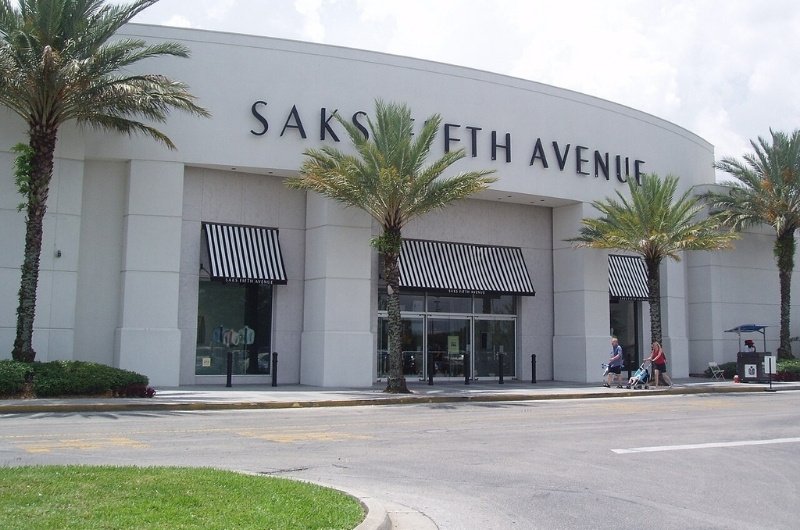
Saks Global filed for Chapter 11 bankruptcy protection on Tuesday, underscoring the growing challenges facing traditional luxury retailers in a post-pandemic economy shaped by higher costs and changing consumer habits. The company, which owns Saks Fifth Avenue, Neiman Marcus, and Bergdorf Goodman, said it plans to keep stores open while restructuring its finances. Customer loyalty programs and normal operations are expected to continue during the bankruptcy process. Saks Global expanded aggressively after the pandemic, using mergers and low-interest borrowing to scale its business. That approach worked briefly during the luxury spending rebound, but rising interest rates and mounting debt quickly narrowed the company’s margin for error. As costs climbed, the balance sheet became increasingly difficult to sustain. At the same time, the company experimented with new distribution strategies. Saks recently launched a storefront on Amazon, signaling an effort to meet luxury shoppers where they already spend time online. While the move reflected changing consumer behavior, it also highlighted how far legacy luxury retailers have been pushed to adapt outside traditional department-store models. Luxury retail itself has been undergoing a broader shift. Shoppers who once relied on department stores are increasingly buying directly from brands, shopping online, or prioritizing experiences over high-end purchases. While some luxury brands have successfully leaned into direct-to-consumer models, department-store-style operators continue to face structural challenges. Industry observers say Saks Global’s restructuring will serve as a key test for whether large luxury retail groups can adapt to today’s environment. The outcome may shape how other legacy retailers approach growth, debt, and long-term sustainability in a sector that no longer operates by pre-pandemic rules.
Major Retailers Slated to Close Hundreds of Locations in 2026 as Consumer Habits Continue to Shift
Across the United States, a wave of store and restaurant closures is shaping the early retail landscape of 2026, underscoring enduring changes in consumer habits, economic pressures and corporate strategies. In recent months, a growing number of well-known chains have announced plans to shutter locations, restructure operations or pivot away from traditional brick-and-mortar footprints in favor of digital and experience-driven models. Industry tracking shows that hundreds of stores and restaurants are slated to close their doors this year as companies seek to improve profitability and respond to declining foot traffic. The closures span a wide range of sectors, from clothing and department stores to pharmacies and eateries, reflecting broader shifts in how Americans shop and dine. Some major grocery and drugstore chains have confirmed plans to reduce underperforming locations, a move aligned with long-term efforts to streamline operations and focus resources on stronger markets. Meanwhile, fast-casual and sit-down restaurant brands are also adjusting their portfolios in response to rising costs and changes in consumer spending patterns. Experts say the trend is driven by a confluence of economic forces: continued expansion of e-commerce, tightening consumer budgets, and the increasing importance of omnichannel retail strategies that blend online and physical experiences. For many retailers, this moment is less about retreat and more about rebalancing where and how they connect with customers. As 2026 unfolds, the closures highlight a fundamental transition in the U.S. retail and service sectors. Companies that adapt — by rethinking store formats, enhancing digital offerings or curating unique in-person experiences — are more likely to navigate this period of realignment successfully. Readovia will continue tracking this evolving retail landscape as more companies outline their plans for 2026. ——————– Related: Banner’s Hallmark Files for Bankruptcy
How U.S. Oil Companies Are Navigating the Venezuelan Upheaval
The sudden upheaval in Venezuela has forced U.S. oil companies to reassess a country long viewed as both a strategic opportunity and a high-risk investment. While markets reacted quickly, corporate responses have been far more cautious — signaling that any shift in U.S. energy involvement will unfold gradually, not overnight. Energy stocks climbed in the immediate aftermath of the crisis as investors speculated about Venezuela’s vast oil reserves potentially re-entering global markets. With the largest proven reserves in the world, the country represents an enormous long-term prize. But for U.S. producers, enthusiasm in the markets has not translated into public commitments. Most companies are signaling restraint as they evaluate political stability, legal protections, and the condition of Venezuela’s long-neglected infrastructure. Chevron remains the only major U.S. oil company with ongoing operations in Venezuela under existing approvals, and its posture has been notably conservative. Rather than outlining expansion plans, the company has emphasized regulatory compliance and operational safety. Other U.S. oil majors are taking a wait-and-see approach, monitoring developments while avoiding speculation about renewed investments until clearer governance and commercial frameworks emerge. Where interest appears more immediate is among U.S. refiners, particularly along the Gulf Coast. Several facilities are equipped to process Venezuela’s heavy crude, and expanded access could offer a geographically close supply option without requiring direct upstream investment. For refiners, the opportunity lies less in rebuilding Venezuela’s oil fields and more in selectively integrating supply if conditions allow. The broader challenge remains Venezuela’s oil infrastructure itself. Years of underinvestment have left production facilities degraded, meaning any meaningful recovery would require substantial capital and time. Even under improved political conditions, restoring output to prior levels would be a complex, multi-year effort — one that few companies appear eager to rush into. For now, U.S. oil companies are balancing opportunity against uncertainty. Investors may be pricing in future possibilities, but corporate strategy remains grounded in caution. The next phase will depend not on headlines, but on whether Venezuela can offer the stability and legal clarity required for long-term energy investment. Until then, U.S. firms appear content to watch closely — and move slowly.
Paramount Ups the Pressure With $40B Guarantee in Bid for Warner Bros. Discovery

Paramount Skydance has escalated its aggressive push to acquire Warner Bros. Discovery, unveiling a dramatically revised offer that includes a $40.4 billion personal financial guarantee from Oracle co-founder Larry Ellison. The updated move is designed to reinforce the strength of Paramount’s financing and counter concerns raised by Warner Bros.’ board about the certainty of the deal. The company’s hostile bid seeks to acquire all outstanding shares of Warner Bros. Discovery at $30 per share in cash, valuing the studio at roughly $108.4 billion — significantly higher than the competing offer already accepted from Netflix. Paramount is positioning its bid as the stronger choice for shareholders, emphasizing its all-cash certainty and its intention to acquire the full company rather than a partial stake. A Takeover Battle Intensifies Warner Bros. Discovery’s board, however, has urged shareholders to reject the hostile offer, calling it risky and inferior to its existing merger agreement with Netflix. That deal combines Warner Bros.’ film and TV assets — including HBO and HBO Max — with Netflix’s global streaming infrastructure in a stock-and-cash transaction the board says offers greater stability. In a clear sign that Paramount intends to continue the fight, its revised bid also raises the reverse termination fee to match Netflix’s terms and extends its tender offer deadline into January, keeping the pressure on as the industry heads into the new year. The Stakes for Hollywood Whoever prevails in this battle will shape the future of the entertainment landscape. A Paramount-led takeover would unite two major studios under one roof, potentially altering the balance of power in film, television, and streaming. Both proposals will likely face intense regulatory scrutiny in the United States and abroad, and analysts expect a prolonged review process before any path forward becomes clear. For now, Paramount and Netflix are locked in a high-stakes competition — and Warner Bros. Discovery shareholders hold the next decisive move. ——————– Related: Netflix’s Epic Power Move to Acquire Warner Bros. Studios and HBO for $82 Billion Paramount Attempts to Outbid Netflix to Acquire Warner Bros. Discovery Warner Bros. Discovery Rejects Paramount’s $108.4 Billion Bid
Warner Bros. Discovery Rejects Paramount’s $108.4 Billion Bid
The board of Warner Bros. Discovery has formally rejected a $108.4 billion hostile takeover proposal from Paramount Skydance, telling shareholders that the offer lacks credible financial backing and carries unacceptable risk. In a statement released Wednesday, the board said Paramount’s all-cash bid of $30 per share failed to provide sufficient proof that financing was firmly secured. Directors cited concerns over the structure and transparency of the funding, saying it did not offer the certainty required for a transaction of this size. Warner Bros. Discovery reaffirmed its support for an existing merger agreement with Netflix, which values the company at $27.75 per share. The board described that deal as binding and fully financed, with clearer commitments that reduce execution and regulatory uncertainty. Shareholders were urged to reject the Paramount proposal ahead of a forthcoming vote. The rejection comes amid weakening momentum behind Paramount’s bid. A key financial backer recently withdrew from the effort, further undermining confidence in the offer and its ability to close. Paramount has not publicly responded to the board’s decision. Shares of Warner Bros. Discovery and Paramount both slipped following the announcement, while Netflix shares edged higher, reflecting investor reaction to the board’s endorsement of the streaming giant’s deal. ——————– Related: Netflix’s Epic Power Move to Acquire Warner Bros. Studios and HBO for $82 Billion Paramount Attempts to Outbid Netflix to Acquire Warner Bros. Discovery
Disney Files Lawsuit Against Google for Using Copyrighted Characters
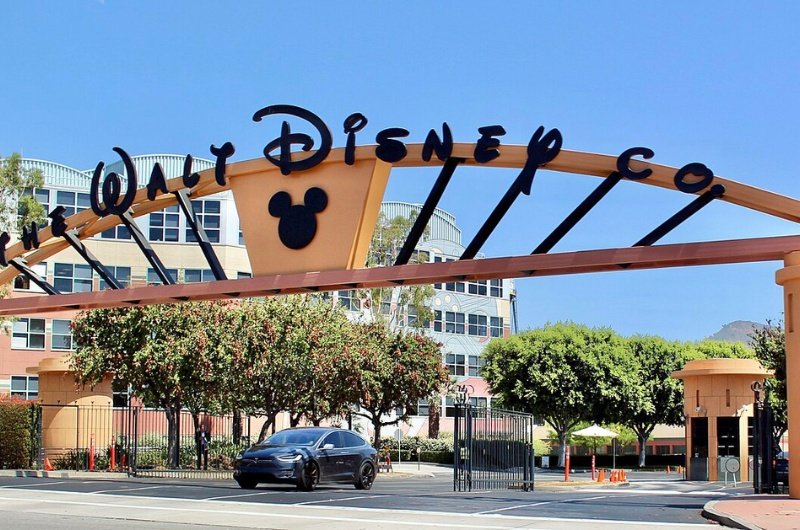
The Walt Disney Company has filed a lawsuit against Google’s parent company, Alphabet, alleging that the tech giant’s artificial intelligence systems unlawfully used Disney’s copyrighted characters and story assets without permission. The complaint marks one of the most consequential confrontations to date between a major entertainment conglomerate and a leading technology firm over the business risks created by generative AI. Disney claims that Google’s AI models can generate content that closely resembles iconic characters and franchises, suggesting that proprietary material was used in training datasets without licensing agreements. The company argues that such practices undermine its intellectual property portfolio — a core revenue driver that supports films, streaming, merchandising, and theme parks worldwide. The legal action comes at a pivotal moment for the entertainment industry. As AI systems become increasingly capable of mimicking artistic styles, voices, and visual identities, legacy media companies are scrambling to safeguard their creative assets and renegotiate how content may be used in emerging technologies. Disney has already begun exploring structured licensing partnerships with selected AI developers, signaling that it views controlled collaboration — not unrestricted use — as the path forward. For Google, the lawsuit introduces fresh uncertainty around how generative AI models source and process training data. If courts side with Disney, tech companies may face new financial and operational burdens, including licensing fees, dataset audits, and revised development practices to prevent unintentional reproduction of copyrighted material. The outcome of the case could reshape the economics of AI development and set a precedent for how intellectual property is valued, licensed, and protected in the digital era. With billions of dollars in creative assets at stake, the battle between Disney and Google is poised to influence strategy across both Hollywood and Silicon Valley for years to come.
Paramount Attempts to Outbid Netflix to Acquire Warner Bros. Discovery

Paramount has launched a hostile takeover bid for Warner Bros. Discovery, attempting to disrupt a proposed acquisition that would bring the entertainment company under Netflix’s control. The move escalates a growing power struggle in Hollywood, where legacy studios and streaming giants are racing to secure scale, libraries, and long-term influence. The rival offer is aimed squarely at Warner Bros. Discovery shareholders, with Paramount proposing an all-cash deal it says delivers clearer and more immediate value. In its appeal, the company has underscored that its bid includes roughly $18 billion more in cash than Netflix’s proposal and argues that its structure stands a stronger chance of clearing antitrust review under the Trump administration. Meanwhile, Netflix has already begun framing the deal as transformational for consumers. In an email sent to subscribers on Saturday, December 6, the company told customers it plans to acquire Warner Bros., including its film and television studios, HBO Max, and HBO. Netflix described the combination as uniting its global platform with Warner’s iconic franchises — spanning everything from Harry Potter, Friends, The Big Bang Theory, and Game of Thrones to Netflix originals such as Stranger Things, Wednesday, Squid Game, Bridgerton, and KPop Demon Hunters. The competing bids highlight how aggressively companies are repositioning themselves as traditional cable revenues continue to shrink and streaming growth shows signs of maturity. Warner Bros. Discovery, home to some of the most valuable intellectual property in entertainment, has emerged as a centerpiece in the industry’s consolidation push. As shareholders and regulators evaluate the competing offers, the outcome could reshape the global media landscape. Whether Warner Bros. Discovery aligns with Netflix’s streaming empire or accepts Paramount’s counterstrike, the decision may help define who controls content creation, distribution, and cultural influence in the next era of entertainment. —————— Related: Netflix’s Epic Power Move to Acquire Warner Bros. Studios and HBO for $82 Billion
Netflix’s Epic Power Move to Acquire Warner Bros. Studios and HBO for $82 Billion
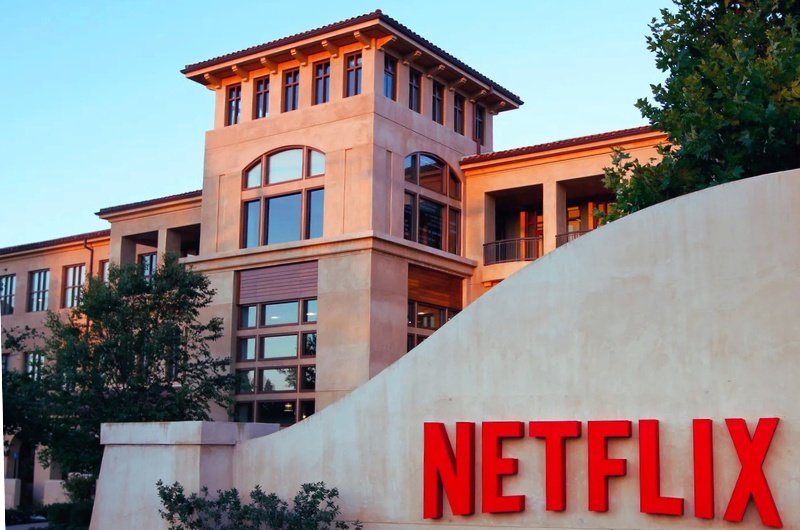
Netflix announced this morning that it will acquire Warner Bros. Discovery’s studio and streaming divisions — including HBO, Warner Bros. Pictures, DC Studios, and one of the richest back-catalog libraries in the world — in a deal valued at roughly $72 billion in equity and more than $82 billion in total enterprise value.” The transaction, still subject to regulatory approval, would give Netflix control of nearly a century of blockbuster franchises and put unprecedented pressure on traditional movie studios and cable networks already fighting to stay relevant. Under the plan, Warner Bros. Discovery will split itself in two: its cable networks such as CNN, TNT, and TBS will be spun off into a separate company, while the storied Warner Bros.–HBO content engine will go to Netflix. WBD shareholders will reportedly receive just under $28 per share in cash and stock, a premium over rival bids from Paramount and Comcast. For Netflix, which outbid both competitors with a cash-heavy offer, the acquisition represents something Hollywood insiders have long speculated about — the moment Netflix stops competing with legacy studios and starts becoming one. For consumers, this consolidation could change the entertainment landscape almost overnight. With HBO’s premium catalog and Warner Bros.’ global production machine folded into its platform, Netflix would gain total control of content pipelines stretching from theatrical releases to streaming premieres. The company has signaled it intends to preserve major theatrical runs for flagship films, but the long-term future of cinemas becomes far less certain when the industry’s most influential distributor also owns one of its most powerful studios. If the old model of theaters, cable networks, and weekend TV premieres wasn’t already fading, this deal pushes it firmly into yesterday. The move also underscores a broader, irreversible shift: the era of “Hollywood as we knew it” is ending. Streaming is no longer a lane in entertainment — it is the highway. Traditional TV has been declining for years, and studios that once relied on cable revenue are facing a world where viewers expect everything on-demand. The Amazon–MGM merger signaled the start of this transition, but Netflix–WBD marks a tipping point. The companies that own the content libraries will not just participate in the future of entertainment; they will define it. Regulators, filmmakers, and independent producers are already voicing concerns. A group of prominent film producers has urged Congress to apply the highest level of antitrust scrutiny, warning that a single distributor controlling so much of the market could limit creative diversity and reduce opportunities for mid-budget and independent films. Still, if the deal proceeds, Netflix will emerge as the first true global entertainment superpower — part studio, part streamer, part cultural gatekeeper. And for better or worse, the industry will reorganize around whatever Netflix becomes next.