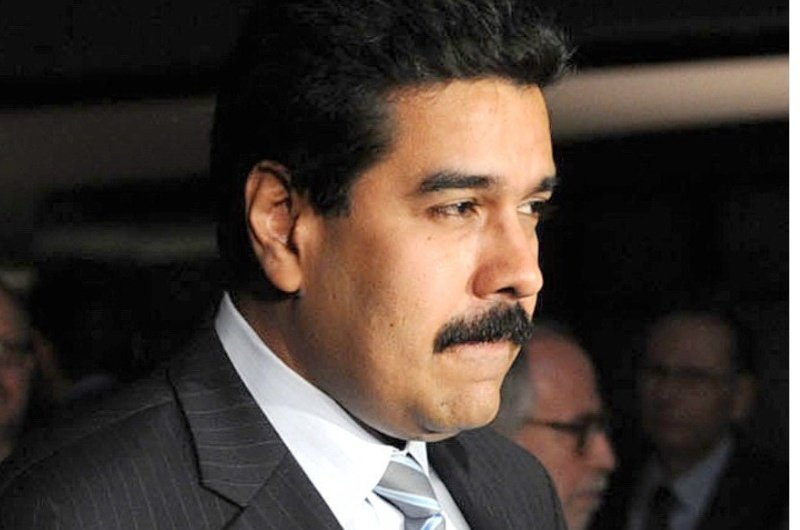
Deposed Venezuelan leader Nicolás Maduro appeared in a New York federal courtroom Monday and pleaded not guilty to a sweeping set of U.S. criminal charges, marking one of the most significant prosecutions of a former head of state in modern history.
Maduro, brought into court under heavy security, denied all allegations and challenged the legitimacy of the proceedings, asserting that he remains Venezuela’s rightful president. Speaking through an interpreter, he rejected U.S. jurisdiction and maintained that his arrest and transfer to the United States were unlawful.
U.S. prosecutors accuse Maduro of leading a long-running criminal enterprise centered on narco-terrorism — a charge that combines drug trafficking with acts intended to support or advance terrorist activity. According to the indictment, Maduro and his associates allegedly worked with armed groups to traffic large quantities of cocaine into the United States while using the proceeds to maintain power and destabilize the region.
The charges to which Maduro pleaded not guilty include:
- Narco-terrorism
- Conspiracy to traffic cocaine into the United States
- Drug trafficking conspiracy involving international distribution
- Conspiracy to use and carry firearms in furtherance of drug trafficking
- Conspiracy to provide material support to a designated terrorist organization
Potential Consequences if Convicted
If convicted on all counts, Maduro could face life imprisonment under U.S. federal law.
Maduro’s wife, Cilia Flores, who was detained during the same operation, also entered a not-guilty plea. Both are currently being held at the Metropolitan Detention Center and did not request bail during the brief court appearance. A future hearing has been scheduled for later this spring.
The case follows a dramatic U.S. operation earlier this month that resulted in Maduro’s capture and removal from Venezuela, a move that has triggered global reaction and raised sharp questions about sovereignty, international law, and precedent. Demonstrators gathered outside the courthouse Monday, reflecting deep divisions over the U.S. action and Maduro’s legacy.
International fallout continues, with the United Nations Security Council holding emergency discussions on the implications of prosecuting a former head of state in a U.S. court — a development that could reshape how future cases involving foreign leaders are handled.
——————–
What do you say? Send us your comments. We may post them here.