While the AI race has largely been defined by chipmakers like Nvidia and manufacturing giants like Taiwan Semiconductor Manufacturing Company (TSMC), a quieter shift is beginning to take shape behind the scenes — and it could determine who controls the next phase of the industry.
Intel, long seen as a company trying to reclaim its footing, is now positioning itself in a less obvious but increasingly critical part of the AI supply chain: advanced chip packaging. And according to multiple reports, that strategy may already be gaining traction with some of the biggest names in tech.
The company is said to be in ongoing discussions with major players like Google and Amazon — both of which design their own custom AI chips but rely on external partners for key stages of production. If those conversations turn into formal agreements, it would mark a meaningful shift not just for Intel, but for how AI infrastructure is built moving forward.
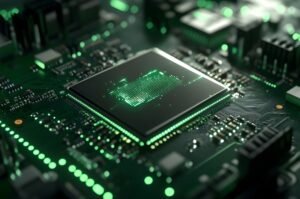
Unlike traditional chip manufacturing, advanced packaging focuses on how multiple chip components are combined into a single high-performance system. As AI workloads grow more complex, this layer has become increasingly important, enabling greater power and efficiency without relying solely on smaller, more expensive transistor designs.
For Intel, this represents strategic pivot.
After years of falling behind in mobile and high-performance chips, the company has been working to reestablish its position in the semiconductor space, backed in part by efforts to strengthen domestic chip production. Securing packaging deals with companies like Google and Amazon could accelerate that effort, creating new revenue streams while placing Intel at a critical junction in the AI ecosystem.
But the real story is about where the AI battle is moving next. As more companies design their own silicon, control is shifting away from who manufactures the chips to who can integrate them into powerful, scalable systems. That’s where packaging — once considered a backend step — is emerging as a front-line differentiator.
The Readovia Lens
The next phase of the AI race may not be decided by who builds the fastest chip — but by who can assemble the smartest system.
If Intel can position itself as the bridge between custom chip design and real-world deployment, its comeback will take on real strategic weight. And in an era where AI infrastructure is becoming the backbone of everything from search to cloud computing, the companies that control the “in-between” layers may end up controlling far more than expected.