

Amazon Plans 5,105-Satellite Network to Connect Phones From Space

Amazon is seeking federal approval to launch a new network of as many as 5,105 satellites designed to connect mobile phones directly from space, sharply expanding the company’s ambitions in the growing satellite communications market. The proposed Amazon Leo Direct-to-Device system would deliver voice calls, text messaging, mobile data and emergency communications in areas beyond the reach of conventional cell towers. Amazon has filed an application with the Federal Communications Commission and plans to begin deploying the low Earth orbit satellites in 2028. The network would operate through partnerships with mobile carriers, allowing compatible phones and other cellular devices to connect by satellite when terrestrial coverage is unavailable. That could extend service across rural communities, remote travel areas and regions where hurricanes, wildfires or other disasters have damaged ground-based networks. Amazon’s plan is closely tied to its pending acquisition of satellite communications company Globalstar. Under a definitive merger agreement announced in April, Amazon would acquire Globalstar’s satellite operations, infrastructure and globally authorized mobile-satellite spectrum licenses, giving the company an established foundation for its direct-to-device expansion. Amazon and Apple have also reached an agreement for Amazon Leo to power satellite services on supported iPhone and Apple Watch models, including emergency messaging and roadside assistance. That agreement signals that Amazon’s planned network is already being positioned for use by mainstream consumer devices. The direct-to-device satellites would operate alongside Amazon Leo’s broader broadband network, which is being developed to connect homes, businesses, government customers and transportation systems through dedicated satellite antennas. The Readovia Lens The Amazon Leo proposal places Amazon in more direct competition with SpaceX’s Starlink and AST SpaceMobile as satellite operators race to make voice, messaging and mobile data available beyond the reach of cell towers. Amazon says the combined network could eventually support hundreds of millions of connected devices worldwide. The plan still requires regulatory approval, and deploying thousands of additional satellites would require an extensive series of launches. But the scale of Amazon’s filing—and the Globalstar and Apple agreements behind it—suggests that direct-to-phone satellite service is rapidly moving from emergency backup technology toward a much larger global communications business. ——————– Related: Could Your Next Cell Signal Come From Space? New Satellites Bring That Future Closer
Youth Mental Health and Drug Use Show Encouraging Improvement

Mental health and substance-use trends among American teenagers improved across several important measures, according to newly released federal data collected in 2025. The 2025 National Survey on Drug Use and Health found that fewer adolescents ages 12 to 17 reported using tobacco, alcohol or marijuana. Binge drinking also declined, while fewer teenagers said they had begun drinking, vaping or using marijuana during the previous year. The findings also pointed to progress in youth mental health. Rates of major depressive episodes fell among adolescents, along with the percentages reporting serious thoughts of suicide, making a suicide plan or attempting suicide. Young adults ages 18 to 25 experienced similar improvements. The results do not mean the youth mental health crisis has ended. Nearly one in five adolescents reported moderate or severe anxiety symptoms during the two weeks before they were surveyed, almost three times the rate among adults. Access to care also remains a serious challenge. Nearly 45 million Americans were estimated to have a substance-use disorder, while more than 80% of those who needed treatment did not receive it. The newly released findings suggest that young people may be moving in a healthier direction after years of troubling trends, but millions of families are still struggling to find adequate mental health and addiction support.
Four Events That Could Move Markets This Week

Wall Street is heading into one of the most consequential stretches of the summer, with a Federal Reserve decision and earnings from four of the world’s largest technology companies arriving within roughly 30 hours. Together, Microsoft, Meta, Apple and Amazon account for an enormous share of the major stock indexes. Their results could influence not only technology stocks, but also retirement accounts, interest-rate expectations and investor confidence across the broader market. 1. Microsoft and Meta Put AI Spending to the Test Microsoft and Meta report their latest results after the market closes Wednesday, placing the financial returns from artificial intelligence spending at the center of attention. Investors will be watching Microsoft’s cloud business and demand for its AI products, while Meta is likely to face questions about whether its expanding investment in data centers and computing infrastructure is strengthening its advertising business quickly enough to justify the cost. The issue is becoming increasingly important across Wall Street. Technology companies are committing enormous sums to chips, power, data centers and other AI infrastructure, but investors are beginning to demand clearer evidence that those expenditures will generate lasting profits. 2. The Federal Reserve Decides What Comes Next for Interest Rates The Federal Reserve will announce its latest interest-rate decision Wednesday following a two-day policy meeting. The immediate decision matters, but the Fed’s language about inflation and future rate moves may be even more influential. Higher rates can increase borrowing costs for households and businesses while placing pressure on stock valuations, particularly for fast-growing technology companies. Any unexpected shift in the Fed’s outlook could move stocks, Treasury yields and mortgage-rate expectations within minutes. 3. Apple Faces Questions About Its Next Growth Engine Apple reports Thursday as investors assess the strength of iPhone demand, services revenue and the company’s developing artificial intelligence strategy. Because Apple’s products reach deeply into consumer spending, its results can provide clues about whether households are still willing to pay for premium devices and subscriptions. Investors will also look for signs that Apple can turn its enormous installed base of devices into a stronger position in the AI market. 4. Amazon Reveals the Cost of Its Expanding Ambitions Amazon joins Apple in reporting Thursday, with attention likely to center on its cloud business, retail operations and aggressive investment in AI infrastructure. Amazon Web Services remains a major profit engine, but the company is spending heavily to expand computing capacity and support rising demand for artificial intelligence. Investors will want to know whether that demand is growing fast enough to support the scale of the company’s investment. Amazon’s outlook could also provide a broader reading on consumer spending, online commerce and corporate technology budgets. The Readovia Lens By the end of Thursday, investors should have a much clearer picture of whether the economy and the AI boom remain strong enough to support today’s market expectations. With so much of the stock market tied to a small group of powerful companies, even modest surprises could ripple through retirement accounts, index funds and everyday investor portfolios. ——————– Related: Wall Street Braces for Critical Week as Earnings and Inflation Take Center Stage
Thune Pushes Back as Trump Demands Senate Stay Until Voting Bill Passes
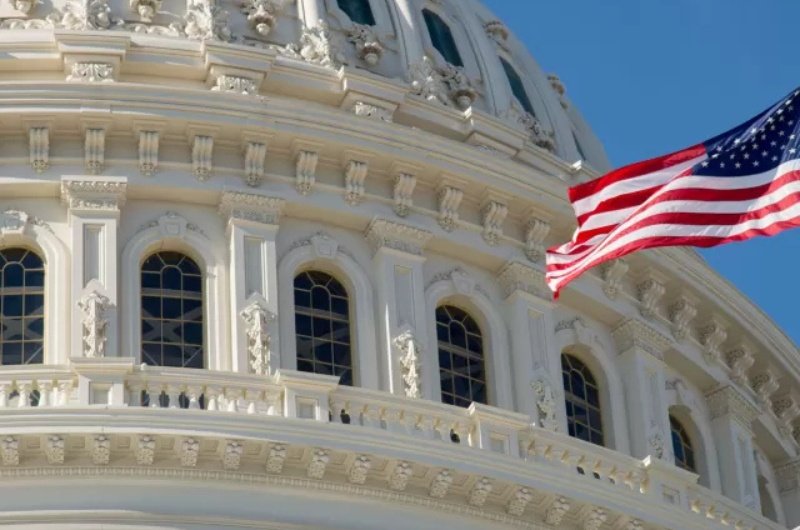
Senate Majority Leader John Thune is resisting President Trump’s demand that Republicans cancel their August recess until they pass sweeping election legislation, saying the chamber still lacks a workable path to move the bill forward. Trump called on Thune to keep senators in Washington until they approve the SAVE America Act or eliminate the legislative filibuster blocking it. Republicans hold a 53–47 Senate majority but generally need 60 votes to advance the legislation over Democratic opposition. Thune said he would support postponing the recess if supporters could demonstrate how the bill would pass, but noted that senators have already voted on it several times without producing the necessary support. He has also rejected calls to eliminate the filibuster, while several Republican senators continue pressing leadership to keep the chamber in session. The legislation would require people registering to vote in federal elections to provide documentary proof of U.S. citizenship and require voters to present photo identification at the polls. Supporters describe the provisions as election safeguards, while opponents warn that eligible voters who lack passports, birth certificates or other readily available documents could face new barriers. The Readovia Lens Trump said Monday that his relationship with Thune remains “fine” and that he has not considered replacing him. But the confrontation is widening into a larger test of Republican unity, Senate rules, and the party’s election strategy as lawmakers approach an August recess scheduled to begin August 7.
Trump Demands Senate Cancel August Recess Until Voting Bill Passes
President Trump is demanding that Senate Republicans cancel their August recess and remain in Washington until they pass his sweeping election legislation, escalating pressure on party leaders as Congress approaches its summer break. Trump called on Senate Majority Leader John Thune to keep the chamber in session until lawmakers approve the SAVE America Act or eliminate the legislative filibuster standing in its way. Republicans control the Senate 53–47 but would generally need 60 votes to advance the legislation over Democratic opposition. The bill would require people registering to vote in federal elections to provide documentary proof of U.S. citizenship and require voters to show photo identification at the polls. Supporters describe the measures as basic election safeguards, while opponents warn that millions of eligible Americans could face difficulty obtaining or presenting the required documents. Trump’s demand places Thune under increasing pressure from conservative senators who have also called for the recess to be postponed. Senate leaders are simultaneously confronting government-funding deadlines and several other unfinished legislative priorities, leaving little time to resolve the voting-bill standoff before lawmakers are scheduled to leave Washington. The confrontation could now become a test of Republican unity ahead of the midterm elections. Trump has urged senators to find a procedural workaround if they will not eliminate the filibuster, but Senate Republicans have yet to demonstrate that they have enough support to move the bill forward through another route.
Portugal’s Best-Kept Secret: The Alentejo Region Is Having Its Moment

Most travelers who visit Portugal never make it past Lisbon, the Algarve, and perhaps a day trip to Sintra. That itinerary is entirely understandable — Portugal’s capital is among the most livable and beautiful cities in Europe, and the southern beaches are genuinely world-class. But there is a region between the capital and the coast that covers nearly a third of the country, contains some of the most extraordinary landscapes on the Iberian Peninsula, and remains almost entirely undiscovered by the international travelers rushing past it on the way to somewhere more familiar. The Alentejo is Portugal at its most authentic, it is quietly emerging as one of Europe’s most compelling slow-travel destinations. The defining characteristic of the Alentejo — a name that translates roughly as “beyond the Tagus river” — is its extraordinary sense of space. Rolling golden plains stretch to every horizon under an immense sky. Ancient cork oak forests shade empty back roads where the only sound is the wind moving through the wheat. The region is home to just 5% of Portugal’s population despite covering roughly 30% of its land area, and that imbalance gives the Alentejo a rare quality in modern travel: true quietude. At its heart lies Évora, a UNESCO World Heritage city that has been continuously inhabited since Roman times, its medieval walls and iconic Roman Temple rising from the plains as they have for two thousand years. The city’s streets contain more history per square kilometer than almost anywhere else in Western Europe — and its restaurants, serving slow-cooked lamb and black pork dishes with locally pressed olive oil and bread still warm from the oven, are making serious inroads on the culinary map. The villages surrounding Évora are where the Alentejo’s character becomes unmistakable. Monsaraz, a medieval walled settlement perched on a hilltop above the glittering Alqueva Reservoir — Europe’s largest artificial lake — feels genuinely suspended in time, its narrow cobblestone lanes and whitewashed houses with blue trim offering some of the most striking golden-hour views in Portugal. Marvão, up in the northern Serra de São Mamede mountains, is a fortified village on a granite outcrop with panoramic views stretching into Spain on a clear day. And scattered across the countryside between these villages lie the megalithic stone circles of the Cromelque dos Almendres, among the oldest prehistoric monuments in Europe — predating Stonehenge by two thousand years, and standing largely in solitude among the cork trees with no ticket queue in sight. The wine story here is as compelling as anything the region offers culturally. The Alentejo has emerged over the past decade as one of Portugal’s most exciting wine regions, producing bold, generous reds from varieties like Alicante Bouschet and Aragonez alongside increasingly refined whites. The terroir — granite, schist, and limestone soils under a Mediterranean climate tempered by Atlantic breezes — creates wines of genuine complexity, and the region’s estate wineries welcome visitors with the kind of unhurried hospitality that more famous wine regions have largely lost. In 2026, the southern sub-region of Baixo Alentejo holds the designation of European Wine City of the Year, bringing a calendar of open-cellar days, amphora tastings, and village wine routes that offer rare access to winemakers still fermenting in ancient clay vessels as the Romans did. For travelers who love wine but have grown tired of Napa or Tuscany, this is the new frontier. What the Alentejo requires from its visitors is a car, a willingness to linger, and a resistance to over-scheduling. The region reveals itself slowly — through a long lunch on a winery terrace, through an afternoon drive through cork forest where the trees are being harvested by hand as they have been for centuries, through an evening glass of local red in the square of a village where the same families have gathered at dusk for generations. This is travel as restoration rather than consumption, and it has found its moment precisely because so many travelers are reaching the end of their patience with destinations designed entirely around the needs of mass tourism. The Alentejo was not designed for tourism at all. It was designed for living, and that, increasingly, is exactly what makes it worth visiting.
The Readovia Aerospace Report Debuts with Its First Quarterly Edition

The aerospace industry rarely stands still—and the second quarter of 2026 proved it once again. From major government initiatives and commercial spaceflight milestones to advances in defense aviation and satellite technology, the past three months brought developments that will continue shaping the industry well into the second half of the year. To help readers quickly understand what mattered most, Readovia has released the inaugural edition of The Readovia Aerospace Report, a concise quarterly publication highlighting the biggest stories, key industry developments, and the trends worth watching. Rather than covering every headline, the report focuses on the events and data that provide the clearest picture of where the aerospace sector is headed. It also includes The Readovia Lens, our editorial perspective on the quarter’s most significant themes, along with a look ahead at what to watch during Q3. Whether you follow commercial aviation, defense, satellite technology, or the rapidly evolving space industry, the report is designed to give you a fast, informative overview in just a few minutes. Get The Readovia Aerospace Report here
Iran War Spills Across Borders as Strikes Hit Two Iraq Crossings

The conflict between the United States and Iran expanded beyond Iranian territory Thursday after two border crossings in Iraq were struck during the latest round of hostilities. Officials and verified video footage indicate that the Shalamcheh border crossing between Iran and Iraq was hit, reportedly damaging a police rest station. Later the same day, the Abdali border crossing between Iraq and Kuwait also came under attack in what appeared to be a retaliatory strike. Iraqi officials had not publicly commented on either incident as of publication. The developments came as the U.S. military completed its 13th consecutive night of strikes against targets inside Iran. According to U.S. Central Command, the latest operation targeted command centers, drone storage sites, communications infrastructure, coastal surveillance systems, and other military facilities. The continuing campaign reflects the longest sustained period of direct U.S. military operations against Iran in the current conflict. As strikes continue and attacks spread beyond Iran’s borders, regional security concerns are mounting across neighboring countries. Military analysts are closely watching whether the latest cross-border attacks signal a broader expansion of the conflict or remain isolated incidents as tensions continue to escalate.
DOJ Backs Away From New York Times Subpoenas in Air Force One Investigation

The U.S. Department of Justice has withdrawn subpoenas seeking testimony and phone records from three New York Times reporters in its investigation into leaked information about President Donald Trump’s new Air Force One aircraft, ending a closely watched legal dispute after a federal judge questioned the government’s handling of the case. The subpoenas were issued as part of an investigation into reports that raised security concerns about a Boeing 747 donated by Qatar and intended for presidential use. Prosecutors had sought to identify the sources behind the newspaper’s reporting, arguing the disclosures involved sensitive national security information. During a hearing in federal court in New York, U.S. District Judge Arun Subramanian questioned whether the Justice Department had met the legal standards required before compelling journalists to reveal confidential sources. Government attorneys subsequently agreed to withdraw the subpoenas rather than continue the legal dispute. The case drew national attention because it highlighted the ongoing tension between leak investigations and longstanding First Amendment protections for the press. While the Justice Department has ended its effort to obtain testimony and records from the reporters, officials have indicated that the broader investigation into the disclosure of information about the aircraft remains active.
Credit Scores Explained: What Really Affects Your Score — and What Doesn’t

Credit scores play a central role in many financial decisions, from qualifying for a mortgage to securing favorable interest rates on loans and credit cards. Yet despite their importance, many consumers still misunderstand what actually influences their score — and what doesn’t. Here’s a clear breakdown of what truly matters when it comes to your credit score, and where common myths often lead people astray. What Really Impacts Your Credit Score Payment history remains the single most important factor in determining a credit score. Paying bills on time, every time, carries more weight than almost any other behavior. Even one missed payment can have a noticeable impact, especially if it becomes delinquent. Credit utilization is another major driver. This refers to how much of your available credit you’re using. High balances relative to your credit limits can signal risk to lenders, even if payments are made on time. As a general rule, using 30% or less of your available credit is often considered healthy, and keeping balances low relative to limits generally supports a stronger score. The length of your credit history also matters. Older accounts help demonstrate stability, which is why closing long-standing credit cards can sometimes do more harm than good. What Has Less Impact Than People Think Checking your own credit score does not hurt it. Soft inquiries, including those made when you review your own credit or receive pre-approval offers, have no impact on your score. Income level is also not a factor in credit scoring. While income may be considered by lenders during an application, it does not directly affect your credit score itself. Carrying a balance month to month is another common misconception. You do not need to pay interest to build credit. Paying your statement balance in full can still demonstrate responsible usage without incurring extra costs. Why Credit Scores Matter for Big Financial Decisions Credit scores influence the interest rates you’re offered, which directly affects long-term costs. A higher score can mean lower monthly payments and significant savings over time, especially for major loans like mortgages. Even modest improvements can make a meaningful difference. Understanding how scores work — and focusing on the factors that truly matter — is often more effective than chasing quick fixes. How to Strengthen Your Credit Over Time Improving a credit score is typically about consistency rather than speed. Paying bills on time, keeping balances manageable, avoiding unnecessary new credit, and maintaining older accounts can steadily strengthen your profile. It’s also important to remember that credit scores change over time. Short-term fluctuations are normal, and long-term habits matter far more than any single action. The Bottom Line Credit scores aren’t mysterious, but they are often misunderstood. Focusing on payment history, responsible credit usage, and long-term consistency can do far more for your score than reacting to myths or short-term swings. For consumers planning major financial moves — such as buying a home or refinancing debt — understanding how credit really works is one of the most practical financial tools available.