

The Next Wave of Federal Job Cuts Has Moved from Rumor to Reality

As the government shutdown stretches into its tenth day, layoff notices are being issued across Washington. Agencies once considered permanent fixtures are now facing reductions in force, and federal workers who were furloughed are learning their positions may not return. The administration has framed the cuts as part of a broader restructuring of government operations. But behind the measured language, the move has taken on an unmistakably political edge. President Trump has repeatedly vowed to dismiss federal workers during the shutdown standoff — now entering its tenth day — and has suggested his team will target what he’s described as “Democrat agencies”. That claim, whether rhetorical or real, is expected to fuel multiple legal challenges in the weeks ahead. For thousands of federal employees, this week’s notices have deepened an already anxious period. Many were first furloughed when the government closed, then told their positions may not return when it reopens. Agency leaders are said to be reviewing staffing rosters under new directives from the Office of Management and Budget, accelerating decisions that might otherwise have taken months. The process is fast, opaque, and deeply personal for those affected. Labor unions and employee groups have already begun preparing lawsuits, arguing that reductions in force during an active shutdown may violate federal employment statutes requiring advance notice and due process. Legal experts say the cases could test the boundaries of executive power — and the protections that have long insulated the civil service from political retaliation. Between the Lines The country’s largest employer is cutting staff without a clear end date or plan for recovery, adding new meaning to “willy-nilly”. As Washington’s workforce braces for what could be a drawn-out fight in court, the rest of the nation watches a simple but profound question unfold: what happens when politics turns employment itself into a weapon?
Shutdown Turbulence: Flight Delays and Cancellations Leave Travelers Grounded

As the federal government shutdown stretches on, America’s skies are showing the strain. Across major airports, travelers are canceling flights, rerouting itineraries, and questioning whether it’s worth the risk. What was supposed to be a long weekend getaway for some travelers has turned into a logistical gamble — one that’s eroding confidence in the nation’s air travel system. The ripple effects are immediate. With federal employees unpaid and staffing stretched thin, flight delays and cancellations are climbing. Air traffic controllers and TSA workers, already working under high stress, are reporting burnout and absenteeism. Airlines are bracing for more turbulence if the shutdown extends into next week, a scenario that could deepen operational disruptions and dent public trust further. For travelers, the uncertainty is creating a new kind of fatigue. Business flyers are pushing meetings to virtual platforms. Families are shelving vacation plans. International tourists, already wary of long security lines, are choosing alternate destinations. This is beyond inconvenience. It’s an erosion of reliability in an industry built on precision and predictability. The economic toll is building as well. The U.S. travel sector, one of the country’s most resilient post-pandemic industries, is facing another confidence test. Analysts estimate billions in potential losses if air travel continues to slow through October. Each delayed flight represents not only stranded passengers but missed hotel bookings, idle rental cars, and lost tourism revenue. Final Word If the shutdown persists, the damage could linger well beyond the runways. The longer travelers remain uncertain, the harder it becomes to restore the sense of stability that underpins the entire system. For now, the message from weary passengers and overstretched crews is the same: America’s airways can’t afford a prolonged political standoff.
When Code Writes Code: Nvidia-Backed Reflection AI Raises $2 Billion to Redefine Software’s Future

The next great leap in artificial intelligence isn’t just about smarter chatbots or digital art. It’s about teaching machines to build the digital world themselves. That’s exactly what Reflection AI, a rapidly rising startup backed by Nvidia, is setting out to do — and investors just handed it a staggering $2 billion vote of confidence. At an $8 billion valuation, Reflection AI joins the elite class of next-generation AI developers that are not only writing algorithms, but building systems that can write, test, and deploy software autonomously. The company’s founders, a mix of DeepMind veterans and early OpenAI engineers, describe their mission as building the “self-improving developer” — an AI capable of analyzing its own codebase and optimizing it without human direction. Behind the funding round is a lineup that reads like a who’s-who of Silicon Valley’s elite. Nvidia led the investment, joined by Lightspeed, Sequoia, and former Google CEO Eric Schmidt — a collective bet that the next trillion-dollar disruption will be agentic AI, where machines operate independently across entire software lifecycles. We’re already seeing early glimpses of that future. A growing wave of AI-powered web app builders and no-code automation tools can now generate functioning websites, dashboards, and databases in minutes. What once required a team of developers can now be done by a single creator using natural language — a preview of how autonomous development might evolve once platforms like Reflection AI mature. These tools, while still in their infancy, are reshaping how entrepreneurs and engineers think about creation itself. That confidence comes with sky-high expectations. Reflection’s previous round valued it around half a billion dollars. The jump to $8 billion represents one of the fastest valuation climbs in recent memory — and puts the startup under pressure to deliver technology that meaningfully outperforms the competition. Its pitch: instead of AI that merely assists developers, Reflection AI aims to be the developer — planning features, writing code, debugging errors, and managing deployment pipelines on its own. If realized, it could transform how software companies operate, replacing thousands of repetitive engineering hours with self-managing systems that continuously learn and evolve. Yet with those ambitions come familiar risks. The AI sector is crowded, talent-intensive, and capital-hungry. Rivals like OpenAI, DeepSeek, and Anthropic are racing toward similar horizons. Reflection’s challenge will be not only building smarter code-writing systems but also earning trust in industries where a single line of bad code can carry monumental cost. Still, the symbolism of this funding round runs deeper than its headline numbers. It marks a shift in where investors see value: away from end-user AI tools and toward infrastructure that enables machines to think, plan, and build like humans. It’s a wager that the next big breakthrough won’t just generate words or images — it will generate the digital future itself.
Amazon Pharmacy Brings Prescription Kiosks to One Medical

Amazon will begin filling select prescriptions at electronic kiosks inside One Medical primary-care clinics, starting in Los Angeles this December. The pilot focuses on common, non-refrigerated medications—think antibiotics, asthma inhalers, and blood-pressure treatments—and includes a virtual pharmacist consult at the kiosk. It’s the company’s first in-person pickup option for pharmacy, which until now has leaned on delivery. By placing inventory closer to patients, Amazon aims to cut shipping costs and speed up urgent fills, while keeping the footprint small enough to slot into existing clinics. Access isn’t limited to members: while One Medical runs a membership model, non-members can still book appointments and use the kiosk. Amazon says it plans to expand outside California in 2026, and is also talking with external health systems about partnerships. The kiosks won’t handle refrigerated drugs—such as popular GLP-1 weight-loss medications—or tightly controlled pain medicines. Inventory will be tailored to each clinic. Why it matters If the pilot works, expect these pharmacy kiosks to show up wherever Amazon already sees patients—tightening the loop between clinic visit → prescription → pickup and giving the company a new lever on convenience and cost in healthcare.
Australia Locks Under-16s Out of Social Media — and Yes, That Now Includes YouTube

Beginning December 10, 2025, Australia law will require social media platforms to restrict accounts for users under 16—or face steep penalties. Australia is set to run a world-first experiment in teen online life: a social-media “delay” until age 16. From December 10, platforms must take reasonable steps to prevent under-16s from creating or maintaining accounts. Parents and kids aren’t penalized; the burden—and liability—shifts to the companies. Officials say age checks should be effective but minimally invasive, meaning platforms are expected to strengthen behind-the-scenes age assurance, tighten teen-safety defaults, and act faster on accounts flagged as underage. Expect new sign-up flows, more prompts for age confirmation, and periodic sweeps to catch under-16 accounts. What to watch next: which services end up covered beyond the household names (think Discord, Reddit, Roblox), how companies redesign sign-up flows, and any legal challenges from platforms unhappy with the classification. Also watch the data: regulators plan to measure whether the policy actually reduces harms—or just pushes activity to workarounds. The woman behind the shift Australia’s eSafety Commissioner Julie Inman Grant—a former Big Tech executive turned regulator—has been the loudest voice pushing to include YouTube and tighten the system. She’s now the face of a policy other governments are eyeing as a template.
Trump Confirms Diddy’s Team Asked for a Pardon — But He’s Leaning Toward A “No”

President Trump confirmed that members of Sean “Diddy” Combs’ circle reached out to request a presidential pardon — but said he’s “not inclined” to grant one. Speaking to reporters outside Mar-a-Lago, Trump said he would “take a look” and consult with the Department of Justice, but hinted that Combs’ high-profile legal troubles and previous criticism of him could weigh heavily against approval. “I don’t know. We’ll see. He’s said some things — not so nice things — but I’ll look at it,” Trump told reporters. Combs, who is currently serving time following a conviction on prostitution-related charges, has denied personally requesting clemency. His legal team told People that “neither Mr. Combs nor his attorneys have made any formal request for a pardon,” though others “close to him” reportedly made inquiries on his behalf. The conflicting accounts have fueled another media storm around the embattled music mogul, who has been under intense scrutiny since his conviction. Trump, meanwhile, has been fielding multiple high-profile pardon questions — including one related to Ghislaine Maxwell — reigniting debate over his controversial clemency record. If granted, a pardon for Diddy would mark one of Trump’s most contentious moves yet. Critics argue that such a decision would signal favoritism toward celebrity figures, while allies say it shows the former president’s willingness to entertain requests from all corners. For now, Trump appears to be signaling hesitation. “He’s asked. People have asked,” he said. “But I’m leaning toward no.” Between the Lines Trump’s response hits two familiar notes: tease the possibility, then retreat to plausible distance. It’s a move that keeps him at the center of the story — and forces Diddy’s camp to keep reacting. Whether this was a serious request or simply a signal flare from Diddy’s inner circle, one thing’s certain: the intersection of fame, politics, and power isn’t cooling off anytime soon.
Longevity Travel: The Next Wave in Luxury & Wellness Getaways

From blue-zone retreats to biohacking resorts, a new era of travel is emerging — one that promises not just escape, but extension. The Rise of Longevity-Focused Escapes For decades, luxury travel has sold serenity. Now it’s selling years. From the Mediterranean cliffs of Sardinia to the high-altitude spas of the Swiss Alps, travelers are booking experiences that promise not only relaxation but regeneration. The trend — dubbed “longevity travel” — fuses cutting-edge science with holistic wellness. Guests undergo DNA-based health assessments, biohacking sessions, and nutritional optimization programs, all under the guidance of medical professionals. The goal isn’t merely to recharge; it’s to reset the body’s biological clock. At the forefront are resorts offering longevity diagnostics, IV infusions, circadian therapy, and blue-zone-inspired diets. Think five-star hotels with health labs instead of minibars, and mindfulness coaches replacing traditional concierges. From Destination to Data Unlike classic wellness retreats, longevity travel is built on measurable results. Many properties now offer health dashboards that track sleep cycles, inflammation markers, and metabolic performance during a guest’s stay. In Costa Rica’s Nicoya Peninsula — one of the world’s famed blue zones — private villas partner with nutritionists who craft menus using ingredients sourced within a five-mile radius. In Iceland, spa lodges offer geothermal immersion therapy to improve cardiovascular function. In Thailand and Bali, resorts are adopting wearable integrations that sync with medical-grade health tech to monitor real-time progress. These experiences are data-driven yet deeply personal — appealing to the modern traveler’s desire for both luxury and longevity. The Psychology of Living Better, Not Just Longer Longevity travel is about more than biological age. It taps into a growing cultural shift: people want their experiences to add meaning as much as years. Guests aren’t chasing immortality — they’re chasing vitality. For the travel industry, it’s an evolution from self-care to life optimization. And for travelers, it’s proof that the most valuable souvenir isn’t a keepsake — it’s a measurable improvement in health, mood, and longevity markers. The Future of the Longevity Itinerary Industry analysts predict that longevity travel will expand beyond resorts and spas into cruise lines, eco-retreats, and even business travel. Some hotels are already incorporating sleep sanctuaries, oxygen therapy pods, and “recovery menus” for jet-lagged executives. In an era where wellness has become both lifestyle and currency, the next luxury frontier is simple — feeling younger longer. And as technology continues to merge with travel, the idea of returning from vacation biologically younger might not be fantasy for much longer.
Julie Inman Grant, The Regulator Reshaping Teen Social Media in Australia
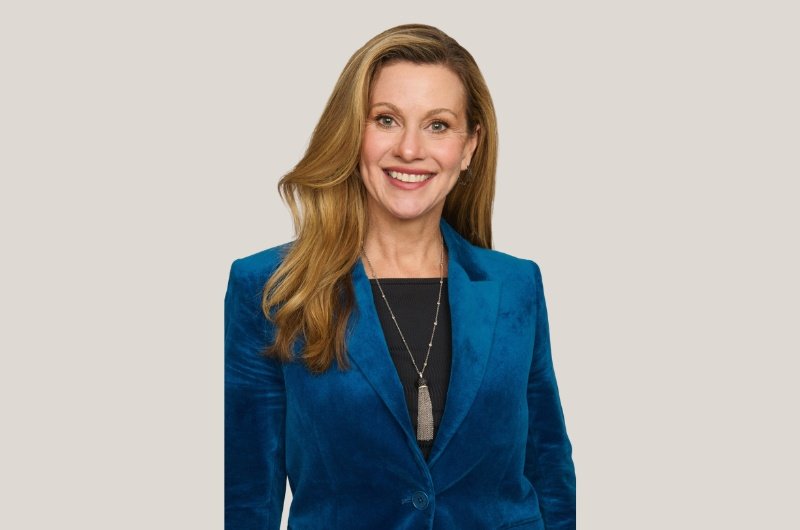
Australia’s eSafety Commissioner, Julie Inman Grant, has become the public face of a new approach to teen online safety: put responsibility on platforms and prove it works. With the under-16 account restrictions set to take effect on December 10, she’s pressing companies to deliver age checks that are effective without being intrusive—and to show measurable results, not just new settings pages. Inman Grant’s stance is pragmatic rather than punitive. She talks about “reasonable steps,” not blanket ID checks, and about layered signals that help identify under-age accounts while minimizing friction for everyone else. The message to product teams is clear: redesign the on-ramp, tighten defaults for teens, and build systems that catch and remove under-16 accounts consistently over time. Her influence is visible in the scope of the policy itself. After early debate about exemptions, regulators moved to treat YouTube like other social platforms—an acknowledgement of how teens actually use it: creators, comments, direct messages, and a highly personalized feed. That call reflects Inman Grant’s broader view that the line between “video site” and “social app” has effectively vanished for young users. She’s also preparing for the backlash cycle that tends to follow big safety moves. Expect questions about privacy trade-offs, false positives, and whether determined teens will simply route around restrictions. Inman Grant’s answer is to commit to measurement: track outcomes, publish effectiveness, and iterate if the data demands it. If the policy reduces harm without heavy-handed verification, Australia will become a template. If it stumbles, she’ll be the one fielding the questions—and pushing the next round of fixes. Bottom Line Inman Grant is a regulator who speaks product. As the December 10th rollout begins, she’ll test whether “minimally invasive” age assurance can actually deliver what years of safety promises haven’t: a system that keeps under-16 accounts restricted at scale—without turning the Internet into a checkpoint.
Fuel Prices Dip — A Quiet Win for Drivers

The national average price for regular gasoline is $3.115 as of Oct. 8, 2025. That’s 4.5 cents lower than a week ago and 8.4 cents lower than a month ago. The spread remains wide by state. On the high end, Hawaii: $4.485; on the low end, Delaware: $2.903. Most Gulf and South states cluster below the national average, while West Coast states remain higher due to taxes and supply dynamics. Why the drop Seasonal demand: After Labor Day, driving tapers off, easing pressure on prices. Winter-blend switch: Most markets moved to cheaper winter formulations in mid-September, which typically lowers costs in September–October. Crude and supply: Softer crude prices and ample supply filter through to pump prices with a lag. Between the lines The federal shutdown has fewer government employees commuting—especially around D.C. and other federal hubs—nudging weekday demand lower at the margins. It will be interesting to see whether the shutdown drives fuel prices lower. We’ll keep an eye on it through the week.
X Settles Severance Lawsuit Brought by Former Twitter Executives

X Corp. has reached a settlement with four former Twitter leaders — ex-CEO Parag Agrawal, former CFO Ned Segal, former chief legal officer Vijaya Gadde, and former general counsel Sean Edgett — resolving their lawsuit over unpaid severance tied to Elon Musk’s acquisition. Terms of the settlement were not disclosed. The executives alleged they were collectively owed $128 million under change-in-control provisions, including one year of salary and stock-based compensation. A recent filing in San Francisco federal court noted the settlement and pushed back case deadlines to allow it to be finalized. The companies did not disclose financial terms. In court papers, the former executives said Musk falsely accused them of misconduct and forced them out after they sought to hold him to the $44 billion purchase agreement. X has denied wrongdoing, saying they were terminated for performance reasons. The deal closes one of several legal aftershocks from the 2022 takeover and mass layoffs that followed, including a separate settlement X reached with rank-and-file employees over severance claims. It also removes a high-profile dispute as the company continues to operate under its new brand and leadership.