

OpenAI’s Trillion-Dollar Gamble: Inside the Plan to Redefine AI’s Future

OpenAI is no longer just building chatbots — it’s building an empire. According to recent reports, the company has drafted a five-year plan to position itself within the more than $1 trillion in AI investment expected worldwide by the end of the decade. The scale is staggering. This blueprint touches everything from new infrastructure and enterprise tools to video creation, AI agents, and even consumer hardware. At the heart of this strategy lies Project Stargate, OpenAI’s next-generation compute infrastructure designed to support the explosion of AI model training and deployment. Partnered closely with Microsoft, the company is pursuing a vertically integrated future where it doesn’t just run AI models — it helps define how those models are powered, distributed, and monetized. The Business Shift: Beyond ChatGPT For now, roughly 70% of OpenAI’s revenue still flows from ChatGPT, its flagship product that has become synonymous with generative AI. But that dependence also represents a vulnerability — one the company is moving fast to correct. The new roadmap includes a suite of AI-driven ventures: video generation through Sora, task-handling agents that operate autonomously across devices, and a potential hardware collaboration with Jony Ive, the designer behind Apple’s most iconic products. Together, these moves suggest a clear intention: to evolve from a product-based company into an AI ecosystem that touches every layer of digital life — software, hardware, and infrastructure alike. This diversification is more than expansion. It’s insurance — a way to future-proof the company as competitors like Anthropic, Google DeepMind, and xAI push their own frontiers. The Risk Factor: Scaling at the Edge of Reality But even with Microsoft’s backing, OpenAI’s plan borders on audacious. The cost of compute, data acquisition, and engineering talent required to sustain its roadmap is enormous. Industry analysts warn that maintaining this pace of innovation could challenge even the deepest corporate partnerships. And yet, that’s precisely what makes the gamble so significant. OpenAI is betting that its early leadership in generative AI will translate into lasting dominance — that by owning the infrastructure layer through Stargate and continuing to innovate at the application layer, it can control both the foundation and the future of the AI economy. It’s a strategy reminiscent of tech’s great inflection points — when a company stops reacting to disruption and starts defining it. The Mission Paradox: Profit vs. Purpose For a company that began as a nonprofit devoted to “ensuring that artificial general intelligence benefits all of humanity,” the shift toward trillion-dollar ambition raises existential questions. Can OpenAI continue to balance safety and transparency with the pressure of private investors and billion-dollar revenue targets? That tension between idealism and profitability has followed the company since its restructuring in 2019. And as it grows into a global infrastructure powerhouse, the stakes of that paradox only deepen. The mission hasn’t vanished — but it now coexists with a commercial drive that could easily overshadow it. The Stakes: Building the Future or Betting It All? If OpenAI succeeds, it will become the blueprint for how the next digital era is built. If it fails, the fallout could reshape how the world views AI investment altogether. Either way, the next five years will define the balance between human ambition, technological power, and the responsibility that binds them together.
Judge Blocks Trump Administration’s Mass Layoff Plan Amid Shutdown

A federal judge has temporarily blocked the Trump administration’s move to lay off thousands of federal employees during the ongoing government shutdown — a sweeping plan that had already cost roughly 4,000 workers their jobs. The emergency order, issued today, pauses additional terminations while the court reviews whether the layoffs violate federal labor and employment laws. The case stems from a lawsuit filed by multiple unions, arguing that the administration overstepped its authority by firing workers while government operations remain unfunded. The unions claim the move not only breaks existing labor protections but also undermines public safety by thinning the federal workforce in critical agencies. White House officials, led by acting chief of staff Kash Patel, have defended the layoffs as part of the president’s broader push to “cut waste and streamline Washington,” projecting up to 10,000 job losses if the shutdown continues. The administration says the reductions are necessary to offset costs tied to what it calls “Democrat-run programs” that would otherwise remain unfunded. The court’s decision injects fresh urgency into the three-week shutdown standoff, deepening tensions between Congress and the White House as hundreds of thousands of unpaid workers brace for uncertainty — and Washington faces its most volatile political and economic moment in years.
Erebor: The Billionaire-Backed Bank with Trump Ties and a Fast-Track Approval

A New Kind of Bank — and a Familiar Cast The U.S. Office of the Comptroller of the Currency has conditionally approved Erebor, a new national bank backed by a network of powerful tech investors including Peter Thiel, Palmer Luckey, and Joe Lonsdale. The bank’s focus: financing firms in AI, defense, digital assets, and what its founders call the “innovation economy.” Erebor has raised roughly $275 million in capital and plans to serve high-growth companies that traditional banks often avoid. The name itself — pulled from Tolkien’s The Hobbit — hints at ambition: the mountain where gold is hoarded and guarded. The Speed — and the Scrutiny What’s drawing attention isn’t just the bank’s investors, but how fast it got approved. The OCC signed off on Erebor’s application in just four months, a remarkably short timeline compared with the years similar charters often take. That speed has ignited political concern. Senator Elizabeth Warren, the ranking Democrat on the Senate Banking Committee, condemned the decision in a sharply worded statement released Wednesday. “President Trump’s billionaire buddies Peter Thiel and Palmer Luckey just received approval from the OCC to launch a new bank that will cater to the financial whims of Silicon Valley billionaires,” Warren said. “Trump’s financial regulators just fast-tracked an approval of this risky venture that could set up another bailout funded by American taxpayers and destabilize our banking system.” Her remarks frame Erebor as not just a banking experiment — but a potential flashpoint in the ongoing debate over political influence and financial deregulation under Trump’s leadership. Innovation or Cronyism? Erebor’s founders describe the venture as a solution to what they see as outdated financial infrastructure — a way to “bank the builders” fueling AI, defense tech, and next-generation industries. Supporters argue that traditional institutions have become overly risk-averse since the collapses of Silicon Valley Bank and Signature Bank, leaving innovators stranded. Erebor, they say, fills that gap. But Warren and other critics see something else: a system tilted toward the elite, where proximity to political power accelerates approvals and concentrates financial control. The bank’s backers have close ties to the Trump orbit — from Thiel’s early campaign support to Luckey’s defense contracting firm Anduril, which has won major government contracts. That proximity is what has turned Erebor’s charter into more than a business story — it’s now a litmus test for how influence moves through Washington’s financial corridors. The Bigger Picture Erebor’s conditional approval signals a broader shift in the U.S. financial landscape — one where politically connected capital and technologically ambitious banking models are colliding. Whether Erebor becomes a model of innovation or a cautionary tale may depend on what happens next. Will it expand opportunity for next-generation companies — or deepen public skepticism about who America’s banking system truly serves? Either way, it marks another unmistakable moment in the Trump-era fusion of politics, money, and Silicon Valley power.
Supreme Court Rejects Alex Jones’ Appeal in $1.4 Billion Defamation Case
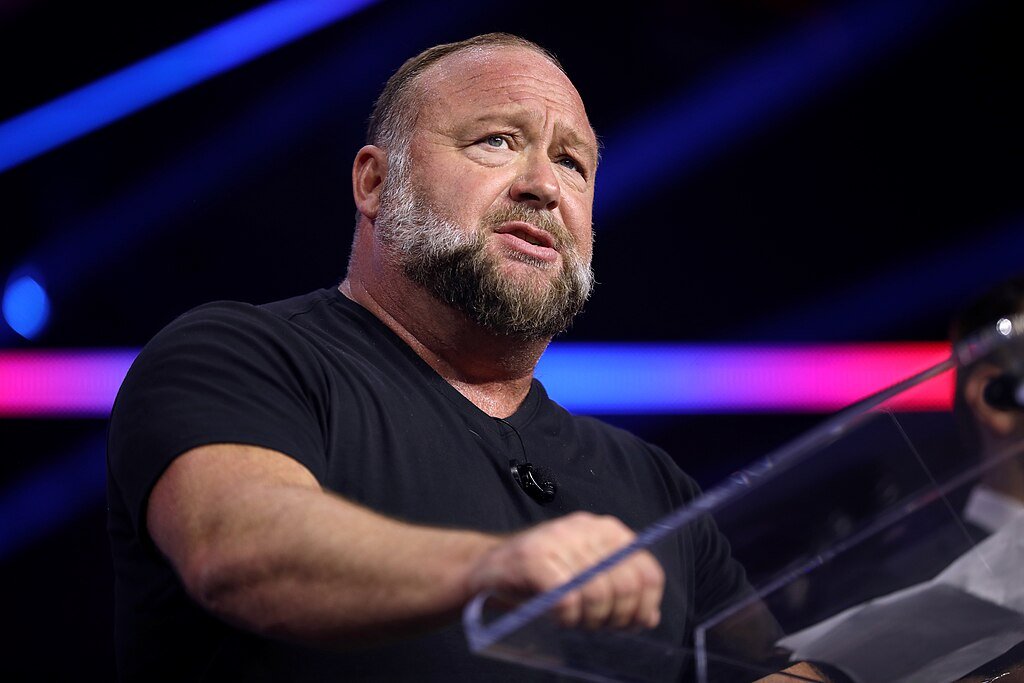
The U.S. Supreme Court has refused to hear Alex Jones’ challenge to the staggering $1.4 billion defamation judgment against him — effectively ending his years-long legal battle over false claims that the 2012 Sandy Hook Elementary School shooting was a hoax. The decision leaves intact prior court rulings that found Jones and his media company, Infowars, liable for spreading deliberate misinformation about one of the nation’s deadliest school shootings. Families of the victims argued that his repeated false statements caused them relentless emotional harm and threats from conspiracy followers. The massive award, issued by courts in Connecticut and Texas, includes compensatory and punitive damages to multiple families of Sandy Hook victims, as well as an FBI agent who responded to the scene. Jurors found that Jones profited from years of spreading lies, using his media platform to amplify conspiracy theories while increasing traffic and sales for his supplements and merchandise business. Jones’ attorneys had asked the high court to review the case on First Amendment grounds, but the justices declined without comment. The move cements one of the largest defamation awards in U.S. history and underscores the growing legal accountability for those who profit from disinformation.
Reunions and Uncertainty: Gaza Ceasefire Brings Joy—and Fragile Peace

The Israel–Hamas ceasefire has entered a fragile new phase following the near-completion of a historic prisoner and hostage exchange. As of October 13, 2025, officials confirm that all 20 living Israeli hostages have been released, alongside more than 1,900 Palestinian detainees, under a deal brokered by the United States, Egypt, and Qatar. The carefully orchestrated handover has brought relief to families on both sides — but concern is growing that the calm may not last. In recent days, Hamas fighters have been seen deploying across parts of Gaza in what officials described as a “show of strength,” even as humanitarian convoys began delivering long-delayed aid. Israeli defense officials have warned of possible ceasefire violations, citing sporadic drone activity and unverified reports of rocket launches, though no renewed combat has been confirmed. The uneasy atmosphere underscores how precarious the truce remains despite the successful exchange. President Trump, whose administration played a central role in mediating the agreement, called the outcome “an important step toward lasting peace,” while acknowledging that “more work lies ahead.” Diplomats involved in the talks say negotiations will now shift to the next phase — including border access, reconstruction aid, and long-term security arrangements for Gaza. Human rights observers have praised the exchange as a humanitarian breakthrough but cautioned that underlying issues — including governance of the Strip, displaced civilian return, and international oversight — remain unresolved. “This is a pause, not a peace,” said one regional analyst in Amman. “Unless the deeper grievances are addressed, this truce will live on borrowed time.” For now, families across Israel and Gaza are trying to rebuild a sense of normalcy. Outside Tel Aviv, relatives of freed hostages described an emotional reunion after two years of anguish. In Gaza, released prisoners returned to cheers and celebration, even as aid groups warned that food, fuel, and medical supplies remain critically low. Whether this tenuous calm can hold will depend on restraint — and trust — on both sides.
Holiday Squeeze: Americans Brace for Higher Prices as 100% China Tariffs Loom

The holidays could look a little less merry this year for U.S. shoppers. President Trump’s proposed 100% tariffs on Chinese imports, set to take effect November 1, are sending shockwaves through the retail industry — and analysts say it’s the average American who will feel the sting first. Retailers across the country are rushing to stock up before prices spike, but for many, it’s too late. The National Retail Federation warns that everything from toys and electronics to apparel and furniture could see price hikes of 20% or more by Thanksgiving. Big-box chains are scrambling to adjust, while small businesses — already operating on thin margins — say they may have no choice but to pass costs directly to consumers. Economists argue the timing couldn’t be worse. The new tariffs hit just as inflation had begun to cool and consumer confidence was stabilizing. “We’re heading into the most important shopping season of the year with enormous uncertainty,” said one analyst, noting that middle-income households are already stretched by rising housing and insurance costs. “This could easily push spending into a downturn.” The White House maintains that the move is necessary to rebalance trade and protect U.S. manufacturing, but critics call it a political gamble disguised as economic strategy. Supply chain experts note that many American companies are still dependent on China for core components — meaning that even “Made in the USA” products could rise in cost as input prices climb. For everyday families, the impact may hit long before Black Friday. From laptops for students to holiday décor and kitchen gadgets, many household staples are about to get more expensive. As one shopper outside a Target in Virginia put it: “I was just starting to feel like I could breathe again — now it feels like we’re right back where we started.”
Court Says No to Trump’s National Guard Deployment in Chicago
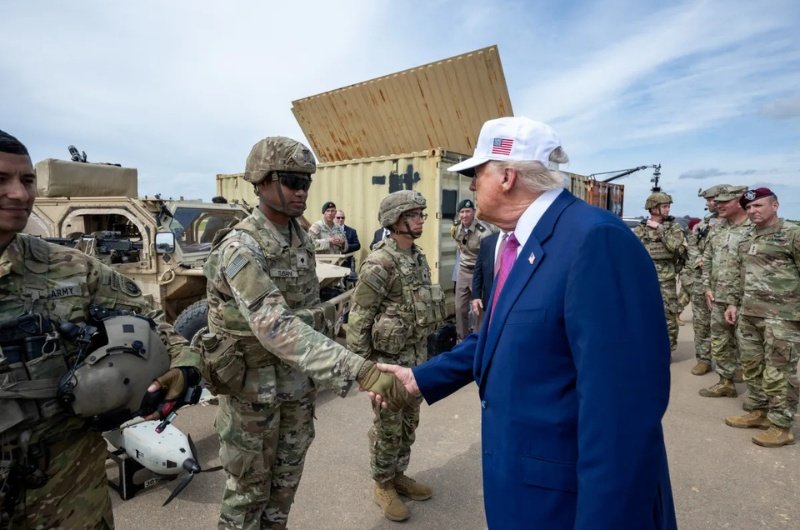
A federal appeals court has rejected President Trump’s request to deploy National Guard troops to the Chicago area, dealing a major setback to his latest effort to exert federal control over local unrest. The 7th U.S. Circuit Court of Appeals upheld an earlier ruling that temporarily blocks the administration from sending troops into Illinois, reinforcing limits on presidential authority in domestic deployments. The ruling leaves intact a decision by U.S. District Judge April Perry, who challenged the notion that federal agents faced an imminent threat warranting a National Guard deployment. The judge’s order remains in effect until at least October 23, unless extended, while the legal fight continues. For now, Guard members from other states who were already stationed in Illinois will not be forced to leave, but no new deployments can proceed. The case highlights ongoing friction between the White House and Democratic-led states over who controls the National Guard in times of civil tension. Under U.S. law, the Guard typically answers to state governors unless federalized under specific circumstances — a process that requires clear justification and oversight. Trump’s team argued that the move was necessary to protect federal property and agents from what they called “coordinated violent threats,” but the courts were unconvinced. Legal experts say the decision marks an important test of executive power at a time when law-and-order issues dominate national debate. Similar disputes are playing out in other cities, including Portland, where federal courts have also intervened to block troop deployments. For now, the appeals court ruling signals that even amid heightened political tension, checks and balances remain firmly in place. As the administration weighs its next legal move, Illinois officials have praised the court’s decision as a victory for state sovereignty. “This is about upholding the Constitution and the rights of local government to manage their own communities,” one state lawmaker said Sunday. Whether Trump will appeal to the Supreme Court remains to be seen — but for now, Chicago’s streets will stay in local hands.
Beloved Actress Diane Keaton Dies at 79

Oscar-winning actress Diane Keaton, whose quick wit, timeless charm, and singular sense of style made her one of Hollywood’s most enduring icons, has died at the age of 79. Her family confirmed the news, saying she passed away in California on Saturday, October 11. Keaton’s career spanned more than five decades, beginning with her breakout performance as Kay Adams in The Godfather (1972) and soaring with her Oscar-winning role in Annie Hall (1977). With her trademark turtlenecks, bowler hats, and offbeat humor, she became synonymous with authenticity — a rare blend of vulnerability and confidence that defined an era of American cinema. Across films like Manhattan, Reds, Something’s Gotta Give, and Father of the Bride, Keaton embodied complex women navigating love, ambition, and self-discovery. She worked with nearly every major director of her generation — including Woody Allen, Francis Ford Coppola, and Nancy Meyers — and inspired generations of actresses to embrace individuality over image. In addition to acting, Keaton was an accomplished author, photographer, and preservationist. She championed architectural restoration in Los Angeles and shared her passion for design and storytelling in several acclaimed memoirs. Her death marks the end of an extraordinary chapter in film history. Tributes from across Hollywood have poured in, celebrating Keaton not only as a cinematic legend but as a cultural touchstone whose humor, grace, and fearless originality left an indelible mark on audiences worldwide.
BREAKING NEWS: Powerful Storm to Bring Damaging Winds and Flooding to East Coast This Weekend

A sprawling coastal storm is strengthening off the Atlantic, and forecasters warn it will lash the Eastern Seaboard with dangerous winds, coastal flooding, and heavy rain through the weekend. From the Carolinas to New York, millions are now under weather alerts as the system moves north, threatening communities already saturated by weeks of unsettled weather. The storm’s wide reach could bring wind gusts topping 60 miles per hour along exposed coastlines, with isolated bursts approaching hurricane force. Low-lying areas from the Outer Banks to Long Island are expected to face storm surges of one to three feet, and forecasters say localized flooding could reach higher in vulnerable zones. Air travel delays, power outages, and beach erosion are likely as the system intensifies. Officials are urging residents to secure property, avoid coastal roads, and prepare for possible evacuations if water levels rise faster than expected. Emergency crews in multiple states have pre-positioned high-water vehicles and response teams in anticipation of flash flooding and downed power lines. The timing of the storm — hitting during high tides in several regions — increases the risk of severe inundation. While the storm is not expected to reach hurricane status, meteorologists emphasize that its slow movement and broad structure make it especially dangerous. Heavy rainfall totals could exceed six inches in some areas, overwhelming storm drains and swelling rivers already running high. Residents are advised to monitor local forecasts closely and heed any evacuation orders issued through the weekend. As the storm tracks northward, it will test the readiness of coastal infrastructure once again — and remind East Coast communities that in an era of warming seas and stronger systems, preparation remains the best defense against the next round of wind and water.
Shifting Focus Series (Part 1): How AI Is Rewriting Digital Discovery and Why Search Traffic Is Vanishing

A new era of digital discovery: where AI answers before we click. (Photo: Readovia) The familiar hum of online search is getting quieter. For years, the digital economy has relied on a steady rhythm — people search, they click, and publishers measure success in traffic and conversions. But that rhythm is breaking. AI agents are now answering questions before users ever reach a website, shaking the foundation of search engine visibility. Industry data shows that many publishers have already lost between 30% and 70% of their referral traffic from traditional search over the past year. As users embrace AI chat interfaces and intelligent assistants that summarize the web in real time, the once-straightforward funnel of “search → click → site visit” has morphed into something new — and far less predictable. The Era of Answer-Based Discovery In this new ecosystem, discoverability isn’t just about who ranks highest — it’s about who answers best. AI agents are designed to respond to intent, not just identify relevance. They scan vast networks of content and select fragments that appear to satisfy a query directly. The result? People are getting the information they want without ever leaving the interface that provided it. For publishers, this means visibility is no longer measured by clicks alone. The next wave of success belongs to content that’s answerable — clear, contextual, and structured in a way that makes sense to machines as well as humans. It’s not just about keywords anymore; it’s about completeness. Keywords still matter, but they’re no longer the star of the show. AI systems prioritize language that answers questions and responds conversationally. Articles that weave insight, intent, and structure are now more likely to surface in AI-driven discovery — even if they don’t top a search results page. The Great Traffic Recalibration Across the publishing world, analytics dashboards tell the same story: fewer visits, shorter sessions, and declining ad impressions. For brands that built entire revenue models on inbound traffic, this is an identity crisis. But it’s also an inflection point. The agentic web — a term increasingly used to describe the AI-powered layer between humans and information — is changing the very mechanics of attention. Instead of optimizing for visibility alone, digital strategists now face a deeper challenge: optimizing for interpretation. If your content can’t be understood by AI, it might as well be invisible. Businesses that once poured budgets into search rankings are now experimenting with new approaches: question-based content design, multi-format storytelling, and structured data frameworks that make their material more accessible to machine readers. In short, they’re learning to speak agentic. From Clicks to Context This shift isn’t just technical — it’s philosophical. The old metrics of success were transactional; now they’re relational. Brands must focus less on chasing traffic and more on building context around their expertise. Some are already adapting: creating mini-hubs of educational content, rewriting headlines as direct answers, and embedding subtle cues like “why it matters” sections that guide both readers and AI toward clarity. The smartest publishers are rediscovering something that predates algorithms entirely — the human instinct to ask and answer questions. The irony is poetic: the more advanced our technology becomes, the more value it places on timeless clarity. Shifting Focus, Forward There’s no going back to the web we knew. AI has changed not just how information is found, but why it’s found. As discoverability becomes increasingly agent-driven, success will belong to those who adapt early — structuring their content to serve the next generation of intelligent intermediaries while still nurturing real human connection. Publishers, creators, and businesses are entering a new era where visibility will depend on more than metadata. It will depend on meaning. The Shifting Focus Series Shifting Focus is a multi-part feature examining the pivot from search engine dependence to strategic discoverability in the age of AI. More to come…