

Massive Venezuela Earthquakes Leave More Than 500 Dead as Search for Survivors Continues
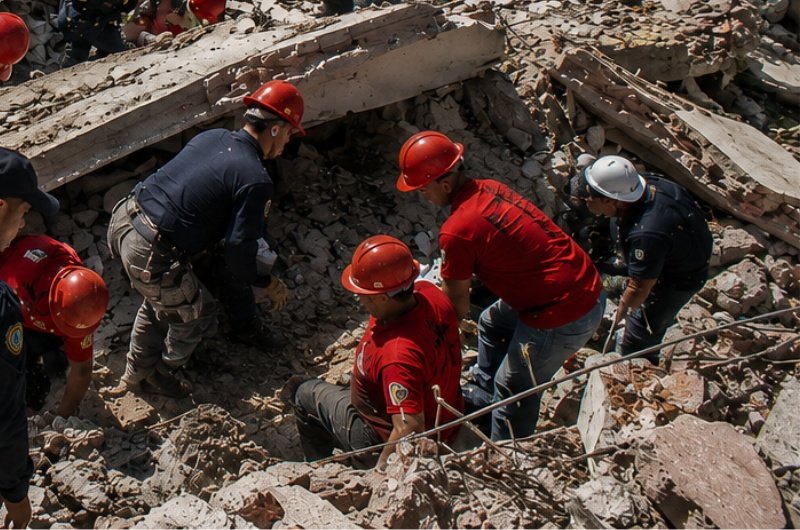
Rescue crews from Venezuela and around the world are racing against time to find survivors after two powerful earthquakes devastated parts of the country, leaving hundreds dead and thousands injured in one of the nation’s worst natural disasters in decades. Officials said the death toll had risen to at least **589 people** by Friday, with nearly 3,000 others injured. Tens of thousands of people have also been reported missing or remain unaccounted for as emergency teams continue searching collapsed buildings in the hardest-hit communities. Rescue efforts are expected to continue around the clock as families wait for news of loved ones. The twin earthquakes, measuring 7.2 and 7.5 magnitude, struck Wednesday evening west of Caracas before powerful shaking spread across the capital and nearby coastal regions. Entire apartment buildings collapsed, roads were damaged, and critical infrastructure suffered extensive damage, complicating rescue operations. The coastal state of La Guaira has emerged as one of the areas hardest hit by the disaster. Search-and-rescue teams equipped with heavy machinery, rescue dogs, and specialized equipment have joined local emergency workers in digging through mountains of concrete and twisted steel in hopes of finding survivors. International assistance has begun arriving from several countries as humanitarian organizations mobilize food, medical supplies, temporary shelter, and emergency personnel. The United States is among the nations providing assistance, while the United Nations is helping coordinate the broader international response. The earthquakes struck a country already facing significant economic and infrastructure challenges, making recovery especially difficult for many communities. Officials warned that the death toll could continue to rise as rescue crews gain access to heavily damaged buildings and isolated neighborhoods. Authorities continue urging residents to remain alert for aftershocks while emergency operations remain focused on saving lives and providing aid to thousands of displaced families.
Trump Delays Signing of Bipartisan Housing Bill Amid Election Bill Standoff
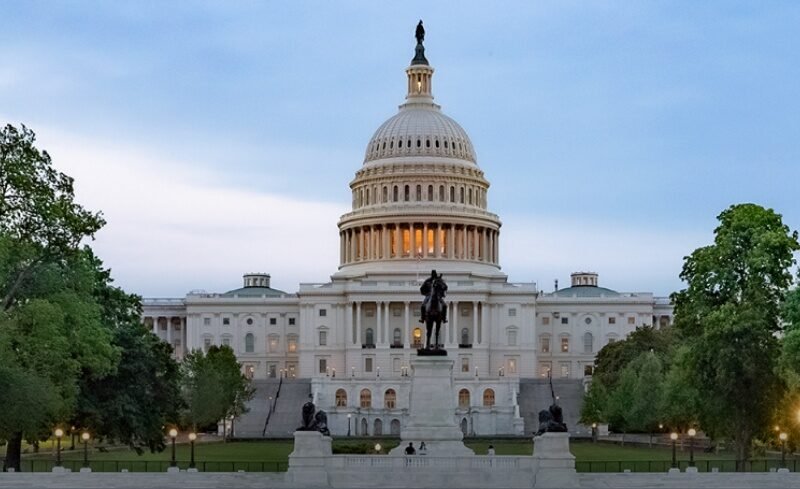
A bipartisan housing bill that cleared Congress with overwhelming support is facing an unexpected delay after President Trump postponed signing the legislation, saying he wants lawmakers to first approve separate election-related legislation. The measure, known as the 21st Century ROAD to Housing Act, passed the Senate by an 85-5 vote before receiving broad bipartisan approval in the House. The legislation is designed to encourage the construction of more affordable homes, reduce regulatory barriers, and expand the nation’s housing supply at a time when affordability remains one of the biggest financial challenges facing American families. President Trump announced Wednesday that he would delay signing the bill until Congress passes the SAVE America Act, legislation that would require proof of U.S. citizenship for voter registration in federal elections. Although the decision has sparked debate in Washington, congressional leaders have indicated they still expect the housing measure to become law. Why Housing Remains a National Issue The legislation arrives as many Americans continue to struggle with high home prices, elevated mortgage rates, and a limited supply of available homes. Supporters say the bill could help encourage new residential construction by streamlining certain federal reviews, modernizing housing policies, and reducing barriers that have slowed development in many parts of the country. Housing experts caution that the legislation is unlikely to produce immediate relief, but many believe it represents one of the most significant bipartisan efforts to address housing affordability in years. What Happens Next? Under the U.S. Constitution, legislation can still become law if a president neither signs nor vetoes a bill within the required time period while Congress remains in session. Congressional leaders have suggested the current housing bill is still expected to move forward even as negotiations continue over unrelated legislation. For homebuyers, renters, builders, and investors, the larger issue remains unchanged: increasing the nation’s housing supply is widely viewed as an important step toward improving long-term affordability. As Washington debates the next steps, millions of Americans continue watching for signs that meaningful progress on housing costs may finally be within reach.
The Visibility Era, Part III: Mastering the New Visibility Economy

As we discussed in the previous installments of this series, the internet has entered a new chapter. Search engines are evolving, artificial intelligence is changing how people discover information, social media platforms continue adjusting their algorithms, and new technologies are reshaping the digital landscape at a pace few could have imagined just a few years ago. For businesses, creators, publishers, nonprofits, entrepreneurs, and anyone building an online presence, the challenge has shifted from simply getting discovered to remaining visible in a world where visibility itself is changing. The good news is that while the rules continue to evolve, the fundamentals of building a trusted brand remain remarkably consistent. Advertisement Stop Chasing Algorithms. Start Serving People. Algorithms will continue to change, but people’s needs change much more slowly. Organizations that consistently solve problems, answer questions, provide value, and earn trust will be far better positioned than those trying to outsmart every platform. Technology should shape your tactics—not your purpose. When people become the priority, algorithms often become easier to navigate over time because meaningful content has a way of remaining valuable regardless of how technology evolves. Build a Brand People Remember Visibility begins long before someone performs a search. A recognizable brand creates familiarity, drives returning visitors, repeat customers, referrals, and recommendations because people remember who you are—not simply where they found you. The strongest brands become destinations rather than just another search result, and they continue attracting people long after a single algorithm update has come and gone. Create Experiences Worth Returning To Having a digital presence is only the beginning. Whether someone discovers you through your website, social media, store, or other online platform, every interaction contributes to the overall impression of your brand. Thoughtful design, premium visuals, clear writing, intuitive navigation, and fast performance all communicate professionalism, build confidence, and encourage people to return. Diversify Your Sources of Visibility No business, creator, or organization should depend entirely on one source of traffic. The strongest online brands build multiple pathways that help people discover and return. Those pathways may include search, social media, email marketing, strategic partnerships, paid promotion, digital products, and countless other opportunities that introduce people to your brand. When visibility comes from many directions instead of one, it becomes far more resilient. Build a Discovery Ecosystem One of the biggest mistakes people and organizations make is assuming they’ll always be discovered through search engines or social media. Instead of relying on those traffic sources alone, a stronger strategy is to leave digital breadcrumbs across the internet that spark curiosity about you or your brand and guide people to your online destination. Those breadcrumbs can take many forms: a thoughtful guest article, a podcast interview, a LinkedIn post, participation in an industry community, a listing in a respected niche directory, or a strategic partnership that introduces your work to a new audience. Individually, each breadcrumb may seem small. Collectively, they create a growing network of discovery that helps people encounter your brand in places you may never have expected. Digital breadcrumbs are not limited to content published on other platforms. Every meaningful piece of work becomes another breadcrumb that increases the likelihood of someone discovering your brand, whether through your own platforms or through the countless digital touchpoints across the web. External breadcrumbs are the content, mentions, interviews, and partnerships that exist beyond your own platforms. Internal breadcrumbs are the growing body of work you own and continue to expand—your articles, videos, products, podcasts, newsletters, or other original content. Together, they form a discovery ecosystem: a network of meaningful touchpoints that continually creates new opportunities for people to encounter your brand. This reveals an important distinction. Visibility is an outcome. Discoverability is the strategy. Many people chase visibility. They hope to rank first in search results, go viral on social media, or benefit from a favorable algorithm. Brands built for the long term take a different approach. They focus on becoming increasingly discoverable by intentionally building a healthy discovery ecosystem made up of internal assets, external assets, and meaningful connections across the web – and dare I say…offline. Rather than relying on one platform or one moment of success, they build an interconnected network where people continue encountering their brand from dozens—even hundreds—of different sources over time. Readovia provides a good example. At the time of this writing, the publication has produced more than 760 original articles. Each one represents an opportunity for discovery—a new entry point through search, sharing, or recommendation that can introduce someone to the brand. Individually, one article may attract only a modest audience. Collectively, they form a growing network of pathways that can continue bringing visitors to the publication long after the headlines have cooled. The same principle applies whether you publish articles, videos, podcasts, products, or social media content. Most successful brands don’t begin with hundreds of digital breadcrumbs. They create them over time, one meaningful connection at a time. The goal isn’t simply to be found. It’s to create enough moments of discovery that your brand becomes increasingly difficult to overlook. Quality Is Becoming a Competitive Advantage Again Artificial intelligence has made creating content faster and easier than ever before. Ironically, that makes human judgment, originality, craftsmanship, credibility, and thoughtful execution even more valuable. People may forget individual articles, videos, or posts, but they remember brands that consistently deliver quality. In the years ahead, quality may become one of the most important competitive advantages an organization can possess. Trust Is the New Currency In an age of nearly unlimited information, trust has become one of the internet’s most valuable assets. It is earned through consistency, transparency, reliability, and a genuine commitment to serving people before chasing algorithms. Trust cannot be manufactured overnight, but once it is earned, it becomes one of the strongest competitive advantages a brand can have. The Future Belongs to Those Who Adapt Every major technological shift creates uncertainty, but it also creates opportunity. The organizations that thrive won’t necessarily be the biggest or the loudest. They’ll
Could This Mission Change the Future of Satellites? NASA Is About to Find Out

NASA is preparing for a mission that could help reshape how spacecraft are managed in orbit, potentially extending the lives of valuable satellites instead of retiring them when their missions end. The agency has awarded a contract to aerospace company Katalyst Space Technologies to raise the orbit of NASA’s Neil Gehrels Swift Observatory, a space telescope that has spent more than two decades studying some of the universe’s most powerful events, including gamma-ray bursts, black holes, and neutron stars. The effort, known as Swift Boost, aims to demonstrate whether commercial spacecraft can successfully rendezvous with and reposition satellites already operating in orbit. If successful, the mission could provide a glimpse into a future where spacecraft are serviced, upgraded, or repositioned rather than replaced. NASA officials say Swift’s orbit has gradually declined as increased solar activity has expanded Earth’s upper atmosphere, creating additional drag on the spacecraft. While the observatory remains operational and continues to produce scientific data, the changing orbital conditions have prompted NASA to explore ways to extend its mission. To accomplish that goal, Katalyst Space has developed a spacecraft known as LINK, which is designed to locate Swift in orbit, rendezvous with the observatory, and raise it to a higher altitude. Preparations for the mission have already advanced significantly. According to NASA, a Northrop Grumman Stargazer aircraft recently departed NASA’s Wallops Flight Facility carrying a Pegasus XL launch vehicle integrated with the LINK spacecraft as teams move closer to launch. The mission represents more than an effort to support a single observatory. Aerospace experts view orbital servicing as one of the industry’s most promising emerging capabilities. A successful demonstration could help satellite operators extend mission lifespans, reduce costs, and make better use of spacecraft already deployed in orbit. For decades, most satellites have been designed with a limited operational lifespan. Once fuel runs low or orbital conditions change, many are retired even if their instruments remain functional. Missions such as Swift Boost seek to challenge that model by proving that spacecraft can receive a second life through on-orbit servicing. For NASA, the mission could preserve the scientific contributions of one of its most successful observatories. For the broader aerospace industry, it could provide an early look at a future where maintaining spacecraft becomes as important as launching them. The Readovia Lens The commercial space industry is increasingly moving beyond launches and satellite deployment into a new phase focused on servicing, maintenance, and sustainability in orbit. If Swift Boost succeeds, it could help demonstrate that satellites and space telescopes no longer need to be discarded simply because their original missions are nearing an end. Instead, they may become part of a new generation of spacecraft designed to be maintained, repositioned, and kept in service for years beyond their original expectations.
Micron’s Latest Results Point to a More Predictable Future for AI Investing

Micron’s latest earnings report did more than exceed Wall Street’s expectations—it suggested that one of the technology industry’s most unpredictable businesses may be entering a more stable era as demand for artificial intelligence infrastructure continues to grow. The memory-chip maker reported record quarterly results while revealing that customers have committed approximately $22 billion through long-term strategic agreements designed to secure future supplies of its memory products. The agreements include pricing floors, cash deposits, and “take-or-pay” commitments that give Micron greater visibility into future demand than the industry has traditionally enjoyed. Advertisement A Shift Beyond Quarterly Earnings For decades, memory-chip companies have been known for dramatic boom-and-bust cycles. Periods of strong demand often encouraged manufacturers to expand production, only to face falling prices when supply eventually caught up. Artificial intelligence is beginning to change that dynamic. As technology companies continue investing billions of dollars in AI infrastructure, demand for high-performance memory has remained exceptionally strong. Rather than relying primarily on short-term orders, Micron is increasingly securing multi-year customer commitments that provide a clearer picture of future revenue. Why Investors Are Paying Attention The company’s latest results suggest investors are looking beyond one strong quarter. Long-term customer agreements can help reduce some of the uncertainty that has historically characterized the memory-chip business. While no technology sector is immune to changing economic conditions, contracts that lock in future purchases may provide a more predictable foundation than investors have seen in previous industry cycles. Micron said it expects strong demand for AI-related memory products to continue as data center expansion accelerates, reinforcing the view that AI infrastructure spending remains a long-term investment theme rather than a short-lived trend. The Investor Takeaway The AI boom has often centered on the companies building advanced processors and software. Micron’s latest results highlight another part of the story: the companies supplying the memory and infrastructure that make artificial intelligence possible. For investors, the significance extends beyond another earnings beat. If long-term customer agreements continue gaining traction, they could help make one of the semiconductor industry’s most cyclical businesses increasingly predictable—a shift that may reshape how Wall Street evaluates AI infrastructure companies in the years ahead.
Bone Loss Often Starts Earlier Than People Realize

Bone loss often begins years before people notice any symptoms, making it easy to overlook until a routine screening or unexpected fracture reveals a problem. Health experts say many adults develop osteopenia—a condition marked by lower-than-normal bone density—before osteoporosis ever occurs. While osteoporosis is widely recognized, osteopenia receives far less attention despite affecting millions of adults. The condition weakens bones gradually and can increase the risk of fractures if bone loss continues over time. Recent research is drawing renewed attention to the importance of identifying bone loss early, when lifestyle changes may have the greatest impact. Advertisement Who Is Most at Risk? Bone density naturally declines with age, but several factors can increase the likelihood of developing osteopenia earlier in life. Women, particularly after menopause, face a higher risk because declining estrogen levels can accelerate bone loss. Older adults, people with a family history of osteoporosis, smokers, and individuals with low calcium or vitamin D intake may also be more vulnerable. Certain medical conditions and medications can further increase the risk, making regular conversations with a healthcare provider an important part of long-term bone health. Small Changes Can Make a Difference Experts say healthy habits can play an important role in supporting bone strength. Weight-bearing activities such as walking, hiking, dancing, and strength training help stimulate bone growth, while adequate calcium, vitamin D, and a balanced diet provide important building blocks for healthy bones. Avoiding tobacco and limiting excessive alcohol consumption may also help protect bone health over time. For people with additional risk factors, a bone density screening may help identify changes before osteoporosis develops. Looking Ahead Bone loss is often described as a silent condition because it typically progresses without obvious symptoms. The good news is that awareness continues to grow, giving more people the opportunity to take action before significant bone loss occurs. Understanding the risk factors, staying physically active, and discussing bone health with a healthcare professional can all play a role in maintaining stronger bones and supporting long-term health.
AI Talent War Heats Up as Companies Compete for Top Researchers

Leading AI companies are racing to recruit and retain the world’s top researchers and engineers, fueling one of the most competitive talent markets in the technology industry. As investment in artificial intelligence continues to accelerate, companies are offering increasingly attractive compensation packages, long-term incentives, and opportunities to work on groundbreaking research in an effort to secure the experts who will help shape the next generation of AI. The Race for AI Expertise While advanced computer chips and massive data centers often dominate the headlines, the people designing and training AI systems remain one of the industry’s most valuable assets. Researchers specializing in machine learning, large language models, robotics, and AI safety are helping develop systems that are faster, more capable, and increasingly reliable. As AI expands into healthcare, finance, education, manufacturing, transportation, and scientific research, demand for experienced AI professionals continues to grow. More Than Just Salaries The competition extends well beyond higher pay. Many AI companies are offering researchers greater freedom to pursue ambitious projects, access to advanced computing resources, and opportunities to work on technologies that could influence millions of people around the world. For many experts, the ability to solve complex problems and contribute to groundbreaking discoveries is becoming just as important as financial incentives. A Defining Moment for the AI Industry The battle for AI talent reflects a broader reality: artificial intelligence is becoming one of the world’s most strategically important technologies. The companies that attract the brightest minds today may be better positioned to develop tomorrow’s most influential AI systems, products, and services. As competition intensifies, the race for talent is expected to remain one of the defining stories shaping the future of artificial intelligence. The Readovia Lens The AI revolution isn’t being driven solely by faster processors or larger data centers. Behind every breakthrough are researchers, engineers, and scientists whose ideas continue pushing the technology forward. As artificial intelligence evolves, the competition to attract exceptional talent may prove just as important as the race to build the next generation of AI itself.
Supreme Court Nears Final Decisions in Cases Testing Presidential Power

The U.S. Supreme Court is entering one of the most closely watched periods of its current term as the justices prepare to release several remaining decisions that could shape the balance of power between the presidency, Congress, and federal agencies for years to come. With only a handful of major cases still awaiting rulings, attention has increasingly focused on disputes involving the scope of executive authority and the ability of presidents to direct or remove officials within the federal government. Several of the pending cases stem from legal challenges connected to actions taken by President Donald Trump’s administration. The cases touch on issues ranging from immigration policy and federal appointments to the independence of government agencies and the limits of presidential power. Legal analysts say the decisions could provide important guidance on how future administrations exercise authority across a wide range of policy areas. One of the most closely watched disputes involves questions surrounding birthright citizenship and the authority of lower federal courts to block presidential actions nationwide. Another centers on the ability of presidents to remove officials from certain independent agencies, a long-running constitutional debate that could have implications far beyond the current administration. Additional cases involve immigration programs and humanitarian protections, areas that have frequently generated legal challenges and national debate. The Supreme Court traditionally releases many of its most significant decisions near the end of its term, often drawing intense attention from lawmakers, legal experts, advocacy groups, and the public. Because the Court’s rulings establish binding legal precedent, their impact often extends well beyond the immediate parties involved in a case. For Americans, the outcomes could influence how future presidents implement policies, how federal agencies operate, and how courts review executive actions. While the justices have already issued hundreds of opinions during the current term, several of the most consequential cases remain unresolved. As decisions are released in the coming days, they are expected to generate significant discussion in Washington and across the country. The final rulings could help define the relationship between the executive branch and the judiciary at a time when questions surrounding presidential authority continue to play a central role in American politics.
The Greek Islands You Haven’t Heard Of — And Why Now Is A Great Time to Discover Them

Greece’s lesser-known islands offer travelers a chance to experience whitewashed villages, winding stone pathways, and sweeping Aegean views away from the crowds. Santorini, the caldera-view island that launched a thousand Instagram accounts — with its stacked whitewashed houses, blue-domed churches, and sunsets so reliably gorgeous they feel almost theatrical — is grappling with a tourism crisis that has reshaped the conversation around Aegean travel. With roughly 3.4 million visitors arriving annually against a permanent population of about 15,500, daily cruise ship arrivals frequently exceeding local capacity limits, and residential rents that have surged dramatically as short-term rentals crowd out long-term residents, the island’s own authorities now speak openly of a destination at a breaking point. Greece’s government has put new tourism management laws in place for 2026, and the conversation has finally turned to a question seasoned travelers have been asking for years: what about everywhere else? The answer is richer than most people expect. Greece has more than 200 inhabited islands, and while Santorini and Mykonos have absorbed the bulk of international attention, a constellation of Cycladic alternatives offers Aegean beauty without the structural strain. Milos, the volcanic island in the western Cyclades roughly three hours by ferry from Athens, is frequently described by those who have visited as the most visually dramatic island in Greece. Its coastline is a geological theater — sculpted by ancient volcanic activity into formations of wild color and improbable shape. Sarakiniko beach, with its lunar landscape of bleached white pumice and electric blue water, looks unlike anything else in the Mediterranean. The colorful fishing village of Klima, with its boatshed houses painted in faded ochres and reds, painted directly into the rock above the sea, is quietly one of the most photogenic places in Europe. A boat tour around Milos to the sea caves of Kleftiko is considered non-negotiable by those who have made the trip. Folegandros, tucked an hour’s ferry ride southwest of Santorini, operates at an entirely different frequency. The island has no airport, one main road, and no cruise ship calls — a combination that enforces the kind of unhurried pace that the rest of the Cyclades has largely surrendered. Its main town, Chora, is widely considered to have the most beautiful village center in the island group: a medieval settlement of flower-draped passageways and Venetian-era architecture, perched on a cliff above the sea with views that shift from gold to violet as the sun goes down. Above the village, the Church of Panagia sits on a dramatic rocky promontory, reached by a steeply winding path that rewards the climb with a panorama of open Aegean. There are beaches to swim from, hiking paths that trace the island’s ridgelines, and restaurants where the octopus drying on the line outside is the same one arriving on your plate. For travelers who want romance without performance, Folegandros is the answer. Naxos, the largest of the Cyclades, works best for those who want variety rather than a single defining experience. It has long sandy beaches — Agios Prokopios and Plaka among the finest in Greece — that Santorini conspicuously lacks. It has ancient ruins, including the massive marble doorway of the unfinished Temple of Apollo standing alone at the harbor entrance. It has mountain villages in its interior where the air smells of thyme and the pace of life has barely shifted in decades. And it produces exceptional food: Naxian potatoes and cheeses are considered among the best in the country, and the island’s tavernas reflect that localism in a way that tourist-saturated destinations rarely manage. Naxos also functions as an excellent ferry hub, connecting easily to the smaller islands of the Little Cyclades — Koufonisia, Schinoussa, Donousa — which for now remain almost entirely off the international radar. The Readovia Lens The shift in how travelers are approaching the Greek islands feels durable rather than merely fashionable. Greece itself is responding to it, investing in ferry connectivity to less-visited destinations and promoting its interior and northern regions alongside the classic Cycladic circuit. Travelers who act on this moment — before Milos becomes the next Santorini, before Folegandros acquires a direct flight — will find an Aegean that still rewards curiosity. The blue-domed postcard image remains beautiful. But the real Greece is bigger, quieter, and considerably more interesting than any single island can contain.
Pentagon Requests Additional $80 Billion to Cover Iran Conflict Costs

The Pentagon is seeking roughly $80 billion in additional funding from Congress to cover costs associated with the conflict involving Iran, adding another major spending request to an already expansive defense budget proposal. Defense officials have informed lawmakers that the funding would help pay for military operations tied to the Iran conflict, along with other defense-related expenses. The proposed funding package is expected to face close scrutiny on Capitol Hill. Lawmakers from both parties have raised questions about the overall cost of the conflict, how the additional funds would be allocated, and the impact on the federal budget. Some members of Congress have also called for greater transparency regarding future military spending plans. The Pentagon’s request would come on top of a broader defense spending proposal already under consideration. Defense officials argue that maintaining military readiness, replenishing equipment and munitions, and supporting ongoing operations remain essential national security priorities. The funding request arrives at a pivotal moment following the recent peace framework announced between the United States and Iran. While both sides have expressed support for continued negotiations, significant differences remain regarding long-term security arrangements and the future of Iran’s nuclear program. For now, lawmakers will be tasked with weighing the Pentagon’s request against competing priorities as Congress considers the next phase of federal spending negotiations. The Readovia Lens The proposed $80 billion request highlights the financial realities of modern military conflicts. Even as diplomatic efforts advance, governments often face substantial costs tied to military operations, equipment replacement, troop readiness, and long-term strategic commitments. The funding proposal serves as a reminder that military operations can carry financial consequences long after the immediate crisis has passed.