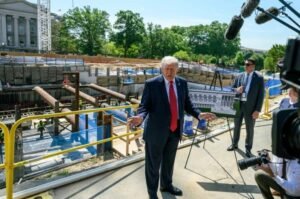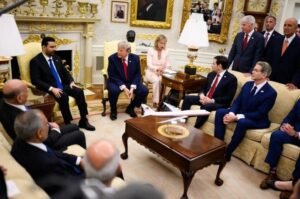


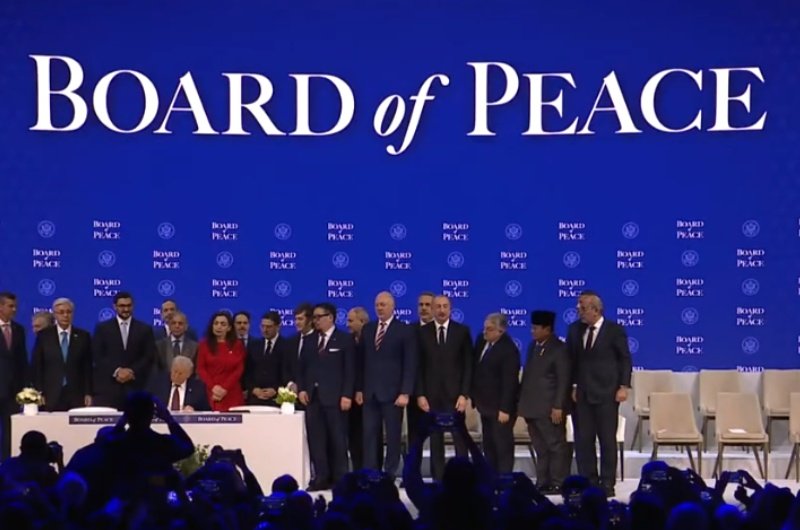
Davos, Switzerland — President Donald Trump today formally launched his new foreign-policy initiative, the Board of Peace, hosting a high-profile signing ceremony aimed at overseeing the reconstruction of Gaza and promoting long-term stability in conflict-affected regions.
The ceremony, held during the World Economic Forum in Davos, marked the official debut of the Board, which the White House describes as a framework to restore dependable governance, promote peace, and coordinate post-conflict rebuilding efforts. Trump said the initiative is initially focused on Gaza but emphasized that its mandate could expand to address broader global challenges.
Speaking after the signing, Trump reiterated his view that existing international institutions have failed to fully realize their potential. He said the Board of Peace could complement the work of the United Nations, adding that he has long believed the U.N. has “tremendous potential” that has not been effectively used.
According to Trump, roughly 30 of the 50 countries invited to participate have signed onto the policy so far. Support has been strongest among nations in the Middle East and parts of the Global South, while several major allies have chosen not to sign at this stage.
Notably, the United Kingdom, France, and Italy have declined to join the initiative, citing concerns about the Board’s structure, scope, and long-term implications. Their absence underscores lingering skepticism among traditional U.S. allies about how the Board of Peace would operate alongside established international bodies.
Trump acknowledged the mixed response but framed the launch as an opening step rather than a finished project. “This can spread to other things,” he said, signaling that the Board’s role could evolve beyond Gaza as additional nations assess whether to participate.
As questions remain about governance, enforcement authority, and coordination with existing institutions, today’s signing nevertheless marks a significant new chapter in U.S. foreign policy — one that could reshape how post-conflict reconstruction and peacekeeping efforts are approached in the years ahead.