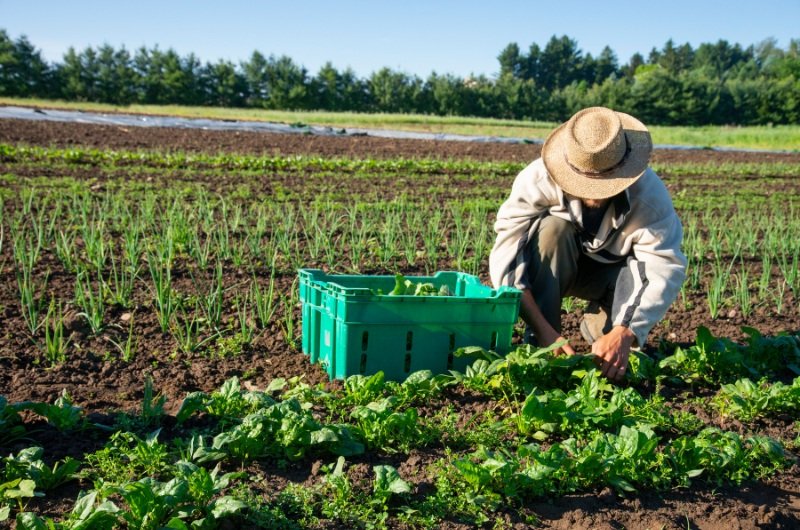
President Donald Trump announced a $12 billion aid package for American farmers, aimed at offsetting significant financial losses caused in part by reduced exports to China. The emergency assistance targets growers hit by falling crop prices and lost foreign sales after China sharply curtailed purchases of U.S. agricultural products.
The administration described the funding as a bridge for farmers producing staple crops such as soybeans, corn, wheat, cotton, and rice — commodities that once relied heavily on Chinese demand. Before trade disruptions, China was the largest buyer of U.S. soybeans, and the sudden decline in exports left many farmers with oversupply and diminished income.
As Chinese buyers shifted to alternative suppliers in South America and elsewhere, American farmers were forced to sell at lower prices or store excess crops, further straining already tight margins. Combined with rising costs for seed, fertilizer, and fuel, the loss of access to the Chinese market has had a lasting impact on farm profitability.
Supporters of the plan say the $12 billion package acknowledges those losses and provides necessary relief for rural communities that absorbed the economic shock of disrupted trade flows. The payments are expected to be distributed through existing federal agriculture programs, allowing funds to reach farms relatively quickly.
Critics argue that while the assistance helps address short-term damage, it does not resolve the longer-term challenge of rebuilding export markets once dominated by China. Still, the announcement signals a renewed effort by Washington to stabilize the farm economy while broader trade negotiations and market adjustments continue.