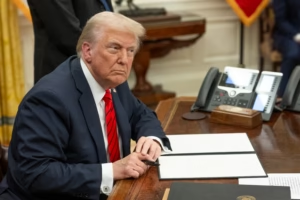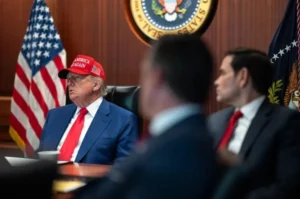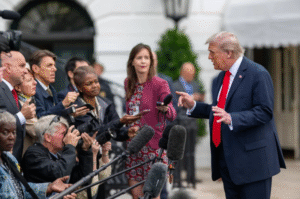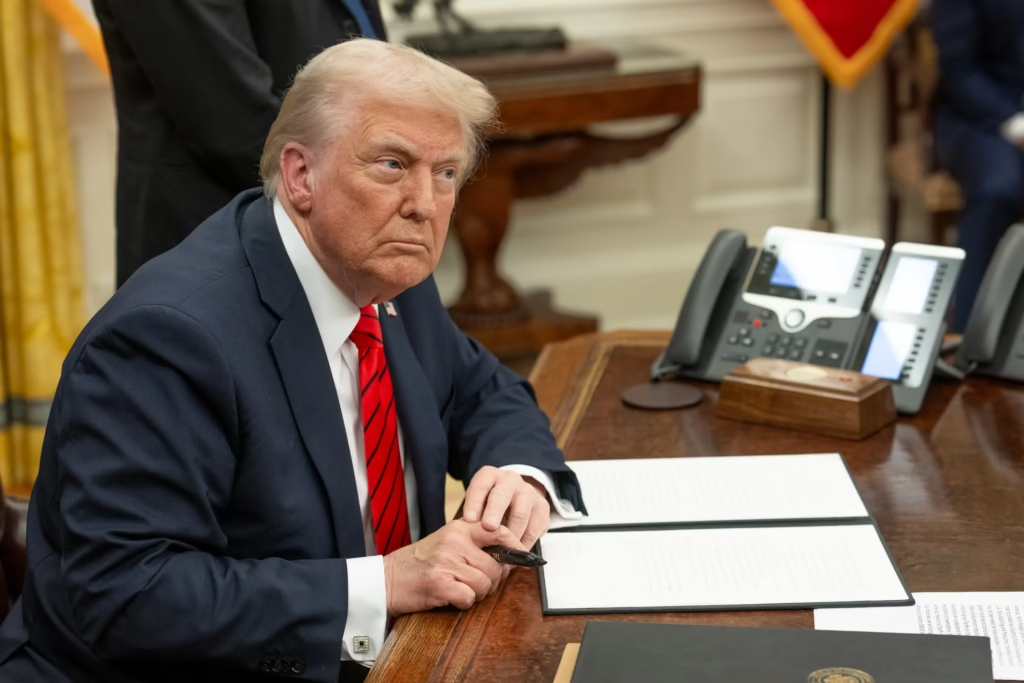
President Donald Trump has threatened to sue the BBC for $1 billion over what he calls “defamatory editing” of his January 6 speech in the network’s Panorama documentary. The move, part of his escalating campaign against the press, extends his attacks beyond U.S. borders and underscores how political power, litigation, and media accountability are colliding in a globalized information age.
Two senior BBC executives have already resigned amid the fallout. Trump’s legal team claims the broadcast inflicted “massive reputational and financial harm,” though experts say a successful claim faces major hurdles, including jurisdiction and the high burden of proof under U.S. defamation law.
A lawyer for Trump said the broadcast caused him “overwhelming financial and reputational harm” and may have violated Florida law — despite the fact that the channels carrying the Panorama documentary are not available in the United States. The BBC confirmed it has received correspondence from Trump’s legal team and said it “will respond directly in due course.”
The episode reflects a broader shift in strategy — where litigation is increasingly used not just as recourse but as a tool of narrative control. It raises questions about how media organizations manage political risk and editorial integrity in a world of rapid, viral content cycles.
For corporations and media outlets alike, the case highlights a new frontier in risk management: cross-jurisdictional reputational threats. As digital distribution blurs national boundaries, so too do the legal and ethical lines that govern accountability and influence.
The Readovia Lens
This fight is not about a documentary. It’s about who controls the story in an era when every edit, post, and headline can become a global legal battlefield.