

Moderna Has Developed a Cancer Vaccine — and a Major Phase 3 Trial Shows It Can Work

Moderna shares exploded higher after the company and Merck announced that their personalized mRNA cancer vaccine succeeded in a pivotal Phase 3 melanoma trial — a major milestone that could move the technology closer to patients and open a new chapter for mRNA beyond infectious disease. The experimental treatment, called intismeran autogene, was tested alongside Merck’s Keytruda in 1,137 patients with high-risk melanoma whose tumors had been surgically removed. The combination significantly improved the amount of time patients remained free of cancer recurrence and reduced the risk of the disease spreading to distant parts of the body compared with Keytruda alone. Unlike a traditional vaccine given to healthy people to prevent disease, this treatment is created individually for someone who has already developed cancer. Scientists analyze a patient’s tumor to identify mutations unique to that cancer, then use mRNA to help train the immune system to recognize and attack cells carrying those mutations. Keytruda works alongside it by helping remove one of the mechanisms cancer cells use to evade an immune response. The companies have not yet disclosed the detailed Phase 3 efficacy numbers and plan to present the results at a medical meeting and submit them for publication. They said the improvements were statistically significant and clinically meaningful, with no new safety concerns identified. Moderna and Merck are also testing personalized mRNA treatments in other cancers, including lung, kidney and bladder cancer. Wall Street’s reaction was extraordinary. Moderna shares surged nearly 177% Wednesday, adding tens of billions of dollars to the company’s market value in one of the most dramatic trading days in its history. The reaction reflects something much larger than melanoma: investors are suddenly confronting the possibility that Moderna’s mRNA platform could have an important commercial life far beyond COVID vaccines. The Readovia Lens The remarkable part of this development is the word personalized. Instead of designing one cancer treatment for millions of people, researchers are attempting to create a vaccine around the genetic fingerprint of one person’s tumor. A successful Phase 3 trial does not mean cancer has been cured, and regulatory review still lies ahead. But it provides the strongest evidence yet that personalized mRNA cancer vaccines may be moving from an ambitious scientific idea toward a new form of cancer treatment.
Claude Is About to Leave an Invisible Watermark on the Words It Writes

Anthropic is preparing to embed invisible watermarks into text generated by new Claude models, a move designed to make AI-created writing detectable even after it has been copied and pasted elsewhere. But the technology is already stirring concern among writers, professionals and other users who rely on AI for more than simply generating finished work. Anthropic says the watermark will not visibly alter Claude’s writing or add hidden characters to the text. Instead, it will create a detectable statistical pattern without changing the meaning or quality of the output. The company says the system will not require additional tokens or increase costs, and the watermark will contain no identifying information that could be traced to a particular user, organization or conversation. Anthropic also notes that Claude will not be alone: new European Union rules require AI providers serving the EU market to mark AI-generated content, and other major model developers that signed the EU’s Code of Practice are expected to introduce their own watermarking systems. The technology is being introduced as Anthropic moves to comply with transparency requirements under the European Union’s AI Act, which requires certain AI-generated content to be identifiable in a machine-readable format. Anthropic has chosen to implement the watermark globally rather than limit it to users in Europe. That decision has generated pushback from some Claude users who worry about what happens when AI is used primarily as an editor. A person might write an article, report or other document independently, then ask Claude to improve the grammar, reorganize paragraphs or polish the language. If enough of Claude’s wording remains, the finished work could still contain a detectable watermark — even though describing the entire document as AI-written would be misleading. The Readovia Lens Anthropic stresses that detecting its watermark indicates Claude was involved in producing text, not that Claude necessarily authored the work. The distinction could become increasingly important as AI becomes embedded in everyday writing and professional workflows. What began as a technical solution for identifying synthetic content may ultimately force employers, educators and publishers to confront a more complicated question: where does AI assistance end and AI authorship begin?
When the Work Starts Teaching You

Some of the best ideas aren’t the ones we start with. They’re the ones we discover along the way. Every creative project begins with an intention — a direction, a goal, maybe even an outline. You start building, convinced you know where you’re going. Then, if you stay with the work long enough, something unexpected happens: the project starts showing you possibilities you couldn’t see at the beginning. It happens through the ordinary work of creating — questioning assumptions, refining ideas, removing what doesn’t belong, noticing what still feels incomplete. Eventually you realize the thing you’re making has changed. That may sound backwards, but anyone who has built something meaningful has probably felt it. Some of our best ideas aren’t forced into existence. They emerge because we’ve given the work enough time to develop and ourselves enough time to recognize where it’s leading. When the Better Idea Arrives Later Sometimes we don’t see how an idea is evolving until we’re deeply engaged in developing the work. I experienced this while writing a recent essay about online visibility. What began as a fairly straightforward discussion gradually became something larger. As I worked through it, new concepts started surfacing — digital breadcrumbs, discovery ecosystems, and eventually a simple distinction that became the heart of the piece: “Visibility is an outcome. Discoverability is the strategy.” None of those ideas existed in the opening draft. I didn’t sit down intending to write them. They appeared through the process of writing, reconsidering, and refining what was already there — proof, to me, that the most valuable insights often arrive after the obvious ones have been exhausted. “The irony of our accelerated creative age may be that technology allows us to create faster than ever while our most valuable ideas still refuse to be rushed.” Letting It Simmer In May 2009, during a rehearsal for what would become his final shows, Michael Jackson stopped his band and told them: “We gotta let it simmer. We got a moment where it has to simmer.” It’s a small moment, but it’s stayed with me. The pop legend wasn’t talking about writing, but he could have been. A great article, a memorable speech, a successful business, a meaningful life — none of these are built in a single draft. We create. We review. We tweak. We step away. We sit with it for a while and let it breathe. Letting something simmer isn’t simply taking a break from it. It’s allowing time for your own understanding of it to evolve. Sometimes that space is exactly what allows us to see what the work needs next. Something that seemed essential gets removed, and something we barely noticed becomes the center of everything. “We gotta let it simmer.” What Happens When We Fill Every Quiet Moment? We’ve become remarkably good at eliminating boredom. Waiting in line, check the phone. Sitting in an airport, scroll. A few unexpected minutes alone, there’s always another video, headline, or notification waiting to fill them. Artificial intelligence has only sharpened this instinct. It’s made it possible to brainstorm, draft, and revise faster than ever, which is genuinely useful. But it also feeds the belief that because something can be finished quickly, it should be. Those tiny gaps we’ve engineered away once gave our minds somewhere to wander. Boredom created room for reflection, daydreaming, and unrelated thoughts to bump into one another. Sometimes nothing happened. But sometimes an idea appeared. Original thought doesn’t always cooperate with a deadline. Sometimes it needs to sit overnight. Sometimes the problem you couldn’t solve becomes obvious while you’re driving the next morning. The irony of our accelerated creative age may be that technology allows us to create faster than ever while our most valuable ideas still refuse to be rushed. Perhaps that’s one of the great misconceptions about creativity — that inspiration arrives first and craftsmanship follows. Often the opposite is true. Craftsmanship creates the conditions where inspiration can finally appear. The best creative work isn’t rushed into existence. It’s discovered through the process of making it — and that’s only possible when we’re quiet enough to listen. In the end, the work starts teaching us what it’s trying to become.
11 Charged in Alleged Scheme Behind More Than 1,000 Fraudulent Marriages

Federal prosecutors have charged 11 people in an alleged nationwide immigration fraud operation that arranged more than 1,000 sham marriages over at least a decade, allowing foreign nationals to seek legal permanent residency in the United States. The Justice Department says the operation was centered in New York but extended across several states. Foreign nationals, primarily from China, allegedly paid facilitators as much as $100,000 to be paired with U.S. citizens willing to enter fraudulent marriages. Participating Americans could receive as much as $30,000, according to prosecutors. The alleged operation went far beyond arranging introductions. Prosecutors say participants staged wedding ceremonies and photographs, opened joint bank and other accounts, and prepared documents intended to make the marriages appear legitimate. Participants were also allegedly coached on how to answer questions from immigration officials and conceal the true nature of their relationships. Some of the marriages allegedly involved active-duty U.S. service members, and the broader network stretched into states including Connecticut, Massachusetts, Pennsylvania, Kentucky, Tennessee, Georgia and Florida. Prosecutors estimate that the operation collected tens of millions of dollars from foreign nationals seeking lawful permanent resident status. The defendants face federal conspiracy charges related to marriage and immigration fraud and allegedly encouraging the unlawful residence of immigrants in the United States. Attorney General Todd Blanche described the case as one of the largest marriage-fraud prosecutions in U.S. history. The charges are allegations, and the defendants are presumed innocent unless proven guilty.
Trump’s Former Defense Attorney Todd Blanche Becomes U.S. Attorney General

Todd Blanche has been sworn in as the 88th attorney general of the United States, formally taking control of the Justice Department after a narrow Senate confirmation and a contentious fight over his leadership of one of the federal government’s most powerful agencies. The Senate confirmed Blanche 50–49 on Saturday, August 8, after two Republicans — Sens. Susan Collins of Maine and Lisa Murkowski of Alaska — joined Democrats in opposing his nomination. Blanche took the oath of office at the White House on Monday, August 10, with federal appeals court judge Emil Bove, another former attorney for President Donald Trump, administering the oath. Blanche had already been leading the Justice Department as acting attorney general since April, when Trump removed Pam Bondi from the position. Before entering the administration, Blanche worked as a federal prosecutor and later became one of Trump’s personal criminal-defense attorneys. He represented Trump in the New York criminal case that resulted in Trump’s 2024 conviction and also worked on his defense in federal criminal cases before joining the administration as deputy attorney general in 2025. Blanche’s confirmation nearly collapsed over a proposed $1.8 billion “Anti-Weaponization Fund” created as part of the settlement of Trump’s $10 billion lawsuit against the IRS. The fund was intended to compensate people who claimed they had been unfairly targeted by the federal government, potentially including Trump allies. Republican Sens. John Cornyn and Thom Tillis withheld their support for Blanche until he provided written assurances that the Justice Department would rescind the fund. Blanche ultimately issued an order ending it, helping clear the way for his confirmation. Blanche now assumes the office with considerably more history inside the department than a typical incoming attorney general. During his months as acting attorney general, he established a National Fraud Enforcement Division, pursued antitrust investigations involving meatpacking operations and directed new Justice Department initiatives involving human trafficking, child exploitation and religious-liberty protections. His confirmation converts that temporary authority into a Senate-confirmed tenure at the helm of the Justice Department as the administration continues reshaping federal law-enforcement priorities.
Who Is Abdul El-Sayed? Meet the Democrat Who Just Won Michigan’s Senate Primary
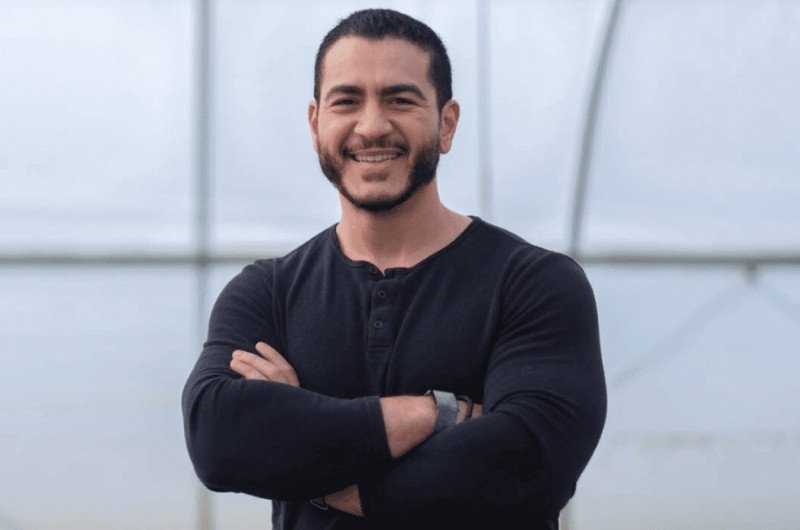
Abdul El-Sayed has won Michigan’s Democratic primary for U.S. Senate, narrowly defeating U.S. Rep. Haley Stevens after a closely contested race that took more than a day to call. The victory puts the 41-year-old physician and progressive Democrat into a November showdown with Republican Mike Rogers — and within reach of becoming the first Muslim elected to the U.S. Senate. El-Sayed is a doctor and former public-health official who previously led Detroit’s health department. He first gained national political attention during his unsuccessful 2018 campaign for Michigan governor, then spent several years largely outside electoral politics before returning for the open Senate race. His latest campaign built a large grassroots operation that held hundreds of events across Michigan and attracted thousands of volunteers. Politically, El-Sayed has aligned himself with the Democratic Party’s progressive wing and received support from figures including Sen. Bernie Sanders and Rep. Alexandria Ocasio-Cortez. His campaign emphasized expanding health coverage, lowering costs for working families, reducing the influence of large donors in politics and ending unconditional U.S. military aid to Israel. That agenda put him in sharp contrast with Stevens, who had support from prominent Democratic establishment figures and benefited from tens of millions of dollars in outside spending. His narrow victory is attracting national attention because Michigan is not a reliably Democratic state. President Donald Trump carried it in 2024, and Democrats need to defend the open Senate seat as part of an already difficult path toward winning control of the chamber. El-Sayed’s campaign will therefore become a major test of whether a progressive candidate who energized Democratic primary voters can build a broader coalition in one of the country’s most important swing states. That challenge begins immediately. Rogers, a former congressman who narrowly lost Michigan’s 2024 Senate election, is already working to portray El-Sayed as too far left for the state. El-Sayed, meanwhile, must bring together Democrats after a divisive primary and win over voters who did not support him. If he succeeds in November, his victory would be significant both for the battle over Senate control and for American political history.
Starlink Is Coming for Your Mobile Phone Service

SpaceX is preparing to turn Starlink into a full-fledged mobile phone service, laying out plans to combine its satellite network with ground-based cellular infrastructure and compete more directly with AT&T, Verizon and T-Mobile. During SpaceX’s second-quarter earnings call Tuesday, President and COO Gwynne Shotwell said the company intends to build a terrestrial component for Starlink Mobile using wireless spectrum acquired from EchoStar. The goal is to create what she described as a true mobile service, rather than limiting Starlink to satellite coverage that fills gaps when conventional cellular networks aren’t available. SpaceX’s approach could look very different from the sprawling tower networks built by traditional wireless carriers. Shotwell said small cellular base stations could potentially be installed alongside Starlink broadband equipment and deployed around the country as needed. Those ground stations would work alongside a new generation of direct-to-device Starlink satellites, which SpaceX expects to begin launching next year. The strategy is possible in large part because SpaceX has secured valuable nationwide wireless spectrum from EchoStar. That spectrum includes frequencies that can support both satellite and terrestrial communications, giving SpaceX something it previously lacked: the ability to build a mobile network on the ground while simultaneously expanding coverage from space. SpaceX has indicated terrestrial service could begin as early as the end of 2027. For consumers, the long-term idea is straightforward: a Starlink phone service could use ground-based cellular coverage where available and satellites where it isn’t, potentially reducing the dead zones that still exist across rural areas, highways and remote parts of the country. Building a network capable of challenging America’s three dominant wireless carriers would take enormous investment and years of deployment, but SpaceX has now made clear that Starlink’s ambitions extend well beyond home internet. It wants a place on your phone, too.
We May Be the Last Generation of Traditional Work

For generations, the path to a successful career followed a familiar pattern. Get an education. Learn a profession. Find a good job. Build a career. Retire. Artificial intelligence is beginning to rewrite that formula—and faster than many people expected. For millions of workers, this isn’t a distant possibility. It’s already happening. Companies are reducing hiring for some entry-level positions, automating tasks that once required teams of employees, and rethinking roles that have existed for decades. What began as a tool to improve productivity is rapidly becoming a force that is reshaping which jobs businesses need—and which they don’t. The first wave of artificial intelligence helped people work faster. The next wave is beginning to perform the work itself. The Great Career Shift Has Already Begun Every major technological revolution has changed the way people work. The Industrial Revolution transformed manufacturing. Computers reshaped the modern office. The internet connected the world and created entirely new industries. Artificial intelligence is different. For the first time, businesses have access to technology capable of performing many routine cognitive tasks that once required human employees. Instead of simply helping people do their jobs, AI is increasingly completing those tasks on its own. Businesses are making rational economic decisions. Organizations continuously look for ways to improve efficiency, reduce costs, increase productivity, and remain competitive. Artificial intelligence is allowing many companies to accomplish those goals while fundamentally changing how work is organized and which positions remain essential. That shift is no longer theoretical. IBM CEO Arvind Krishna said in 2023 that the company expected to pause hiring for roles where roughly 7,800 jobs could be replaced by artificial intelligence, particularly in back-office functions such as human resources. He also said about 30% of non-customer-facing roles could be replaced by AI and automation within five years. The First Jobs Already Disappearing Not every profession will disappear. But many individual jobs—and in some cases, entire categories of routine work—are already beginning to vanish as organizations discover they can accomplish the same work with artificial intelligence. Across multiple industries, businesses are adopting AI to automate routine documentation, customer support, software development, standardized reporting, medical transcription, marketing content creation, financial analysis, and other highly structured tasks that once required significant human time and attention. Some technology leaders are warning that early-career workers may feel the shift first. Anthropic CEO Dario Amodei said AI could eliminate a significant share of entry-level white-collar jobs within the next several years, particularly in technology, finance, law, consulting, and other knowledge-work professions. A recent labor market analysis by Anthropic also found that occupations such as computer programming, customer service, and financial analysis are among those most exposed to AI because many of their routine tasks can already be performed—or significantly assisted—by today’s large language models. Many of these roles have traditionally served as entry points into long-term careers. As those positions become increasingly automated, younger workers may find themselves entering a labor market that looks dramatically different from the one their parents experienced. This isn’t simply about replacing employees. It’s about replacing specific kinds of work. As artificial intelligence continues to improve, businesses will increasingly evaluate every repetitive, predictable, and rules-based task through a new lens: Does this still require a human? It’s Not Just About Technology This transformation isn’t happening because businesses are abandoning people. It’s happening because the economics are changing. Every business faces constant pressure to become more efficient while delivering better products and services. When artificial intelligence can perform certain tasks with increasing speed, consistency, and scalability, organizations naturally begin redesigning the way work is done. Recent workforce data already suggests the trend is accelerating, with artificial intelligence increasingly cited as a factor in workforce reductions and changes to hiring strategies. That’s why this story is much bigger than artificial intelligence itself. It’s about the beginning of a fundamental shift in the global labor market. The Questions AI Is Forcing Us to Ask Artificial intelligence isn’t just changing the jobs people do. It’s prompting economists, technology leaders, and policymakers to ask much bigger questions about the future of work itself. If AI continues to automate more routine tasks, how will societies adapt? Could shorter work weeks become the norm? Will people spend more time creating, caring for others, or pursuing entrepreneurship? And could ideas such as Universal Basic Income (UBI)—once considered fringe—become part of mainstream economic discussion? Those questions remain unanswered, but they’re beginning to move from academic debate into public conversation. In the months ahead, Readovia will take a closer look at these emerging ideas and what they could mean for workers, businesses, and society. The Next Chapter Every generation inherits a different economy. Previous generations helped build the industrial economy and later the digital economy. We may become the first generation to build careers in an economy where intelligence itself has become abundant. Whether that future brings unprecedented opportunity, widespread disruption, or something in between remains to be seen. But one thing is becoming increasingly difficult to ignore: we may be the last generation to experience work the way previous generations did. One day, younger generations may look back on traditional careers the way many people today look back on rotary telephones—essential in their time, but products of a very different era. ——————– Readovia: AI Is Reshaping the Tech Job Market — and Entry-Level Workers Are Feeling It First
Millions of Student Loan Borrowers Face New Repayment Rules Under Federal Overhaul

Millions of Americans with federal student loans are facing one of the most significant changes to the student loan system in years as a sweeping federal overhaul takes effect. The new rules, which became effective on July 1, introduce new repayment options, phase out existing programs, and establish new borrowing limits for many future students and parents. For many borrowers, the biggest immediate change involves the end of the Biden-era Saving on a Valuable Education (SAVE) repayment plan. Borrowers enrolled in SAVE will receive notifications from their loan servicers and generally have about 90 days to select a new repayment option before being transitioned to another plan. New Repayment Options Under the new system, most borrowers taking out new federal student loans on or after July 1 will have two primary repayment choices: Repayment Assistance Plan (RAP), a new income-based repayment program that calculates monthly payments using adjusted gross income. Tiered Standard Repayment Plan, which spreads payments over different repayment periods based on the amount borrowed. Existing borrowers with older federal loans may continue using certain repayment plans for a limited time, although several current income-driven repayment options are expected to be phased out over the next few years. Borrowing Limits Also Change The overhaul also introduces new borrowing limits for certain federal student loans. Graduate and professional students will face new lifetime borrowing caps, while Parent PLUS loans will now have annual and lifetime limits for new borrowers. The legislation also phases out new Grad PLUS loans, although some current borrowers may continue borrowing under transitional provisions while completing existing degree programs. Supporters say the changes simplify a complex repayment system and promote long-term financial responsibility. Critics argue some borrowers could face higher monthly payments and fewer repayment options than were previously available. What Borrowers Should Do Financial aid experts recommend that borrowers review any correspondence from their loan servicer carefully over the coming weeks. Borrowers affected by the changes should: Watch for repayment notices from their loan servicer. Review available repayment options before any deadlines. Verify that their contact information is up to date. Understand how the new rules may affect future borrowing decisions. Final Thoughts As millions of Americans adjust to the new rules, understanding available repayment options early may help borrowers avoid unnecessary payment increases and choose a plan that better fits their financial situation. ——————– Related: Federal Student Loan Rules Are Changing in 2026 — What Borrowers Need to Know Student Loans Move to Treasury in Major Federal Power Shift
The One Question Entrepreneurs and Side Hustlers Can’t Afford to Ignore in 2026

Entrepreneurs and side-hustlers don’t usually struggle with effort. They struggle with alignment. Days fill quickly with planning, posting, refining, researching, and building — yet the financial results don’t always reflect the work being done. Busy days can still end without progress where it matters most. The issue isn’t ambition or discipline. It’s that too much work never actually touches revenue. Tasks feel productive, but they don’t move money. Over time, that disconnect creates frustration, burnout, and the sense that something isn’t working — even when effort is constant. One question helps cut through that noise: how does today’s work connect to revenue? Not eventually. Not after everything is perfect. Today. When that question becomes part of daily decision-making, priorities shift. Work becomes more intentional. Time is spent differently. Revenue-connected work doesn’t always mean selling directly. It can mean pitching, following up, improving a conversion point, promoting something already built, onboarding a client, or refining a monetized page. The common thread is simple: the action creates a clear path between effort and income. The power of this approach compounds over time. One revenue-focused action per day may feel small, but over the course of a year, it adds up to 365 intentional actions tied directly to earning. Imagine that. Few businesses fail because they didn’t work hard enough. Many stall because too few days were spent doing work that actually moved money. Consistency in the right direction beats intensity without focus — every time. The Takeaway Before the day ends, ask one question: How did today’s work connect to revenue? Then make sure at least one action answers it clearly. Progress isn’t built all at once. It’s built daily — one intentional, revenue-connected task at a time. ——————– Recommended: The Skills That Will Matter More Than Capital in 2026