


Senate Fights Back: Voting to Terminate Global Tariffs
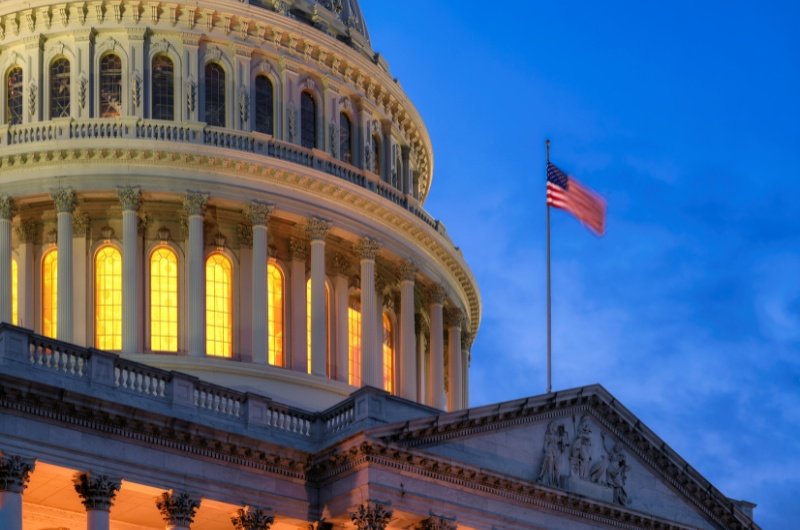
In a rare act of defiance, the United States Senate has voted to terminate President Donald Trump’s sweeping global tariffs — a move that challenges the administration’s grip on trade policy and tests the limits of executive power. The 51–47 vote marks a sharp bipartisan rebuke of a system that has levied tariffs on more than 100 countries, raising costs for American industries and consumers alike. While the measure faces steep odds in the Republican-controlled House, it underscores a growing unease in Congress over what many lawmakers view as a “one-man trade war.” The Vote Heard Around the World The Senate resolution seeks to end the so-called “Liberation Day” tariff plan — an initiative the Trump administration implemented under emergency economic authority. The tariffs, framed as a tool to pressure trading partners and protect U.S. manufacturing, have since drawn criticism for disrupting global supply chains and straining relationships with allies. Four Republican senators — Susan Collins, Mitch McConnell, Rand Paul, and Lisa Murkowski — joined Democrats to advance the measure. Their support was enough to send a symbolic message: trade policy belongs to Congress, not the Oval Office. Cracks in the Trade Wall The Senate’s vote follows earlier challenges to tariffs targeting Brazil and Canada, signaling an organized pushback rather than isolated dissent. For many legislators, this moment represents an inflection point — a bid to reclaim oversight authority long eroded by decades of executive expansion. Even conservative lawmakers who once supported Trump’s protectionist stance now argue that the costs are outweighing the benefits. Farmers, manufacturers, and importers have reported steep price increases, delayed shipments, and shrinking export opportunities. “The tariffs were supposed to make America stronger,” one senator remarked privately, “but they’re starting to make America smaller.” A Global Ripple International markets reacted cautiously to the Senate’s vote, viewing it as both a political statement and a potential precursor to policy recalibration. Countries targeted under the tariff plan — including Canada, Germany, and Japan — welcomed the move as a sign that Washington’s trade posture may be softening. Still, the measure faces a procedural blockade in the House, where Republican leadership has implemented new rules preventing tariff-related resolutions from reaching the floor until next spring. That delay effectively shields the administration’s trade program from immediate reversal. The Bigger Picture At stake is precedent. The battle over tariffs reflects a broader question about how much power presidents should wield over global economics. For decades, Congress has ceded portions of its constitutional trade authority in the name of efficiency and diplomacy. But the Senate’s action suggests an appetite to rebalance that equation — even at the risk of political fallout. Economists warn that instability in tariff policy can rattle markets and complicate corporate planning, particularly for industries dependent on long-term supply agreements. Yet for lawmakers, the immediate concern is not just economic, but institutional: restoring checks and balances in the era of economic nationalism. Between the Lines For investors and executives, the Senate’s defiance signals a potential shift in how trade and governance intersect. It may not dismantle the tariffs overnight — but it does mark the beginning of a larger recalibration of U.S. economic strategy. When politics and global commerce collide, it’s rarely about the numbers. It’s about who gets to write the rules.
President Trump Suggests He “Would Love” a Third Term as Shutdown Drags On
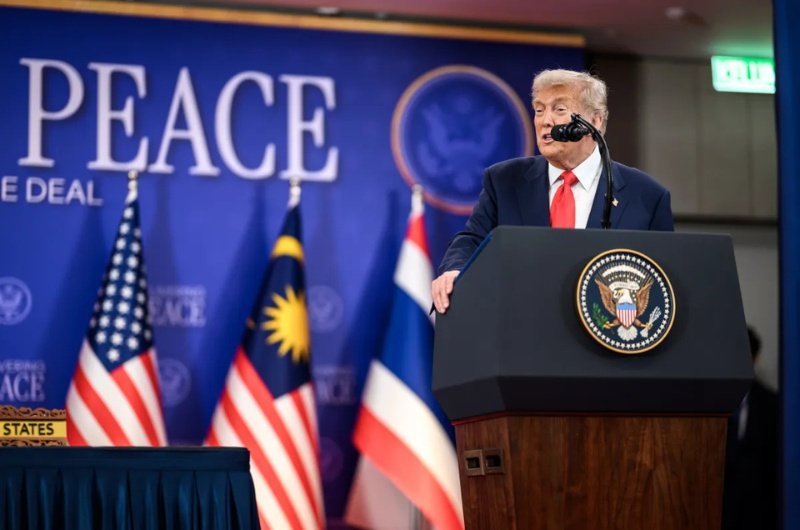
With the government shutdown entering its fourth week, President Donald Trump reignited controversy overseas by suggesting he would “love” to seek a third term in office — a remark that instantly sparked debate over presidential limits and political norms already under strain. A Remark That Hit a Nerve Speaking to reporters during his Asia trip, Trump dismissed questions about when the shutdown might end, instead pivoting to what he described as his “long future ahead.” When pressed on whether that future could include a third campaign, he smiled and replied, “I would love to do it.” The comment landed sharply in Washington, where lawmakers remain deadlocked over a federal funding bill. For many, it underscored how Trump’s rhetoric continues to blur the line between humor and constitutional challenge — and how political fatigue is deepening after nearly a month of gridlock. A Government at a Standstill The shutdown, now stretching past 27 days, has furloughed thousands of federal workers and shuttered key operations. Negotiations have faltered over competing spending priorities and immigration funding, with the Senate failing to pass multiple procedural votes. Public frustration is mounting, and pollsters say confidence in Congress has dipped to its lowest level in two years. Yet on social media, Trump’s remarks about a potential third term quickly overtook coverage of the stalled talks, highlighting how personality politics continues to eclipse governance. A Test of Boundaries Under the 22nd Amendment, presidents are limited to two elected terms — a cornerstone of modern American democracy. But in an era when political conventions are often treated as flexible, Trump’s offhand suggestion struck many observers as a deliberate provocation. Analysts say the comment may serve a dual purpose: energizing his base by projecting longevity while baiting critics into outrage that keeps him dominating the news cycle. Either way, it reflects a reality reshaping Washington — one where political theater increasingly defines the agenda itself. Between the Lines For a country still emerging from years of polarization, the combination of governing paralysis and performative power is testing the resilience of American institutions. Each shutdown, each boundary-pushing remark, becomes less an exception and more a pattern — proof that the structure of U.S. governance now depends as much on restraint as on law.
White House Demolition: East Wing Torn Down for $300 Million Ballroom Project
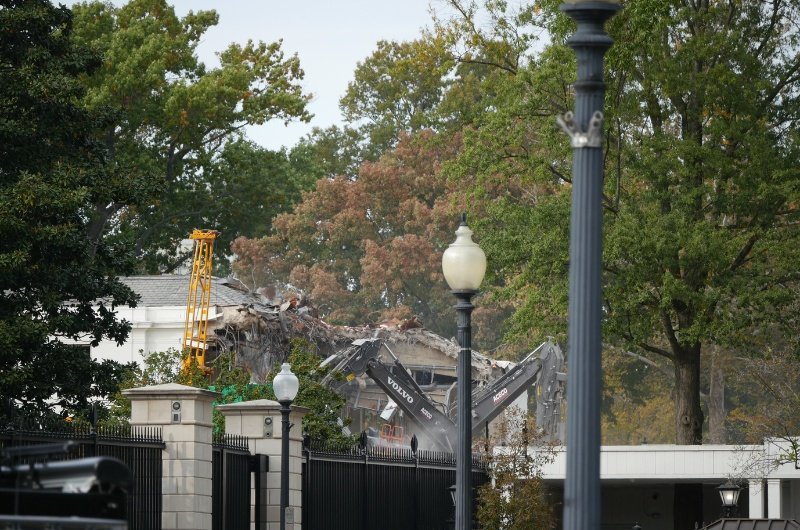
The historic East Wing of the White House — long the domain of first ladies and state receptions — has been demolished to make way for a new 90,000-square-foot ballroom. The project is privately funded, politically charged, and raising questions about transparency, preservation, and the true cost of the “People’s House.” What’s Going On Demolition crews have completed the teardown of the White House East Wing, clearing the site for construction of a massive new ballroom. The structure, which had stood in various forms since 1902, once housed the First Lady’s offices, the Social Office, and the public tour entrance. The new ballroom — projected at roughly 90,000 square feet and costing about $300 million — is being described by the administration as a “privately funded modernization.” Officials claim the East Wing needed upgrades to meet current functional and security demands. Critics argue that the process bypassed traditional preservation and review standards that usually apply to changes on federal historic sites. Donors and the Private Dinner at the White House President Trump recently released a list of prominent guests invited to a White House dinner celebrating the ballroom project. The event reportedly included around 130 attendees, among them executives from Apple, Amazon, Google, Meta, Lockheed Martin, and several major cryptocurrency firms. According to press briefings, the dinner was not purely ceremonial — it served as an opportunity to thank contributors and showcase early architectural renderings of the ballroom. A partial donor list has also been shared with reporters, revealing that a mix of corporate sponsors and wealthy individuals are financing the build. Some of the larger contributors are said to include major tech and defense companies, with Alphabet’s (Google’s) contribution estimated at $22 million toward design and infrastructure technology. While the administration emphasizes that no taxpayer funds are being used, watchdog groups have called for full transparency about the donation amounts, terms, and any potential access or influence tied to participation. Timeline and Construction The ballroom plan was announced in late summer with an estimated $200 million cost. Within weeks, that number rose to roughly $300 million as the scope expanded to include new security systems and digital infrastructure. By early autumn, demolition was underway, and satellite images taken this week confirm that the East Wing is now gone — replaced by construction staging at one of the most secure addresses in the world. Officials say the funding is being managed through an intermediary trust, but preservation advocates continue to press for more detail about oversight, project governance, and how donor recognition will be handled once the new structure is complete. President Trump has publicly championed the ballroom as a “necessary modernization.” According to a July 31 press release posted on WhiteHouse.gov: “The White House State Ballroom will be a much-needed and exquisite addition of approximately 90,000 total square feet of ornately designed and carefully crafted space, with a seated capacity of 650 people — a significant increase from the 200-person seated capacity in the East Room of the White House.” What’s at Stake For over a century, the East Wing symbolized the public-facing side of the White House — where diplomacy, ceremony, and national traditions intersected. Its demolition marks one of the most significant changes to the presidential complex since the Truman-era reconstruction. To supporters, the new ballroom represents modernization and capacity for large-scale state events. To critics, it is a rebranding of America’s most iconic residence — one funded and influenced by private interests, not the public it represents. The debate now extends far beyond architecture to include governance, ethics, and ownership of national heritage. Who Are We Serving? The East Wing’s removal highlights a broader tension between modernization and preservation — between what serves the presidency and what serves the public. The unprecedented corporate involvement in a federal landmark’s redesign is already prompting calls for stricter transparency laws governing privately funded government projects. It’s a reminder that in the modern era, even the most symbolic institutions can be reshaped by those with the means to pay for access — and by those willing to allow it. The Bigger Picture At its core, the ballroom project underscores how symbolism, power, and private influence now intersect at America’s most recognized address. The White House is a working residence — but it is also a public institution, built to serve and represent the nation, not the individual who occupies it. When major transformations are financed by private donors and carried out with limited public oversight, the line between preservation and personalization begins to blur. The question is whether the public will still see the completed project as their own.
Trump Presses Zelenskyy to Accept Putin’s Demands in Heated Meeting, Tossing Maps and Warnings
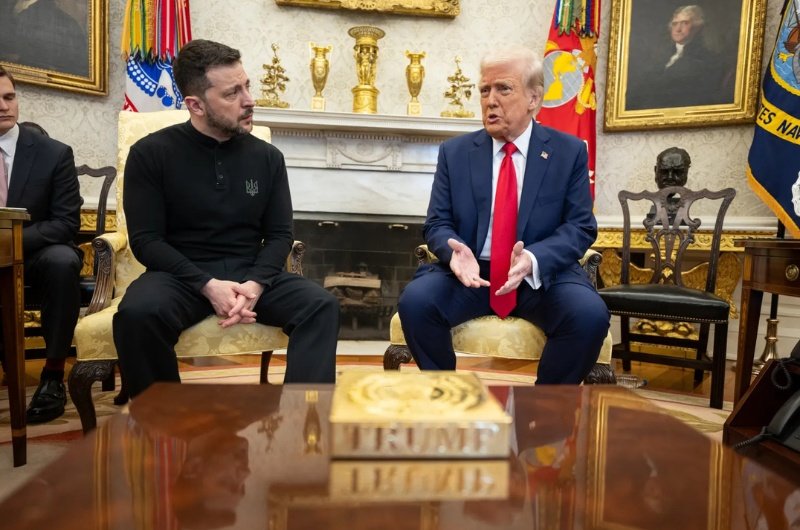
In a tense Oval Office meeting on Sunday, President Donald Trump reportedly urged Ukrainian President Volodymyr Zelenskyy to accept Russian territorial terms to end the war — warning that President Putin would “destroy” Kyiv otherwise. According to multiple accounts, Trump’s tone was explosive, at one point shouting, cursing, and tossing maps across the room as he outlined areas he claimed Ukraine should concede. The confrontation — first reported by The Times of India — underscores how sharply Trump’s diplomatic approach departs from Washington’s previous bipartisan backing of Ukraine’s resistance. Witnesses said Trump appeared fixated on “ending the war fast,” even if that meant forcing Kyiv to surrender portions of the Donbas region to Moscow. European officials reacted with alarm. EU foreign policy chief Kaja Kallas called any move to pressure Ukraine “deeply inappropriate,” warning it would reward aggression and destabilize Europe further. The EU, France, and Germany have reiterated their support for Kyiv’s sovereignty, with several diplomats privately expressing fears that U.S. policy may be shifting toward appeasement. Adding to the tension, Hungary has proposed hosting a Trump-Putin summit that could include Ukraine “if invited.” The prospect of such a meeting — and who might attend — has raised eyebrows across NATO capitals. “It’s one thing to pursue peace,” said one European envoy, “it’s another to dictate it.” For Zelenskyy, who has vowed not to trade territory for peace, the moment marks one of his most precarious diplomatic crossroads since the invasion began. For Trump, it represents an attempt to reassert his image as the ultimate deal-maker — one who believes he alone can end the war. Between the Lines Trump’s outburst may play well with voters who crave decisive action, but it risks alienating allies and emboldening Putin. The larger question now is whether peace will come at the cost of Ukraine’s independence.
Trump Plans to Shift Billions in Anti-Terror Funds from Democratic to Republican States
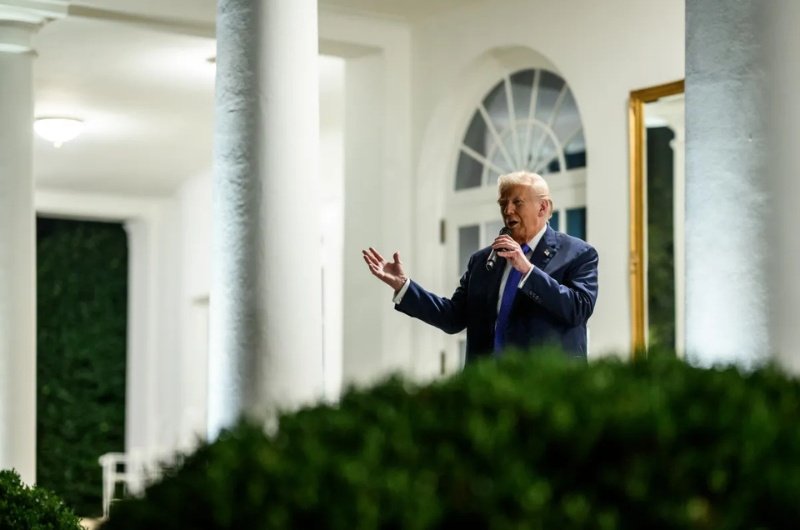
The Trump administration’s new homeland security plan would cut anti-terror grants to Democratic states by up to 70%, redirecting funds to Trump-voting states. The plan is igniting political and legal controversy, with Democratic-led states accusing the White House of using national security dollars as a political weapon. A Radical Funding Shift The administration has unveiled a plan to restructure the federal anti-terrorism grant program, which was created after the September 11 attacks to strengthen homeland security at the state and local levels. The new formula would divert billions away from Democratic-controlled states — including California, Illinois, New Jersey, and Washington, D.C. — and funnel much of that funding toward Republican-led states that supported Trump in the 2024 election. Some states could lose as much as 70 percent of their current allocations under the revised framework, according to federal budget documents reviewed by The Guardian. The Department of Homeland Security has defended the overhaul as a “risk-informed adjustment” aimed at addressing modern threats such as border violence and transnational crime. Critics Say It’s Political Retaliation Democratic officials and national security experts have blasted the move as partisan punishment masquerading as reform. “This isn’t about risk,” one state security director said. “It’s about retribution.” Twelve Democratic-led states have already filed a joint lawsuit seeking to block the rule, arguing it violates both the Constitution and long-standing federal statutes governing the use of national security funds. A federal judge in Rhode Island has temporarily halted the redistribution while the case moves forward. The Bigger Picture The proposal comes at a time when federal-state tensions are already high over shutdown politics, immigration enforcement, and federal law enforcement priorities. Analysts warn that this funding shift could deepen partisan divides within America’s security apparatus — and set a dangerous precedent where **“who you vote for” determines **how much federal protection you get.
Reunions and Uncertainty: Gaza Ceasefire Brings Joy—and Fragile Peace

The Israel–Hamas ceasefire has entered a fragile new phase following the near-completion of a historic prisoner and hostage exchange. As of October 13, 2025, officials confirm that all 20 living Israeli hostages have been released, alongside more than 1,900 Palestinian detainees, under a deal brokered by the United States, Egypt, and Qatar. The carefully orchestrated handover has brought relief to families on both sides — but concern is growing that the calm may not last. In recent days, Hamas fighters have been seen deploying across parts of Gaza in what officials described as a “show of strength,” even as humanitarian convoys began delivering long-delayed aid. Israeli defense officials have warned of possible ceasefire violations, citing sporadic drone activity and unverified reports of rocket launches, though no renewed combat has been confirmed. The uneasy atmosphere underscores how precarious the truce remains despite the successful exchange. President Trump, whose administration played a central role in mediating the agreement, called the outcome “an important step toward lasting peace,” while acknowledging that “more work lies ahead.” Diplomats involved in the talks say negotiations will now shift to the next phase — including border access, reconstruction aid, and long-term security arrangements for Gaza. Human rights observers have praised the exchange as a humanitarian breakthrough but cautioned that underlying issues — including governance of the Strip, displaced civilian return, and international oversight — remain unresolved. “This is a pause, not a peace,” said one regional analyst in Amman. “Unless the deeper grievances are addressed, this truce will live on borrowed time.” For now, families across Israel and Gaza are trying to rebuild a sense of normalcy. Outside Tel Aviv, relatives of freed hostages described an emotional reunion after two years of anguish. In Gaza, released prisoners returned to cheers and celebration, even as aid groups warned that food, fuel, and medical supplies remain critically low. Whether this tenuous calm can hold will depend on restraint — and trust — on both sides.
Court Says No to Trump’s National Guard Deployment in Chicago

A federal appeals court has rejected President Trump’s request to deploy National Guard troops to the Chicago area, dealing a major setback to his latest effort to exert federal control over local unrest. The 7th U.S. Circuit Court of Appeals upheld an earlier ruling that temporarily blocks the administration from sending troops into Illinois, reinforcing limits on presidential authority in domestic deployments. The ruling leaves intact a decision by U.S. District Judge April Perry, who challenged the notion that federal agents faced an imminent threat warranting a National Guard deployment. The judge’s order remains in effect until at least October 23, unless extended, while the legal fight continues. For now, Guard members from other states who were already stationed in Illinois will not be forced to leave, but no new deployments can proceed. The case highlights ongoing friction between the White House and Democratic-led states over who controls the National Guard in times of civil tension. Under U.S. law, the Guard typically answers to state governors unless federalized under specific circumstances — a process that requires clear justification and oversight. Trump’s team argued that the move was necessary to protect federal property and agents from what they called “coordinated violent threats,” but the courts were unconvinced. Legal experts say the decision marks an important test of executive power at a time when law-and-order issues dominate national debate. Similar disputes are playing out in other cities, including Portland, where federal courts have also intervened to block troop deployments. For now, the appeals court ruling signals that even amid heightened political tension, checks and balances remain firmly in place. As the administration weighs its next legal move, Illinois officials have praised the court’s decision as a victory for state sovereignty. “This is about upholding the Constitution and the rights of local government to manage their own communities,” one state lawmaker said Sunday. Whether Trump will appeal to the Supreme Court remains to be seen — but for now, Chicago’s streets will stay in local hands.
The Next Wave of Federal Job Cuts Has Moved from Rumor to Reality

As the government shutdown stretches into its tenth day, layoff notices are being issued across Washington. Agencies once considered permanent fixtures are now facing reductions in force, and federal workers who were furloughed are learning their positions may not return. The administration has framed the cuts as part of a broader restructuring of government operations. But behind the measured language, the move has taken on an unmistakably political edge. President Trump has repeatedly vowed to dismiss federal workers during the shutdown standoff — now entering its tenth day — and has suggested his team will target what he’s described as “Democrat agencies”. That claim, whether rhetorical or real, is expected to fuel multiple legal challenges in the weeks ahead. For thousands of federal employees, this week’s notices have deepened an already anxious period. Many were first furloughed when the government closed, then told their positions may not return when it reopens. Agency leaders are said to be reviewing staffing rosters under new directives from the Office of Management and Budget, accelerating decisions that might otherwise have taken months. The process is fast, opaque, and deeply personal for those affected. Labor unions and employee groups have already begun preparing lawsuits, arguing that reductions in force during an active shutdown may violate federal employment statutes requiring advance notice and due process. Legal experts say the cases could test the boundaries of executive power — and the protections that have long insulated the civil service from political retaliation. Between the Lines The country’s largest employer is cutting staff without a clear end date or plan for recovery, adding new meaning to “willy-nilly”. As Washington’s workforce braces for what could be a drawn-out fight in court, the rest of the nation watches a simple but profound question unfold: what happens when politics turns employment itself into a weapon?
Trump Administration Seizes Control of D.C.’s Union Station
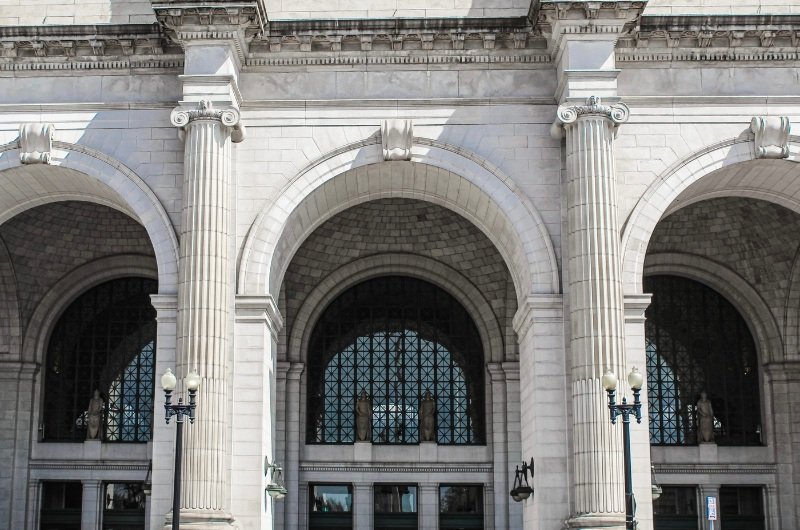
The Trump administration has assumed control of Union Station, Washington, D.C.’s main transportation hub, transferring management from Amtrak to the Department of Transportation. The move marks the latest step in a sweeping federal takeover of the nation’s capital, which has already seen law enforcement powers shifted away from local authorities. Union Station, just blocks from Capitol Hill, has long been a focal point for both commuters and visitors. While federal officials described the site as deteriorating and unsafe, critics argue the station has already undergone significant improvements in recent years, including the clearance of homeless encampments and progress on a $10 billion expansion project announced last year. The change in oversight is being framed as part of a broader campaign to reshape the capital’s infrastructure and security under direct federal control. For supporters, the move signals an effort to impose order and modernization on a high-profile landmark. For opponents, it is yet another example of centralized authority displacing local governance in Washington. Union Station’s new status underscores a defining theme of the administration’s approach to the city: visible, high-impact assertions of control that blend politics, symbolism, and power over some of the capital’s most iconic spaces.
FEATURE: Analyzing Elon Musk’s Strategic Firings at the CFPB: Benefit or Risk?
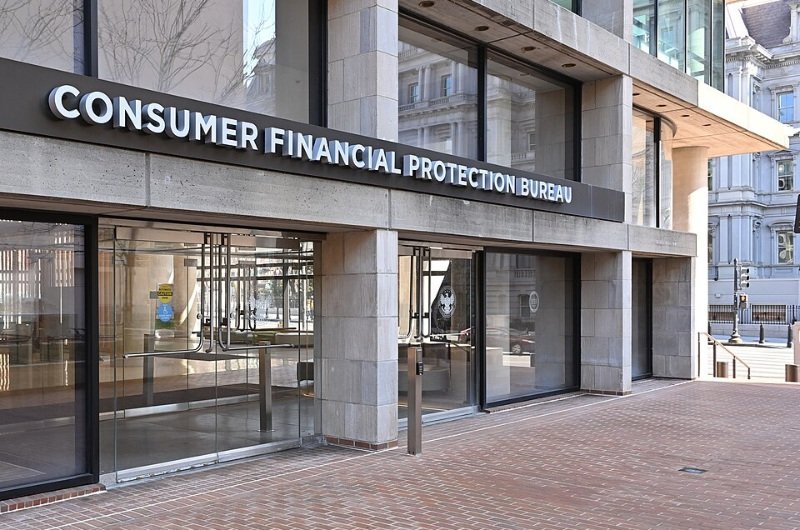
The Consumer Financial Protection Bureau (CFPB) is a pivotal regulatory agency established in response to the financial crisis of 2008, with the primary goal of protecting consumers from unfair, deceptive, or abusive practices in the financial sector. Its functions extend to overseeing financial institutions, enforcing consumer laws, and fostering transparency and fairness in financial transactions. Given the crucial role the CFPB plays in ensuring accountability within the financial sphere, any significant changes in its leadership or operational methodologies are likely to have wide-ranging implications for both consumers and financial entities alike. Recently, Elon Musk gained attention for his strategic firings at the CFPB, a move that has stirred considerable debate among both business and regulatory circles. These actions are particularly notable given Musk’s influential persona within the tech and automotive industries, leading to questions regarding the intersection of his entrepreneurial ambitions and regulatory governance. His motivations may be rooted in a desire to reshape regulatory frameworks that may hinder innovation or market competition, particularly in sectors where Musk has vested interests, such as finance and technologies associated with electric vehicles and space exploration. This intersection between Musk’s business interests and the regulatory environment of the CFPB demands careful examination. The repercussions of such strategic firings are not confined to organizational dynamics; they are emblematic of broader trends in how entrepreneurial leaders engage with regulatory bodies. As we delve deeper into Musk’s motivations for these actions, it will become imperative to consider both the immediate and long-term effects these changes may have on the regulatory landscape and consumer protections that the CFPB is designed to uphold. Understanding this nuance will be key to analyzing whether Musk’s approach serves as a benefit or a risk to the financial sector and its consumers. Overview of the CFPB: Mission and Functions The Consumer Financial Protection Bureau (CFPB) was established in response to the 2008 financial crisis, with the primary mission of protecting consumers in the financial sector. Created by the Dodd-Frank Wall Street Reform and Consumer Protection Act of 2010, the CFPB aims to ensure that consumers have access to fair and transparent financial products and services. It is tasked with regulating and overseeing a wide array of financial organizations, including banks, credit unions, mortgage servicers, and payday lenders, ensuring that they adhere to federal laws regarding consumer protection. One of the CFPB’s central objectives is to provide consumers with the necessary tools and information to make informed financial decisions. This includes implementing regulations that promote transparency in financial transactions, developing educational resources, and offering recourse mechanisms for consumers to address grievances against financial institutions. The bureau also performs critical functions such as rulemaking, enforcement, and supervision in order to mitigate unfair, deceptive, or abusive practices in the financial services industry. By prioritizing consumer rights, the CFPB seeks to create a more equitable marketplace. In addition to its protective functions, the CFPB also serves as a watchdog within the financial industry. It collects and analyzes data on consumer financial practices, which helps in identifying trends and emerging risks. This empirical knowledge informs the bureau’s regulatory decisions and helps guide legislative initiatives aimed at improving financial consumer protections. For corporations, including those associated with figures like Elon Musk, the implications of CFPB regulations can be profound. Businesses must navigate the complexities of compliance to avoid penalties and to uphold their reputation as responsible entities in the eyes of consumers. Understanding the mission and functions of the CFPB is essential for analyzing Musk’s strategic firings within the context of potential regulatory conflicts and corporate governance. A Closer Look at Elon Musk: Business Ventures and Influence Elon Musk is a prominent entrepreneur whose ventures span multiple industries including automotive, aerospace, and technology. His most notable companies, Tesla and SpaceX, have revolutionized their respective fields but also intersect with complex regulatory frameworks, such as those enforced by the Consumer Financial Protection Bureau (CFPB). At the helm of Tesla, Musk has led the company to become a global leader in electric vehicles, pushing the boundaries of sustainable transportation while navigating various financial regulations. These regulations are crucial as they govern consumer protection laws that impact the automotive financing ecosystem. SpaceX, founded by Musk in 2002, has redefined the aerospace industry with a focus on reducing space travel costs and enhancing accessibility to space. The intersection of SpaceX with regulatory oversight becomes evident when considering its involvement in federal contracts and partnerships. A clear understanding of the implications of financial regulations is essential, as failure to comply could jeopardize lucrative contracts or funding opportunities, ultimately influencing the company’s growth trajectory. Furthermore, Musk’s influence extends beyond these companies, impacting the tech industry at large. His ventures often inspire innovation, prompting competitors to adapt and thrive under the evolving landscape shaped by new technologies and changing consumer expectations. However, as the leader of such influential enterprises, Musk also faces potential vulnerabilities linked to the CFPB’s regulations. Any strategic decision made by him or the companies under his guidance may bear scrutiny, especially concerning consumer financial services. Musk’s approach to managing these regulatory challenges is critical in determining how his businesses navigate risks while seizing growth opportunities in a climate that emphasizes consumer protection. The Rationale Behind Musk’s Firings at the CFPB Elon Musk’s decision to implement strategic firings at the Consumer Financial Protection Bureau (CFPB) has garnered significant attention and raised various questions regarding the underlying motivations. At the core of these actions lies Musk’s goal to reshape the organization to better align with his vision for the financial regulatory landscape. One of the primary justifications Musk employed for these firings is the belief that a streamlined workforce within the CFPB would allow for a more agile and responsive regulatory body, capable of adapting to the rapidly evolving financial technology sector. An interpretation of Musk’s approach suggests that he views the firings as a necessary step toward reducing the existing regulatory scrutiny that his businesses may face. By replacing key personnel with individuals who are more aligned with his business philosophy,