

Who Decides War? Congress Prepares Vote as Iran Conflict Widens
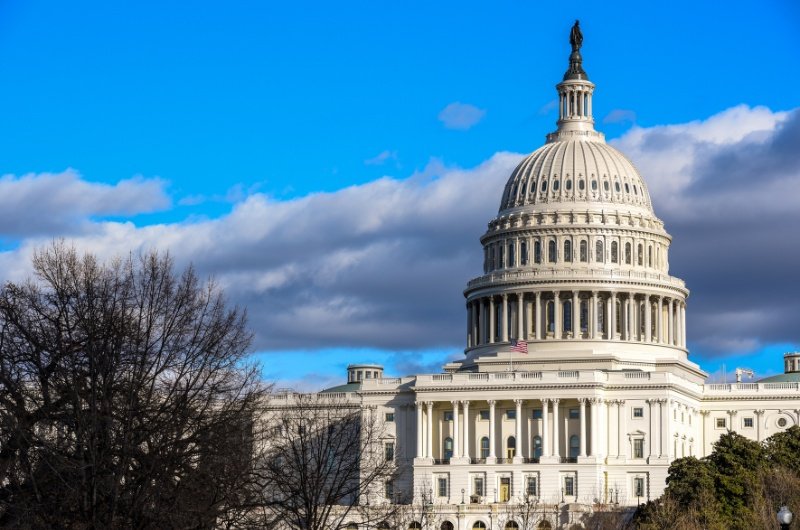
As the military conflict between the United States, Israel, and Iran intensifies, Congress is preparing for a pivotal vote that could redefine who controls America’s path to war. The U.S. Senate is set to vote Wednesday on a bipartisan war powers resolution requiring congressional approval for continued military action against Iran, with the House expected to follow Thursday. The measure, led by Senator Tim Kaine and supported by several Democrats and a small group of Republicans, is designed to reassert Congress’s constitutional authority over decisions of war and peace. Critics argue the recent air campaign against Iran, launched without explicit congressional authorization, raises fundamental questions about the balance of power between the White House and Capitol Hill. Supporters of the resolution say the United States risks sliding into a broader Middle East conflict without a clear debate or vote by the nation’s elected representatives. Opponents, including many Republican leaders, warn that restricting presidential authority during an active military confrontation could weaken U.S. strategy and signal division to adversaries. Even if the resolution passes Congress, its future remains uncertain. President Donald Trump is expected to veto any measure that limits his authority to continue military operations, meaning lawmakers would need a two-thirds majority to override the veto — a difficult political hurdle. The vote revives a long-running constitutional debate over war powers in Washington. As tensions with Iran continue to escalate, lawmakers are once again confronting a central question: who ultimately decides when America goes to war.
State of the Union Tonight: Trump Faces High-Stakes Moment in Divided America
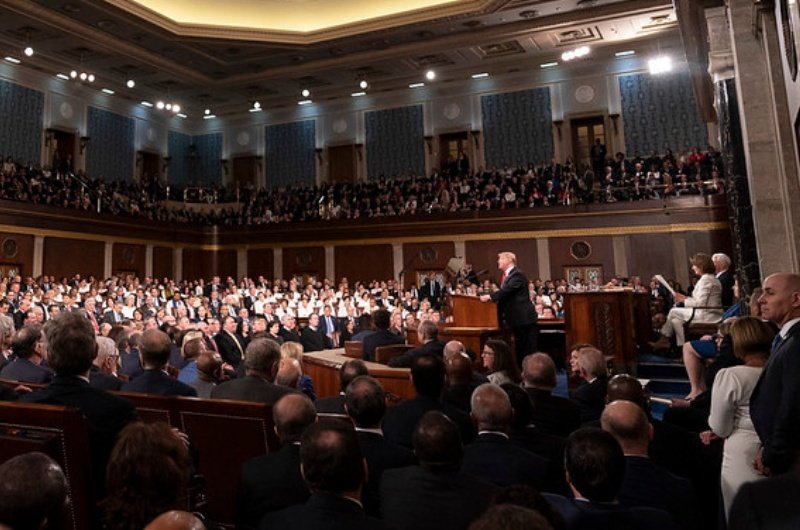
President Donald Trump will deliver the first State of the Union address of his second term tonight at 9 p.m. ET, stepping into a chamber — and a country — sharply divided over the direction of the economy, immigration policy, and America’s global posture. The speech arrives at a politically sensitive time, with midterm elections looming and approval ratings under pressure. The White House has signaled that Trump will emphasize economic performance, including job growth and broader market strength, while defending his trade strategy and tariff policies. Yet public sentiment remains mixed. Many Americans continue to express frustration over cost-of-living concerns, even as headline economic data shows resilience. How the president reconciles those competing realities may define the tone of the address. Immigration is also expected to feature prominently. Ongoing disputes over border enforcement and Department of Homeland Security funding have sharpened partisan tensions in Washington. Trump is likely to frame his administration’s approach as a matter of national security and sovereignty, while critics argue the policies have fueled division and legal battles. Foreign policy could round out the evening’s major themes. Trade negotiations, tariff disputes, and geopolitical tensions abroad provide a complicated backdrop. Allies and adversaries alike will be listening closely for signals about the administration’s next moves, particularly as global markets remain sensitive to U.S. policy shifts. The Democratic response will follow the president’s speech, offering a contrasting vision ahead of the 2026 midterms. For Trump, the address represents more than a constitutional obligation. It is a defining political moment — a chance to reset the narrative, rally supporters, and shape the national conversation for the year ahead.
Supreme Court Limits Presidential Trade Authority in Tariff Decision

In a major separation-of-powers ruling, the Supreme Court concluded Friday that the Trump administration exceeded its statutory authority when imposing certain tariffs, drawing clearer boundaries around executive power in trade matters. The decision underscores that while presidents are granted flexibility in responding to economic and national concerns, Congress retains primary constitutional authority over taxation and commerce. The Court’s opinion reinforces that delegated powers cannot be expanded beyond what lawmakers explicitly authorize. The ruling may reshape how future administrations approach tariff policy and emergency trade measures, particularly when broad economic actions are undertaken without direct congressional approval. More broadly, the decision signals that courts remain willing to scrutinize executive actions that test the limits of delegated authority. ——————– Related: Supreme Court Rules Trump Tariffs Unlawful, Billions Could Be Returned
House Approves Stricter Voter Registration Rules Ahead of 2026 Midterms
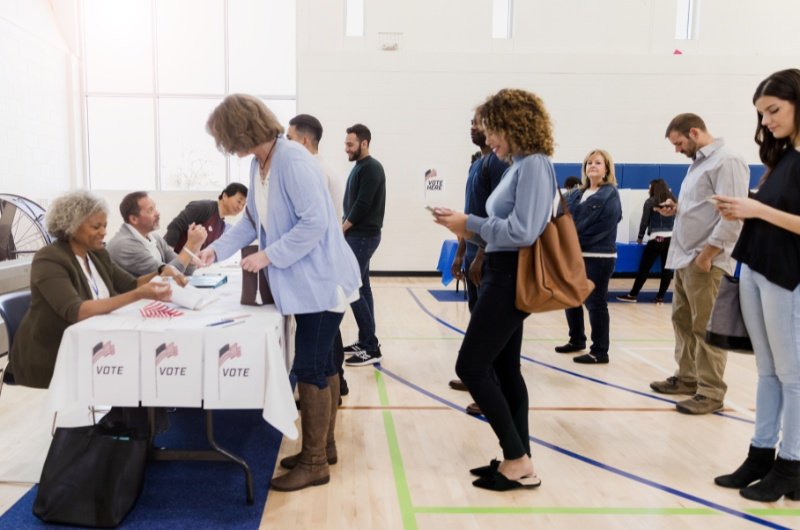
The Republican-controlled U.S. House has approved legislation that would impose new proof-of-citizenship requirements for voters ahead of the November 2026 midterm elections, advancing one of the party’s top election policy priorities. The bill would require individuals registering to vote in federal elections to provide documentary evidence of U.S. citizenship, such as a passport or birth certificate. It would also tighten identification standards for both in-person and mail-in voting. Supporters describe the measure as a safeguard intended to strengthen election integrity and reinforce public trust in the voting system. Democrats and voting rights advocates strongly oppose the proposal, arguing that documented instances of non-citizen voting are exceedingly rare and that additional paperwork requirements could create barriers for eligible voters. Critics warn the changes may disproportionately affect Americans who lack easy access to formal documents, including some older voters and individuals whose legal names have changed. The measure passed largely along party lines and now heads to the Senate, where its future remains uncertain. Even with Republican support, the legislation would likely face procedural hurdles requiring bipartisan cooperation to advance. The vote highlights the deepening national divide over election law as lawmakers prepare for what is expected to be a highly competitive 2026 midterm cycle.
U.S. and India Unveil Trade Framework as Strategic Ties Deepen

The White House has announced a new trade framework with India, signaling a major step toward strengthening economic and strategic alignment between the two countries. The agreement outlines plans to reduce tariffs, expand market access, and accelerate negotiations toward a broader bilateral trade pact. Under the framework, both governments committed to easing long-standing trade barriers that have restricted exports and strained commercial relations. The United States plans to lower tariffs on selected Indian goods, while India agreed to eliminate or significantly reduce tariffs on a wide range of American industrial and agricultural products. Officials describe the approach as an effort to rebalance trade while creating clearer pathways for growth. A central component of the deal is India’s commitment to large-scale purchases of U.S. goods across sectors including energy, agriculture, technology, and manufacturing. The move is designed to reinforce supply chains and reduce dependence on rival powers for critical materials and products, reflecting the growing geopolitical dimension of global trade. The framework also expands cooperation in digital trade and technology policy, with both countries aiming to reduce digital barriers and align more closely on innovation, data flows, and emerging technologies. Additional provisions focus on supply-chain security and economic resilience, underscoring the deal’s strategic importance beyond commerce alone. While the agreement stops short of a full trade pact, it establishes a clear roadmap for continued negotiations. If finalized, a comprehensive U.S.–India trade agreement could reshape economic relations between the two democracies and strengthen their influence in an increasingly competitive global economy.
DHS Shutdown Looms as Democrats Set Conditions for Funding Approval
The Department of Homeland Security is just four days away from a potential shutdown, as negotiations over funding stall and Democrats lay out a list of conditions they say must be met before approving a spending bill. If no agreement is reached by the deadline, a shutdown would affect multiple agencies operating under the Department of Homeland Security, including immigration enforcement, border operations, cybersecurity, disaster response, and transportation security. While some essential services would continue, thousands of federal employees could be furloughed, and key programs would face disruptions. Democrats have made clear they will not approve DHS funding without what they describe as concrete legislative safeguards. According to party leaders, their conditions must be enacted directly as part of the DHS spending bill, not addressed through future negotiations or executive actions. The list includes ten demands focused on oversight, accountability, and constitutional protections. Among them are requirements for mandatory body cameras for immigration enforcement officers, stricter limits on when agents may enter private homes, and explicit enforcement of judicial warrant requirements. Democratic lawmakers are also pushing for measures that would prohibit the use of masks during enforcement operations, arguing that visible identification is necessary for accountability. They have emphasized that Fourth Amendment protections must be upheld, particularly during arrests and home entries, and that violations should be subject to independent investigation. Another key demand asserts the authority of state and local governments to conduct their own investigations into alleged violations of state and local laws, even when federal agencies are involved. Democrats argue this provision is essential to maintaining checks on federal power. Republicans have criticized the demands as overreach, warning that tying enforcement restrictions to funding could weaken DHS operations at a critical moment. They argue that immigration enforcement and national security should not be subject to what they describe as last-minute policy concessions. With the deadline approaching, neither side appears ready to back down. If talks fail, DHS would join a growing list of federal agencies caught in the crossfire of broader political disputes, once again raising questions about Congress’s ability to fund the government without crisis-driven deadlines. For now, the clock is ticking — and the outcome could determine not only whether DHS remains operational, but how its authority is defined moving forward.
Federal Judge Temporarily Blocks Trump Administration From Withholding Gateway Tunnel Funds

A federal judge has temporarily blocked the Trump administration from withholding billions of dollars in federal funding for the Gateway tunnel project, stepping into a high-stakes dispute over infrastructure spending and executive authority. The ruling follows lawsuits filed by New York, New Jersey, and the Gateway Development Commission. State officials argue that the funding freeze threatens a critical transportation project and exceeds the administration’s legal authority. At the center of the case is the Gateway tunnel project, a $16 billion effort to construct new rail tunnels beneath the Hudson River. The project is seen as essential to maintaining reliable rail service along the Northeast Corridor, which serves Amtrak and multiple commuter rail systems between Washington and Boston. The Trump administration moved to halt the funds late last year, citing concerns related to oversight and broader policy priorities. State leaders countered that the project had already met federal requirements and warned that delays would drive up costs and risk service disruptions. In issuing the temporary block, the judge pointed to the potential for immediate harm if funding remained frozen. The court noted that delays could lead to job losses, higher construction costs, and long-term transportation problems in one of the nation’s most economically important regions. The ruling does not permanently resolve the dispute. Instead, it preserves the current funding arrangement while the court considers whether the executive branch can suspend previously approved infrastructure funding without congressional approval. Legal experts say the case could have broader implications for future administrations, particularly around how much control the White House can exert over federally funded projects once money has been authorized. For now, the decision offers temporary relief for state officials and project supporters, while setting the stage for a legal battle that could shape the balance of power over infrastructure spending. ——————– Related: Trump Wants Dulles Airport and Penn Station to Bear His Name in Exchange for Release of Gateway Tunnel Funding
Trump Outlines Achievements and Future Priorities in NBC Interview
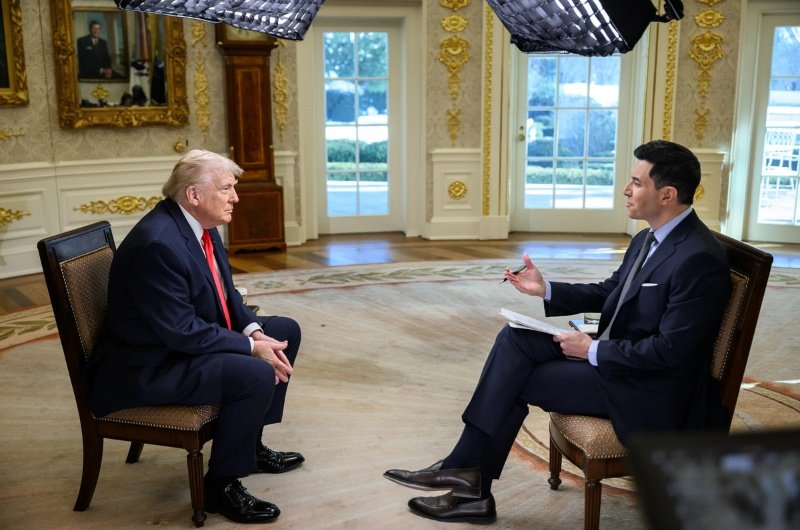
President Donald Trump sat down for a nationally televised interview with NBC News to reflect on his presidency, pointing to what he described as major accomplishments while laying out priorities for the period ahead. Speaking from the Oval Office, Trump pointed to national security, economic performance, and immigration enforcement as defining pillars of his administration. He portrayed his leadership as focused on restoring American strength at home and abroad, repeatedly emphasizing outcomes he characterized as decisive and transformative. On immigration, the president defended aggressive enforcement actions and reiterated his support for federal law enforcement, even as recent operations have drawn public scrutiny. Trump acknowledged the sensitivity surrounding several high-profile incidents involving federal agents, but maintained that his approach remains necessary to protect public safety and uphold the rule of law. Trump also turned to emerging policy terrain, including artificial intelligence, which he described as a defining issue of the next era of global competition. He argued that U.S. leadership in advanced technologies is critical to maintaining economic and strategic dominance, signaling that AI will play a growing role in his administration’s agenda. The interview reflects a broader effort by the White House to shape the narrative around Trump’s presidency as historically significant while positioning his next phase in office as forward-looking. As the 2026 midterm elections approach, the remarks underscore how the president intends to frame both his record and his vision to voters navigating a deeply divided political landscape.
Trump, Senate Democrats Strike Funding Deal, Split DHS Bill to Avert Broader Shutdown
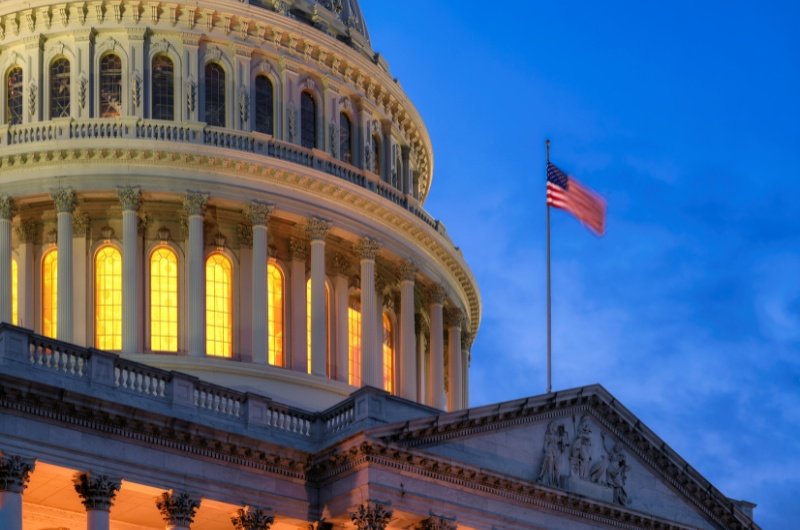
President Trump and Senate Democrats reached an agreement aimed at keeping most of the federal government funded, easing immediate shutdown concerns as lawmakers raced against a funding deadline. Under the agreement, funding for the majority of federal agencies would be extended through the end of the fiscal year. The deal splits the Department of Homeland Security (DHS) spending bill from the broader package, funding the agency for two weeks at current levels while negotiations continue over unresolved immigration and enforcement issues. The decision to isolate DHS reflects deep divisions in Congress over border security, detention authority, and recent enforcement actions. Lawmakers agreed the temporary extension would allow talks to continue without forcing a wider government shutdown tied to one of the most contentious policy areas in Washington. Despite the agreement in principle, procedural hurdles remain. Final passage still requires approval in both chambers, and timing challenges — including the House schedule — have raised the possibility of a brief funding lapse before the legislation is fully enacted. If approved, the deal would keep most federal operations running uninterrupted while giving lawmakers a narrow window to resolve DHS funding disputes. Leaders from both parties said negotiations are ongoing, with no guarantee a longer-term DHS agreement will be reached before the two-week extension expires.
Trump Heads to Iowa to Discuss the Economy As Affordability Concerns Persist Nationwide
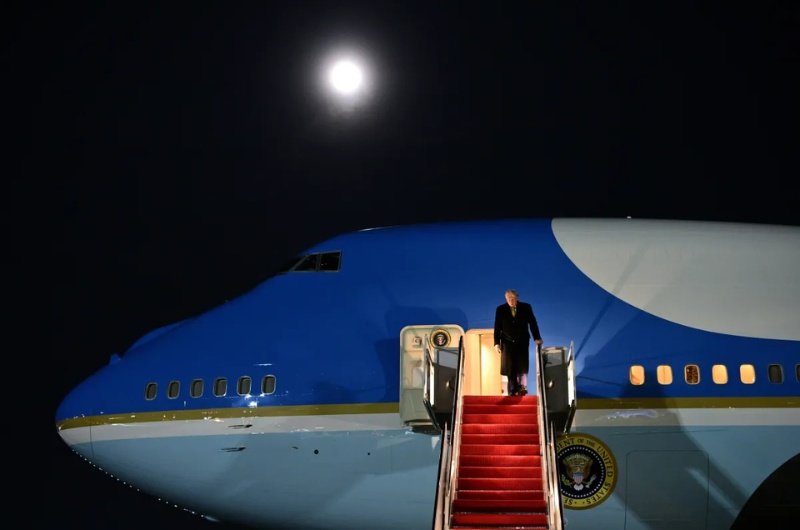
President Donald Trump is set to speak in Iowa today, with the economy expected to take center stage as cost-of-living concerns continue to shape the national mood. The visit carries symbolic weight. Iowa is often viewed as a microcosm of the American economy, combining agriculture, manufacturing, housing markets, and consumer affordability pressures into a single snapshot of everyday life. Iowa’s economic makeup offers a broad view of the challenges many households are facing. From farming communities to manufacturing hubs, the state reflects familiar stress points across the country: rising grocery prices, higher fuel costs, housing affordability struggles, and uncertainty tied to biofuels and energy markets. These indicators make Iowa a strategic backdrop for addressing inflation and household expenses that continue to strain family budgets. Healthcare costs remain a particularly sensitive issue. While healthcare affordability is frequently cited as a concern, recent policy developments have raised alarms rather than relief. Significant cuts to Medicaid, combined with the expiration of premium tax credits that helped offset insurance costs, have already pushed some Americans to drop marketplace coverage. As premiums rise, analysts warn that the number of people unable to afford health insurance is likely to grow, with little visible policy momentum aimed at reversing the trend. Housing affordability is another pressure point expected to loom large. Rents and mortgage payments have climbed steadily over the past five years, placing first-time homebuyers and renters under increasing strain. Despite multiple policy announcements, critics note a lack of concrete federal action to address the underlying causes of the housing crisis. Chief among them is a persistent shortage of housing supply, with the country simply not building enough homes to meet demand. As the president takes the stage in Iowa, the speech will be closely watched for more than rhetoric. For many Americans, the question is whether meaningful action will follow to address the costs shaping daily life.