


Supreme Court Upholds Birthright Citizenship in Landmark Constitutional Ruling

The U.S. Supreme Court on Tuesday upheld birthright citizenship, rejecting President Donald Trump’s effort to limit automatic citizenship for certain children born in the United States and reaffirming a constitutional principle that has stood for more than a century. The decision centered on an executive order issued by President Trump shortly after returning to office in 2025. The order sought to deny automatic U.S. citizenship to children born in the United States if their parents were in the country illegally or were present only temporarily, such as on student or tourist visas. In its ruling, the Court concluded that the Fourteenth Amendment’s Citizenship Clause continues to guarantee citizenship to nearly everyone born on U.S. soil, preserving a constitutional interpretation that has guided American law for generations. The decision leaves only the narrow, long-recognized exceptions that have historically existed, such as children born to foreign diplomats. The case represented one of the most closely watched legal battles of the Court’s term because it tested the scope of presidential authority as well as the meaning of the Constitution’s citizenship protections. The ruling also reinforces the Court’s longstanding interpretation of the Fourteenth Amendment, first established in the landmark 1898 case involving Wong Kim Ark. Supporters of the executive order argued that the Constitution does not require automatic citizenship for children born to parents who are unlawfully or temporarily present in the United States. Opponents countered that the Citizenship Clause has consistently been understood to apply to virtually everyone born within the country’s borders, regardless of their parents’ immigration status. The ruling marks a significant setback for one of the Trump administration’s highest-profile immigration initiatives. While the decision preserves the current constitutional understanding of birthright citizenship, debates over immigration policy are expected to continue in Congress and throughout the 2026 election season. ——————– Related: Birthright Citizenship Fight Returns to Supreme Court in High-Stakes Legal Clash Supreme Court Issues Landmark Ruling on Transgender Athletes in School Sports
Gunman Charged After Attempted Assassination Plot Targets Trump at Washington Dinner
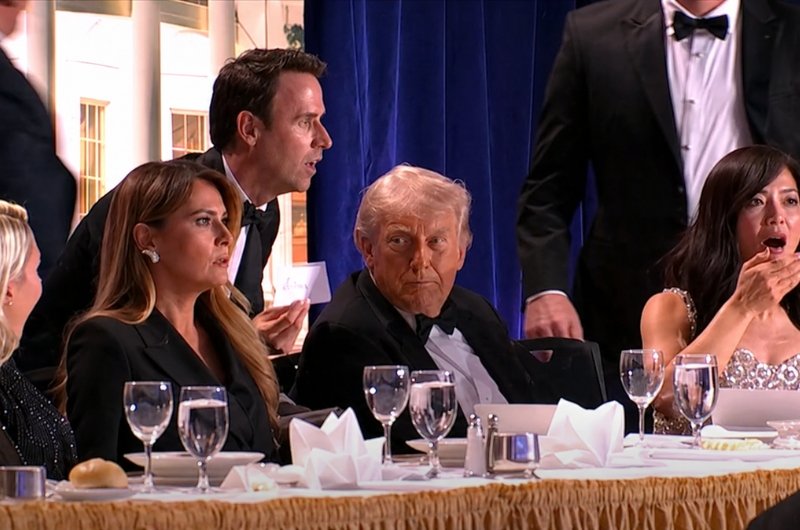
A man identified by authorities as Cole Tomas Allen has been charged after an attempted assassination plot targeting President Donald Trump during the White House Correspondents’ Association dinner at the Washington Hilton hotel. Several shots were fired during the event on April 25, prompting an immediate security response while the dinner was underway Within seconds, Secret Service agents surrounded the president and rushed him from the stage. Vice President JD Vance and other senior officials were also moved to safety as guests inside the ballroom took cover under tables and waited for instructions. Trump, members of the Cabinet, and other dignitaries were not injured. According to a CNN video timeline, several gunshots were heard at 8:34 p.m.. The suspected shooter was then stopped on the floor above the ballroom where the dinner was taking place. By 8:52 p.m., the suspect was seen lying face down on the ground shirtless and in handcuffs as law enforcement secured the scene. Investigators said the suspect remains in custody and faces serious federal charges. The incident has renewed scrutiny of presidential security at large public events, especially when multiple top government officials are gathered in one location. The incident also underscored the complex challenge of protecting national leaders at large public gatherings, where even layered security operations can be tested in seconds by a determined threat.
BREAKING NEWS: Former Virginia Lt. Gov. Justin Fairfax and Wife Dead in Apparent Murder-Suicide
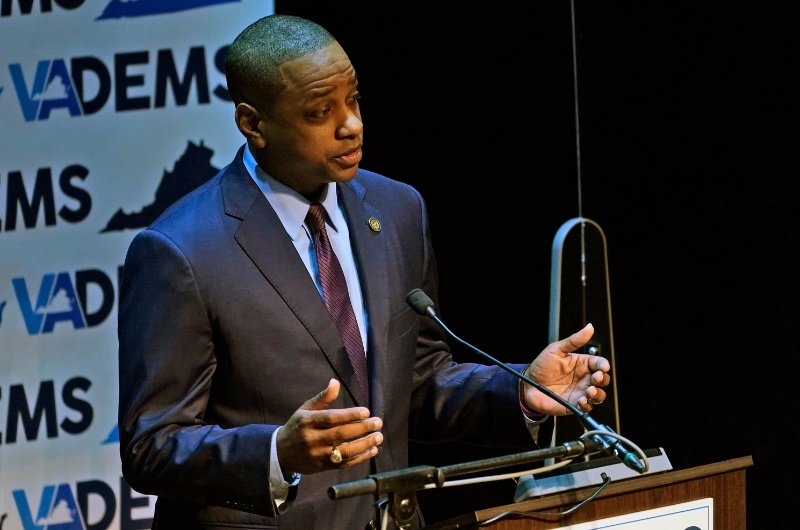
Former Virginia Lt. Gov. Justin Fairfax and his wife, Cerina Fairfax, were found dead Thursday inside their Annandale, Virginia home in what authorities are investigating as an apparent murder-suicide. Police said Fairfax is believed to have fatally shot his wife before taking his own life. Officials said the couple’s children were inside the home during the incident. The tragedy has stunned many across Virginia, where Fairfax once held one of the state’s highest offices and was widely viewed as a rising political figure. Fairfax was elected lieutenant governor in 2017 and later became a prominent name during a turbulent period in Virginia politics. His political rise was severely damaged in 2019 after two women publicly accused him of sexual assault in separate incidents. Fairfax denied the allegations, but the controversy triggered calls for his resignation, led to his departure from a major law firm, and shadowed his later campaign for governor. He left office in 2022. The Readovia Lens Beyond the headlines is a devastating reminder that private turmoil can carry public consequences. It is also a sobering moment about family trauma, unresolved conflict, and the unseen crises that can unfold behind closed doors. The deeper lesson is clear: seek professional help, create distance, or part ways before a situation spirals out of control.
$166 Billion Tariff Refund Expected as New U.S. System Prepares to Launch

A new U.S. tariff refund system is expected to launch April 20, potentially returning billions of dollars to businesses after key tariffs were ruled unlawful in court. The system, known as the Consolidated Administration and Processing of Entries, or CAPE, is being introduced by U.S. Customs and Border Protection to automate what could become one of the largest trade repayment efforts in recent history. The goal is to replace a slow, case-by-case claims process with a more centralized digital framework built to handle refunds at scale. At the center of the issue are tariffs previously imposed under the International Emergency Economic Powers Act. In February, the U.S. Supreme Court determined those tariffs had been applied beyond the limits of the law, setting in motion a massive refund process for affected importers. The numbers involved are substantial. Estimates indicate as much as $166 billion in tariff collections could be eligible for repayment. Officials have reportedly already identified roughly $127 billion through electronic filing records, giving the government a major starting point as the first phase begins. The rollout will happen in stages rather than all at once. The opening phase is expected to focus on simpler claims, including unliquidated entries and certain recently liquidated transactions. More complicated claims, older filings, and cases requiring deeper review are expected to move into later phases. For businesses, timing matters almost as much as the total amount. Once claims are validated, many refunds are expected to be issued within roughly 60 to 90 days, though some payments could arrive sooner depending on the claim type and documentation already on file. More than 56,000 importers have reportedly registered, covering over 53 million shipments tied to the broader refund effort. That level of volume helps explain why a fully automated system is being introduced instead of relying on traditional manual processing. Why does this matter beyond trade circles? Tariffs often become hidden costs inside the economy. They can influence retail prices, manufacturing expenses, supply chain decisions, hiring plans, and business expansion. Returning some of that money could improve liquidity for companies that absorbed those costs over time. There is also a broader policy lesson. Government actions tied to trade and emergency powers can create effects that last for years, even after the original political debate fades. Court rulings, agency systems, and refund programs can become the final chapter of decisions made long before. Oversight will remain important as the process begins. The Court of International Trade is expected to monitor implementation as refunds move forward, adding another layer of scrutiny to one of the most significant tariff reversals in years. The next key question is execution. If the system works smoothly, billions could begin moving back into the private sector in the months ahead. If delays emerge, pressure could quickly build for faster action and expanded access. The Readovia Lens This is a rare example of policy, courts, and technology colliding in a way that could directly affect business balance sheets across America.
Michigan Wins NCAA Men’s Basketball Championship — A Title Years in the Making

The Michigan Wolverines men’s basketball are back on top of college basketball. In a tightly contested championship matchup, Michigan defeated the UConn Huskies men’s basketball 69–63 to capture the 2026 NCAA Men’s Basketball National Championship, marking the program’s first title since 1989. From the opening tip, the game carried the weight of the moment. UConn, coming off a dominant tournament run, looked poised to repeat. But Michigan controlled the tempo, leaning on disciplined defense and timely scoring to keep the Huskies just out of reach. The difference came down to execution. Michigan’s ability to slow the pace, limit second-chance opportunities, and convert in key moments ultimately sealed the win. It was controlled, composed, and championship-level basketball. For Michigan, this title signals a return to national prominence for one of college basketball’s most recognized programs. For UConn, it’s a reminder of how narrow the margin is at the top, even for a team that entered the game with momentum and confidence. And for millions watching, the championship game delivered exactly what March is known for—pressure, unpredictability, and a final moment that defines a season.
Breaking News: Two Killed After Air Canada Plane Collides With Fire Truck at LaGuardia, Airport Shuts Down
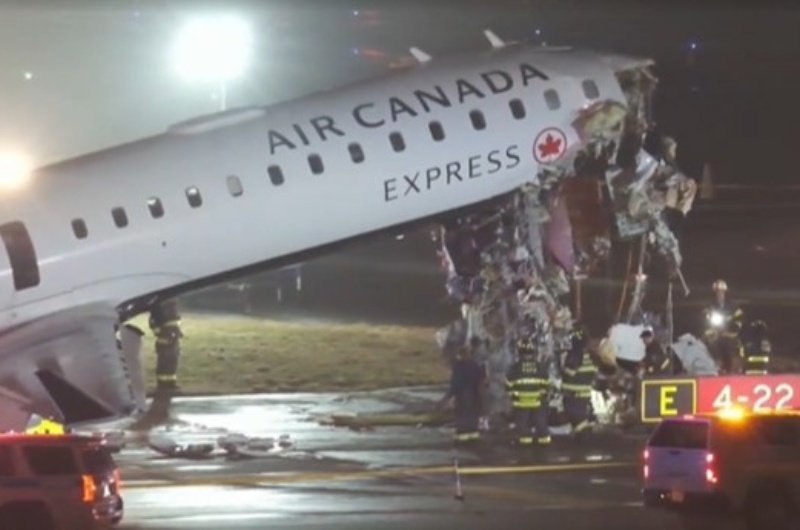
A deadly collision at New York’s LaGuardia Airport has left two people dead and forced a complete shutdown of one of the nation’s busiest travel hubs. The incident occurred when an Air Canada Express aircraft struck a fire truck on the runway, triggering an immediate emergency response and halting all airport operations. Authorities confirmed that two crew members were killed in the crash, while additional personnel on the ground were evaluated for injuries. Emergency crews quickly secured the area as investigators began assessing how the aircraft and emergency vehicle ended up in the same active runway zone. In the aftermath, officials ordered a full closure of LaGuardia Airport, disrupting flights across the country. Departures and arrivals were suspended as airlines scrambled to reroute passengers and manage delays, with ripple effects expected throughout the national air travel system. The crash has raised urgent questions about runway safety and coordination between aircraft and ground operations. Federal investigators are expected to examine communication protocols, visibility conditions, and emergency response procedures as part of a comprehensive review. For travelers, the shutdown serves as a stark reminder of how quickly a single incident can impact the broader aviation network. As the investigation unfolds, attention will remain focused on both the cause of the crash and how long it will take for normal operations to resume. 🖼️ Caption An Air Canada Express aircraft collided with a fire truck on the runway at LaGuardia Airport, prompting a full shutdown and nationwide travel disruptions.
Student Loans Move to Treasury in Major Federal Power Shift

The Trump administration has begun transferring federal student loan management from the Department of Education to the U.S. Treasury, marking one of the most significant structural changes to the student loan system in decades. The shift starts with defaulted loans but signals a broader realignment that could eventually move the entire $1.7 trillion portfolio out of Education oversight. At its core, the move reframes student debt as a financial asset to be managed rather than a social policy tool tied to education. Treasury, equipped with advanced financial infrastructure and collections authority, is expected to take a more aggressive and systemized approach to repayment and enforcement. Supporters argue the transition could streamline operations, reduce inefficiencies, and bring long-overdue discipline to a system that has struggled with servicing failures and borrower confusion. Critics, however, warn that shifting control away from the Education Department may weaken borrower protections and create new layers of complexity for millions of Americans already navigating repayment. The timing is equally notable. The move comes amid broader efforts to reshape or reduce the role of the Department of Education, raising questions about whether this is an operational fix or the first step in a larger institutional overhaul. For borrowers, the immediate impact may be subtle, but the long-term implications are significant. The system governing how Americans repay their education debt is no longer anchored solely in education policy. It is becoming part of the federal government’s financial machinery — and that shift could redefine how student debt is treated for years to come.