


“A Tale of Two Wallets” — U.S. Card Spending Rises While Savings Shrink

Spending Up, Resilience Down Across the U.S., consumer card spending continues to rise even as household savings decline. The average family’s financial cushion has thinned noticeably over the past year, and the national saving rate now sits near record lows. The surface strength in spending masks a deeper fragility — one that hints at growing financial strain beneath the numbers. Growing Divide Between Income Tiers Higher-income households remain active in travel, dining, and discretionary purchases, while lower- and middle-income consumers are pulling back. Economists expect overall consumer-spending growth to slow through 2025, with inflationary pressure quietly reshaping everyday habits. The Hidden Fragility Many households are increasingly relying on credit to maintain their lifestyles. Non-essential purchases are being reconsidered, and monthly subscriptions are being cancelled as saving patterns continue to erode. The result is a slow shift from confidence to caution — a quiet tightening of the wallet that could ripple through key sectors by year’s end. Brand & Strategic Implications For consumer brands and financial institutions, the message is clear: sustained spending doesn’t necessarily mean stability. The emerging “two-wallet” economy — one resilient, one stretched — demands segmentation, empathy, and precision in how companies engage, price, and communicate with their audiences. Readovia Insight In a landscape where spending persists but savings fade, the most forward-looking enterprises will pivot from velocity and volume to value, loyalty, and resilience. The question is which consumers will spend, and on what terms.
Erebor: The Billionaire-Backed Bank with Trump Ties and a Fast-Track Approval

A New Kind of Bank — and a Familiar Cast The U.S. Office of the Comptroller of the Currency has conditionally approved Erebor, a new national bank backed by a network of powerful tech investors including Peter Thiel, Palmer Luckey, and Joe Lonsdale. The bank’s focus: financing firms in AI, defense, digital assets, and what its founders call the “innovation economy.” Erebor has raised roughly $275 million in capital and plans to serve high-growth companies that traditional banks often avoid. The name itself — pulled from Tolkien’s The Hobbit — hints at ambition: the mountain where gold is hoarded and guarded. The Speed — and the Scrutiny What’s drawing attention isn’t just the bank’s investors, but how fast it got approved. The OCC signed off on Erebor’s application in just four months, a remarkably short timeline compared with the years similar charters often take. That speed has ignited political concern. Senator Elizabeth Warren, the ranking Democrat on the Senate Banking Committee, condemned the decision in a sharply worded statement released Wednesday. “President Trump’s billionaire buddies Peter Thiel and Palmer Luckey just received approval from the OCC to launch a new bank that will cater to the financial whims of Silicon Valley billionaires,” Warren said. “Trump’s financial regulators just fast-tracked an approval of this risky venture that could set up another bailout funded by American taxpayers and destabilize our banking system.” Her remarks frame Erebor as not just a banking experiment — but a potential flashpoint in the ongoing debate over political influence and financial deregulation under Trump’s leadership. Innovation or Cronyism? Erebor’s founders describe the venture as a solution to what they see as outdated financial infrastructure — a way to “bank the builders” fueling AI, defense tech, and next-generation industries. Supporters argue that traditional institutions have become overly risk-averse since the collapses of Silicon Valley Bank and Signature Bank, leaving innovators stranded. Erebor, they say, fills that gap. But Warren and other critics see something else: a system tilted toward the elite, where proximity to political power accelerates approvals and concentrates financial control. The bank’s backers have close ties to the Trump orbit — from Thiel’s early campaign support to Luckey’s defense contracting firm Anduril, which has won major government contracts. That proximity is what has turned Erebor’s charter into more than a business story — it’s now a litmus test for how influence moves through Washington’s financial corridors. The Bigger Picture Erebor’s conditional approval signals a broader shift in the U.S. financial landscape — one where politically connected capital and technologically ambitious banking models are colliding. Whether Erebor becomes a model of innovation or a cautionary tale may depend on what happens next. Will it expand opportunity for next-generation companies — or deepen public skepticism about who America’s banking system truly serves? Either way, it marks another unmistakable moment in the Trump-era fusion of politics, money, and Silicon Valley power.
Fuel Prices Dip — A Quiet Win for Drivers

The national average price for regular gasoline is $3.115 as of Oct. 8, 2025. That’s 4.5 cents lower than a week ago and 8.4 cents lower than a month ago. The spread remains wide by state. On the high end, Hawaii: $4.485; on the low end, Delaware: $2.903. Most Gulf and South states cluster below the national average, while West Coast states remain higher due to taxes and supply dynamics. Why the drop Seasonal demand: After Labor Day, driving tapers off, easing pressure on prices. Winter-blend switch: Most markets moved to cheaper winter formulations in mid-September, which typically lowers costs in September–October. Crude and supply: Softer crude prices and ample supply filter through to pump prices with a lag. Between the lines The federal shutdown has fewer government employees commuting—especially around D.C. and other federal hubs—nudging weekday demand lower at the margins. It will be interesting to see whether the shutdown drives fuel prices lower. We’ll keep an eye on it through the week.
Wall Street Rallies on AI Buzz — AMD Jumps on OpenAI Deal
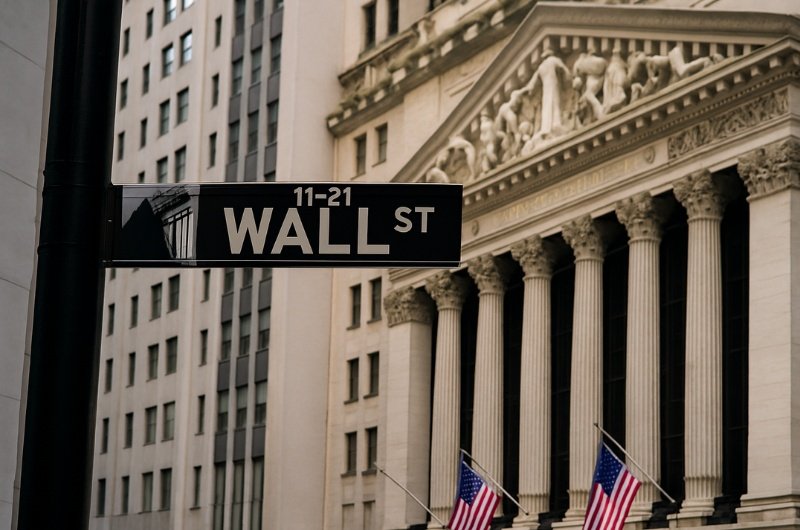
Investors double down on artificial intelligence optimism as AMD’s new partnership with OpenAI sparks a tech-led surge on Wall Street. Wall Street kicked off the week with renewed momentum, as optimism around artificial intelligence once again lit up the trading floor. Shares of Advanced Micro Devices (AMD) soared more than 30% in early trading after news of a major partnership with OpenAI, positioning AMD as a critical supplier of advanced chips powering the next generation of AI infrastructure. The deal signals a deepening collaboration between hardware and AI software leaders — and offers investors a glimpse of where the real growth may lie: not only in applications like ChatGPT, but in the high-performance chips that make them possible. AMD’s rally also lifted the broader semiconductor sector, with Nvidia, Broadcom, and Micron posting gains in sympathy. Even amid uncertainty from the ongoing federal government shutdown, tech remains Wall Street’s anchor of confidence. Traders appear willing to overlook short-term political noise in favor of long-term innovation plays. “AI isn’t a bubble,” one strategist noted. “It’s a race for infrastructure dominance — and every new deal confirms that.” Still, analysts caution that the pace of enthusiasm may outstrip fundamentals. With no major economic data releases during the shutdown, price momentum is being driven more by sentiment than by measurable growth indicators. Between the Lines Wall Street’s appetite for AI shows no sign of cooling — and AMD’s leap into OpenAI’s supply chain cements the chipmaker as one of the market’s most closely watched power players.