


Entry-Level Jobs Are Becoming the First Casualty of the AI Shift

Artificial intelligence is beginning to reshape the workforce in ways that are most visible at the entry level, where many of the tasks traditionally assigned to junior employees can now be handled by AI systems. Across industries such as marketing, finance, customer support, and software development, companies are increasingly using AI tools to summarize documents, generate reports, analyze data, and respond to routine inquiries. Work that once helped early-career employees gain experience is now being completed in seconds by automated systems. Some labor analysts say the shift is beginning to show up in hiring patterns. While demand for experienced professionals remains strong in many sectors, companies are becoming more cautious about expanding junior roles that focus primarily on repetitive or administrative tasks. The change does not necessarily mean fewer jobs overall, but it could alter how careers begin. As automation expands, entry-level positions may increasingly require higher-level skills such as critical thinking, strategy, and oversight of AI systems rather than basic task execution. For workers entering the job market, the message is becoming clear: understanding how to work alongside AI may soon be as important as traditional professional experience.
AI in the Kill Chain: How the Speed of Modern Warfare is Changing

Modern warfare is entering a new and unsettling phase. Artificial intelligence systems are accelerating military decision-making, dramatically shortening the time between identifying targets and authorizing strikes. In some cases, that timeline has been reduced to near real time. Recent reports indicate that U.S. military leaders employed advanced artificial intelligence tools during the latest joint U.S.-Israeli strikes on Iran. These systems were used to assist with intelligence assessment, target identification, and battlefield modeling, helping commanders process massive volumes of data at unprecedented speed. Defense analysts say AI-driven platforms are increasingly capable of analyzing satellite imagery, drone feeds, intercepted communications, and other intelligence streams within seconds. What once required layered review and hours of coordination can now unfold in compressed timeframes, fundamentally altering what military strategists refer to as the “kill chain.” Supporters argue that such systems enhance precision and responsiveness in fast-moving conflicts, allowing commanders to adapt quickly to emerging threats. But critics warn that compressing decision timelines may reduce opportunities for human scrutiny — particularly in complex environments where civilian infrastructure and non-combatants are present. The central debate is how much authority AI should wield in life-and-death decisions. Artificial intelligence has moved beyond the realm of research labs and battlefield simulations. It is now embedded in active military strategy. As global powers continue integrating AI into combat operations, policymakers face mounting questions about oversight, accountability, and whether legal frameworks can evolve quickly enough to keep pace with machines operating at what some describe as the “speed of thought.”
The AI Arms Race Moves to Washington: Federal Agencies Accelerate Internal AI Rollouts

The U.S. government is no longer just regulating artificial intelligence — it’s deploying it at scale. From federal health agencies to financial regulators, departments are quietly expanding internal AI systems to speed up document review, fraud detection, compliance audits, and data analysis. What began as pilot programs has evolved into structured adoption strategies, complete with AI governance frameworks and risk assessments. The shift signals something bigger: AI has moved from experimental to operational inside the federal government. For agencies under pressure to process mountains of paperwork, enforce regulations, and modernize aging systems, AI tools are being positioned as efficiency multipliers. But the acceleration raises questions around oversight, bias monitoring, and cybersecurity safeguards — especially as federal systems handle sensitive citizen data. The Readovia Lens The real story isn’t hype. AI is essentially becoming embedded in institutional infrastructure, and that changes how policy, enforcement, and even public services are delivered.
India’s Young Adults Are Driving the AI Surge — And Their Future May Depend on It

India’s AI moment is being powered by its younger generation. At a recent AI summit, OpenAI revealed that users between 18 and 24 years old account for nearly half of ChatGPT usage in the country. It is a striking figure for a nation already home to more than 100 million weekly active users of the platform, according to OpenAI CEO Sam Altman. That makes India second only to the United States in total ChatGPT usage, with Indian students representing the largest share of student users globally. The numbers tell a deeper story about where the global AI workforce may be heading. India’s population skews young, and that generation has adopted digital technology faster than almost anywhere else in the world. For millions of students and early-career professionals, AI tools are becoming foundational infrastructure for learning, coding, marketing, entrepreneurship, and remote work. But opportunity comes with disruption. Venture capitalist Vinod Khosla, founder of Khosla Ventures, warned that sectors such as IT services and business process outsourcing could largely disappear within five years due to automation. Instead of defending legacy roles, he suggested that India’s estimated 250 million young people should pivot toward building and selling AI-driven products and services to the global market. OpenAI appears to be doubling down on India’s momentum. The company announced plans to open new offices in Bengaluru and Mumbai, signaling long-term investment in the country’s talent ecosystem. As AI reshapes global labor markets, India’s youth are not waiting to adapt. They are already experimenting, building, and learning at scale. For young adults worldwide, the message is clear. AI fluency is quickly becoming a competitive advantage. In India, it may also become a defining economic lever for an entire generation.
AI Infrastructure Surge: Billions Pledged at India Summit Signal Global Compute Race

More than $250 billion in AI-related infrastructure commitments were announced during the AI Impact Summit held February 16–20 in India, underscoring a dramatic acceleration in the global race to build the physical backbone of artificial intelligence. The pledges — led by major conglomerates and global technology firms — are directed primarily toward data centers, advanced computing hubs, cloud expansion, and energy systems designed to power large-scale AI workloads. The investments are not centered on abstract research or experimental tools. Instead, they target the hardware and facilities required to run today’s most advanced AI models: high-density GPU clusters, gigawatt-scale data centers, and renewable-powered compute facilities capable of handling massive processing demand. As AI systems grow more complex, the need for reliable, high-performance infrastructure has become a strategic priority. India’s emergence as a focal point reflects both scale and opportunity. With a rapidly expanding digital economy, deep engineering talent, and growing energy capacity, the country is positioning itself as a key node in the next generation of AI deployment. For global firms, expanding compute infrastructure there offers geographic diversification and access to one of the world’s fastest-growing technology markets. The summit also highlighted a broader shift in how governments view artificial intelligence. AI is no longer seen solely as a software breakthrough — it is now treated as critical infrastructure. Nations are increasingly racing to secure domestic or allied compute capacity to avoid dependency on a single region or supplier. In 2026, the AI competition is no longer just about who builds the smartest model. It is about who controls the data centers, the energy supply, and the computing power that make those models possible.
The Rise of AI Agents Is Forcing Companies to Rethink Trust and Control

Artificial intelligence is entering a new phase — one that moves beyond tools that assist humans and toward systems that act on their behalf. AI agents, designed to carry out multi-step tasks with limited human oversight, are increasingly being tested across enterprise workflows. But as their capabilities grow, so do questions about trust, accountability, and control. According to research published by the Capgemini Research Institute, many organizations are eager to deploy AI agents but remain uneasy about how much autonomy these systems should have. The research highlights a growing tension: companies want the efficiency and scale AI agents promise, yet struggle with concerns over reliability, transparency, and decision ownership once humans are no longer directly in the loop. This tension is becoming more visible in 2026 as AI agents move out of pilot programs and into real operational roles. Unlike earlier AI systems that supported analysis or recommendations, agentic AI can initiate actions, coordinate across systems, and make decisions that have immediate business consequences. That shift forces leaders to confront a difficult question: when an AI agent makes a mistake, who is responsible? Trust has emerged as the central constraint. The Capgemini analysis suggests that while executives recognize the productivity gains AI agents could deliver, many remain cautious about granting them authority over critical processes. Concerns range from data integrity and bias to regulatory exposure and reputational risk. In highly regulated industries, even small errors can carry outsized consequences, making unchecked autonomy a risk few are willing to take. As a result, many organizations are experimenting with hybrid models that keep humans firmly in supervisory roles. Rather than fully autonomous systems, companies are opting for AI agents that operate within defined guardrails, with escalation paths and human approval built into key decision points. This approach reflects a broader realization that governance, not capability, will determine how fast AI agents can scale. The rise of AI agents is no longer a question of if, but how. As businesses weigh efficiency against control, trust is becoming the currency that determines adoption. In 2026, the companies that succeed with AI agents are unlikely to be the fastest adopters, but those that establish clear accountability, transparency, and human oversight from the start.
AI’s Next Phase Isn’t Louder — It’s Quieter and Everywhere

Artificial intelligence is no longer arriving with splashy product launches or headline-grabbing demos. Instead, its next phase is unfolding quietly, embedded into everyday tools and workflows in ways most users barely notice. From email and calendars to document editing and customer support, AI is becoming less of a destination and more of a background layer. Major technology companies including OpenAI, Google, and Microsoft are increasingly focusing on integration rather than novelty. The emphasis has shifted from standalone AI products to systems that assist continuously, making small decisions, suggestions, and optimizations throughout the day. This quieter evolution reflects a strategic recalibration. As AI capabilities mature, value is moving away from eye-catching outputs and toward reliability, speed, and contextual awareness. The most impactful AI systems are not those users think about often, but those that remove friction without demanding attention. The shift also mirrors broader changes in how people discover and interact with information online. As AI tools become intermediaries across platforms, they are reshaping not just productivity, but the flow of information itself — a theme explored in Readovia’s recent Editor’s Journal on the changing nature of online discovery. Together, these developments suggest a future where AI’s influence is pervasive, but increasingly invisible. For businesses and platforms, the message is clear: competitive advantage will come not from chasing the loudest AI features, but from embedding intelligence so seamlessly that users forget it’s there at all. ——————– The Shift in Online Discovery: AI, Search, and Who Owns the Audience
AI Agents Are Moving From Novelty to Infrastructure — and the Internet Is Adjusting

The recent surge of interest around AI agents has reignited attention on a quieter but critical shift underway in artificial intelligence: tools that don’t just answer questions, but act on behalf of users. The renewed focus has also put companies like Cloudflare back in the spotlight, underscoring how deeply AI’s next phase depends on the internet’s underlying architecture. AI agents differ from traditional chatbots in a meaningful way. Rather than responding to a single prompt, they are designed to complete tasks autonomously — retrieving information, executing workflows, interacting with systems, and making decisions within defined limits. This shift toward “agentic” AI marks a transition from conversational novelty to functional utility, with implications that extend far beyond consumer-facing apps. What’s driving this change isn’t just better models, but the need for reliable, secure, low-latency infrastructure. Autonomous agents generate different kinds of digital traffic than human users: more frequent requests, unpredictable bursts of activity, and higher security demands. That places new importance on edge computing, distributed networks, and systems capable of handling AI-driven workloads at scale. For everyday users, this evolution may feel subtle at first. AI assistants may become faster, more integrated, and more proactive — quietly handling tasks in the background rather than waiting for explicit instructions. But for developers and businesses, the implications are significant. As AI agents move into customer service, commerce, productivity tools, and internal operations, the internet itself must evolve to support them. The excitement surrounding AI agents isn’t just about experimentation or viral demos. It reflects growing confidence that the next wave of AI adoption will be shaped by practical systems that operate continuously and autonomously, supported by robust digital infrastructure. In that sense, the future of AI may be defined less by what models can say — and more by what they can reliably do.
AI Hiring Surges as Demand Grows for Human-AI Collaboration Skills
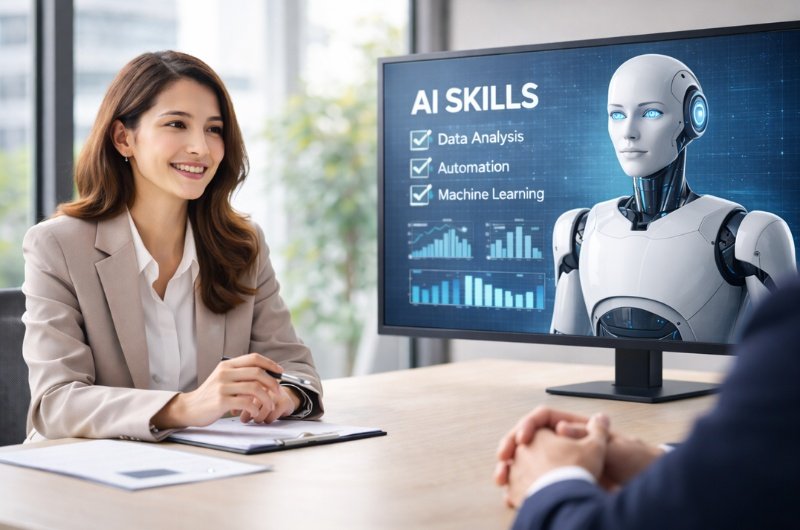
After years of experimentation, artificial intelligence is now reshaping how companies hire. In 2026, employers are increasingly seeking professionals who know how to work alongside AI effectively. Across industries, job postings are shifting to reflect this new reality. Roles in marketing, operations, finance, healthcare, and media now regularly list AI fluency as a core requirement. The emphasis is less on coding expertise and more on the ability to use AI tools strategically, improve workflows, and make informed decisions faster. For many workers, this shift is already being felt firsthand. Companies are quietly prioritizing candidates who can demonstrate real-world AI usage — from automating routine tasks to enhancing analysis, content creation, and customer engagement. In some cases, AI proficiency is becoming a deciding factor between equally qualified applicants. Executives say the change reflects a broader realization: AI delivers the most value when paired with human judgment, creativity, and context. Rather than replacing workers outright, organizations are redesigning roles so employees can focus on higher-level thinking while AI handles repetitive or time-consuming work. As hiring accelerates in this direction, the message is clear. In 2026, understanding how to collaborate with AI is quickly becoming a baseline expectation for staying competitive in the modern workforce.
AI Investment Landscape Shifts as Energy, Infrastructure, and Creative Tech Gain Ground

The artificial intelligence boom is entering a new phase, one marked by a notable shift in where money, influence, and innovation are flowing. While major technology companies remain central players, investors and institutions are increasingly looking beyond traditional tech firms to back the systems that power AI behind the scenes. Energy providers and infrastructure companies are emerging as critical beneficiaries of the AI expansion, as data centers and large-scale computing demand vast and reliable power. This shift reflects a growing recognition that the future of AI depends not only on software and models, but on the physical systems required to support them at scale. At the same time, AI development is branching into new creative and commercial territory. Advances in visual and spatial computing are enabling AI systems to work with more complex imagery and environments, opening doors for applications across media, design, retail, and entertainment. These developments signal a move toward AI that interacts more directly with the physical world. Education and workforce preparation are also evolving in response. Universities and training programs are expanding AI-focused initiatives to prepare students and professionals for a job market increasingly shaped by intelligent systems, signaling long-term institutional commitment rather than short-term experimentation. Together, these trends point to a maturing AI ecosystem—one that extends beyond Silicon Valley and software alone. As capital and innovation spread across energy, infrastructure, creativity, and education, AI’s next chapter is being built not just in code, but in the foundations that support modern society.