


The Next Big Upgrade Isn’t Your Phone—It’s Your Laptop

For years, smartphones have been the center of the technology world. New models arrived with better cameras, faster processors, and larger displays, encouraging consumers to upgrade every few years. Today, the spotlight is beginning to shift. A new generation of laptops is arriving with specialized hardware designed to support artificial intelligence features directly on the device. These systems, often referred to as AI PCs, are equipped with dedicated processors that can handle certain AI tasks without relying entirely on cloud-based services. For consumers, the change may not be as obvious as a larger screen or a redesigned keyboard. Instead, AI-enabled laptops are being built to improve everyday tasks such as searching files, organizing information, enhancing video calls, creating content, and managing workflows more efficiently. The trend comes as many smartphone owners are holding onto their devices longer than in previous years. While modern phones continue to improve, annual upgrades have become less dramatic for many users. At the same time, laptops remain central to how people work, learn, create, and communicate. Technology companies see AI as the next major evolution in personal computing. By processing some AI functions locally, laptops can offer faster responses, improved privacy, and new capabilities that do not depend entirely on an internet connection. The shift could also influence how consumers think about their next technology purchase. Rather than replacing a perfectly capable smartphone, some users may find greater value in upgrading the computer they use every day. As artificial intelligence becomes more deeply integrated into software and productivity tools, the next major leap in personal technology may be happening on desks and kitchen tables rather than in pockets.
Meta’s Threads Tops 500 Million Monthly Users as Platform Expands Features

Meta’s social media platform Threads has surpassed 500 million monthly active users, marking a significant milestone as the company rolls out new features designed to strengthen communities and give users more control over their experience. The growth reflects Threads’ continued evolution since its launch, positioning the platform as a major player in the competitive social media landscape. Alongside the user milestone, Meta announced a series of updates aimed at encouraging deeper engagement and making it easier for people to connect around shared interests. Among the most notable additions is the broader rollout of Communities, which allows users to participate in topic-focused groups centered on hobbies, professions, and other common interests. The feature is accompanied by a new Communities Hub, customizable community icons, and tools that highlight participation and recognize active contributors. Meta is also introducing Your Algo, a personalization feature that gives users more influence over the content recommended in their feeds. The update builds on the company’s efforts to make content discovery more transparent and customizable while helping users shape the conversations they see most often. The announcement underscores Meta’s strategy of pairing audience growth with product innovation. Rather than relying solely on increasing user numbers, the company is investing in features intended to foster longer-term engagement and create more meaningful interactions across the platform. Threads’ expansion comes as competition among social networks remains intense, with companies seeking new ways to attract users and keep them engaged through personalized experiences and interest-based communities. For Meta, reaching the 500 million monthly user mark signals that Threads has grown well beyond its early launch phase and is continuing to establish itself as a significant destination for online discussion. As the platform evolves, the latest updates suggest Meta is focused not only on growing its audience but also on giving users greater control over how they discover content and participate in digital communities.
AI Is Forcing a Shift in the Tech Job Market

Artificial intelligence is beginning to reshape hiring decisions across parts of the technology industry as companies increasingly use AI tools to automate tasks once handled by junior employees, support teams, and entry-level knowledge workers. While major tech firms continue investing billions into artificial intelligence infrastructure and software development, a growing number of executives are also acknowledging that AI is changing how companies think about staffing, productivity, and workforce expansion. In some cases, businesses are slowing hiring for certain positions as AI systems become more capable of handling coding assistance, research, customer support, scheduling, data analysis, and internal operations. The shift is creating growing uncertainty for younger workers entering the technology field, particularly those seeking entry-level jobs that traditionally served as stepping stones into larger careers. Some analysts believe the industry may be entering a transition period where routine digital tasks increasingly become shared between humans and AI systems rather than performed exclusively by employees. At the same time, many companies argue that artificial intelligence is not simply eliminating jobs, but transforming them. Demand for AI engineers, cybersecurity specialists, infrastructure experts, prompt designers, and data-center-related roles continues growing rapidly as businesses race to build and support next-generation AI systems. Still, the broader shift is becoming harder to ignore. Over the past year, several technology leaders have openly discussed how AI could reduce the need for certain categories of administrative and repetitive work while simultaneously increasing demand for more advanced technical and strategic roles. The result is a tech industry that appears to be entering a new phase — one where artificial intelligence is no longer viewed only as a product, but increasingly as part of the workforce itself. For many workers, the long-term impact remains uncertain. But across Silicon Valley and the broader technology sector, one thing is becoming increasingly clear: the AI era is beginning to reshape not just the products companies build, but the people they hire as well.
Why Your Devices Feel Smarter Than Ever—and What That Actually Means for You

Across the U.S., AI-powered devices are increasingly anticipating user behavior, reshaping everyday technology experiences in subtle but powerful ways. Apps appear before they’re searched. Maps suggest routes before departure. Inboxes draft replies that were never fully written. The shift is subtle, but constant—devices are beginning to think ahead. For those who haven’t noticed it yet, it’s likely just a matter of time. This shift isn’t coming from one breakthrough feature. It’s the result of layers of artificial intelligence working quietly in the background, learning your habits, predicting your next move, and removing steps you used to take manually. What once required a search, a click, or a decision is now often handled automatically. In many ways, it’s a clear upgrade. Tasks take less time. Friction disappears. The experience feels smoother, faster, and more intuitive. For busy users, that kind of efficiency is convenient and welcome. But there’s a quieter side to the shift. As devices take on more of the thinking, users are doing less of it. Recommendations replace exploration. Automation replaces small decisions. Over time, that can subtly change how people interact with technology—and how much control they feel they have over it. The bigger story is that devices are beginning to shape the flow of everyday life in ways most people don’t actively notice. The next phase of technology may not be defined by what we ask our devices to do—but by what they start doing on their own.
Apple Names John Ternus Next CEO as Tim Cook Prepares to Move to Executive Chairman

Apple has announced a historic leadership transition, with Tim Cook set to become executive chairman while longtime executive John Ternus takes over as chief executive officer on September 1. The move marks the start of a new chapter for one of the world’s most influential technology companies. Ternus has been with Apple for roughly 25 years and currently serves as senior vice president of hardware engineering. He has played a key role in the development of products including the iPad, AirPods, and recent iPhone and Mac devices, making him a deeply experienced internal successor. Cook became CEO in 2011 following Steve Jobs and led Apple through a period of extraordinary growth, major product expansion, and deeper global reach. During his tenure, Apple strengthened its services business, expanded its manufacturing network, and remained one of the most valuable companies in the world. As executive chairman, Cook is expected to remain active in strategic matters and global relationships, giving Apple a continuity bridge as Ternus steps into the top operating role. Investors and consumers will now be watching for clues about Apple’s next era, especially in hardware innovation and artificial intelligence. The Readovia Lens Leadership changes at Apple are never just corporate news. They can signal where technology, design, and consumer habits may be heading next.
Intel’s Quiet Comeback May Hinge on One Overlooked Piece of the AI Boom
While the AI race has largely been defined by chipmakers like Nvidia and manufacturing giants like Taiwan Semiconductor Manufacturing Company (TSMC), a quieter shift is beginning to take shape behind the scenes — and it could determine who controls the next phase of the industry. Intel, long seen as a company trying to reclaim its footing, is now positioning itself in a less obvious but increasingly critical part of the AI supply chain: advanced chip packaging. And according to multiple reports, that strategy may already be gaining traction with some of the biggest names in tech. The company is said to be in ongoing discussions with major players like Google and Amazon — both of which design their own custom AI chips but rely on external partners for key stages of production. If those conversations turn into formal agreements, it would mark a meaningful shift not just for Intel, but for how AI infrastructure is built moving forward. Unlike traditional chip manufacturing, advanced packaging focuses on how multiple chip components are combined into a single high-performance system. As AI workloads grow more complex, this layer has become increasingly important, enabling greater power and efficiency without relying solely on smaller, more expensive transistor designs. For Intel, this represents strategic pivot. After years of falling behind in mobile and high-performance chips, the company has been working to reestablish its position in the semiconductor space, backed in part by efforts to strengthen domestic chip production. Securing packaging deals with companies like Google and Amazon could accelerate that effort, creating new revenue streams while placing Intel at a critical junction in the AI ecosystem. But the real story is about where the AI battle is moving next. As more companies design their own silicon, control is shifting away from who manufactures the chips to who can integrate them into powerful, scalable systems. That’s where packaging — once considered a backend step — is emerging as a front-line differentiator. The Readovia Lens The next phase of the AI race may not be decided by who builds the fastest chip — but by who can assemble the smartest system. If Intel can position itself as the bridge between custom chip design and real-world deployment, its comeback will take on real strategic weight. And in an era where AI infrastructure is becoming the backbone of everything from search to cloud computing, the companies that control the “in-between” layers may end up controlling far more than expected.
Instagram Locks Teen Accounts by Default — Parents Now Play a Bigger Role

Instagram is rolling out stricter protections for teens — and this time, they’re built in by default. The platform’s new “Teen Account” system automatically applies privacy and safety settings to users under 18, marking a shift away from optional safeguards. Younger teens must get parental approval before loosening these protections, while older teens can adjust certain settings on their own unless supervision is enabled. Under the new system, teen accounts are set to private by default, giving users control over who can follow them. Messaging is also limited, allowing contact only from people they follow or are already connected to. Sensitive content is filtered automatically, and built-in tools encourage healthier usage habits, including reminders to take breaks and optional nighttime restrictions. Parents now have the option to supervise their teen’s account through a linked dashboard. From there, they can view activity insights, set screen time limits, and approve changes that would reduce built-in protections. Rather than requiring constant monitoring, the system is designed to act as a guardrail — allowing teens to use the platform while limiting exposure to potential risks. The update reflects a broader shift in how social media platforms approach younger users. Instead of relying on families to discover and activate safety tools, Instagram is making those protections the default experience — adding friction only when users attempt to remove them. The Readovia Lens This teen account system is a strategic shift. Social media companies are facing increasing pressure from lawmakers, parents, and regulators to better protect younger audiences. By embedding restrictions directly into the platform and requiring parental involvement to override them, Instagram is reducing both user risk and corporate exposure. More importantly, this Instagram move signals a new era of platform design — one where behavior is guided by default settings, not just user choice. And for advertisers, it opens the door to something the industry has been chasing for years: a digital environment that feels stable, predictable, and brand-safe — the kind of environment emerging across a new generation of premium publishers…such as Readovia.
Foldable Phones Are Back — Signaling the Next Shift in Mobile Design
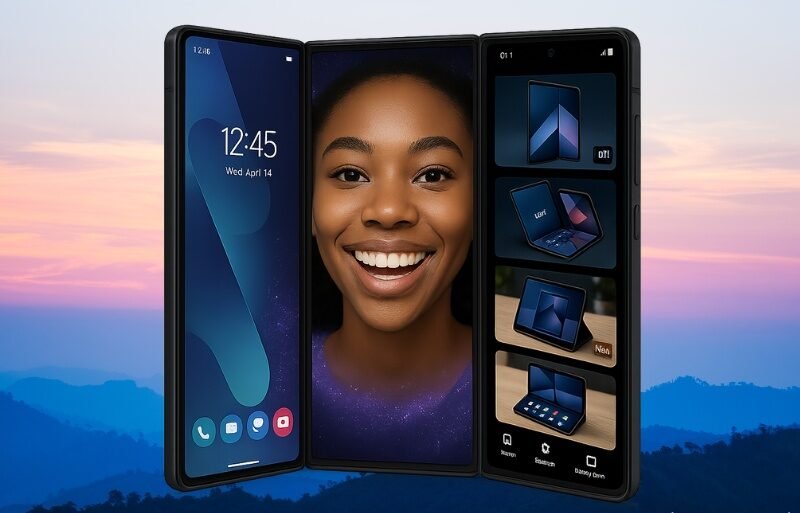
Foldable smartphones are making a return, and this time, the technology appears far more practical. After years of durability concerns and high price tags, manufacturers are delivering devices that are thinner, stronger, and better suited for everyday use. Recent models feature improved hinge designs, reduced screen creasing, and longer battery life. These upgrades address many of the early issues that made foldable phones feel more experimental than essential. The appeal is simple: one device that functions as both a compact phone and a larger, tablet-like screen. For users who multitask, stream content, or work on the go, that added flexibility is becoming increasingly attractive. Prices remain on the higher end, but competition is beginning to push the category forward. As more brands enter the space, innovation is accelerating and costs are slowly becoming more approachable. Foldable phones are evolving into a serious category — and could represent the next shift in how we think about and use mobile devices. Expect major brands to roll out new foldable models later this year as the category gains momentum.
Samsung Galaxy S26 Debuts With AI at the Core of the Smartphone Experience
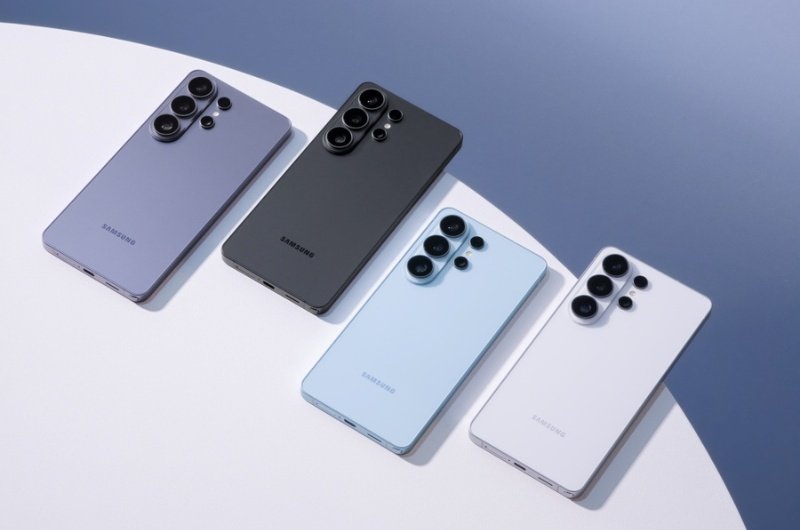
Samsung has officially unveiled the Samsung Galaxy S26 series, positioning artificial intelligence at the center of its 2026 flagship strategy. Announced at its latest Unpacked event, the new lineup signals a clear shift: smartphones are no longer just faster and brighter — they are becoming more predictive, contextual, and autonomous. The S26 series includes three models: the standard S26, S26+, and S26 Ultra. Across the lineup, Samsung is expanding its “Galaxy AI” capabilities, integrating deeper on-device intelligence for everyday tasks such as smart scheduling, real-time language tools, contextual search, and advanced photo editing. Rather than operating as a separate feature layer, AI is embedded directly into the system experience, surfacing suggestions and automations based on user behavior. Under the hood, the devices are powered by next-generation processors optimized for neural performance, enabling faster AI processing without relying solely on cloud connectivity. Samsung says this allows for improved privacy protections, as more data processing occurs directly on the device. The Ultra model also introduces a new privacy-focused display technology designed to reduce side-angle screen visibility in public spaces. Design refinements remain evolutionary rather than dramatic, with high-refresh AMOLED displays, upgraded durability, and enhanced battery efficiency. The Ultra continues to lead in camera performance and storage capacity, offering configurations that push into professional-grade territory. Pricing reflects premium positioning, with the base model entering the high-end smartphone tier and the Ultra anchoring the lineup at flagship levels. The bigger story, however, is strategic. The Galaxy S26 series underscores a broader industry shift toward AI-first mobile ecosystems. As smartphones mature in hardware innovation, the competitive edge is increasingly defined by intelligence — how seamlessly devices anticipate needs, automate tasks, and integrate across digital life. With the S26 launch, Samsung is making clear that the future of the smartphone is not just faster — it is smarter.
Tech Layoffs Continue Into 2026 as Companies Restructure for Efficiency
The wave of tech layoffs that defined much of the past two years is showing no signs of slowing in 2026. In just the first several weeks of the year, tens of thousands of jobs have already been cut across the global technology sector, putting this year on pace to rival — or potentially exceed — the workforce reductions seen in 2025. Major players are once again leading the trend. Amazon has confirmed additional corporate job cuts as part of an ongoing restructuring effort, while Meta has trimmed roles within its Reality Labs division. Salesforce and Workday have also reduced headcount, describing the moves as strategic adjustments rather than emergency measures. Across companies, executives are citing efficiency, streamlined operations, and sharper focus on core priorities. The language surrounding these layoffs has shifted. Instead of recession-driven urgency, companies are framing the cuts as deliberate recalibration. Leadership teams are flattening management layers, consolidating overlapping roles, and reallocating resources toward high-growth initiatives — particularly artificial intelligence, automation, and enterprise services. Smaller startups and fintech firms are facing similar pressure. Some are pivoting business models entirely, moving away from consumer-heavy strategies toward business-to-business offerings in search of steadier revenue streams. The result is a broader reshaping of the tech workforce, not just a trimming of excess. While hiring has not disappeared altogether, the industry’s rapid expansion phase appears firmly behind it. For employees and investors alike, 2026 is shaping up to be a year of discipline — one defined less by explosive growth and more by structural reset.