

USDA Puts Brakes on SNAP Data Grab After Lawsuit Hits Hard

A sweeping request by the USDA to gather years’ worth of personal data from millions of SNAP recipients is now on hold — after a federal lawsuit raised the alarm over privacy violations and government overreach. The U.S. Department of Agriculture (USDA) has paused its directive requiring states to submit sensitive personal data of Supplemental Nutrition Assistance Program (SNAP) recipients. The move comes after a federal lawsuit challenged the legality of the agency’s sweeping request. In May, the USDA instructed states and their electronic benefit transfer (EBT) processors to provide five years’ worth of detailed information on SNAP applicants and recipients — including names, birthdates, Social Security numbers, and addresses. The agency cited a recent executive order mandating “unfettered access” to data from federally funded state programs. Privacy advocates and hunger relief organizations pushed back immediately, filing a lawsuit that claimed the USDA’s demand bypassed long-standing privacy protections and failed to follow proper legal procedures. In a recent court filing, a USDA official confirmed that the agency has not yet begun collecting the data and has issued instructions to all involved parties to hold off until legal questions are resolved. The pause offers temporary relief to more than 40 million Americans who rely on SNAP benefits. Still, questions linger about the future of the data collection effort as the lawsuit moves forward — and as federal agencies navigate the fine line between oversight and overreach.
Brace Yourself: Extreme Heatwave Forecasted to Grip U.S. Cities This Summer

As the summer of 2025 unfolds, the United States is facing an unprecedented heatwave, with forecasts predicting soaring temperatures across the nation. This season could become one of the hottest on record, with widespread heat alerts and scorching conditions expected from coast to coast. Cities in the Crosshairs Several major cities are expected to bear the brunt of this extreme heat: Phoenix, AZ: Temperatures are projected to exceed 110°F, with some days climbing even higher. Las Vegas, NV: Forecasts indicate triple-digit highs day after day, putting stress on both residents and infrastructure. Houston, TX: After experiencing its hottest spring on record, the city is bracing for heat indices near or above 100°F. New York City, NY: The Big Apple is expected to experience more 90°F+ days than usual, amplifying discomfort in a densely populated environment. The Urban Heat Island Effect Urban areas are particularly vulnerable due to the “urban heat island effect,” where concrete and asphalt trap and radiate heat long after sunset. Cities with limited green space can see temperatures several degrees higher than nearby rural areas, compounding the risks for residents. Health and Safety Concerns Extreme heat isn’t just uncomfortable — it can be deadly. Health officials are urging precautions as the risk of heat exhaustion, dehydration, and heatstroke rises. Vulnerable populations such as seniors, children, outdoor workers, and people with chronic conditions are especially at risk. Staying hydrated, avoiding peak sun hours, and checking on neighbors are all key safety measures. Climate Change: A Driving Force Scientists say this isn’t just a freak season — it’s a glimpse of what the future may hold. As global temperatures continue to rise, the intensity and frequency of heatwaves are expected to grow. The urgency for climate resilience and adaptation strategies has never been more pressing.
Ukraine and Russia Exchange Peace Proposals Amid Escalating Conflict

In a pivotal yet tense meeting in Istanbul on June 2, 2025, Ukrainian and Russian delegations convened for a second round of peace talks aimed at ending the ongoing war. Despite the exchange of peace memorandums, the discussions concluded after just over an hour, highlighting the deep divisions that persist between the two nations. Starkly Contrasting Proposals Ukraine’s delegation, led by Defense Minister Rustem Umerov, presented a comprehensive plan advocating for: A full and unconditional 30-day ceasefire The release of all prisoners of war The return of Ukrainian children taken to Russia A high-level summit involving Presidents Zelenskyy, Putin, and potentially U.S. President Donald Trump Russia, represented by former culture minister Vladimir Medinsky, withheld its memorandum until the talks began and maintained demands including: Ukraine’s withdrawal from four contested regions A pledge to abstain from joining NATO Recognition of Russia’s annexation of Crimea These conditions were deemed unacceptable by Ukraine, which views them as undermining its sovereignty and territorial integrity. Escalation on the Battlefield The talks were overshadowed by recent military escalations. On the eve of the meeting, Ukraine launched a significant drone operation targeting Russian airbases, reportedly damaging over 40 aircraft. In response, Russia conducted its largest drone assault since 2022, deploying hundreds of drones across Ukrainian cities including Kyiv and Kharkiv. Limited Progress and Continued Tensions While the talks did result in an agreement on a new prisoner exchange, substantial progress toward a broader peace deal remains elusive. Ukrainian officials expressed frustration over Russia’s firm demands, and the U.S., which has been supporting the discussions, signaled potential disengagement due to the lack of movement. As both sides prepare for what may be another round of negotiations, the world watches closely — hopeful for a breakthrough, but wary of another stalemate. The Author
FDA Goes All In on AI: A Government Tech Upgrade That Might Actually Work

In a move that’s turning heads across both healthcare and government sectors, the U.S. Food and Drug Administration (FDA) is going full throttle on artificial intelligence — and for once, the buzz may be justified. By June 2025, every FDA center and office will be plugged into AI-powered tools designed to streamline operations, speed up reviews, and bring the agency into the modern era. This isn’t a speculative pilot or a long-term roadmap. It’s a sweeping rollout, fueled by the surprising success of a small-scale test earlier this year. That test introduced generative AI into key workflows and yielded results too efficient to ignore — namely, a sharp reduction in time spent on repetitive administrative tasks like document summarization, meeting prep, and email drafting. The FDA’s Chief AI Officer (yes, we said “Chief AI Officer”), Vid Desai, said the agency will prioritize safety and transparency while expanding the program. The generative AI tools won’t be used to evaluate scientific evidence or issue product approvals. Instead, they’ll function as behind-the-scenes assistants — think AI that reads hundreds of pages in seconds so analysts don’t have to. Healthcare and tech experts are watching closely. This move could mark a meaningful shift in how federal agencies use emerging tech to serve the public, without the usual red tape. If the initiative succeeds, the FDA won’t just be catching up with the digital age — it’ll be proving that federal agencies can harness cutting-edge technology to streamline operations, improve oversight, and move faster without compromising standards. The Author
Philadelphia Mass Shooting on Memorial Day Leaves 2 Dead, 9 Injured

What was meant to be a day of remembrance ended in tragedy. A Memorial Day gathering in Philadelphia turned deadly when gunfire erupted in Fairmount Park, leaving two people dead and at least nine others injured — including three teenagers. Authorities say the attack happened just after 11 p.m., shaking a peaceful community event and reigniting national conversations around gun violence in America. No arrests have been made as of Tuesday morning. Police are still searching for the suspect and reviewing surveillance footage. The motive remains unclear. Among the victims were a 14-year-old and two 16-year-olds, according to local officials. One man died at the scene, while another succumbed to injuries at a nearby hospital. “This was supposed to be a family-friendly holiday,” said one witness, “and now it’s a crime scene.” City leaders and advocacy groups have already begun calling for stricter firearm regulations and more visible public safety measures at large events. The shooting marks one of several mass shootings over the Memorial Day weekend nationwide — a trend that continues to draw national concern. From the Web: Philadelphia District Attorney’s Office Statement on Mass Shooting at Lemon Hill in Fairmount Park
Harvard Wins Round One: Judge Blocks Trump Crackdown on International Student Enrollment

Federal Court Sides with Harvard in Showdown Over Student Visas In a second major legal defeat for the Trump administration this week, a federal judge on Friday issued a ruling that temporarily blocks the government from cutting off Harvard University’s ability to enroll international students — a move the school called “unconstitutional retaliation.” The decision by U.S. District Judge Allison Burroughs halts the Department of Homeland Security’s surprise effort to strip Harvard’s federal certification to host foreign students, pending the outcome of a newly filed lawsuit. The court’s response comes just days before graduation, as campus officials warned of mass legal and academic fallout. “Without International Students, Harvard Is Not Harvard” The university’s legal filing, submitted Friday morning, argues that the government’s actions violate the First Amendment and threaten the status of more than 7,000 foreign nationals currently enrolled at Harvard. Most are graduate students, many serving as lab assistants, researchers, teaching fellows, and even athletes — roles that anchor the university’s daily operations. “With the stroke of a pen, the government has sought to erase a quarter of Harvard’s student body,” the lawsuit reads. Officials said the decision would have an “immediate and devastating effect,” leaving international students in legal limbo — unable to transfer, unsure of their visa status, and uncertain whether they can stay in the country at all. The Accusations — and the Pushback The Department of Homeland Security, led by Secretary Kristi Noem, accused Harvard of fostering an “unsafe campus environment,” citing alleged violence toward Jewish students and ties to “anti-American, pro-terrorist agitators.” The agency also referenced claims of past coordination with the Chinese Communist Party, saying Harvard had trained members of a Chinese paramilitary group as recently as 2024. Harvard has denied the allegations and says it has already submitted thousands of data points in response to the government’s April request. The university called Noem’s latest demands “vague, retaliatory, and lacking legal basis.” What’s at Stake: Graduate Schools, Global Talent, and Harvard’s Future The impact of a full ban would be most severe at graduate-level programs, such as the Harvard Kennedy School (where nearly half of students are international) and the Harvard Business School (where roughly a third come from outside the U.S.). If the government’s move stands, Harvard warned it would be barred from admitting any new international students for at least the next two academic years — and unable to reapply for federal certification for at least 12 months after that. The ripple effects would be long-term. Harvard argued that even the threat of losing international student access could chill global applications: “Future applicants may shy away from applying out of fear of further reprisals,” the filing stated. “This Is Madness,” Says Former Harvard President The decision has already sparked outrage from academic and diplomatic circles. Lawrence Summers, former Harvard president and U.S. Treasury Secretary, said the policy would alienate rising global leaders and damage long-term U.S. interests. “Some small fraction of these students are going to go on to be prime ministers,” Summers wrote. “They’ve now been turned into enemies of the United States. This is madness.” Legal Questions and Political Backdrop Harvard’s lawsuit notes that the Department of Homeland Security failed to follow its own procedures for revoking a school’s visa eligibility, which are typically based on administrative failures — not politics. Historically, schools have lost certification for reasons like losing accreditation, failing to maintain basic facilities, or hiring unqualified instructors. Harvard’s case is different — and, the university argues, deeply political. In a separate but related legal battle, Harvard is also suing the federal government over $2 billion in funding cuts that it claims were politically motivated. The Battle is Not Over The court’s decision to block the administration’s crackdown is temporary, but the implications are massive: This isn’t just about visas — it’s about academic freedom, immigration policy, and the power of the executive branch to punish dissenting institutions. As of now, Harvard’s doors remain open to its international students. But the legal and political battle over who gets to walk through them is far from over.
Back to Class: Federal Judge Blocks Trump’s Attempt to Dismantle Department of Education, Orders Reinstatement of Fired Employees
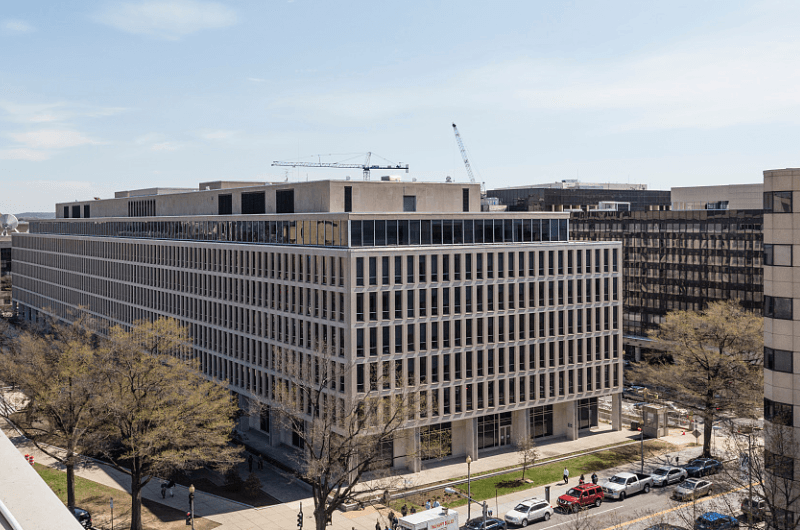
In a significant legal setback for the Trump administration, U.S. District Judge Myong Joun has issued a preliminary injunction halting President Donald Trump’s executive order aimed at dismantling the Department of Education. The ruling mandates the immediate reinstatement of approximately 1,300 employees who were laid off as part of the administration’s reduction-in-force announced in March . Judge Joun’s decision emphasizes that such a substantial reorganization of a federal agency requires congressional approval. He criticized the administration’s portrayal of the layoffs as a mere efficiency measure, stating that the actions effectively amount to dismantling the department without legislative authorization. The judge also blocked the administration’s plan to transfer key functions, including federal student loan management and special education programs, to other agencies. He highlighted concerns about the potential harm to students and educators, particularly those relying on federal aid and services . In response, the Trump administration has appealed the ruling, arguing that the executive branch has the authority to reorganize federal agencies to improve efficiency. However, critics contend that the administration’s actions overstep executive powers and undermine essential educational services. This ruling marks a pivotal moment in the ongoing debate over the scope of executive authority and the future of federal involvement in education. As legal proceedings continue, the Department of Education is required to restore its workforce and halt any further steps toward its dissolution.
San Diego Jet Crash Kills Two Prominent Music Industry Figures, Destroys Neighborhood

In the early hours of May 22, a private jet crashed into the Murphy Canyon neighborhood of San Diego, killing several people — including two high-profile figures in the music world — and destroying homes and vehicles on the ground. The Cessna 550 Citation II had been approaching Montgomery-Gibbs Executive Airport around 3:45 a.m. when it struck power lines and plunged into a residential block. The impact sparked fires that engulfed multiple homes, sent eight people to the hospital, and forced the evacuation of nearly 100 residents. Authorities have confirmed six fatalities on board with no survivors, and at least two victims now publicly identified. The cause of the crash remains under investigation by the Federal Aviation Administration (FAA) and the National Transportation Safety Board (NTSB). Early reports suggest dense fog and limited visibility may have played a role during final approach. Music Industry Mourns Loss of Daniel Williams and Dave Shapiro Among those killed in the crash were: Daniel Williams, 39 Best known as the former drummer for the Christian metalcore band The Devil Wears Prada, Williams was a key force behind the band’s rise in the early 2000s. After parting ways with the group in 2016, he pursued a second act in tech and design, recently announcing a new role at Apple. Hours before the crash, Williams had posted photos from inside the cockpit — a moment now frozen in time. Fans and friends have described him as “passionate, creative, and fiercely loved by the underground music scene.” Dave Shapiro, 42 Shapiro co-founded Sound Talent Group, an agency that represented major acts including Sum 41, Underoath, and Vanessa Carlton. He was a behind-the-scenes powerhouse — shaping tours, championing emerging artists, and working to redefine the role of agents in a post-pandemic music landscape. He also owned the aircraft that crashed and was known to pilot privately. Shapiro’s unexpected death sent shockwaves through the industry. Tributes Pour In: ‘The Kind of People Who Make Music Happen’ Since the crash, artists and colleagues have shared messages of grief, admiration, and respect for the two men’s contributions. “Daniel made you feel the music in your chest — not just from his drums, but from how much he cared about the scene,” said one former bandmate. “Dave never wanted the spotlight. He wanted to build the spotlight and put artists in it,” a former client shared. “He changed careers for a lot of people.” On social media, hashtags like #RIPDanielWilliams and #ThankYouDave have emerged as fans post clips, memories, and concert photos. A Neighborhood Left Reeling Local residents described the crash as “a fireball out of nowhere.” First responders spent hours battling the blaze and clearing the wreckage. Officials say the jet fuel spill will require ongoing environmental cleanup, and displaced families are being assisted with temporary housing. The FAA and NTSB continue to examine flight data and weather conditions at the time of impact. Final Thoughts The loss of Daniel Williams and Dave Shapiro is not just a blow to their families, but to a music industry that thrives on creativity, resilience, and connection. Their work lives on in songs, stories, and the careers they shaped — and their legacy now joins the long, aching chord of lives gone too soon.
Factories, Funding, and the Future: Major Companies Pour Billions into American Industry

Investments Surge as U.S. Manufacturing Reawakens Big companies are pouring money into U.S. factories and research labs — a sign that American industry might be heading for a major comeback. These investments are expected to bring more jobs and new energy to the economy. Notable announcements in included: Sanofi committed $20 billion over five years to strengthen domestic manufacturing and research. Kraft Heinz unveiled a $3 billion plan to modernize U.S. factories — the company’s largest investment in decades. Carrier pledged $1 billion toward innovation and workforce expansion, with an estimated 4,000 new jobs on the way. Anheuser-Busch announced a $300 million upgrade to its nationwide production facilities. Siemens Healthineers invested $150 million to expand U.S. operations, including relocating manufacturing from Mexico to California. These moves reflect a larger trend: companies are responding to policy shifts, incentives, and a growing push to bring industrial capability back to American soil. Job Market Shows Resilience The labor market has stayed strong, defying some economic forecasts. In April, the U.S. added 177,000 jobs, outpacing expectations. Unemployment remained low at 4.2%, with notable gains in healthcare, transportation, warehousing, and hospitality. While inflation and interest rates continue to dominate headlines, job growth remains a bright spot — a signal that underlying momentum still exists in the broader economy. Looking Ahead This season’s wave of investment announcements suggests more than just optimism — it points to a strategic pivot back to domestic strength. The White House has emphasized these developments as evidence that its economic strategy is working. Skeptics warn that tariff tensions and regulatory uncertainty could complicate the outlook. Still, for workers and communities across the country, the signs of industrial revival offer something increasingly rare in today’s economy: hope for the future.
Pentagon Begins Removing Transgender Troops as Trump Directive Takes Effect

The U.S. military has begun enforcing a controversial policy that will remove up to 1,000 transgender troops from active service. The directive follows a recent Supreme Court ruling and an executive order signed by President Donald Trump in January, which bans individuals from serving in the military if their gender identity differs from their biological sex at birth. According to an internal Pentagon memo, active-duty personnel have until June 6 to voluntarily identify for discharge, while reserve members face a deadline of July 7. After that, involuntary separations will begin. Critics say the move undermines the service of qualified individuals who have risked their lives for the country. LGBTQ+ advocacy groups have condemned the policy as discriminatory and dangerous, calling it a rollback of hard-won rights under prior administrations. Supporters of the policy argue that it is necessary to maintain unit cohesion and reduce medical costs. The new directive stems from Executive Order 14183, which Trump signed shortly after taking office in his second term. It revives and expands a similar ban issued during his first presidency — one that was later reversed under President Biden. Public opinion on the issue has shifted. A recent Gallup poll shows support for transgender military service has dropped from 71% in 2019 to 58% in 2025, highlighting growing polarization on social policy under the current administration. For the affected troops, however, the decision is more than political — it’s personal. Many now face abrupt career changes, loss of benefits, and the emotional toll of being pushed out of service simply for who they are. The Department of Defense has not indicated whether it will provide transition support or legal resources for those impacted. The Author