

Why Some Professionals Are Taking ‘Micro-Retirements’ Instead of Waiting Until 65

For generations, retirement has been viewed as something that happens at the end of a long career. A growing number of professionals are taking a different approach by stepping away from work for shorter, planned breaks throughout their lives. Often called “micro-retirements,” these intentional pauses can last anywhere from a few weeks to several months. During that time, people may travel, volunteer, learn new skills, pursue creative projects, or simply recharge before returning to their careers. Rather than postponing personal ambitions until the end of a career, some professionals are choosing to weave those experiences into their working lives. The goal is to create opportunities to enjoy meaningful life experiences while health, energy, and personal circumstances make them possible. Remote work and flexible employment arrangements have made the concept more realistic for some professionals. Others carefully save in advance, negotiate extended leave, or plan career transitions that allow time away without sacrificing long-term goals. Supporters say these planned breaks can reduce burnout, improve mental well-being, and provide valuable perspective. Time away from daily routines may also encourage personal growth, strengthen relationships, and inspire new ideas that carry over into future work. Of course, micro-retirements are not practical for everyone. Financial responsibilities, family obligations, and workplace policies can make extended breaks difficult or impossible. Careful planning and realistic expectations are essential for anyone considering the approach.
Why Some Experts Say Wellness Has Become Too Complicated

For years, the wellness industry has encouraged people to optimize nearly every aspect of their lives. Sleep scores, fitness trackers, recovery metrics, supplements, mindfulness apps, hydration goals, and productivity systems have become part of a growing culture focused on self-improvement. While many of these tools can provide valuable insights, some wellness experts say the pursuit of optimization may be becoming counterproductive. As people juggle increasing amounts of health data and wellness advice, a growing number are beginning to ask a simple question: when did healthy living become so complicated? The trend comes at a time when many Americans report feeling overwhelmed by the demands of modern life. Between work responsibilities, family obligations, financial pressures, and constant digital connectivity, adding an extensive wellness checklist can sometimes create additional stress rather than reduce it. In response, some experts are encouraging a return to simpler habits. Regular walks, home-cooked meals, adequate sleep, time outdoors, meaningful social connections, and enjoyable physical activity continue to rank among the most effective ways to support overall well-being. Rather than striving for perfection, the emerging philosophy focuses on consistency. Supporters of the approach argue that sustainable habits practiced over months and years may provide greater benefits than complex routines that are difficult to maintain. For many people, the appeal is obvious. Wellness does not necessarily require expensive devices, elaborate routines, or constant monitoring. Sometimes the most effective habits are also the simplest. As the wellness industry continues to evolve, one idea appears to be gaining traction: better health may not always require doing more. In some cases, it may begin with doing less—and doing it consistently.
Why the NBA’s 2026 Playoffs Became Must-Watch Television
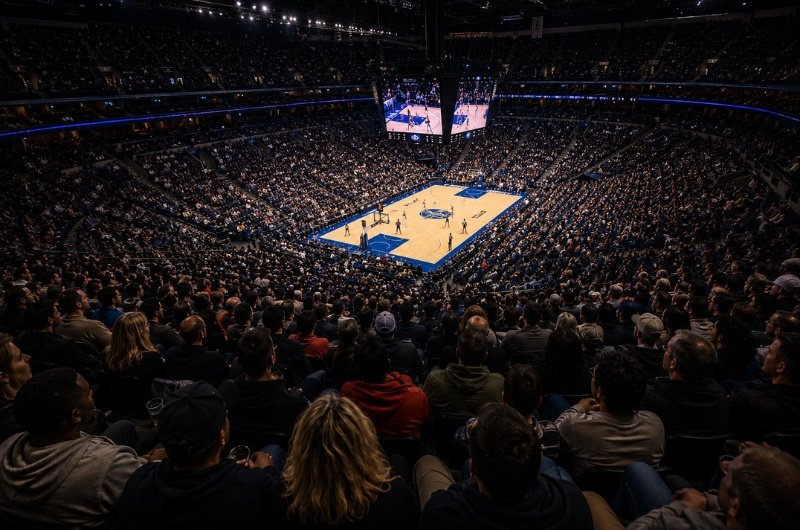
For years, conventional wisdom suggested that younger audiences no longer watch live television the way previous generations once did. Streaming, social media, podcasts, gaming, and endless digital distractions have transformed how people consume entertainment. Then the NBA Western Conference Finals happened. The seven-game series between the San Antonio Spurs and the Oklahoma City Thunder averaged 10.8 million viewers per game, making it the most-watched conference finals in 24 years. The decisive Game 7, which saw the Spurs eliminate the defending champion Thunder, averaged 15.9 million viewers and peaked at 17.7 million viewers. Those numbers are remarkable in any era. They are even more remarkable in 2026. Because when nearly 16 million people tune into a single game in an era of TikTok, Netflix, YouTube, podcasts, and infinite entertainment choices, that’s saying something. The ratings did not happen by accident. The 2026 NBA Playoffs have delivered a steady stream of memorable moments, breakout performances, dramatic finishes, and compelling storylines that have transformed this postseason into one of the league’s most captivating in years. Much of the attention has centered on Victor Wembanyama and the San Antonio Spurs. Widely viewed as one of basketball’s brightest young stars, Wembanyama has continued his rapid rise while helping guide the Spurs through a grueling playoff run that culminated in a Game 7 victory over the defending champion Thunder. But the Spurs are only part of the story. The playoffs have also produced a series of unforgettable moments across both conferences. Fans have witnessed dramatic comebacks, clutch performances, rising stars, and the kind of unpredictability that often defines the most memorable championship runs. Every round seemed to produce another must-see moment, giving fans a reason to keep coming back. The New York Knicks added another chapter of their own. After decades of frustration, the franchise reached the NBA Finals for the first time since 1999, reigniting one of basketball’s most passionate fan bases and giving the league one of its most recognizable brands a long-awaited return to the spotlight. The Knicks advanced to the NBA Finals after sweeping the Philadelphia 76ers in the second round and defeating the Cleveland Cavaliers in the Eastern Conference Finals, completing one of the franchise’s most memorable postseason runs in decades. Perhaps most importantly, the playoffs have felt meaningful. Every series has carried genuine stakes. Every elimination game has mattered. And every round has offered the possibility that something unforgettable might happen. In the Age of Endless Content, the NBA Found a Way to Break Through The success of the 2026 playoffs may signal something larger than basketball. Audiences today have more entertainment choices than any generation in history. Streaming services, social media feeds, podcasts, gaming platforms, and countless digital distractions compete for attention every hour of every day. Yet the NBA managed to cut through the noise. Why? Because people still respond to stories that feel authentic, unscripted, and consequential. The Spurs-Thunder series had all the ingredients. A young superstar. A defending champion. A winner-take-all Game 7. The outcome was uncertain until the very end. The Knicks’ playoff run offered something equally powerful: hope, history, and the possibility of ending a championship drought that has lasted more than a quarter-century. In an era where nearly everything can be watched later, skipped, replayed, or summarized, live sports remain one of the few forms of entertainment that demand attention in the moment. The Finals Have Arrived The timing could not be better for the NBA. Tonight’s Finals opener features the New York Knicks making their first Finals appearance since 1999 against a young Spurs team led by Wembanyama. It is a matchup that blends history and future, tradition and transformation, offering the league a showcase of both an iconic franchise seeking its first championship in decades and a rising superstar who may define the next era of professional basketball. Whether the Finals ultimately match the excitement of the earlier rounds remains to be seen. But one thing is already clear. The NBA has reminded the sports world that when the stakes are real and the story is compelling, millions of people are still willing to stop what they’re doing and watch. The Readovia Lens Technology has changed how we consume content. It has not changed our desire to witness something meaningful unfold in real time. The lesson from the NBA’s remarkable postseason run extends far beyond basketball. In a fragmented media landscape where attention is constantly pulled in a hundred directions, people still gather around moments that matter. The platforms may change. The devices may change. The habits may change. But the human desire to share a story, celebrate a victory, and experience a moment together remains remarkably powerful. The 2026 NBA Playoffs may be remembered not only for who won, but for proving that some experiences are still best enjoyed live.
The Growing Importance of “Third Places” in Modern Life

You may not know the term “third place,” but chances are you’ve been looking for one. In sociology, a “third place” refers to spaces outside of home and work where people gather, relax, socialize, or simply exist around other people. Coffee shops, bookstores, parks, walking trails, gyms, libraries, neighborhood restaurants, and even hotel lounges can all serve as third places — environments that offer connection without the pressure of formal social plans. As remote work, digital communication, and social media continue reshaping modern routines, many people are beginning to realize how much everyday life has changed. For millions of adults, the daily rhythm now revolves almost entirely around home and work, with fewer casual interactions in between. The result can feel surprisingly isolating, even in a hyper-connected world. That shift may help explain why spaces designed for comfort, conversation, and quiet presence are gaining renewed attention. Across the country, people are increasingly gravitating toward cozy coffee shops, walking clubs, boutique gyms, public markets, and community-driven spaces that offer a sense of atmosphere and belonging without requiring constant engagement. In many ways, third places are becoming less about productivity and more about emotional balance. Some people go to a café not because they need coffee, but because they want to be around life. Others seek out bookstores, parks, or neighborhood gathering spots simply to step away from screens and routines that can feel repetitive or mentally exhausting. The concept is also emerging at a time when loneliness and digital fatigue remain major cultural conversations. While technology has made communication easier than ever, it has not necessarily replaced the value of physical spaces where people can casually interact, observe, recharge, or feel part of a community. Modern life may be faster and more connected than ever before — but for many people, the simple act of finding a comfortable place outside of work and home is quietly becoming one of the most valuable parts of the day.
A New Daily Habit Is Emerging: Talking to AI Like a Real Assistant
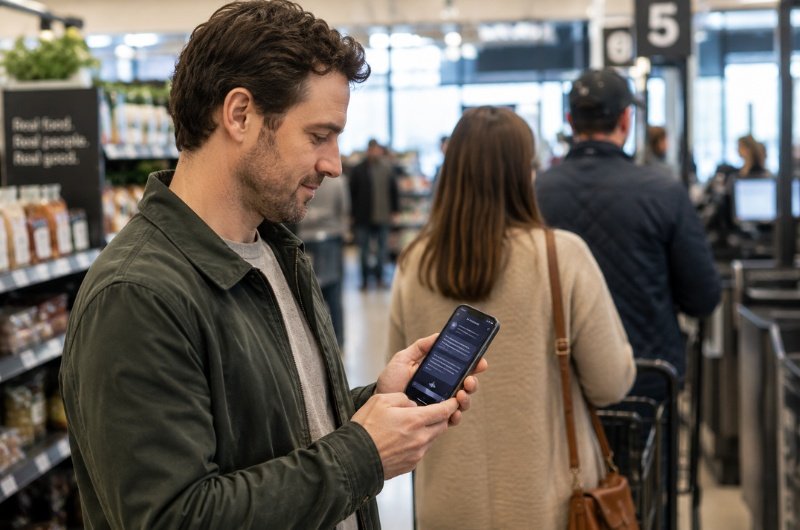
For a growing number of people, talking to artificial intelligence is becoming part of everyday life — not in a futuristic way, but in the quiet routines of work, planning, problem-solving, and daily conversation. People are increasingly using conversational AI to organize schedules, brainstorm ideas, refine messages, prepare for meetings, and even rehearse difficult conversations. What once felt experimental is starting to feel ordinary, especially as digital tools become more conversational, responsive, and integrated into daily routines. Part of the shift may be tied to convenience. Unlike traditional search engines or apps, conversational platforms allow people to interact naturally, asking follow-up questions and receiving responses in real time. That ease of interaction is subtly changing how many people approach productivity, communication, and decision-making throughout the day. The trend also reflects a broader shift in how modern life is being shaped by technology that feels less mechanical and more interactive. For some users, conversational AI functions almost like a digital sounding board — available instantly for brainstorming, organization, recommendations, or guidance without the friction of navigating multiple tools or platforms. Researchers continue studying how increased interaction with conversational technology could affect communication habits over time. But one thing is already becoming clear: as these tools become more embedded in everyday routines, the relationship between people and technology is evolving into something more continuous, conversational, and deeply woven into modern life.
The Atmosphere Is Changing—and Tornado Season Is Showing It

Across the Midwest and Great Plains, the past several days have unfolded in a grim, repeating pattern: sirens and communities bracing for impact—again and again. The late-April severe weather outbreak has produced dozens of tornadoes, including multiple high-intensity systems powerful enough to flatten homes, uproot infrastructure, and leave entire neighborhoods unrecognizable. This wasn’t a single catastrophic strike. It was a sequence—wave after wave of storms tracking across state lines, giving emergency crews little time to recover before the next rotation touched down. In some areas, residents sought shelter multiple times in the span of 48 hours. The scale and persistence have made this one of the most taxing severe weather stretches in recent memory. Meteorologists classify the strongest of these storms as EF4 tornadoes—violent systems with winds exceeding 160 miles per hour. At that intensity, the distinction between “damage” and “erasure” becomes thin. Buildings don’t just lose roofs; they lose structure. Streets don’t just flood; they disappear under debris fields stretching for miles. But the deeper story is about frequency—and the growing sense that these events are no longer rare. Scientists continue to study how shifting atmospheric conditions, influenced in part by climate change, are contributing to more volatile storm environments: warmer air holding more moisture, clashing with unstable systems to produce longer and more intense outbreaks. For the communities in the storm paths, the consequences are immediate and tangible. Power grids fail. Hospitals switch to emergency protocols. Insurance claims pile up even as some insurers quietly scale back exposure in high-risk regions. Recovery, once measured in weeks, increasingly stretches into months—sometimes overlapping with the next disaster. There’s also a psychological toll that doesn’t show up in damage estimates. The unpredictability, the repetition, the constant readiness to drop everything and take cover—it reshapes how people live. When warnings come this often, the question isn’t just how to rebuild, but how to sustain a sense of normalcy at all. The United States has always had a tornado season. What’s changing is its character. Outbreaks like this are testing the assumption that these events are isolated interruptions rather than recurring features of daily life. In that sense, this week’s storms are a signal: the sirens may be temporary, but the conditions behind them are not.
Why Free Time Is Starting to Look Like Success

For years, packed calendars and nonstop busyness were often treated as signs of ambition. A full schedule could look like proof that someone was in demand, productive, or moving ahead. But for many people, that definition of success is beginning to change. More workers are paying closer attention to burnout, stress, and the cost of always being “on.” Instead of admiring exhaustion, many now value something simpler: time to think, rest, enjoy family, or move through the day without constant pressure. That shift is showing up in small but meaningful ways. Flexible schedules, fewer unnecessary commitments, quieter weekends, boundaries around work, and even silencing phones at night before bed are becoming more attractive than a life that looks impressive but feels draining. Free time does not mean a lack of ambition. In many cases, it can reflect better priorities, stronger systems, or the ability to say no to what no longer matters. In a culture that once celebrated overload, having margin in your life may be emerging as a smarter kind of success. ——————– Related: The Notification Economy: Why Your Attention Is Always in Demand The Quiet Disappearance of Boredom
Federal Student Loan Rules Are Changing in 2026 — What Borrowers Need to Know

Millions of Americans with federal student loans may soon face a very different repayment system. Beginning July 1, 2026, new borrowers are expected to enter a simplified structure built around fewer repayment options and updated borrowing limits for certain graduate programs. At the center of the shift is a new income-driven model known as the Repayment Assistance Plan (RAP), designed to align monthly payments more closely with income while reducing the risk of runaway balances. Supporters say the goal is to make repayment easier to understand and more manageable over time. The changes also tighten borrowing rules for many future graduate students. New annual and lifetime caps are expected to apply to several advanced degree programs, while the Grad PLUS loan pathway will be phased out for future borrowers. Undergraduate federal loan limits are expected to remain unchanged. Current borrowers with loans taken out before the new rules begin may have more flexibility, but experts say now is the time to review repayment plans, understand deadlines, and avoid being caught off guard by future transitions. The Readovia Lens Student debt has shaped major life decisions for an entire generation. When repayment rules change, the impact can reach far beyond monthly bills — influencing careers, homeownership, family planning, and how people move through adulthood. Caption: New federal student loan rules set to begin in 2026 could reshape repayment options and borrowing limits for millions of Americans.
The Notification Economy: Why Your Attention Is Always in Demand

It looks like a quiet moment. A break between movement. A pause in the day. But even here, the phone is part of the experience—offering updates, messages, and a steady stream of information that keeps us connected. That’s not chance. It’s design. The modern digital ecosystem runs on what could be called the notification economy—a system where apps, platforms, and services are built to keep us engaged. Every alert, vibration, and badge serves a purpose: to bring us back in, to keep us informed, and to make sure we don’t miss what matters. At the center of it all is a simple reality: attention has become one of the most valuable assets in the digital world. And in many ways, it’s working exactly as intended. What once required intention—checking the news, responding to messages, browsing content—now happens seamlessly throughout the day. The result isn’t necessarily disruption, but integration. Our devices are no longer separate from our routines—they’re woven into them. The impact isn’t always obvious. It doesn’t feel like disruption. It feels normal. But over time, constant interruptions can fragment focus, shorten attention spans, and make it harder to fully engage with the task—or the moment—right in front of you. Reclaiming attention doesn’t require disconnecting from everything. But it does begin with awareness. Because in a world designed to capture your focus, the simple act of choosing where it goes has become one of the most valuable daily decisions you can make. ——————– Related: The Quiet Disappearance of Boredom
Luxury Is Evolving—and Vehicles Are Part of the Shift
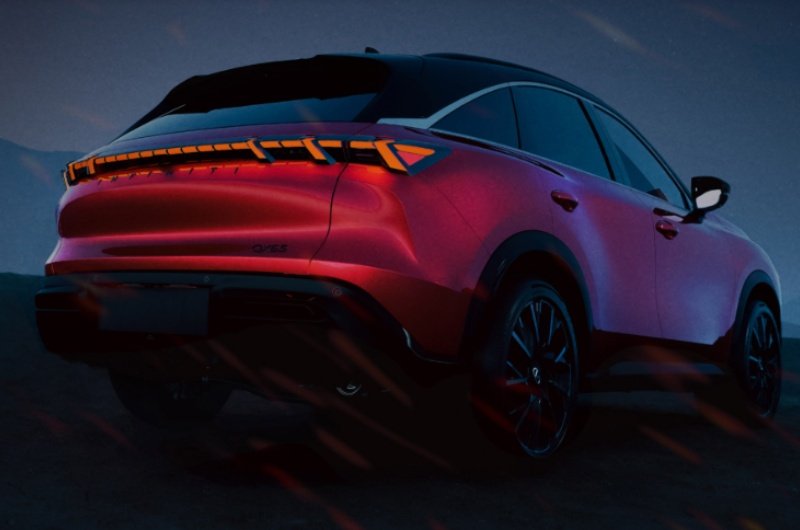
What we consider luxury is evolving, and it’s beginning to reshape even the way we move through the world. What once defined a luxury car—size, power, and status—is giving way to something more refined. Today, it’s about experience. Design. Technology. How something feels, not just how it performs. And increasingly, the next generation of vehicles is being shaped around that idea. The Infiniti QX65, coming this Spring, offers a clear look at where things are heading. Take a look at the 2027 Infiniti QX65 in motion: At first glance, it’s the design that defines it. The QX65 introduces a sport-styled, coupe-inspired SUV form with a sculpted profile and sloped roofline that emphasizes motion and athleticism. Bold lines, a sport-inspired front end, and jet-inspired taillights give the vehicle a sense of speed and depth—even at rest. It’s a deliberate move toward a more expressive, performance-oriented identity within Infiniti’s lineup. That shift continues under the hood. The QX65 features a uniquely tuned VC-Turbo engine designed to deliver sharper responsiveness, with improved torque for confident merging and passing. Crisper gear changes and an added boost from a standstill reinforce its sporty character, while standard Intelligent All-Wheel Drive provides stability across varying road conditions. For those who want more control, an available manual mode with paddle shifters adds a more hands-on driving experience. Inside, the focus turns to immersion—and this is where the QX65 begins to separate itself. The cabin introduces a highly personalized audio environment, anchored by an available 20-speaker Klipsch® Reference Premiere system. Individual audio headrest speakers for both driver and front passenger create a more intimate listening experience, while a personalized sound app adapts audio output based on each occupant’s hearing profile. Active Noise Cancellation works quietly in the background to reduce low-frequency sound, while Active Sound Enhancement adds subtle engine harmonics during acceleration—blending silence and performance in a way that feels intentional. Space and comfort remain central, but they are approached with refinement. The QX65 offers up to 67.7 cubic feet of cargo capacity, along with underfloor storage designed for flexibility—from everyday errands to longer getaways. Inside, best-in-class front-row legroom, a panoramic moonroof, and 64-color ambient lighting contribute to an environment that feels open, calming, and adaptable to the moment. And that may be the bigger shift. Vehicles like the QX65 are moving beyond just transportation. They’re becoming curated environments—spaces where sound, light, comfort, and performance are carefully tuned to the individual. Luxury, in that sense, has moved beyond just something you arrive in — to something you experience along the way. For a closer look at the 2027 Infiniti QX65, visit the official feature overview and take a tour here.