


AI Helps Couple Conceive After 20 Years of Failed Fertility Treatments

In a breakthrough moment for reproductive medicine, a New York couple finally achieved pregnancy after 20 years—and 15 unsuccessful IVF cycles—thanks to an innovative AI tool called STAR, developed at Columbia University. Why It Matters AI meets fertility STAR diagnoses and treats male infertility (specifically azoospermia), pinpointing issues often missed by conventional tests. Unprecedented success After two decades of emotional and physical trials, STAR’s algorithm led to a successful conception, marking a milestone in AI-assisted reproductive health Hope on the horizon This landmark case could redefine fertility treatments, offering new solutions for countless couples facing similar challenges. What’s Next Scaling the solution Columbia researchers are preparing broader clinical studies to determine STAR’s effectiveness across diverse demographics. Personalized reproductive medicine STAR exemplifies the increasing overlap between AI and precision healthcare—tailoring diagnoses and treatments like never before. Ethical Discussion Ahead With AI venturing into sensitive spaces like fertility, ongoing conversations are needed around accessibility, affordability, and data privacy. The Author
When Oil Gets Political: What Israel–Iran Tensions Mean for Your Wallet

Oil prices are wobbling again — and no, it’s not just market drama. Tensions between Israel and Iran are shaking global energy markets, and the ripple effects could hit a lot closer to home than you’d think. This week, Brent crude dipped below $85 a barrel and U.S. oil held steady near $81. Not exactly panic territory, but here’s the thing: just days ago, prices were climbing fast on fears the conflict could spill into a broader regional war. That kind of uncertainty creates what traders call a geopolitical premium — basically, prices rising not because of supply issues, but because of the threat of them. So far, nothing has actually disrupted the flow of oil. But markets are twitchy. The Strait of Hormuz — a key shipping route for about 20% of the world’s oil — is in the spotlight. If that gets blocked, even briefly, we’re talking major price spikes across the board. Here’s where it hits your wallet: higher crude prices can mean higher prices at the pump. If you’re road-tripping this summer or filling up weekly, that extra 20 or 30 cents per gallon adds up fast. And it’s not just gas. Rising oil costs can impact airline tickets, shipping fees, and — yep — groceries. Meanwhile, Wall Street’s watching, too. The oil volatility index has surged nearly 26% this month, showing just how nervous investors are. If things escalate overseas, the market could lurch, and with it, your portfolio or 401(k). So while oil isn’t breaking records just yet, this moment is a reminder: foreign policy can shake up your finances just as much as inflation or interest rates. And sometimes, a distant headline becomes tomorrow’s bottom-line story. The Author
Too Real? AI-Generated TV Ads Are Fooling Viewers — and Threatening the Ad Industry

AI-generated TV commercials are becoming so realistic, viewers can’t tell they’re synthetic. Discover how this tech is reshaping advertising — and why the industry is on edge. AI-generated commercials are no longer just test runs buried on YouTube — they’re hitting the airwaves, and most viewers can’t even tell. From voiceovers to video production, advertisers are quietly rolling out fully AI-generated TV ads using tools like Runway, Synthesia, ElevenLabs, and Sora. The results? Slick, cost-effective spots that blur the line between human creativity and machine output — and send shivers through the traditional ad world. Some of these commercials are shockingly convincing. AI avatars speak with emotional nuance. Virtual actors blink, gesture, and smile naturally. Entire 30-second spots — voice, video, and copy — can now be generated in a matter of hours. What once required full production crews, set rentals, casting calls, and costly edits can now be executed from a laptop. The advertising industry is watching all of this with a mix of awe and dread. Agencies worry they’ll lose major contracts. Voice actors and video editors see automation closing in on their livelihoods. SAG-AFTRA has already raised concerns about the unauthorized use of performers’ voices and likenesses — particularly as deepfake realism improves. There’s also growing fear that synthetic ads could be used to manipulate, mislead, or simply saturate audiences with low-effort, high-volume content. Brands, of course, are thrilled. AI lets them churn out dozens of ad variations for regional audiences, languages, or demographics — all without reshoots. In a competitive landscape where speed and personalization are king, AI offers a seductive edge. A marketing exec at one consumer goods company recently told AdWeek off the record: “If we can make six ad spots in a day for the cost of one? That’s a no-brainer.” But as synthetic ads flood digital and broadcast media, questions loom. Should viewers be told when an ad is AI-generated? Should regulations step in to label synthetic content? And how far can this technology go before it erodes trust in what we see and hear? For now, the industry is racing ahead. One thing is clear: the era of the fully human-made TV commercial is officially over. The Author
GPT-5 Whispers Are Growing Louder — And You’ll Want to Pay Attention

The AI world is holding its breath — again. Whispers of GPT-5 are no longer just speculation. From industry chatter to subtle signals from insiders, there’s a growing sense that OpenAI’s next big leap could be closer than we think. And if even half the rumors are true, it could be a seismic shift. What’s the Word? Here’s what’s fueling the fire: Early testers are allegedly already interacting with a more advanced system. Enterprise insiders in healthcare, education, and finance are prepping for “major rollout updates” this fall. And OpenAI itself? Quiet. Which only adds fuel to the fire. Many believe GPT-5 won’t just be smarter — it’ll be sharper, faster, and more capable of real-time, nuanced reasoning across text, visuals, and voice. If GPT-4 turbocharged productivity, GPT-5 could rewire it. Why It Matters Let’s be clear: this isn’t just another upgrade.This could be the model that brings true multi-modal intelligence into the mainstream. Think: Smarter virtual tutors Sharper legal assistants Seamless creative partners And real-time, multi-language customer service that actually feels human We’re talking massive disruption — again. And the early adopters? They’re already positioning themselves. What You Can Do Now You don’t have to be a developer or tech CEO to prepare for what’s coming. But you should be: Experimenting with current AI tools (ChatGPT, Claude, Perplexity) Following key trends in AI and automation Learning how to prompt — the new power skill in content, business, and education And keeping your eyes peeled for real announcements, not just social media noise The Takeaway If you thought the AI boom was leveling off, think again. GPT-5 could mark the beginning of AI’s second wave — and this one might be even bigger than the first. Readovia will be watching. The Author
AI Could Wipe Out Half of Entry-Level White-Collar Jobs, Warns Anthropic CEO
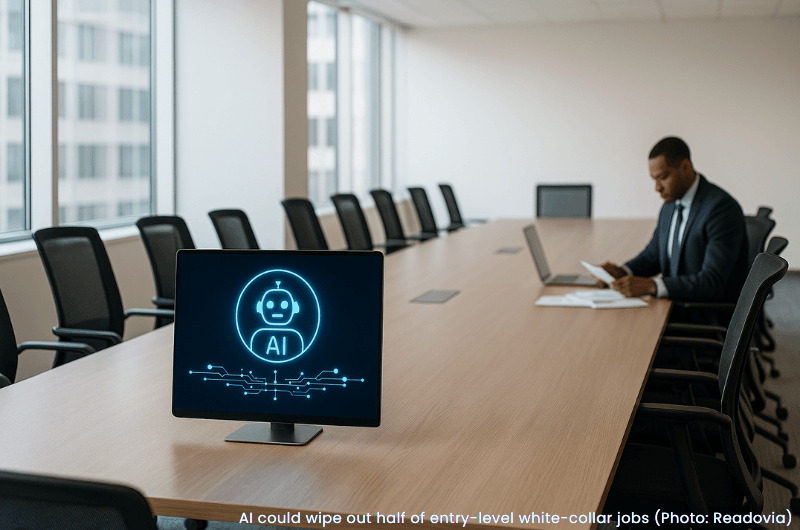
The robots aren’t coming — they’re already filling out your spreadsheets. Artificial intelligence could eliminate as much as 50% of entry-level white-collar jobs within five years, according to Dario Amodei, CEO of leading AI company Anthropic. The stark warning comes as businesses across finance, tech, legal, and consulting sectors accelerate the adoption of generative AI tools — tools capable of drafting contracts, analyzing financial reports, and summarizing massive data sets in seconds. Speaking at a recent conference, Amodei cautioned that the shift could spike the national unemployment rate from 4.2% to as high as 20%, marking what he called a “white-collar bloodbath.” This isn’t the alarmism of futurists — it’s a reality already playing out. Entry-level jobs once viewed as stepping stones — paralegals, junior analysts, content coordinators, financial associates — are being quietly phased out or redefined, often replaced by AI systems that don’t take breaks or draw salaries. Companies argue that AI is enhancing efficiency and reducing redundancy. But critics warn that we’re watching the ladder to the middle class collapse in real time. Amodei’s message wasn’t all doom. He emphasized the potential for AI to create new job categories and transform the workplace in positive ways — if government, education systems, and the private sector act quickly to reskill workers and manage the disruption. Still, the sense of urgency is clear. The AI revolution isn’t just about innovation anymore. It’s about survival in the shifting landscape of work. The Author
Readovia Exclusive – Inside ChatGPT: The AI That’s Quietly Powering a Digital Revolution

From Homework to Headlines — Meet the AI You Didn’t Know You Were Already Using Whether it’s drafting emails, explaining complex topics, generating code, or writing social media posts, ChatGPT has quickly become one of the most widely used — and least understood — tools on the planet. With over 100 million active users worldwide, this conversational AI, developed by OpenAI, is now a silent co-worker in homes, schools, startups, and Fortune 500 companies alike. How It Works (In Plain English) ChatGPT is built on something called a “large language model.” Picture feeding a supercomputer thousands of books, websites, and academic papers, then teaching it how to respond like a human in real time. The most advanced version, GPT-4, can handle a range of tasks including writing, explaining, summarizing, translating, and even analyzing images and data in certain formats. What makes it so powerful is that it doesn’t just retrieve information — it can write, explain, brainstorm, generate original content, and assist users across nearly every field imaginable. It can even think with you — in real time. Is There Just One ChatGPT? Not Even Close ChatGPT isn’t a single AI personality fielding questions for the entire planet. Instead, millions of individual instances are created — and quietly shut down — every day, each focused solely on one user’s request. And when we say “shut down,” we don’t mean anything dramatic. It’s simply how the system saves computing power once a session ends.Each conversation disappears when it’s over — unless memory is enabled, allowing the AI to remember past chats and respond in a more personalized way over time. Where You’ll See ChatGPT Next In apps, search engines, and websites In classrooms, creative studios, and corporate dashboards”” As a writer, analyst, assistant, tutor, or translator — depending on the need And this is just the beginning. OpenAI is already working on GPT-5, which is expected to offer even more advanced reasoning, personalization, and multi-modal capabilities later this year. The Takeaway You don’t need to be a tech expert to benefit from ChatGPT. In fact, many people using it every day don’t fully realize just how deeply it’s shaping the way we learn, create, and make decisions. In a world obsessed with productivity and speed, ChatGPT isn’t just another tool — it’s quietly becoming part of the way we think. The Author
AI Ghostwriting Is the New PR — And No One’s Disclosing It

Your Favorite Expert Might Not Be Writing Their Own Words. The next time you read a CEO’s op-ed, a professor’s blog post, or even a politician’s heartfelt social media thread, there’s a decent chance it wasn’t written by them — or even by a human at all. Welcome to the quiet rise of AI ghostwriting What used to be the domain of elite PR firms or freelance copywriters is now being quietly taken over by large language models like ChatGPT, Gemini, and Claude. The kicker? Most readers — and often even the people being quoted — have no idea. Polished, On-Brand, and 100% Machine-Made In industries where perception is everything, AI is being used to generate: Personal statements and interviews Corporate blog posts Thought leadership essays Internal communications Entire LinkedIn personas All it takes is a prompt — and maybe an intern to copy/paste. “Companies are realizing that AI can hit a word count and sound credible without needing a coffee break,” one anonymous agency insider told Readovia. “We used to have to scramble to get a quote approved by 5 PM. Now, it’s generated in seconds and sent for a quick yes/no.” The Ethics? Still Unwritten There are no clear disclosure rules for AI-generated content in journalism, marketing, or academia. And that’s part of the problem. Universities are grappling with AI-assisted admissions essays and research papers. Politicians are tweeting statements drafted by AI — sometimes even during live events. Corporate leaders are signing off on entire public-facing strategies without ever seeing the raw drafts. It’s not illegal — yet. But the growing lack of transparency has experts raising red flags about credibility, authorship, and manipulation. Why It’s So Tempting Speed, polish, and convenience. In an era of content overload, AI ghostwriting offers the perfect shortcut — and it’s cheaper than a retainer. Tools like ChatGPT can simulate tone, translate across platforms, and generate endless rewrites in seconds. And with memory or trained style files, they’re becoming shockingly accurate at mimicking real voices. So Who’s Really Speaking? That’s the question journalists, regulators, and readers are starting to ask. But for now, there are no guidelines requiring a disclaimer when AI has authored — or even entirely generated — a message. In a world where words carry reputational weight, authenticity is starting to blur. Final Thoughts AI ghostwriting is changing the rules of communication — not by replacing writers, but by accelerating the speed and polish of public messaging. Whether or not disclosure becomes the norm, the shift is already underway. The Author
The Countdown to GPT-5: Power, Promise, and Pressure

As OpenAI Eyes GPT-5, the World Watches — and Worries. A new wave of artificial intelligence may be just months away — and it’s sparking equal parts excitement and anxiety. OpenAI, the company behind ChatGPT, is reportedly preparing to unveil its next-generation model, GPT-5, later this year. While official details are under wraps, insiders say it will be more powerful, more humanlike, and capable of multimodal reasoning that goes far beyond what we’ve seen so far. The timing couldn’t be more charged Tech leaders, startups, and global governments are all racing to harness — or regulate — the rapidly expanding capabilities of generative AI. From copywriting to code generation, legal briefs to therapy chats, AI’s influence is expanding by the day. And GPT-5? It may widen the gap between companies that can afford advanced models… and those left behind. What’s New About GPT-5? Smarter multimodal abilities (text, images, maybe even video) Improved memory and context handling More accurate and personalized responses Greater autonomy in executing complex tasks OpenAI has yet to confirm whether GPT-5 will be rolled out as a major public tool or integrated more discreetly into enterprise products. But one thing is clear: the next leap in AI could be the biggest yet. The Bigger Question: Are We Ready? With power comes pressure. As AI models grow smarter, the challenges around bias, misinformation, automation, and even identity blur faster than regulators can respond. Lawmakers are still debating how to govern GPT-4, let alone what comes next. For now, the world waits — watching OpenAI, and wondering where this intelligence race leads next. The Author
Google Unveils Gemini 2.5 Pro: A Leap Toward Human-Like Reasoning in AI

Google is back in the AI spotlight — and this time, it’s not just playing catch-up. Tuesday, the tech giant unveiled Gemini 2.5 Pro, the latest iteration of its generative AI model, and early testers are calling it the most human-like yet. Trained on multimodal data and built to handle complex reasoning across text, image, and code, Gemini 2.5 Pro is Google’s most aggressive answer to OpenAI’s GPT-4 and Anthropic’s Claude. What’s different this time? Context — and a lot more of it. Google says Gemini 2.5 can retain and reference significantly more information across sessions. That means smoother conversations, better task completion, and the ability to understand your intent even if you don’t spell it out. This upgrade also packs serious capabilities in code writing, advanced math, and image analysis — a trifecta designed to appeal to developers, enterprises, and everyday users alike. But beyond specs, Gemini 2.5 Pro is Google’s chance to reclaim thought leadership in the AI arms race.After a shaky rollout of Bard and delays in integrating Gemini into its ecosystem, Google has a lot riding on this version. The release comes just ahead of Google I/O 2025, where the company is expected to announce full Gemini integration across Workspace, Android, and YouTube. “We want to build AI that’s helpful and responsible,” said one Google spokesperson, emphasizing the model’s improved safety guardrails and fact-checking features. But critics still point to transparency issues — especially when it comes to how Gemini is trained and how user data may be processed in future enterprise applications. So, is Gemini 2.5 Pro the model to watch? Possibly. But one thing is clear: AI models are no longer just answering questions — they’re thinking through them. And in a world flooded with bots, Gemini 2.5 Pro might just be Google’s smartest move yet. The Author
Visa and Mastercard Launch AI Shopping Agents, Ushering In a New Era of E-Commerce
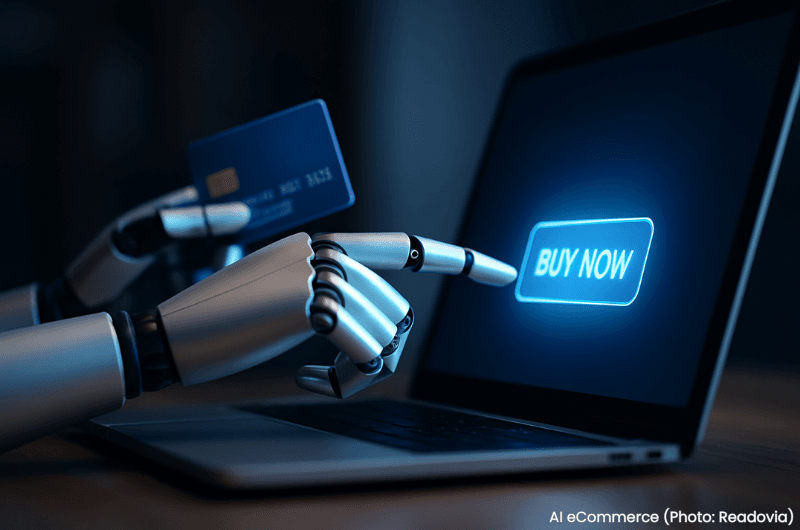
Visa and Mastercard are stepping boldly into the future with the debut of AI-powered shopping platforms designed to handle purchases on behalf of consumers — turning routine transactions into intelligent, automated experiences. Visa’s Intelligent Commerce: Letting AI Shop on Your Behalf Visa’s new “Intelligent Commerce” platform empowers users to delegate everyday shopping tasks to AI agents. Whether it’s ordering groceries, booking a trip, or reordering household staples, these agents can search, compare, and even purchase items — all based on your preset preferences and spending limits. To keep transactions secure, Visa uses tokenization and payment passkeys, adding a strong layer of protection while ensuring purchases remain frictionless. Users retain control, with AI agents handling the busywork but never bypassing final approval when needed. Visa has partnered with major players like Microsoft, Samsung, Stripe, and several leading AI labs to ensure the technology integrates seamlessly across platforms. Mastercard’s Agent Pay: Built for the Age of Conversational Commerce Mastercard is taking a different but equally ambitious approach. Its “Agent Pay” service brings payment capabilities directly into AI-driven chat platforms. Picture this: You’re chatting with an AI about new running shoes, and it not only recommends a pair — it can buy them for you on the spot. By embedding payment tools into the conversation itself, Mastercard is turning recommendations into real-time transactions — reducing friction and reimagining what online shopping can feel like. Where E-Commerce Is Headed Both companies are betting that tomorrow’s shoppers will expect faster, smarter, and more personalized digital experiences — with AI agents not just helping, but actively shopping on their behalf. From impulse buys to daily essentials, AI-driven commerce is no longer a futuristic concept — it’s happening now, and it’s changing the way we interact with brands, platforms, and purchases.