


White House Demolition: East Wing Torn Down for $300 Million Ballroom Project

The historic East Wing of the White House — long the domain of first ladies and state receptions — has been demolished to make way for a new 90,000-square-foot ballroom. The project is privately funded, politically charged, and raising questions about transparency, preservation, and the true cost of the “People’s House.” What’s Going On Demolition crews have completed the teardown of the White House East Wing, clearing the site for construction of a massive new ballroom. The structure, which had stood in various forms since 1902, once housed the First Lady’s offices, the Social Office, and the public tour entrance. The new ballroom — projected at roughly 90,000 square feet and costing about $300 million — is being described by the administration as a “privately funded modernization.” Officials claim the East Wing needed upgrades to meet current functional and security demands. Critics argue that the process bypassed traditional preservation and review standards that usually apply to changes on federal historic sites. Donors and the Private Dinner at the White House President Trump recently released a list of prominent guests invited to a White House dinner celebrating the ballroom project. The event reportedly included around 130 attendees, among them executives from Apple, Amazon, Google, Meta, Lockheed Martin, and several major cryptocurrency firms. According to press briefings, the dinner was not purely ceremonial — it served as an opportunity to thank contributors and showcase early architectural renderings of the ballroom. A partial donor list has also been shared with reporters, revealing that a mix of corporate sponsors and wealthy individuals are financing the build. Some of the larger contributors are said to include major tech and defense companies, with Alphabet’s (Google’s) contribution estimated at $22 million toward design and infrastructure technology. While the administration emphasizes that no taxpayer funds are being used, watchdog groups have called for full transparency about the donation amounts, terms, and any potential access or influence tied to participation. Timeline and Construction The ballroom plan was announced in late summer with an estimated $200 million cost. Within weeks, that number rose to roughly $300 million as the scope expanded to include new security systems and digital infrastructure. By early autumn, demolition was underway, and satellite images taken this week confirm that the East Wing is now gone — replaced by construction staging at one of the most secure addresses in the world. Officials say the funding is being managed through an intermediary trust, but preservation advocates continue to press for more detail about oversight, project governance, and how donor recognition will be handled once the new structure is complete. President Trump has publicly championed the ballroom as a “necessary modernization.” According to a July 31 press release posted on WhiteHouse.gov: “The White House State Ballroom will be a much-needed and exquisite addition of approximately 90,000 total square feet of ornately designed and carefully crafted space, with a seated capacity of 650 people — a significant increase from the 200-person seated capacity in the East Room of the White House.” What’s at Stake For over a century, the East Wing symbolized the public-facing side of the White House — where diplomacy, ceremony, and national traditions intersected. Its demolition marks one of the most significant changes to the presidential complex since the Truman-era reconstruction. To supporters, the new ballroom represents modernization and capacity for large-scale state events. To critics, it is a rebranding of America’s most iconic residence — one funded and influenced by private interests, not the public it represents. The debate now extends far beyond architecture to include governance, ethics, and ownership of national heritage. Who Are We Serving? The East Wing’s removal highlights a broader tension between modernization and preservation — between what serves the presidency and what serves the public. The unprecedented corporate involvement in a federal landmark’s redesign is already prompting calls for stricter transparency laws governing privately funded government projects. It’s a reminder that in the modern era, even the most symbolic institutions can be reshaped by those with the means to pay for access — and by those willing to allow it. The Bigger Picture At its core, the ballroom project underscores how symbolism, power, and private influence now intersect at America’s most recognized address. The White House is a working residence — but it is also a public institution, built to serve and represent the nation, not the individual who occupies it. When major transformations are financed by private donors and carried out with limited public oversight, the line between preservation and personalization begins to blur. The question is whether the public will still see the completed project as their own.
New Haven Named One of 2026’s Must-Visit Cities as Travelers Seek Fresh American Experiences

Smaller destinations are stealing the spotlight — and New Haven is leading the charge. New Haven, Connecticut, is having a moment. Once known mainly for its ivy-covered university and signature pizza, the city has landed on Skyscanner’s list of Top 10 Global Trending Destinations for 2026, earning the No. 8 spot — and marking a major shift in how Americans are traveling. According to the report, flight searches to New Haven jumped nearly 40 percent in the first half of 2025 compared with last year. The data reveals a growing appetite for “second-city” travel — where curious explorers skip the predictable big-city itineraries in favor of smaller, character-rich places that deliver culture without the crowds. Why New Haven Is Trending New Haven’s resurgence is rooted in its arts, architecture, and authenticity. Travelers are drawn to its walkable downtown, thriving restaurant scene, and diverse creative energy that feels distinctly New England — but refreshingly modern. Once visitors arrive, they find a mix of cultural depth and casual charm: the Yale University Art Gallery and Beinecke Rare Book Library for the intellectually inclined; boutique hotels and trendy cafés for weekenders; and, of course, legendary pizzerias that locals argue rival anything in New York. Domestic Escapes The buzz around New Haven reflects a broader travel movement — one defined by intentional exploration and value-driven choices. Post-pandemic travelers are embracing shorter, domestic escapes that balance novelty with affordability. Instead of bucket-list landmarks, they’re seeking experiences that feel local, livable, and undiscovered. Industry experts suggest that cities like Providence, Asheville, and Santa Fe may follow suit as travelers crave destinations that blend access, culture, and comfort. The Takeaway New Haven’s moment in the spotlight signals a new era for American travel — one where smaller cities compete on creativity, cuisine, and character rather than name recognition. For those looking to experience it before the world catches on, now might be the perfect time to book that weekend getaway — and maybe a table at Wooster Street’s most famous pizza joint.
BREAKING: U.S. Targets Russia’s Oil Giants After Trump–Putin Summit Is Cancelled

Washington’s latest sanctions strike at the heart of Moscow’s war funding machine. The United States has imposed sweeping sanctions on Russia’s two largest oil producers, Rosneft and Lukoil, in a fresh effort to undermine Moscow’s ability to finance its war in Ukraine. The move comes just one day after plans for a high-profile summit between President Donald Trump and Russian President Vladimir Putin fell apart. Trump told reporters that he canceled the meeting because “it didn’t feel right” and signaled uncertainty about when the leaders might meet next. According to the U.S. Treasury Department, the sanctions target entities and financial channels believed to be funneling oil revenues toward Russia’s ongoing military campaign. By striking the country’s main energy companies, Washington aims to tighten the economic pressure on the Kremlin and isolate its access to global markets. “The message is clear,” a senior Treasury official said in a statement. “If Russia continues to wage war, it will face escalating consequences that hit its core sources of funding.” The Kremlin condemned the sanctions, calling them “an act of economic aggression,” and vowed to explore countermeasures. Energy analysts noted that while Russia may reroute some exports to friendly nations, restrictions on financing and equipment could significantly hamper production in the long run. The Bigger Picture This latest escalation marks a new phase in U.S.–Russia relations — one defined by strategic disengagement and mounting economic warfare. With the diplomatic door now temporarily closed, both nations appear to be doubling down on pressure tactics rather than peace talks.
Food Benefit Alert: SNAP & WIC May Be Unavailable in November Amid Shutdown

Millions of Americans who rely on federal food assistance programs may go without critical benefits in November if the government shutdown continues. Several states — including Colorado, Oklahoma, Texas, and others — have already issued warnings that November benefits will not be available unless funding is restored. The Readovia News Desk reports that recipients in Maryland have begun receiving in-app alerts on their state benefit portals notifying them that their Food Supplement (SNAP) and WIC benefits “may not be available in November.” Those alerts, verified through user screenshots, mark one of the first direct notices to beneficiaries at the state level — signaling that the risk of interruption is now immediate, not hypothetical. The U.S. Department of Agriculture has advised state agencies that, should the shutdown persist, there may be insufficient funds to cover full November payments for both the Supplemental Nutrition Assistance Program (SNAP) and the Special Supplemental Nutrition Program for Women, Infants, and Children (WIC). Together, these programs serve more than 45 million Americans. Growing Impact Across States From the Midwest to the Gulf Coast, states are bracing for an unprecedented disruption. Officials have warned that federal allocations for November cannot be guaranteed without a new funding agreement. Some states have confirmed that unless the shutdown ends soon, payments will simply not be issued. For many low-income households, groceries and infant formula benefits are lifelines. A missed monthly deposit can mean skipped meals, postponed rent, or complete reliance on local food banks already stretched thin by demand. The combination of inflation, high grocery prices, and a lapse in federal support has created what advocates are calling a “perfect storm” of hardship. WIC is especially vulnerable because it is not an entitlement program; once federal funds run out, state agencies have limited ability to continue disbursements. Several state offices have indicated that funding could expire within days, forcing them to suspend new enrollments or pause benefits altogether. What Beneficiaries Should Know Check your state benefit app or online portal for new alerts regarding your November benefits. Consider stocking up now on essentials if you rely on SNAP or WIC and live in a state that has issued warnings. Local food banks and community organizations are preparing emergency distributions; contact your local social-services office for updates. Congress could fix the problem quickly if it reaches a deal, but right now, there’s no agreement in sight — so benefits remain at risk. The Bigger Picture This growing crisis highlights how deeply political gridlock in Washington affects day-to-day life for families nationwide. When federal programs are disrupted, states must scramble to fill the gap, often without resources to do so. Even a brief interruption in benefits can have lasting effects — from lost nutrition for children to reduced sales for small retailers in low-income communities. As the shutdown stretches on, uncertainty remains the only constant. For millions of families, November may mark the first time in years that grocery benefits simply don’t arrive. Readovia Continuing Coverage The Readovia News Desk will continue to monitor benefit alerts, state updates, and federal negotiations as they develop. Readers who have received similar “not available in November” notices through their state or local benefits portals are invited to contact the Readovia newsroom with the alert information, their state, county, and the date of the alert.
Trump Seeks $230 Million From DOJ Over Russia Probe and Mar-a-Lago Raid
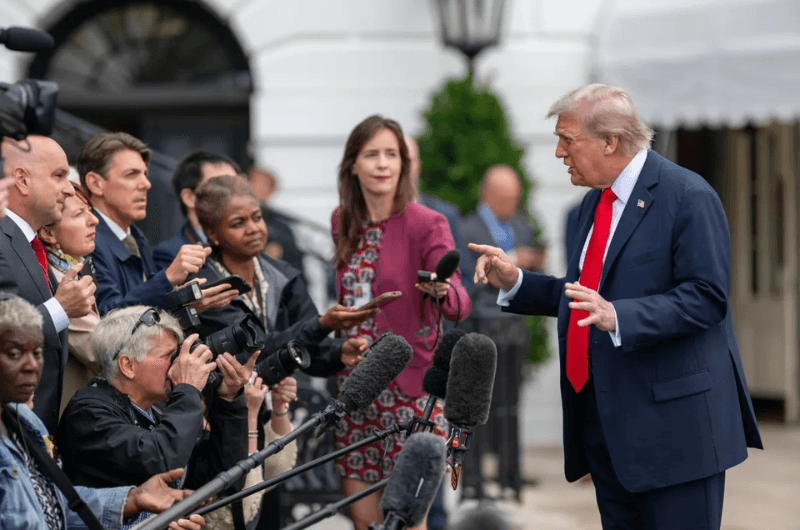
President Donald Trump has filed claims seeking up to $230 million from the U.S. Department of Justice (DOJ), accusing the agency of political retaliation in two of the most high-profile federal actions ever taken against him. According to reports first confirmed Tuesday, the filings — administrative claims known as Form 95s — seek compensation for alleged violations of Trump’s rights during the 2016 Russia investigation and the 2022 FBI search of Mar-a-Lago. Both actions, his lawyers argue, caused “immeasurable reputational and financial harm.” The claims, submitted in 2023 and 2024, precede any formal lawsuit but are required under the Federal Tort Claims Act before suing the government. They accuse the DOJ and FBI of “malicious prosecution” and “abuse of process,” echoing Trump’s long-standing claim that the justice system has been “weaponized” against him. A DOJ spokesperson declined to discuss specifics but said all department officials “follow the guidance of career ethics professionals.” If the claims are approved, any settlement above $4 million would require sign-off by the Deputy Attorney General — a role now held by Todd Blanche, a former Trump defense attorney, raising potential conflict-of-interest questions. Legal experts note that while administrative claims are routine in federal litigation, one of this magnitude is unprecedented for a president. The filings underscore Trump’s effort to recast years of investigation as an injury rather than a liability — and to turn his defense into a financial counteroffensive against the federal government itself. Between the Lines If the DOJ entertains the claim, even briefly, it could open a new political front: one where former presidents pursue damages from their own government. But if it’s dismissed outright, Trump could still transform the rejection into campaign fuel — proof, he’d argue, that the system remains rigged against him. Either outcome keeps the spotlight exactly where he wants it: on Trump versus Washington.
The Fall Immunity Fix: 7 Natural Supplements to Strengthen Your Defenses

As the air turns crisp and the days grow shorter, our immune systems can use a little extra support. Between heavier foods, less sunlight, and more time indoors, fall and winter bring the perfect storm for seasonal sluggishness — and the occasional sniffle. The good news? Nature offers plenty of help. Here are five natural supplements and herbs that can help you stay balanced, boost immunity, and keep your system running strong all season long. 1. Vitamin C — The Classic Defender Vitamin C remains the go-to for immune support — and for good reason. It fuels white blood cells, helps your body fight infections faster, and reduces inflammation. Best sources: Citrus fruits, bell peppers, kiwi, and acerola cherry. For supplements, choose whole-food or liposomal forms for better absorption. 2. Vitamin D — The Sunshine Shield When sunlight fades, so do our vitamin D levels. This “sunshine vitamin” helps regulate the immune system and mood. Tip: Choose D3 (cholecalciferol) with vitamin K2 for optimal absorption and balance. 3. Zinc — The Repair Mineral Zinc supports the production of immune cells and helps shorten the duration of colds. Deficiency can make you more vulnerable to infections. Natural sources: Pumpkin seeds, lentils, and shellfish. Supplement with zinc gluconate or citrate for best results. 4. Elderberry — Nature’s Flu Fighter A potent antioxidant, elderberry has long been used to reduce the severity and length of cold and flu symptoms. How to take it: Syrups, lozenges, or capsules — but make sure they’re free from added sugars and artificial flavors. 5. Detox Herbs — The Gentle Cleanse When your liver and lymphatic system work efficiently, your body fights illness more effectively. Together, these herbs form your body’s natural cleanup crew — perfect for the seasonal reset: Milk Thistle — supports liver detoxification, purifies the blood, and even brightens the whites of your eyes as it cleanses — something I’ve experienced firsthand. Burdock Root — helps remove impurities from the blood Ginger & Turmeric — calm inflammation while boosting circulation 6. Black Tea — The Everyday Immune Ally Sometimes, the simplest rituals are the most powerful. A good old-fashioned cup of black tea provides a daily dose of immune-boosting antioxidants. Compounds in black tea, such as theaflavins and catechins, support the body’s ability to neutralize free radicals and strengthen overall immune function. Make it part of your morning or afternoon routine — a soothing, flavorful way to help your immune system stay alert year-round. 7. Flaxseed Oil — The Immune System’s Drill Sergeant Packed with omega-3 fatty acids, flaxseed oil does more than support heart health — it helps rally your immune system. Scientists have found that its unique compounds act almost as a drill sergeant, signaling the immune system to mobilize and attack toxins and harmful pathogens. Whether in capsule, smoothies, salads, or on its own — flaxseed oil can help the body maintain balance, resilience, and optimal inflammatory response through the colder months. The Takeaway Fall is the time to fortify your body’s natural defenses. With consistent support from some of nature’s most trusted nutrients, you can strengthen your immunity, clear out toxins, and keep your energy steady from autumn through spring. Prevention, after all, is the most elegant form of wellness. ———- Disclaimer: This article is for informational purposes only and is not intended as medical advice. Always consult your physician or a qualified healthcare professional before starting any new supplement or herbal regimen.
Family’s Quick Action Stops Planned Airport Shooting in Atlanta

A Georgia family’s courage to speak up prevented what could have been a mass tragedy at one of the world’s busiest airports. Police arrested 49-year-old Billy Joe Cagle at Hartsfield-Jackson Atlanta International Airport after relatives reported he was livestreaming threats to “shoot it up.” Officers found an AR-15 rifle and 27 rounds of ammunition in his truck parked just outside the terminal. Atlanta’s police chief credited the family’s intervention for saving lives, calling the incident “a success, not a tragedy.” Cagle faces multiple felony charges, including making terroristic threats and illegal firearm possession. Authorities confirmed he had a prior felony record and was not legally permitted to own a gun. The case underscores a crucial truth: when families and communities speak up, lives can be saved. Atlanta’s mayor praised both vigilance and divine grace, saying, “We’re thankful to God and to good people for this crisis being averted.” Cagle’s longtime friend said he suffered from schizophrenia and had been taking medication, raising broader questions about mental health and firearm access. Final Thoughts Security technology is vital, but human awareness remains the strongest defense. One family’s quick decision to “say something” transformed a potential national tragedy into a case study in prevention — proof that when people speak up, danger can be stopped before it starts.
Trump Presses Zelenskyy to Accept Putin’s Demands in Heated Meeting, Tossing Maps and Warnings

In a tense Oval Office meeting on Sunday, President Donald Trump reportedly urged Ukrainian President Volodymyr Zelenskyy to accept Russian territorial terms to end the war — warning that President Putin would “destroy” Kyiv otherwise. According to multiple accounts, Trump’s tone was explosive, at one point shouting, cursing, and tossing maps across the room as he outlined areas he claimed Ukraine should concede. The confrontation — first reported by The Times of India — underscores how sharply Trump’s diplomatic approach departs from Washington’s previous bipartisan backing of Ukraine’s resistance. Witnesses said Trump appeared fixated on “ending the war fast,” even if that meant forcing Kyiv to surrender portions of the Donbas region to Moscow. European officials reacted with alarm. EU foreign policy chief Kaja Kallas called any move to pressure Ukraine “deeply inappropriate,” warning it would reward aggression and destabilize Europe further. The EU, France, and Germany have reiterated their support for Kyiv’s sovereignty, with several diplomats privately expressing fears that U.S. policy may be shifting toward appeasement. Adding to the tension, Hungary has proposed hosting a Trump-Putin summit that could include Ukraine “if invited.” The prospect of such a meeting — and who might attend — has raised eyebrows across NATO capitals. “It’s one thing to pursue peace,” said one European envoy, “it’s another to dictate it.” For Zelenskyy, who has vowed not to trade territory for peace, the moment marks one of his most precarious diplomatic crossroads since the invasion began. For Trump, it represents an attempt to reassert his image as the ultimate deal-maker — one who believes he alone can end the war. Between the Lines Trump’s outburst may play well with voters who crave decisive action, but it risks alienating allies and emboldening Putin. The larger question now is whether peace will come at the cost of Ukraine’s independence.
The Quiet Takeover: AI Steps In to Manage Email, Meeting Scheduling, and More

It started with “smart replies.” Then came calendar assistants. Now, AI agents are quietly running entire chunks of office life — answering emails, accepting meetings, and sending follow-ups — often without the employee lifting a finger. Across major corporations and startups alike, autonomous AI agents are becoming the invisible middle managers of modern productivity. Tools like OpenAI’s o1-series assistants, Anthropic’s Claude Workflows, and Microsoft’s Copilot Teams integrations are being trained to anticipate next steps and act on them. Analysts say what used to be “assistive AI” is fast evolving into delegated decision-making. Recent studies show a sharp rise in the use of AI for workplace automation, with some professionals now allowing intelligent systems to sort and prioritize their inboxes. The shift is raising fresh ethical questions about data privacy and accountability — especially as these bots begin responding on behalf of human managers. Experts warn that while AI delegation boosts output, it also risks blurring authorship and responsibility. “We’re entering an age where an email that looks human may not be,” notes tech ethicist Leah Ortiz. “The bigger concern isn’t that AI’s doing the work — it’s that no one notices.” Between the Lines For employees embracing email automation, the trade-off feels worth it — less inbox stress, fewer scheduling conflicts, and more focus on meaningful work. As companies chase higher productivity targets, invisible AI labor is quickly shifting from novelty to necessity.
Trump Plans to Shift Billions in Anti-Terror Funds from Democratic to Republican States

The Trump administration’s new homeland security plan would cut anti-terror grants to Democratic states by up to 70%, redirecting funds to Trump-voting states. The plan is igniting political and legal controversy, with Democratic-led states accusing the White House of using national security dollars as a political weapon. A Radical Funding Shift The administration has unveiled a plan to restructure the federal anti-terrorism grant program, which was created after the September 11 attacks to strengthen homeland security at the state and local levels. The new formula would divert billions away from Democratic-controlled states — including California, Illinois, New Jersey, and Washington, D.C. — and funnel much of that funding toward Republican-led states that supported Trump in the 2024 election. Some states could lose as much as 70 percent of their current allocations under the revised framework, according to federal budget documents reviewed by The Guardian. The Department of Homeland Security has defended the overhaul as a “risk-informed adjustment” aimed at addressing modern threats such as border violence and transnational crime. Critics Say It’s Political Retaliation Democratic officials and national security experts have blasted the move as partisan punishment masquerading as reform. “This isn’t about risk,” one state security director said. “It’s about retribution.” Twelve Democratic-led states have already filed a joint lawsuit seeking to block the rule, arguing it violates both the Constitution and long-standing federal statutes governing the use of national security funds. A federal judge in Rhode Island has temporarily halted the redistribution while the case moves forward. The Bigger Picture The proposal comes at a time when federal-state tensions are already high over shutdown politics, immigration enforcement, and federal law enforcement priorities. Analysts warn that this funding shift could deepen partisan divides within America’s security apparatus — and set a dangerous precedent where **“who you vote for” determines **how much federal protection you get.